

Many UK gardeners experience the same frustration every spring.
Seeds are sown carefully, young plants are planted out at the right time, and beds are watered regularly. The weather begins to warm, yet vegetables barely grow.
Weeks pass with little visible progress.
Leaves remain small, stems stay thin, and crops that should be developing strongly seem frozen in place.
This slow start is often blamed on poor seed quality, lack of fertiliser, or unpredictable weather.
In reality, the most common cause is cold soil.
In UK gardens, spring soil temperatures frequently remain too low for healthy root function, especially where drainage and structure are poor.
Until soil warms properly, vegetables struggle to absorb nutrients, develop roots, and establish strong growth.
This article explains why cold soil affects UK gardens so severely, how it connects to drainage and compaction, and what actually helps soil warm naturally.
Cold Soil Problems in UK Gardens – Quick Answer
- Cold soil slows root growth and nutrient uptake
- Wet, heavy UK soils warm much later in spring
- Poor drainage keeps roots in cold, oxygen-poor conditions
- Compaction prevents soil from warming evenly
- Feeding rarely works until soil temperature rises
In many UK gardens, slow spring growth is caused by cold, waterlogged soil rather than lack of fertiliser. Improving drainage, reducing compaction and rebuilding soil structure helps soil warm naturally and supports stronger early growth.
Why Cold Soil Slows Vegetable Growth
Roots are living systems that rely on temperature to function efficiently.
When soil is cold:
- Root growth slows dramatically
- Nutrient uptake becomes inefficient
- Microbial activity drops
- Water absorption becomes uneven
Even if air temperatures rise, cold soil keeps plants in a semi-dormant state.
This is why vegetables often appear stuck for long periods in early spring.
Most common vegetable crops perform best when soil temperatures rise above 10–12°C.
In many UK gardens, especially those with heavy or poorly drained soil, this threshold is reached much later than gardeners expect.
Why UK Soils Stay Cold Longer Than Expected
Several factors unique to UK growing conditions contribute to slow soil warming.
High Spring Rainfall
Waterlogged soil warms far more slowly than dry, well-aerated soil.
Moisture fills air spaces between soil particles, reducing heat movement.
After heavy rain, temperatures beneath the surface can remain low for days or even weeks.
Heavy Clay and Compacted Soils
Clay particles pack tightly together, limiting air circulation.
Compacted soil behaves similarly.
Without air spaces, heat struggles to penetrate downward.
This is one reason gardens with poor structure consistently lag behind healthier soils each spring.
The connection between structure and drainage is explored fully in How to Improve Garden Drainage in UK Soil.
Shallow Root Zones
In compacted soil, roots remain close to the surface.
Surface layers experience rapid temperature swings — cold nights followed by mild days.
This instability keeps plants under constant stress.
Deeper, healthier soils warm more evenly and remain stable.
Cold Soil and Nutrient Lock-Up
Many gardeners assume slow spring growth means plants need feeding.
However, cold soil severely limits nutrient absorption.
Even when nutrients are present, roots struggle to take them in efficiently.
Microbial processes that release nutrients from organic matter also slow in cold conditions.
This creates the illusion of poor fertility.
Adding fertiliser often has little effect until soil warms naturally.
This is why feeding rarely fixes early-season slow growth, a problem explained further in Why Feeding Plants Often Doesn’t Fix Slow Growth in UK Soil.
How Cold Soil Leads to Long-Term Weak Growth
Slow spring establishment has lasting consequences.
Plants that struggle early tend to:
- Develop smaller root systems
- Remain more sensitive to drought
- Produce weaker stems
- Yield smaller harvests
Early stress reduces the plant’s overall potential for the entire growing season.
This is one reason improving soil conditions early pays off for months to come.
Why Poor Drainage Makes Cold Soil Worse
Drainage and temperature are closely linked.
Soil that remains saturated warms slowly and stays cold far longer than free-draining soil.
In heavy UK soils, spring rain often fills pore spaces completely.
Without oxygen and air movement, heat transfer slows dramatically.
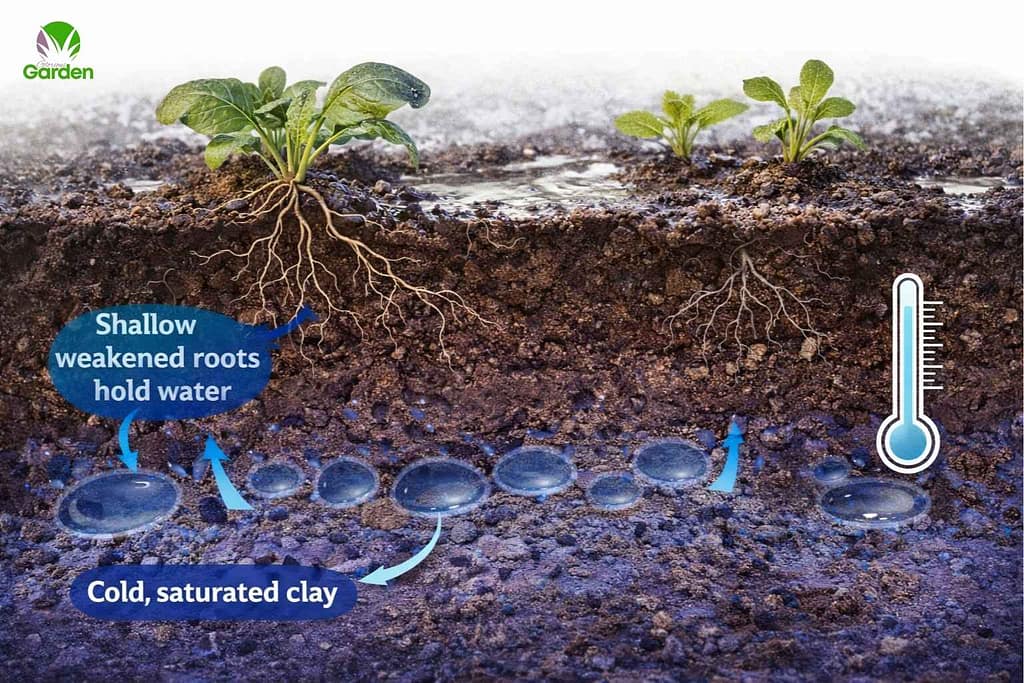
This creates cold, stagnant root zones that delay growth for weeks.
Improving drainage allows soil to dry slightly between rainfall, warming faster and becoming more biologically active.
This relationship is one of the core reasons vegetables struggle in UK gardens, as explained in Why Vegetables Fail in UK Gardens.
Signs Your Soil Is Too Cold for Healthy Growth
Cold soil problems are often subtle.
Common signs include:
- Seedlings that germinate but stall
- Leaves staying pale or small
- Minimal root development
- Slow recovery after transplanting
- Little response to feeding
If these symptoms persist during early spring, soil temperature is often the limiting factor.
Improving structure and drainage usually resolves the issue over time.
The next section explains practical ways to help soil warm naturally and avoid repeated spring stagnation.
How to Help Soil Warm Naturally in UK Gardens
Cold soil is not something that can be fixed with quick tricks.
However, several long-term improvements allow soil to warm faster and remain at healthier temperatures throughout spring.
The focus should always be on improving structure, drainage and airflow.
Improve Drainage First
Free-draining soil warms significantly faster than saturated soil.
When excess water can move away from the root zone, air replaces it in soil pores.
This allows heat to penetrate downward and stabilise temperatures.
In many UK gardens, improving drainage produces the biggest improvement in spring growth.
Practical methods are covered fully in How to Improve Garden Drainage in UK Soil, but even small changes can make a noticeable difference over time.
Reduce Soil Compaction
Compacted soil traps cold and blocks airflow.
Breaking the cycle of compaction allows soil to become looser and more aerated naturally.
Key steps include:
- Avoid walking on beds when soil is wet
- Limit deep digging
- Build soil gradually with organic matter
Understanding how compaction forms and how to reverse it is explained in Soil Compaction in UK Gardens.
As compaction reduces, soil warms faster and supports stronger root development.
Use Organic Matter to Improve Structure
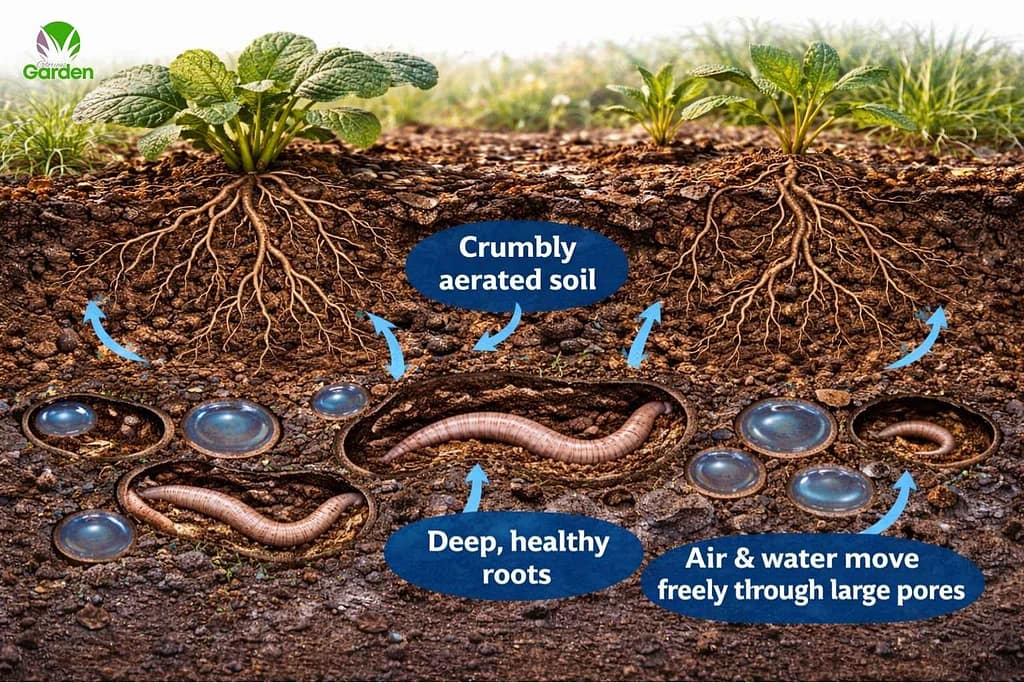
Regular additions of compost, leaf mould and well-rotted manure gradually rebuild soil structure.
As soil organisms process this material, they create channels that improve drainage and airflow.
Over time, these channels allow warmth to move deeper into the soil profile.
This process is central to long-term soil improvement and is explained in How to Improve Garden Soil in the UK Long Term.
Healthy soil structure naturally solves many cold soil problems.
The Role of Mulching in Spring Soil Temperatures
Mulching is often misunderstood when it comes to temperature.
In winter, mulch insulates soil and protects structure from heavy rain.
In early spring, thick cold mulches can slightly slow warming if left piled high.
However, once soil begins to warm, mulch helps retain heat and stabilise moisture.
The key is timing.
Best Mulching Approach for UK Gardens
- Allow soil to warm naturally in early spring
- Apply mulch once temperatures rise consistently
- Use organic materials that break down slowly
This supports warmth, structure and moisture balance throughout the growing season.
Raised Beds and Soil Temperature
Raised beds often warm faster than ground-level soil.
This happens because:
- Water drains more freely
- Air circulates better
- Soil is less compacted
In heavy UK soils, raised beds can provide a noticeable spring advantage.
However, they still benefit from organic matter and good structure.
Poor soil placed into raised beds will still struggle over time.
Common Spring Mistakes That Keep Soil Cold
Working Soil When It Is Wet
Digging or walking on wet soil compresses particles tightly together.
This worsens compaction and reduces airflow.
It also increases water retention and slows warming.
Waiting until soil is slightly dry before working it preserves structure.
Overwatering Early in the Season
Spring rainfall usually provides more than enough moisture.
Extra watering often keeps soil saturated unnecessarily.
This delays warming and reduces oxygen availability.
In most UK gardens, watering should be minimal until temperatures rise.
Relying on Fertiliser Instead of Soil Health
Feeding cold soil rarely produces strong results.
Improving structure and drainage almost always delivers better growth than extra nutrients.
How Long It Takes to Fix Cold Soil Problems
Soil warming issues improve gradually as structure rebuilds.
Some gardeners notice better spring growth within one season.
Most see significant improvement within two to three years of consistent organic matter additions and reduced compaction.
This timeline is realistic and sustainable, as explained in How Long It Takes to Improve Garden Soil.
The results are long-lasting and compound each year.
Why Fixing Cold Soil Improves the Whole Growing Season
When soil warms properly in spring, vegetables establish faster.
Stronger early roots lead to:
- Better drought resistance
- More efficient nutrient uptake
- Healthier stems and leaves
- Higher yields
Instead of spending weeks recovering from early stress, plants move straight into active growth.
This often adds several productive weeks to the growing season.
Common Questions About Cold Soil in UK Gardens
Why is my soil still cold in spring in the UK?
Heavy rainfall, poor drainage and compacted soil trap moisture, which slows soil warming.
At what temperature do vegetables start growing properly?
Most vegetables grow actively once soil temperatures rise above 10–12°C.
Does cold soil stop nutrient uptake?
Yes. Roots absorb nutrients more slowly in cold soil, which can make plants appear deficient even when nutrients are present.
Should I fertilise when soil is cold?
Feeding usually has limited effect until soil warms and roots become more active.
Does clay soil stay colder for longer?
Yes. Clay holds water tightly and drains slowly, which keeps soil temperatures lower in early spring.
Do raised beds warm faster than ground soil?
Raised beds often warm earlier because they drain better and allow more air circulation.
How can I warm soil naturally in the UK?
Improve drainage, reduce compaction and build soil structure with organic matter to allow air and warmth to move through the soil.
A Sensible Place to Start
If your vegetables stall each spring, focus on improving soil structure and drainage rather than feeding more heavily.
Reduce compaction, add organic matter regularly, and allow soil to dry slightly between rainfall.
These changes help soil warm faster, support stronger roots and prevent repeated early-season stagnation.
Once soil behaves more naturally, spring growth becomes reliable instead of frustrating.