

Brussels sprouts have a reputation for being slow, awkward, and often disappointing. In many gardens they grow tall, leafy plants but produce only a handful of usable sprouts. This is usually not a problem with the crop itself, but with how it is grown.
Brussels sprouts are a long-season vegetable that demand planning and patience. They stay in the ground for many months and respond strongly to soil preparation, spacing, and steady growth. When these needs are met, they can be one of the most productive winter crops in a UK garden.
Brussels sprouts are part of the brassica family and share many basic needs with cabbage, broccoli, cauliflower, and kale. If you are not already familiar with how brassicas behave as a group, it is worth reading growing brassicas in the UK first. This guide focuses specifically on Brussels sprouts and the decisions that matter most when growing them successfully.
Why Brussels Sprouts Are Different to Other Brassicas
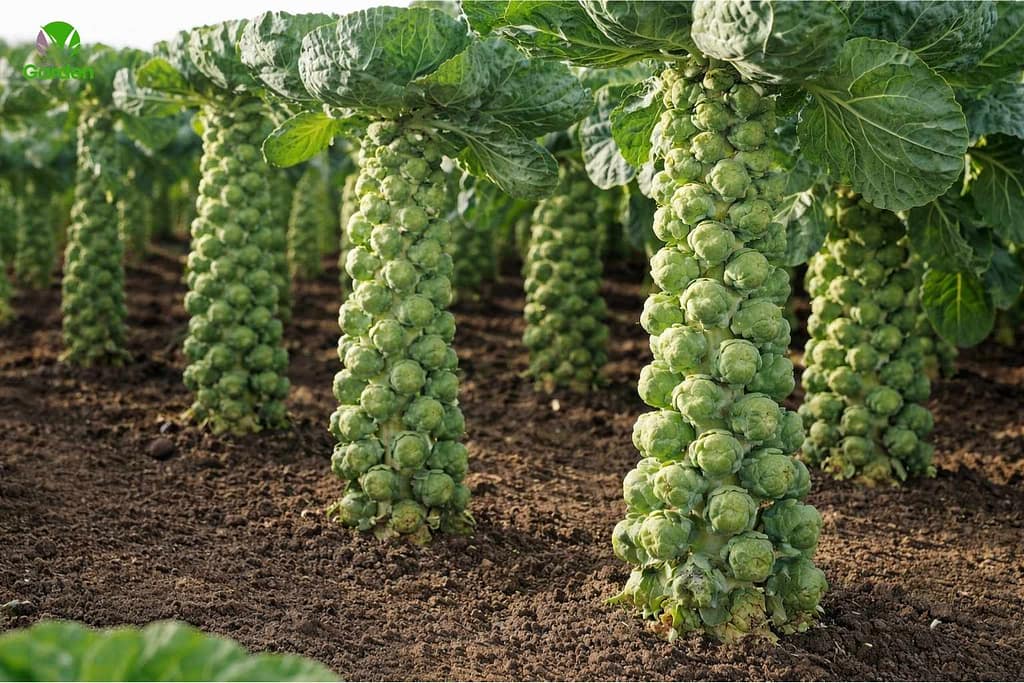
Brussels sprouts are one of the longest-growing vegetables commonly grown in UK gardens. They are usually planted in spring and remain in the ground until late autumn or winter. This long growing period is the reason they behave differently to most other brassicas.
Because they stay in place for so long, any problems early in the season are magnified later. Weak plants rarely recover, and uneven growth leads to loose, poorly spaced sprouts.
Unlike cabbage or cauliflower, where the harvest comes from a single head, Brussels sprouts produce many small buds along a tall stem. This makes plant stability, nutrition, and spacing especially important.
Types of Brussels Sprouts Grown in the UK
Brussels sprouts are usually grown as a winter crop, but varieties differ in their maturity times and final size. Choosing a variety that suits your garden conditions and harvest window helps improve results.
Early Brussels Sprouts
Early varieties are planted in spring and harvested from late summer into early autumn. They mature more quickly but are often smaller and less frost-hardy than later types.
These varieties suit gardeners who want an earlier harvest or who struggle with very exposed winter conditions.
Maincrop Brussels Sprouts
Maincrop varieties are planted in spring and harvested from late autumn through winter. They grow tall and produce a large number of sprouts over an extended period.
These are the most common types grown in UK gardens and are well suited to winter harvesting.
Where to Grow Brussels Sprouts
Brussels sprouts need an open position with good light and shelter from strong winds. Because plants grow tall, wind exposure is one of the main causes of poor results.
Choosing a site where plants can grow undisturbed for many months is essential. Brussels sprouts do not tolerate being moved once established, and crowding them into unsuitable spaces often leads to failure.
Preparing Soil for Brussels Sprouts
Soil preparation is more important for Brussels sprouts than for almost any other brassica. Because plants grow tall and remain in the ground for many months, weak soil structure shows up later as instability, uneven growth, and poor sprout development.
Brussels sprouts grow best in soil that is fertile, moisture-retentive, and firm. Loose or freshly dug ground leads to poor root anchoring, which allows plants to rock in the wind and disrupts steady growth.
Why Firm Soil Matters So Much
As Brussels sprouts grow, they produce a tall central stem with sprouts forming along its length. If roots are not well anchored, even moderate wind causes movement at the base of the plant. This movement damages fine roots and reduces the plant’s ability to take up water and nutrients.
This problem is more severe than with cabbage, which forms a single head close to the ground. Brussels sprouts carry their crop higher, making them far more vulnerable to wind rock if soil is not firm.
Firm soil helps plants remain upright and supports even sprout development along the stem. Without it, sprouts are often small, loose, or unevenly spaced.
Preparing the Bed in Advance
Ideally, soil for Brussels sprouts should be prepared several weeks before planting. Incorporate well-rotted organic matter if the soil is poor, then allow the ground to settle naturally. Avoid digging or cultivating immediately before planting.
Fresh manure or heavy nitrogen feeding at planting time should be avoided. Excess nitrogen produces tall, leafy plants but often reduces sprout quality later in the season.
When to Plant Brussels Sprouts in the UK
Brussels sprouts are usually planted in spring. They need a long growing season to develop strong stems and evenly spaced sprouts.
Planting too late shortens the growing period and often results in small plants with poor sprout formation. Planting into cold, wet soil slows early growth and increases stress.
Planting Early and Maincrop Varieties
Early varieties are planted in mid to late spring for harvest in early autumn. Maincrop varieties are planted at a similar time but harvested later, often through winter.
Regardless of variety, young plants should be planted when conditions allow steady establishment. Cold snaps or dry spells during early growth often affect results months later.
Spacing and Firm Planting
Brussels sprouts need generous spacing. Crowding plants reduces airflow, increases competition for nutrients, and leads to weaker stems.
Most varieties benefit from around 60 centimetres between plants. This spacing allows stems to thicken properly and supports more even sprout development.
When planting, set plants at the same depth they were growing previously and firm soil gently but thoroughly around the roots. Water well after planting to help plants settle quickly.
Caring for Brussels Sprouts Through the Season
Once established, Brussels sprouts benefit from consistent care rather than frequent intervention. Their long growing period means that small, regular adjustments are more effective than dramatic changes.
Watering Consistently
Brussels sprouts need regular moisture, particularly during dry summer periods. Inconsistent watering often leads to uneven sprout development and poor quality.
Water deeply to encourage strong root growth. Allowing soil to dry out completely between watering causes stress that affects later sprout formation.
Feeding Without Encouraging Soft Growth
Brussels sprouts benefit from moderate feeding once plants are growing strongly. Balanced feeding supports steady growth without producing overly soft stems.
Excess nitrogen often results in tall plants with loose or open sprouts. If growth is steady and leaf colour is healthy, additional feeding is usually unnecessary.
Staking and Supporting Tall Plants
In exposed gardens, staking Brussels sprouts can make a significant difference. Tall plants are easily rocked by wind, particularly later in the season when they carry a full crop.
Simple stakes or firming soil around the base of plants during the season helps maintain stability and improves sprout quality.
Common Problems When Growing Brussels Sprouts
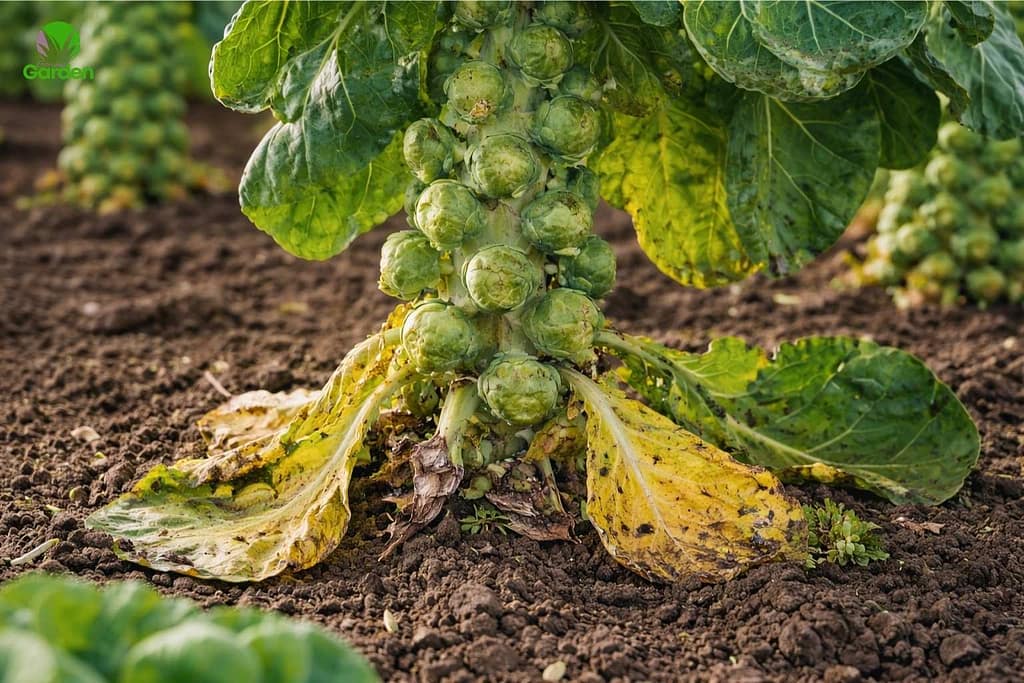
Most problems with Brussels sprouts are the result of stress or poor stability rather than disease. Because these plants grow slowly over a long period, early issues often only become obvious later in the season.
Understanding what causes these problems makes it much easier to avoid repeating them.
Loose or Open Sprouts
Loose sprouts are one of the most common complaints. This is usually caused by uneven growth, often linked to inconsistent watering, excess nitrogen, or plants rocking in the wind.
Once sprouts are loose, they cannot be tightened. Improving soil firmness, spacing, and stability is the key to better results in future plantings.
Small or Poorly Spaced Sprouts
Small sprouts or wide gaps along the stem often indicate early stress. Cold soil, drought during establishment, or overcrowding can all limit stem development.
Strong early growth is essential for producing evenly spaced sprouts later.
Yellowing Lower Leaves
Yellowing of lower leaves is common as Brussels sprouts mature. This is usually normal and not a cause for concern.
However, widespread yellowing combined with poor growth can indicate nutrient imbalance or prolonged stress earlier in the season.
Pest Pressure and Prevention
Brussels sprouts attract the same pests as other brassicas, including cabbage white caterpillars, aphids, and slugs. Because plants remain in the ground for so long, regular inspection is important.
Healthy, well-established plants tolerate some damage. Weak plants often struggle to recover.
Managing Pests Calmly
Protecting young plants early helps reduce problems later. Netting, hand removal of caterpillars, and regular checks usually keep damage manageable.
Overusing treatments can disrupt beneficial insects and often causes longer-term issues. Steady monitoring is usually more effective than reactive control.
Harvesting Brussels Sprouts
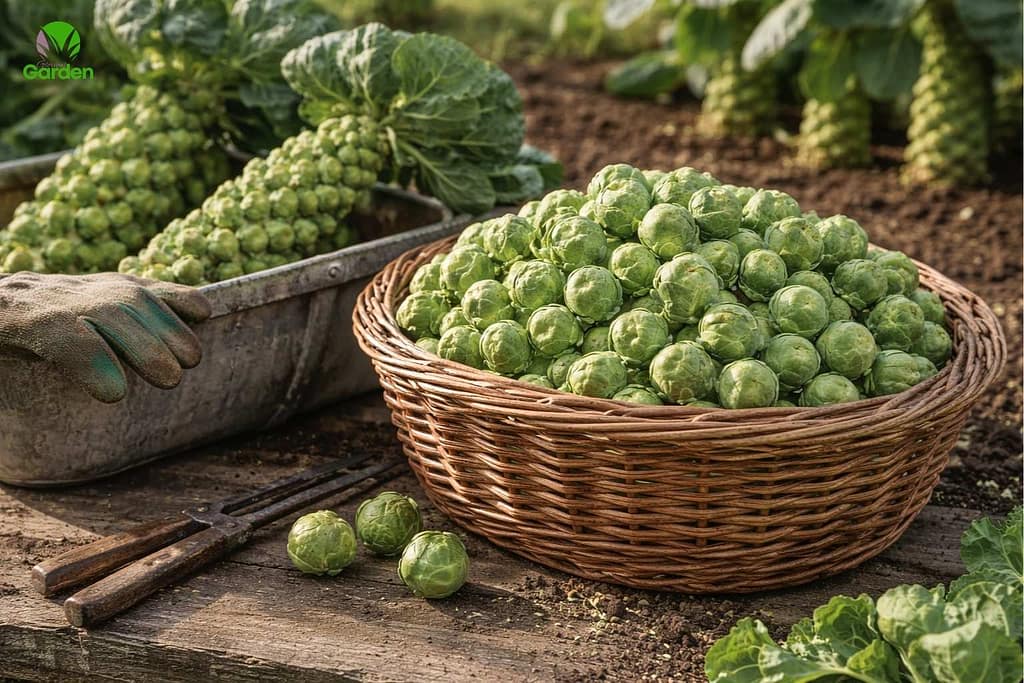
Brussels sprouts are usually harvested from the bottom of the stem upwards. Lower sprouts mature first and are often larger and firmer.
Harvest sprouts when they are firm and tightly closed. Leaving mature sprouts on the plant for too long can reduce quality.
In some cases, removing the growing tip late in the season can help remaining sprouts mature more evenly. This is optional and depends on how the crop is developing.
Brussels Sprouts FAQs
Why are my Brussels sprouts loose instead of tight?
Loose sprouts are usually caused by uneven growth. Wind rock, inconsistent watering, or too much nitrogen can all prevent sprouts from tightening properly along the stem.
Do Brussels sprouts need staking?
In many UK gardens, yes. Because plants grow tall and stay in the ground for months, staking or firming soil around the base helps prevent wind rock and improves sprout quality.
When should I start harvesting Brussels sprouts?
Start harvesting from the bottom of the stem once sprouts are firm and well formed. Lower sprouts mature first, and regular picking encourages the rest to finish evenly.
A Sensible Place to Start
Brussels sprouts reward patience and preparation. They are not a quick crop, but they are dependable when grown in the right conditions.
Start by preparing firm soil, spacing plants generously, and focusing on steady growth. When those foundations are in place, Brussels sprouts can become one of the most reliable winter vegetables in a UK garden.