

Cauliflower has a reputation for being difficult, fussy, or unreliable, and in many gardens that reputation feels deserved. More than most vegetables, cauliflower reacts quickly to stress, and even small interruptions to growth can affect the final crop.
That does not mean cauliflower is impossible to grow. It means it needs to be approached differently. When its requirements are understood and met consistently, cauliflower can be a productive and rewarding crop in UK gardens.
Cauliflower is part of the brassica family and shares many basic needs with crops such as cabbage, broccoli, kale, and Brussels sprouts. If you are not already familiar with how brassicas behave as a group, it is worth reading growing brassicas in the UK first. This guide focuses specifically on cauliflower and the decisions that matter most when growing it successfully.
Why Cauliflower Is More Sensitive Than Other Brassicas
Cauliflower is less forgiving than many other brassicas. Where cabbage or broccoli may tolerate short periods of stress, cauliflower often responds with visible problems. These problems usually appear later, when the curd should be forming.
Cauliflower needs steady, uninterrupted growth from planting through to harvest. Cold soil, drought, overcrowding, or inconsistent feeding can all cause checks in growth. Once growth is interrupted, cauliflower rarely recovers fully.
This sensitivity explains why cauliflower is often described as difficult. In reality, it simply reflects the conditions it is grown in.
Types of Cauliflower Grown in the UK

Cauliflowers are usually grouped by the season in which they are harvested. Choosing the right type for your planting window and garden conditions makes a significant difference to success.
Summer Cauliflower
Summer cauliflowers are planted in spring and harvested in summer. They grow relatively quickly but are vulnerable to heat stress and drought.
Even short dry spells can affect curd formation. Consistent watering and careful timing are essential with these varieties.
Autumn Cauliflower
Autumn cauliflowers are planted in spring or early summer and harvested in late summer or early autumn. They are generally more forgiving than summer types but still require steady growth.
They suit many UK gardens and are often a good starting point for gardeners learning to grow cauliflower.
Winter Cauliflower
Winter cauliflowers are long-season crops planted in late spring or early summer and harvested the following winter or early spring. They remain in the ground for many months and need careful planning.
Because of their long growing period, winter cauliflowers demand firm soil, good drainage, and consistent care over time. Rushed planting or poor soil preparation almost always leads to poor results.
Where to Grow Cauliflower
Cauliflower grows best in an open position with good light and shelter from strong winds. While it tolerates cooler conditions, it does not cope well with drying winds or fluctuating moisture levels.
Because cauliflower reacts badly to stress, choosing a suitable position is particularly important. Areas that dry out quickly or are exposed to strong winds often produce disappointing crops.
Preparing Soil for Cauliflower
Soil preparation is critical when growing cauliflower. More than most brassicas, cauliflower reacts quickly to poor soil conditions, and problems that appear later often trace back to rushed or inadequate preparation.
Cauliflower grows best in soil that is fertile, moisture-retentive, and firm. Loose or freshly dug soil often leads to slow establishment and uneven growth, which increases the risk of poor curd formation.
Why Firm, Well-Prepared Soil Matters
Cauliflower needs steady access to water and nutrients throughout its growth. In loose soil, roots struggle to anchor properly and moisture levels fluctuate more rapidly. This instability causes growth checks that cauliflower rarely recovers from.
Firm soil supports consistent root development and helps plants maintain even growth, which is essential for forming good-quality curds.
Preparing the Bed in Advance
Ideally, soil for cauliflower should be prepared several weeks before planting. Incorporate well-rotted organic matter if needed, then allow the soil to settle naturally. Avoid heavy cultivation immediately before planting.
Fresh manure or large amounts of high-nitrogen fertiliser should be avoided at planting time. Excess nitrogen encourages leaf growth at the expense of curd development and can increase the risk of problems later.
When to Plant Cauliflower in the UK
Correct planting time is one of the most important factors in growing cauliflower successfully. Planting too early or too late often results in plants that never fully recover.
Planting Summer Cauliflower
Summer cauliflowers are planted in spring. They need to establish quickly before warmer weather arrives, as heat stress can affect curd formation.
Planting into cold soil slows early growth, while planting too late increases the risk of drought stress. Both situations can lead to small or misshapen curds.
Planting Autumn Cauliflower
Autumn cauliflowers are usually planted from spring into early summer. They benefit from steadier conditions and are often more forgiving than summer types.
Even so, interruptions to growth during establishment can still affect the final crop. Consistent watering during dry periods is particularly important.
Planting Winter Cauliflower
Winter cauliflowers are planted from late spring into early summer. They need time to build strong root systems and leafy frameworks before colder weather sets in.
Delayed planting shortens the growing season and often results in weaker plants that struggle to form good curds later.
Spacing and Planting Technique
Spacing has a direct effect on cauliflower quality. Plants grown too close together compete for water and nutrients, increasing stress and reducing curd size.
Most cauliflowers need around 45 to 60 centimetres between plants, depending on variety. Giving plants enough space improves airflow and makes care easier throughout the season.
When planting, set plants at the same depth they were growing previously and firm soil gently around the roots. Water well after planting to help plants settle quickly.
Caring for Cauliflower Through the Season
Once established, cauliflower requires consistent care. Sudden changes in moisture or nutrition often lead to problems that cannot be corrected later.
Watering Consistently
Cauliflower has a high demand for water, particularly as the curd begins to form. Inconsistent watering is one of the most common causes of poor curd development.
Water deeply and regularly during dry periods. Allowing soil to dry out completely between watering almost always leads to growth checks.
Feeding Without Overstimulating Growth
Cauliflower benefits from moderate feeding once plants are growing strongly. Balanced feeding supports steady growth without encouraging excessive leaf production.
Overfeeding, especially with nitrogen, often results in lush leaves and poor curd quality. If growth appears steady and leaf colour is healthy, additional feeding is usually unnecessary.
Protecting the Curd
Many cauliflower varieties benefit from curd protection as heads develop. Strong sunlight can discolour curds and affect quality.
Bending outer leaves over the curd or tying them loosely together helps protect the developing head without restricting airflow.
Common Problems When Growing Cauliflower
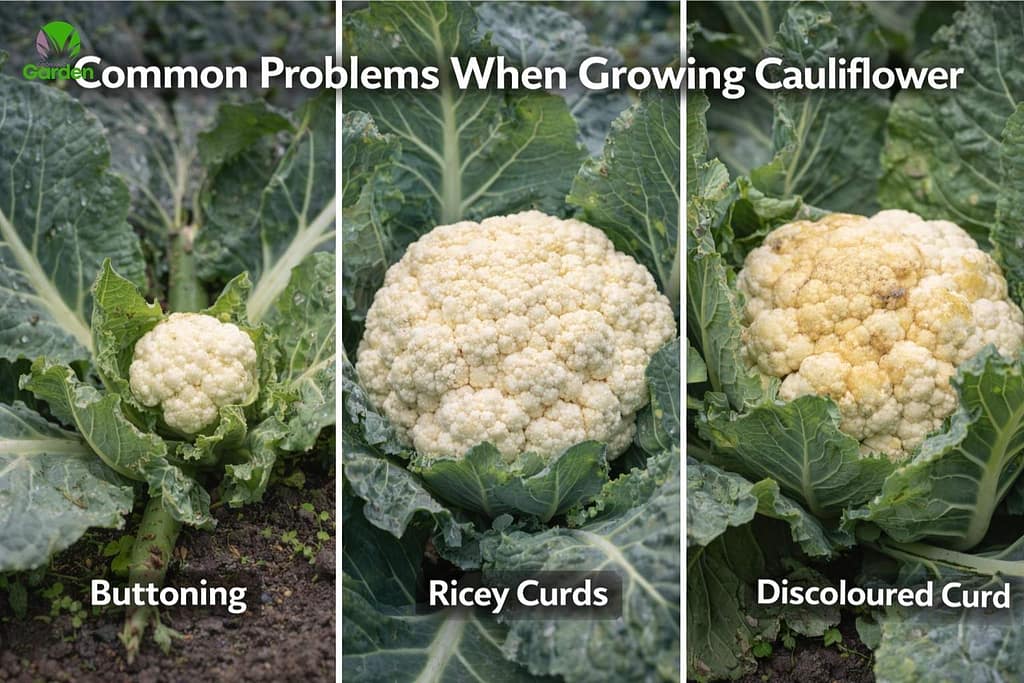
Cauliflower problems are usually the result of interrupted growth rather than disease. Because cauliflower is particularly sensitive, even short periods of stress can show up later when the curd should be forming.
Recognising why problems occur is more useful than trying to correct them once they appear.
Small or Poorly Formed Curds
Small curds are most often caused by early stress. Cold soil, drought, overcrowding, or nutrient imbalance during establishment can all limit development.
Once curd size is reduced, it cannot be improved. The focus should shift to preventing the same issue in future plantings by improving soil preparation and consistency.
Buttoning
Buttoning occurs when cauliflower forms a very small curd prematurely. This is usually caused by severe stress early in the plant’s life, such as cold conditions or lack of moisture.
Buttoned cauliflowers will not recover. Removing affected plants and reviewing planting time and conditions is often the best course of action.
Loose or Ricey Curds
Loose or “ricey” curds often develop when plants grow too quickly, usually due to excess nitrogen or high temperatures.
Maintaining even growth and avoiding overfeeding helps reduce the risk of this problem.
Yellowing Leaves
Yellowing leaves can be linked to nutrient imbalance, inconsistent watering, or natural ageing of lower leaves. While some yellowing is normal, widespread discolouration combined with poor growth usually indicates stress earlier in the season.
Pest Pressure and Prevention
Cauliflower attracts the same pests as other brassicas, including cabbage white caterpillars, aphids, and slugs. This pressure is normal and should be expected.
Strong, well-established plants cope better with pest damage. Weak plants often struggle to recover.
Reducing Pest Problems Early
Protecting young plants early is often the most effective approach. Netting, regular inspection, and prompt removal of pests help keep damage manageable.
Overuse of treatments can disrupt beneficial insects and lead to longer-term issues. Calm, early intervention is usually sufficient.
Harvesting Cauliflower at the Right Time
Cauliflower should be harvested as soon as the curd is fully developed but still tight and compact. Delaying harvest often leads to loose or ricey curds.
Use a sharp knife to cut the head cleanly from the plant. Harvest promptly once ready, as curd quality declines quickly if left too long.
Cauliflower FAQs
Why is my cauliflower forming a very small head?
This is usually caused by early stress, such as cold soil, drought, or poor establishment. Once cauliflower growth is checked early on, the plant rarely recovers enough to form a full-sized curd.
What causes cauliflower to become ricey?
Ricey curds are usually the result of uneven or overly rapid growth, often caused by excess nitrogen or high temperatures. Keeping growth steady and avoiding overfeeding helps reduce this problem.
Do cauliflower curds need protecting from sunlight?
Yes, many varieties benefit from protection as the curd develops. Bending outer leaves over the curd helps prevent discolouration and keeps the head clean and white.
A Sensible Place to Start
Cauliflower is often labelled as difficult, but it is best thought of as precise. It responds directly to how steadily it is grown and how carefully its needs are met.
Choose the right type for your planting window, prepare soil well in advance, and focus on consistent watering and feeding. When those foundations are in place, cauliflower becomes a reliable and rewarding crop in UK gardens.