

Kale is one of the most dependable vegetables you can grow in a UK garden. It copes with cold weather, keeps producing for months, and stays useful when many other crops are finished. If there is one brassica that earns its space year after year, it is kale.
Most problems with kale come from treating it like a quick crop. Planted late, grown too close together, or pushed hard with feed, it can turn coarse, bitter, or stunted. Grown steadily, with enough space and reasonable soil, it becomes the opposite of fussy.
Kale sits within the brassica family and shares key needs with cabbage, broccoli, cauliflower, and Brussels sprouts. If you want the bigger picture of how brassicas behave, start with growing brassicas in the UK. This guide stays focused on kale, and the decisions that make it work well in real UK gardens.
Why Kale Is Worth Growing
Kale earns its reputation because it does not demand perfection. It is productive across a long season, tolerant of cold, and forgiving of minor damage. Even when pests nibble leaves or weather slows growth, kale usually continues producing usable harvests.
It is also one of the few vegetables that can bridge the gap between autumn and spring. In mild areas it can be picked right through winter. In colder gardens it may pause for a time, then restart as daylight increases. Either way, it is rarely a waste of effort.
Flavour is another reason kale is valued. Many varieties improve after frost, losing some of their raw sharpness and becoming sweeter and more pleasant to eat. This matters because it changes when and how you prefer to harvest.
How Kale Grows
Unlike cabbage or cauliflower, kale is not grown for a single head. It produces a central stem with leaves that can be harvested repeatedly. This makes harvesting technique part of growing success.
When kale is picked well, it keeps producing. When it is stripped too hard, or the growing point is damaged, it slows down or stops. If you only take one principle into the season, make it this: kale prefers regular, moderate harvesting rather than occasional heavy harvesting.
Kale also responds strongly to spacing. Crowded plants stay small and produce thin leaves. Plants with room develop stronger stems, better airflow, and a more useful harvest over time.
Types of Kale Grown in the UK

There are several common types of kale grown in UK gardens. Choosing the right one is less about what looks appealing in a seed catalogue and more about what you want from the crop. Some varieties are built for winter toughness, others for softer leaves and quicker harvests.
Curly Kale
Curly kale is the classic winter kale. It is hardy, dependable, and stays productive in cold conditions where softer types struggle. It is often the easiest choice for exposed gardens and for anyone who wants reliable winter leaves.
Curly types can be slower to become tender, especially if pushed into fast growth. Grown steadily, the leaves are excellent for cooking and hold their texture well.
Cavolo Nero
Cavolo nero, sometimes called black kale, produces long, dark leaves with a softer texture than many curly varieties. It is widely grown because it cooks down well and is often milder than traditional curly kale.
It is generally hardy in UK gardens, but it benefits from shelter in very exposed sites. Strong winds can shred leaves and slow growth, even when temperatures are not severe.
Red and Russian Types
Red and Russian kales tend to have flatter leaves and a slightly softer bite. Many are quicker to reach harvesting size, which makes them useful if you want autumn leaves without waiting too long.
Some are less tough through winter than curly kale, particularly in exposed or very cold gardens. They still have a place, but they suit a slightly different role: early harvests, milder conditions, or a crop that does not need to carry right through to spring.
Where to Grow Kale
Kale grows best in an open position with good light. While it will tolerate partial shade, strong growth produces better-quality leaves and a longer harvest period.
Shelter from strong winds is helpful, particularly for taller varieties such as cavolo nero. Although kale is generally sturdier than Brussels sprouts, repeated rocking in loose soil still slows growth and reduces leaf quality.
Because kale remains in the ground for many months, it should be planted where it will not interfere with later crops. Treat it as a long-term planting rather than something to squeeze into spare gaps.
Preparing Soil for Kale
Kale is less demanding than some other brassicas, but soil preparation still plays an important role in how well it performs. Well-prepared soil supports steady growth and improves both yield and leaf texture.
Kale grows best in soil that is fertile, moisture-retentive, and reasonably firm. Very loose soil can lead to weak anchoring, while poor soil often results in pale, slow-growing plants.
If soil is lacking in organic matter, incorporate well-rotted compost before planting. Avoid heavy feeding immediately before planting, as rapid early growth often produces coarse leaves rather than better harvests.
When to Plant Kale in the UK
Kale is usually planted from spring into early summer. Planting at the right time allows plants to establish properly before autumn and winter conditions slow growth.
Earlier planting produces larger, more productive plants. Late planting still works, but plants often remain smaller and produce fewer leaves overall.
Some quicker-growing varieties can be sown later for autumn harvests. These are useful if space is limited earlier in the season, but they should not be relied on for long winter picking.
Spacing Kale Correctly
Spacing has a direct impact on leaf size, airflow, and disease resistance. Crowded kale plants produce smaller leaves and are more vulnerable to problems later in the season.
Most kale benefits from spacing of around 45 to 60 centimetres between plants. This gives enough room for plants to expand and makes harvesting easier.
Although young plants look small, they grow significantly over time. Giving them enough space early prevents competition and stress later.
Caring for Kale Through the Season
Once kale is established, it is one of the lowest-maintenance brassicas. It responds best to steady conditions rather than frequent intervention.
Kale that grows evenly produces better-textured leaves and remains productive for longer. Rapid swings between fast growth and stress often result in coarse or bitter foliage.
Watering Kale
Kale needs consistent moisture, particularly during dry spells. Allowing plants to dry out completely between watering often leads to tough leaves and slower regrowth.
Water deeply rather than little and often. This encourages stronger root systems and helps plants cope better during warm weather.
Mulching around plants helps retain moisture and suppress weeds, particularly during summer.
Feeding Kale
Kale benefits from moderate feeding once it is growing strongly. Too much feed, particularly nitrogen, encourages rapid leaf growth at the expense of flavour and texture.
If leaves are a healthy green and growth is steady, additional feeding is rarely needed. Kale is more tolerant of modest soil fertility than many other brassicas.
Harvesting Kale Properly
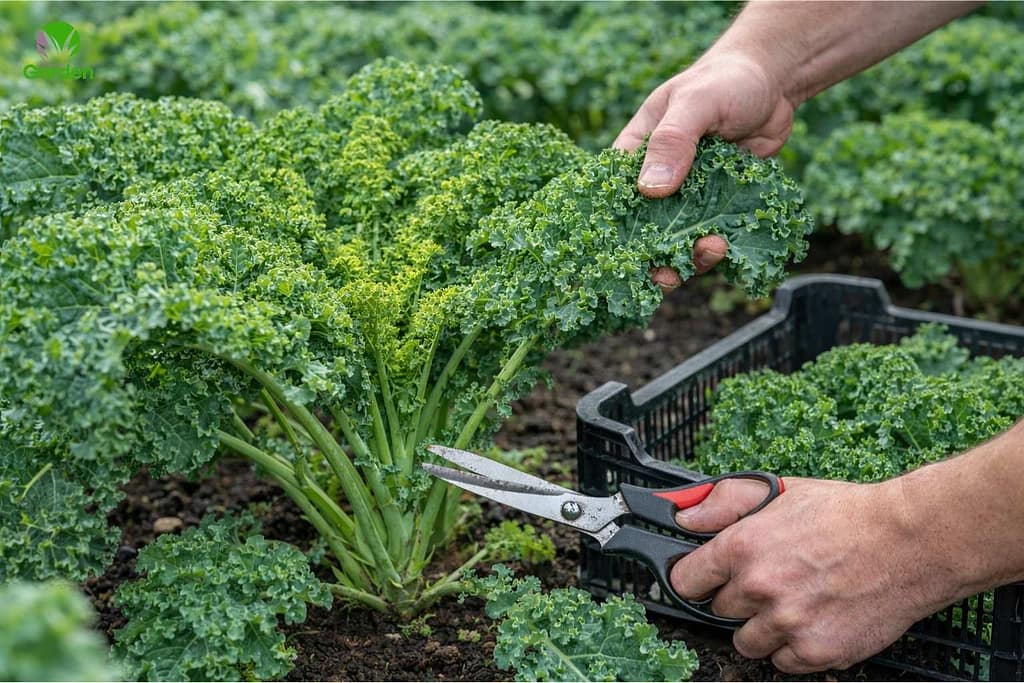
Kale should be harvested little and often to keep plants productive. Always pick the outer leaves first, leaving the central growing point intact.
Avoid stripping all leaves from a plant at once. Leaving enough foliage allows continued growth and prevents plants from stalling.
In cold weather, harvesting after frost often improves flavour. Many gardeners find kale becomes sweeter once temperatures drop.
Common Problems When Growing Kale
Kale is generally robust, but problems can still occur. Most issues are linked to stress, overcrowding, or poor growing conditions rather than disease.
Yellowing Leaves
Lower leaves often yellow naturally as plants mature. This is normal and not usually a cause for concern.
Widespread yellowing combined with slow growth may indicate nutrient imbalance, poor soil structure, or water stress earlier in the season.
Pest Damage
Kale can be affected by the same pests as other brassicas. Healthy plants usually tolerate some damage without serious impact.
Weak or stressed plants are more vulnerable. Regular inspection and early action help keep pest problems under control.
Kale FAQs
How often can you harvest kale?
Kale can be harvested regularly once established. Picking outer leaves every one to two weeks encourages steady regrowth without weakening the plant.
Does kale grow back after cutting?
Yes, as long as the central growing point is left intact. Removing only mature outer leaves allows the plant to keep producing new growth over a long season.
Is kale better after frost?
Many kale varieties taste sweeter after frost. Cold conditions convert some starches to sugars, improving flavour, particularly in winter-hardy types.
A Sensible Place to Start
Kale is one of the easiest brassicas to grow well in UK gardens. It does not demand perfection, but it does respond to steady care and enough space.
Choose a variety suited to your garden, prepare the soil properly, and harvest regularly. With those basics in place, kale will provide a reliable supply of fresh leaves for much of the year.