

If you want stronger growth, better drainage and more reliable harvests, the first thing to understand is your soil type. In UK gardens, most problems with vegetables can be traced back to soil structure rather than fertiliser or watering mistakes.
Before trying to improve soil, add compost, or fix drainage, you need to know whether you are working with clay, sandy soil or loam. Each behaves very differently in spring, especially when temperatures are still low.
This guide explains how to identify your soil type using simple at-home tests, what the results mean, and how to adjust your planting approach accordingly.
Why Soil Type Matters in UK Gardens
The UK has a wide range of soil types. Heavy clay is common across the Midlands and parts of the South East. Sandy soils are frequent in coastal areas. Loam, the ideal balance, is less common than many gardeners assume.
Your soil type affects:
- Drainage speed
- Soil temperature in spring
- Nutrient retention
- Root development
- Compaction risk
For example, clay soil warms up slowly in spring, which can delay planting even if frost risk has passed. This is one of the reasons vegetables sometimes appear slow to grow, especially in early season conditions.
If you have experienced slow early development, see Why Vegetable Plants Grow Slowly in UK Gardens for a deeper explanation.
The Three Main Soil Types Explained
Clay Soil
Clay soil contains very fine particles. It holds water well but drains slowly and compacts easily.
Common signs of clay soil:
- Sticky when wet
- Hard and cracked when dry
- Forms solid lumps
- Water sits on the surface after rain
Clay soil often benefits from structure improvement rather than sand addition. If drainage is poor, see How to Improve Garden Drainage in UK Soil.
Sandy Soil
Sandy soil contains larger particles. It drains quickly and warms up faster in spring, but nutrients can wash away easily.
Common signs of sandy soil:
- Loose and gritty texture
- Dries out quickly
- Does not hold shape when squeezed
- Water drains through rapidly
Sandy soils can struggle with moisture retention and may require consistent organic matter addition to improve structure.
Loam Soil
Loam is a balanced mix of sand, silt and clay. It drains well but retains enough moisture for steady growth.
Signs of loam:
- Crumbly texture
- Holds shape lightly when squeezed
- Breaks apart easily
- Drains steadily without pooling
True loam is less common than many gardeners assume. Many gardens described as “loamy” are actually clay-based with organic matter mixed in.
Simple Soil Identification Tests You Can Do at Home
You do not need laboratory testing to understand your soil type. These simple practical tests give reliable results for most UK gardens.
The Squeeze Test
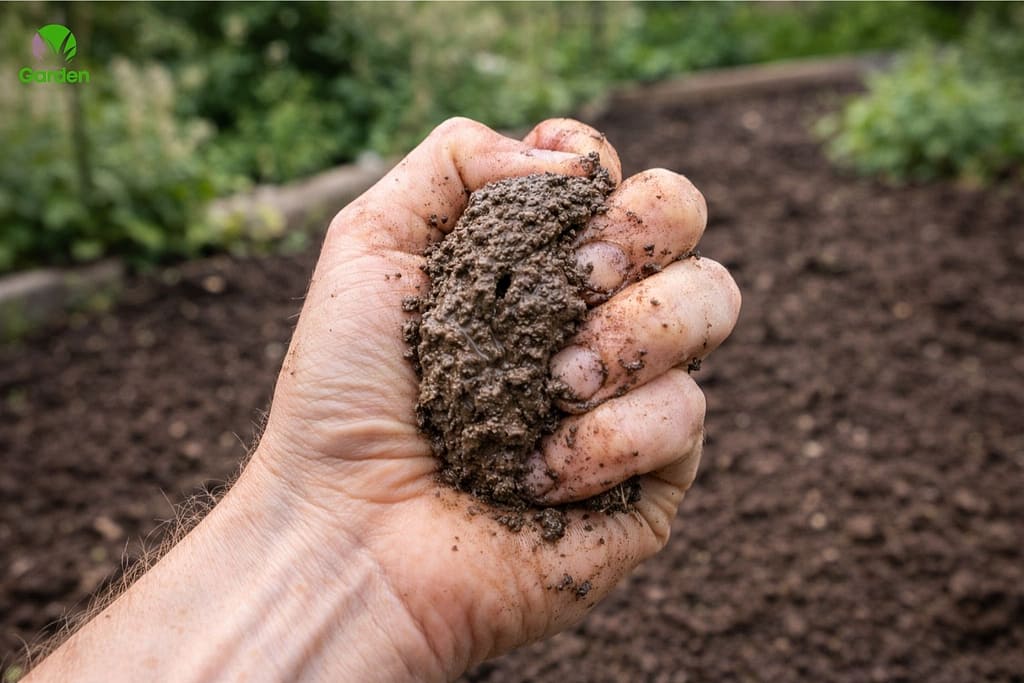
This is the quickest way to get an initial idea of your soil structure.
- Dig a small handful of moist soil from 10–15cm below the surface.
- Remove stones and debris.
- Squeeze it firmly in your palm.
Observe what happens:
- If it forms a tight, sticky ball that does not crumble → likely clay.
- If it barely holds together and falls apart → likely sandy.
- If it forms a soft ball that crumbles easily → likely loam.
This test is most accurate when soil is slightly damp but not waterlogged.
The Ribbon Test
Take a small amount of moist soil and press it between your thumb and forefinger to form a ribbon.
- If you can form a ribbon longer than 5cm before it breaks → high clay content.
- If it barely forms a ribbon → sandy soil.
- If it forms a short ribbon and breaks easily → loam or silt loam.
Clay soils are flexible and cohesive. Sandy soils lack binding strength.
The Drainage Observation Test
Dig a hole around 30cm deep and fill it with water.
- If water drains within 1 hour → sandy soil.
- If it takes 2–4 hours → balanced soil.
- If water remains after 6+ hours → clay or compacted soil.
Slow drainage may also indicate compaction rather than pure clay content. If you suspect compaction, read Compacted Soil in UK Gardens.
Why Many UK Gardens Have Mixed Soil Types
It is common for UK gardens to have layered soil conditions.
For example:
- Topsoil improved with compost
- Clay subsoil underneath
- Compacted layers from construction
This means surface texture alone does not always tell the full story. Always dig below the top 10cm to check deeper structure.
In the next section, we will look at the jar test method for a more visual breakdown of sand, silt and clay proportions — and explain how soil type directly affects planting timing in spring.
The Jar Test: A Simple Way to See Your Soil Structure Clearly
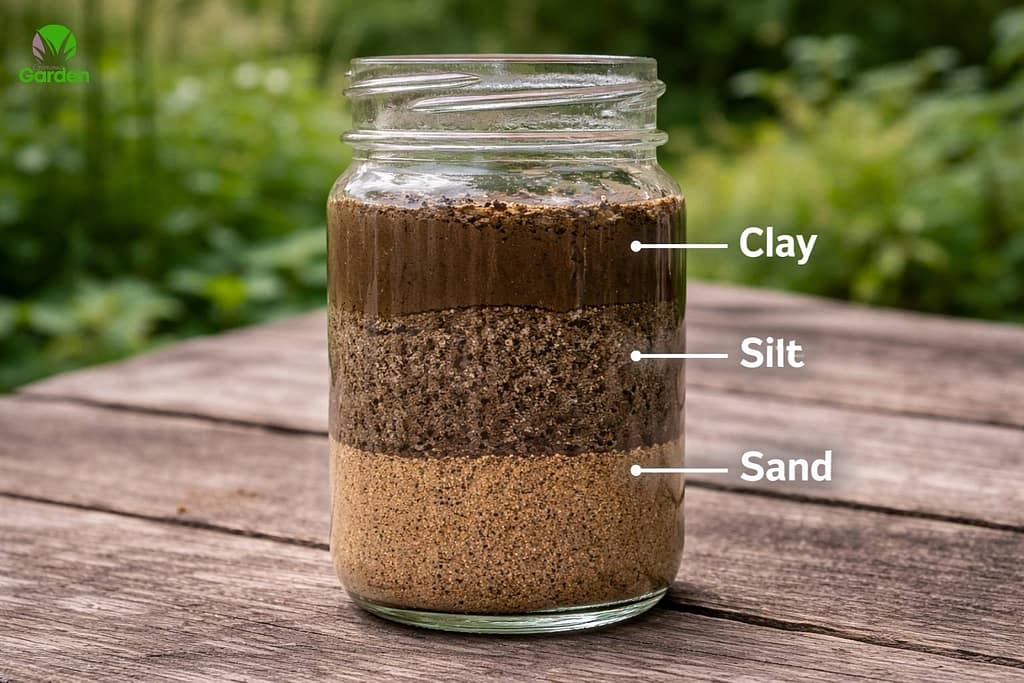
If you want a clearer visual breakdown of your soil composition, the jar test is one of the most reliable methods you can do at home. It separates soil into visible layers of sand, silt and clay.
How to Do the Jar Test
- Collect soil from 15–20cm below the surface.
- Remove stones, roots and debris.
- Fill a clear jar about one-third full with soil.
- Add water until the jar is nearly full.
- Shake thoroughly for 1–2 minutes.
- Leave it to settle for 24–48 hours.
As the soil settles, it separates into layers.
- Bottom layer: Sand (heaviest particles)
- Middle layer: Silt
- Top layer: Clay (finest particles)
The thickness of each layer gives you a rough estimate of your soil type.
Interpreting the Results
- If sand makes up most of the jar → sandy soil.
- If clay forms a thick top layer → clay-heavy soil.
- If layers are fairly balanced → loam or sandy loam.
This test gives more clarity than the squeeze test alone, especially in gardens where soil has been previously improved with compost.
What Is Silt and Why It Matters
Silt particles are smaller than sand but larger than clay. They feel smooth, almost flour-like when dry.
Silt-heavy soils can appear similar to clay but drain slightly better. They still compact easily and can crust over after heavy rain.
If you frequently notice surface crusting or slow drainage after rain, your soil may contain significant silt or clay content.
Persistent surface water may also indicate structural issues rather than pure soil type. If this sounds familiar, see How to Improve Garden Drainage in UK Soil.
How Soil Colour Can Offer Clues
Soil colour often gives hints about composition and drainage.
Dark Brown or Black Soil
Usually indicates higher organic matter content. Often found in improved beds or long-established gardens.
Yellow or Pale Brown Soil
Often sandy or low in organic matter.
Grey or Blue-Tinted Soil
May indicate poor drainage or long-term waterlogging.
If your soil frequently remains wet, compacted or cold in spring, compaction may be contributing. See Compacted Soil in UK Gardens for practical guidance.
How Soil Type Affects Spring Planting in the UK
Understanding your soil type becomes especially important in early spring.
Clay Soil in Spring

- Warms slowly
- Drains poorly after winter rain
- Can delay safe planting dates
Even if frost risk has passed, cold clay soil can stall plant growth. This is why planting decisions should combine frost timing with soil readiness.
To understand frost timing in your area, refer to UK Last Frost Dates by Postcode.
Sandy Soil in Spring
- Warms quickly
- Drains fast
- May dry out rapidly
This can allow slightly earlier planting compared to clay-heavy gardens, but moisture management becomes more important later.
Loam in Spring
- Warms steadily
- Drains consistently
- Offers balanced moisture retention
Loam gives the widest planting window and most predictable growth pattern.
Why Many Soil Problems Are Misdiagnosed
Gardeners often assume poor growth is due to lack of fertiliser. In reality, soil structure is frequently the underlying issue.
Common misdiagnoses include:
- Feeding plants when drainage is the problem
- Adding sand to heavy clay (which can worsen structure)
- Overwatering sandy soil
- Ignoring compacted subsoil layers
If vegetables appear weak or slow even after feeding, soil structure is likely limiting root development. This is explored further in Why Vegetable Plants Grow Slowly in UK Gardens.
How to Identify Soil Layers in Established Gardens
Many UK gardens, especially new builds, have disturbed soil profiles.
You may find:
- Thin improved topsoil layer
- Dense clay subsoil beneath
- Construction compaction
Dig a small inspection hole at least 30cm deep to observe layering. If the lower layer is dense and sticky, roots may struggle to penetrate.
In the final section, we will look at how to improve each soil type properly, what not to do, and how to create better structure over time without damaging existing soil biology.
How to Improve Clay Soil in UK Gardens
Clay soil is often viewed as a problem, but it can be highly fertile once its structure improves. The key is not to try to change clay into sand, but to improve aggregation and airflow.
Do Not Add Sand to Clay
Adding sand to heavy clay is a common mistake. Unless added in very large volumes, sand can combine with clay to create a dense, cement-like texture.
Instead, focus on organic matter.
Add Organic Matter Regularly
- Well-rotted compost
- Leaf mould
- Well-rotted manure
- Green manure crops
Organic matter helps separate clay particles and improve structure over time.
If drainage remains a persistent issue, see How to Improve Garden Drainage in UK Soil for structural solutions.
Avoid Working Clay When Wet
Walking on or digging clay soil when saturated compresses particles and worsens compaction. If your soil feels sticky and leaves marks on tools, wait until it dries slightly.
Compaction is a separate but related issue. If soil feels dense below the surface, refer to Compacted Soil in UK Gardens.
How to Improve Sandy Soil
Sandy soils drain quickly and warm up early, but they often struggle to retain moisture and nutrients.
Increase Organic Matter
Regular additions of compost improve water retention and nutrient holding capacity.
- Apply compost annually
- Use mulches during dry spells
- Consider green manure crops over winter
Water Little and Often
Large infrequent watering can wash nutrients beyond root zones in sandy soils. Smaller, consistent watering supports steady growth.
How to Maintain and Improve Loam
If you are fortunate enough to have loam, the goal is maintenance rather than transformation.
- Add compost lightly each year
- Avoid excessive digging
- Prevent compaction by limiting foot traffic
- Rotate crops to support soil health
Even loam can become compacted or structurally weak if neglected.
How Soil Type Affects Planting Windows
Soil type influences when you can safely plant in spring.
Clay Soil
May remain cold and wet even after frost risk has passed. Check soil temperature before planting tender crops.
Sandy Soil
May allow earlier planting but dries quickly during warm spells.
Loam
Provides the most predictable early-season planting conditions.
Always combine soil readiness with frost timing. If you are unsure of your frost window, use our UK Last Frost Date Checker or read the full UK Last Frost Dates by Postcode Guide.
Common Soil Improvement Mistakes
- Adding sand to clay without large volumes
- Digging soil when waterlogged
- Assuming fertiliser fixes structural problems
- Ignoring subsoil compaction
- Overworking soil every year
Many growth problems that appear to be feeding issues are actually structural. If plants remain weak despite feeding, soil condition is often the limiting factor.
This is especially noticeable in early spring when cold, heavy soil delays root development, even after the average last frost date has passed.
Building Better Soil Structure Over Time
Improving soil is a gradual process. Quick fixes rarely deliver lasting results.
Focus on:
- Consistent organic matter addition
- Minimal compaction
- Crop rotation
- Protecting soil from heavy rain exposure
Within two to three seasons, structure typically improves noticeably.
UK Garden Soil Type – Frequently Asked Questions
How can I tell if my garden soil is clay?
Clay soil feels sticky when wet and forms a firm ball when squeezed. It often drains slowly and can crack when dry. You can also perform a jar test to confirm high clay content.
How do I know if my soil is sandy?
Sandy soil feels gritty, drains quickly and does not hold its shape when squeezed. In a jar test, sand settles quickly and forms a thick bottom layer.
What is loam soil?
Loam is a balanced mix of sand, silt and clay. It feels crumbly, holds shape lightly when squeezed and drains steadily without pooling.
What is the jar test for soil?
The jar test involves shaking soil with water in a clear container and allowing it to settle. Sand sinks first, followed by silt, with clay forming the top layer. This shows your soil composition visually.
Does soil type affect when I can plant vegetables?
Yes. Clay soils warm slowly in spring and may delay planting even after frost risk has passed. Sandy soils warm faster but dry out more quickly.
Can I turn clay soil into loam?
You cannot instantly change clay into loam. However, adding organic matter consistently over several seasons improves structure and drainage.
Why do vegetables grow slowly in heavy soil?
Heavy soil restricts airflow and root movement. Cold, compacted soil slows early growth even if plants receive enough nutrients.
A Sensible Place to Start
Begin by performing the squeeze test and jar test to confirm your soil type. Do not assume your soil is loam without checking.
Once identified, adjust your approach accordingly. Add organic matter regularly, avoid digging when soil is saturated, and combine soil readiness with accurate frost timing before planting tender crops.
This steady, informed approach removes guesswork and gives your vegetables a stronger foundation for healthy growth throughout the season.