

Poor lawn drainage is one of the most common problems UK gardeners face, particularly from autumn through spring. After rainfall, lawns turn muddy, water pools on the surface, and grass becomes thin or patchy. While it often gets blamed on heavy rain, the real issue is usually the soil beneath the grass struggling to move water and air properly.
A healthy lawn should absorb rain steadily, hold enough moisture for grass roots, and allow excess water to drain away. When drainage is poor, water sits in the root zone, oxygen levels drop, and grass roots weaken. Over time this leads to moss invasion, bare patches, and a lawn that never fully recovers.
This guide focuses on why lawns in the UK so often suffer drainage problems and how to improve lawn drainage naturally. For a full overview of how drainage works across beds, borders, and different soil types, see our main guide on garden drainage problems in the UK. The goal is not to dry your lawn out completely, but to restore soil structure so water can move through the soil while still supporting healthy grass growth.
Quick Answers
Why is my lawn always soggy after rain?
Most soggy lawns in the UK are caused by compacted soil, heavy clay, low organic matter, or surface sealing that stops water soaking into the ground.
What is the fastest way to improve poor lawn drainage?
Aerating compacted soil and adding organic matter as a topdressing usually delivers the quickest improvement.
Do I need a drainage system to fix a waterlogged lawn?
Often no. Many lawn drainage problems improve naturally once compaction is reduced and soil structure is rebuilt.
How long does it take to fix poor lawn drainage?
Small improvements can appear within weeks, but lasting drainage change usually takes one to three seasons of consistent care.
Why lawn drainage problems are so common in the UK

The UK’s climate creates ideal conditions for lawn drainage issues. Regular rainfall, mild winters, and long damp periods mean soil often stays moist for months at a time. When soil structure is weak or compacted, it quickly becomes saturated.
Unlike regions with long dry seasons that naturally restore soil structure, UK lawns rarely get a full drying period. Any compaction or structural weakness builds up year after year, gradually reducing infiltration.
The most common causes of poor lawn drainage include:
- soil compaction from foot traffic and mowing
- heavy clay holding water tightly
- low organic matter levels
- surface sealing after rain
- natural dips where water collects
Most soggy lawns suffer from more than one of these problems at the same time.
What happens to grass roots in a waterlogged lawn
Drainage problems damage lawns from the roots up.
Healthy soil contains air spaces between particles that hold oxygen. Grass roots rely on that oxygen to grow, absorb nutrients, and stay disease-resistant. When soil becomes saturated, those air spaces fill with water and oxygen levels fall rapidly.
As a result:
- roots weaken and die back
- nutrient uptake slows
- grass growth becomes thin and slow
- moss thrives in low-oxygen conditions
- bare patches develop easily
This is why feeding a soggy lawn rarely fixes the problem. Until roots can breathe, fertiliser offers little benefit.
Clear signs your lawn isn’t draining properly
Some drainage issues are obvious, while others build gradually.
Surface signs
- standing water after rainfall
- muddy areas that never fully dry
- footprints filling with water
- soft, spongy ground underfoot
Grass health signs
- yellowing or pale grass
- slow spring recovery
- moss spreading rapidly
- thin or bare patches
A simple lawn drainage test
You can quickly check how well your lawn drains using a simple soil test.
Dig a small hole around 30cm deep in the lawn. Fill it with water once and let it drain away completely. Then fill it again and time how long it takes to drain.
As a rough guide:
- Under 4 hours – drainage is reasonable
- 4 to 8 hours – restricted drainage
- 8 to 24 hours – poor drainage
- Over 24 hours – very poor drainage
Test more than one spot, as compaction and soil conditions often vary across a lawn.
Why quick lawn drainage fixes often fail
Many people try spiking the lawn once, adding sand, or installing small trenches to solve soggy grass. These may offer short-term improvement but usually fail to fix the underlying soil structure.
Without improving compaction and rebuilding soil health, water continues to sit in the root zone and drainage problems return every wet season.
The most reliable long-term improvement nearly always comes from improving how the soil itself handles water.
The real causes behind poor lawn drainage
Most soggy lawns in the UK suffer drainage problems for the same reasons as poor garden drainage in beds and borders — but lawns are even more vulnerable because of constant traffic and mowing.
Understanding which of these causes applies to your lawn makes fixing drainage far easier and more effective.
1) Compacted soil beneath the grass
Compaction is the single biggest reason lawns stop draining properly. Over time, foot traffic, mowing, children playing, pets, and garden equipment press soil particles tightly together.
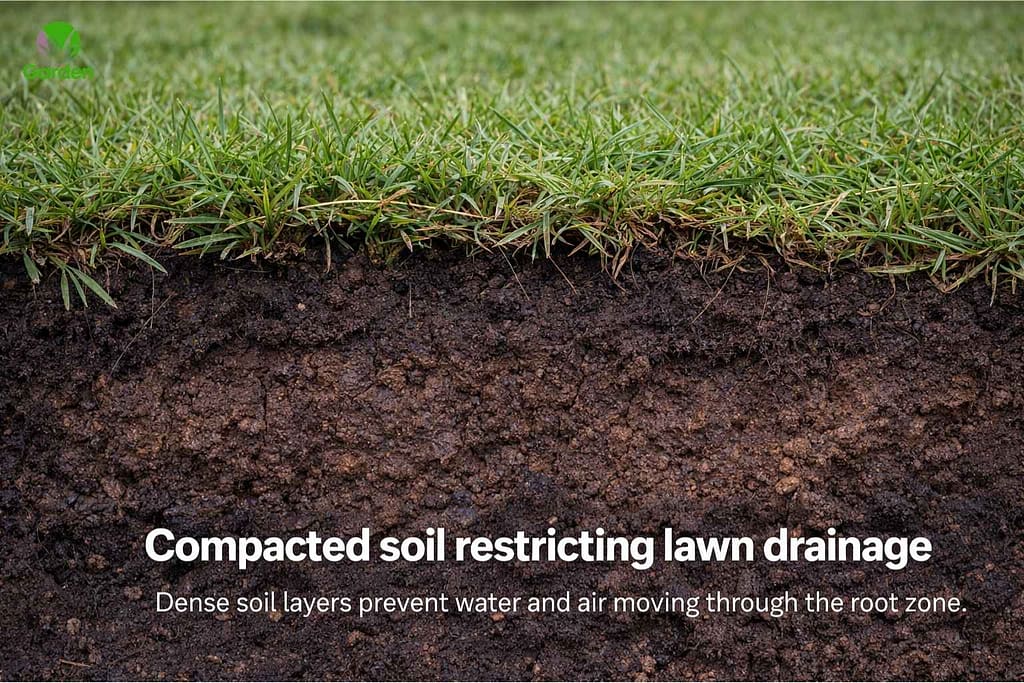
As pore spaces collapse, water can no longer soak in easily and oxygen cannot reach the roots. Even moderate rainfall can then leave lawns saturated.
Common signs of lawn compaction include:
- water sitting on the surface after rain
- soft muddy patches that never dry properly
- grass with shallow weak roots
- hard resistance a few inches down when using a fork
In many lawns, a compacted layer forms between 5–10cm below the surface. Water drains until it reaches this layer, then spreads sideways and remains trapped.
2) Heavy clay soil slowing infiltration
Many UK lawns sit on clay-rich soils. If heavy clay is part of the issue, see our detailed guide on improving drainage in clay soil. Clay particles are extremely fine and naturally hold water tightly, slowing drainage even in good conditions.
When clay becomes compacted or low in organic matter, drainage becomes far worse. Instead of forming stable crumbs, clay collapses into dense plates that resist both water and air movement.
Clay lawns typically show:
- sticky soil in winter
- hard cracking soil in summer
- slow warming in spring
- persistent puddling after rain
Clay itself is not poor soil — but it needs structure and gentle care to drain effectively.
3) Low organic matter in lawn soil
Lawns often receive fertiliser but little organic matter. Over time, this leads to soil that feeds grass but lacks structure.
Organic matter is what allows soil particles to bind into stable aggregates that create pore spaces. Without it, soil collapses into dense mass and drainage declines.
Signs of low organic matter in lawns include:
- rapid compaction after rain
- surface crusting
- poor infiltration
- weak root depth
Rebuilding organic matter is essential for lasting lawn drainage improvement.
4) Surface sealing on fine lawn soils
After heavy rainfall, fine soil particles can wash into a thin dense crust on the lawn surface. This sealing layer slows water infiltration dramatically.
Surface sealing is more likely when:
- organic matter is low
- soil structure is weak
- lawns are bare or thin in patches
- rainfall is heavy and persistent
Once sealed, water runs off or pools instead of soaking in.
5) Low spots where water naturally collects
Some lawn drainage problems are caused simply by garden shape.
Lawns at the bottom of slopes, dips in ground level, or areas where runoff flows naturally will collect more water than surrounding soil can absorb.
In these areas, even improved soil may struggle unless water flow is redirected slightly.
Fixing poor lawn drainage starts with soil structure
Before thinking about drains or major landscaping, it’s worth knowing that most lawn drainage issues improve dramatically when soil structure is restored.
Healthy lawn soil should:
- absorb rainfall steadily
- hold enough moisture for grass roots
- allow surplus water to drain downward
- maintain air spaces for oxygen
To achieve this, three foundations matter most:
- reducing compaction
- adding organic matter
- protecting the soil surface
The most effective way to reduce lawn compaction
Aeration is the single most powerful tool for improving lawn drainage.
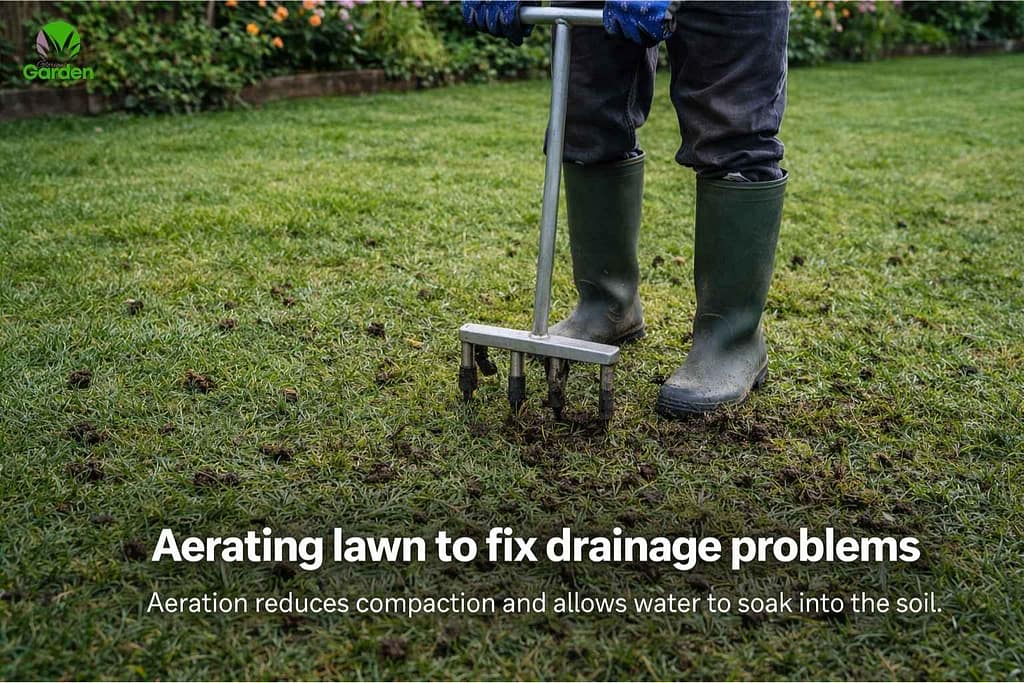
It physically creates space in compacted soil, allowing air and water to move back into the root zone.
Hollow-tine aeration (best long-term results)
This method removes small plugs of soil from the lawn, leaving open holes that fill with air, water, and organic material.
Benefits include:
- real space for roots to grow deeper
- improved infiltration after rain
- reduced surface sealing
- longer-lasting results than spiking
Hollow-tine aeration is ideal in spring or early autumn when grass is actively growing.
Solid spiking (useful but temporary)
Spiking pushes holes into the soil without removing plugs. It can improve infiltration short term but often closes up again quickly in compacted ground.
It works best when combined with organic topdressing.
Using organic matter to permanently improve lawn drainage
Once aeration opens pathways in the soil, organic matter helps keep them open long term.
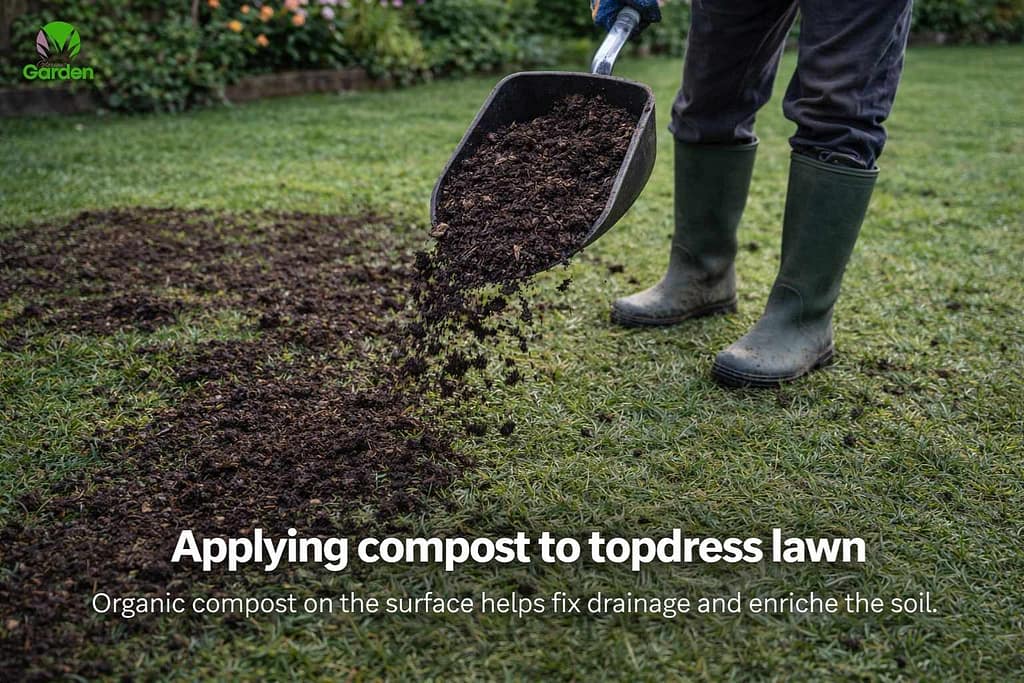
Topdressing lawns with compost or fine organic material:
- feeds soil organisms
- improves aggregation
- prevents compaction returning quickly
- boosts root depth and health
Apply a thin layer of compost and brush it into aeration holes and across the lawn surface.
Over time, this transforms dense lawn soil into a structure that drains naturally.
Preventing lawn soil from sealing after heavy rain
Even when compaction is reduced and organic matter is added, poor drainage can persist if the lawn surface keeps sealing over after rainfall.
Surface sealing happens when fine soil particles break down and pack tightly at the surface, forming a thin crust that blocks water from soaking in.
This is common on lawns with low organic matter, weak structure, or thin grass cover.
How to stop lawn surface sealing
- aerate regularly to keep pores open
- topdress with compost to improve structure
- keep grass reasonably thick and healthy
- avoid mowing when soil is wet
- limit heavy foot traffic in soft conditions
These small habits greatly improve infiltration during wet weather.
Managing excess water flow across lawns
Some lawns struggle not only because of poor soil structure, but because too much water flows onto them from surrounding areas.
This often happens near:
- roofs and downpipes
- patios and driveways
- paths that slope toward grass
- higher ground in the garden
Redirecting this water reduces how much the lawn needs to absorb.
Simple runoff management that helps drainage
- direct downpipes into water butts or soakaway areas
- create shallow gravel channels to guide water away
- slightly reshape low spots that collect water
- break up large paved areas where possible
Even small adjustments can dramatically reduce waterlogging.
When lawn drainage systems become useful
Most lawn drainage problems improve through soil-first methods. If standing water is affecting larger areas beyond the lawn, you may also need to address a waterlogged garden more broadly. However, in some gardens the volume of water is simply too high for soil alone to handle.
You may need engineered drainage if:
- water sits on the lawn for days after rain
- the garden sits in a natural hollow
- groundwater levels are high
- runoff consistently floods one area
Options such as French drains or soakaways can help redirect water away from problem zones.
Even with drainage systems, continuing soil improvement is essential for healthy grass roots.
How long it takes to fix poor lawn drainage
Some improvements appear quickly, especially after aeration and runoff control.
Typical timelines in UK gardens look like:
- weeks: better surface infiltration
- months: firmer lawn and fewer puddles
- 1 year: noticeably healthier root zone
- 2–3 years: strong, resilient soil structure
The key is consistency rather than dramatic one-off treatments.
Common mistakes that keep lawns soggy
- working or mowing when soil is wet
- spiking without adding organic matter
- adding sand instead of compost
- allowing repeated foot traffic on soft ground
- expecting instant permanent fixes
Gentle regular care always outperforms harsh interventions.
How improved drainage transforms lawn health
Once water can move properly through the soil, lawn performance improves dramatically.
Gardeners typically notice:
- faster spring recovery
- thicker grass growth
- less moss invasion
- fewer muddy patches
- better drought tolerance in summer
Fixing drainage doesn’t just remove puddles — it creates a stronger, more resilient lawn year round.
Frequently Asked Questions About Poor Lawn Drainage
What causes a lawn to become waterlogged in the UK?
Waterlogged lawns are usually caused by compacted soil, heavy clay, low organic matter, surface sealing after rain, and frequent rainfall that prevents excess water draining away.
Does aerating a lawn really improve drainage?
Yes. Aeration reduces soil compaction, creates air spaces for water movement, and encourages deeper root growth, which improves drainage over time.
How often should I aerate a soggy lawn?
Most UK lawns benefit from aeration once a year, ideally in spring or early autumn. Very compacted lawns may benefit from twice-yearly treatment.
Will adding compost help poor lawn drainage?
Yes. Compost improves soil structure, increases pore space, and helps prevent compaction returning after aeration.
Is sand good for improving lawn drainage?
Usually not. Small amounts of sand mixed into compacted or clay soil can worsen drainage. Organic matter works far better long term.
When should I consider installing lawn drainage systems?
Drainage systems may help when water consistently sits for days, the lawn sits in a low point, or runoff overwhelms soil absorption despite improvement efforts.
A sensible place to start
If your lawn regularly becomes soggy, begin with aeration and organic matter. Reduce compaction, protect soil structure, and manage water flow where needed.
Most UK lawns respond extremely well to these natural methods, and improvement continues each season with minimal ongoing effort.