

Keeping vegetable plants healthy in UK gardens can feel challenging, especially with unpredictable weather, heavy soils, and common growing mistakes that affect roots, drainage, and moisture levels. Many gardeners water regularly, feed often, and still see yellow leaves, slow growth, wilting, or crops failing to form properly.
In most cases, these problems aren’t caused by a lack of effort — they come from soil structure, incorrect watering habits, compacted ground, and stress from changing UK conditions. Once you understand how these factors affect plant health, growing strong, productive vegetables becomes far simpler and far more reliable.
This practical guide explains how to keep vegetable plants healthy in the UK, the most common causes of plant problems, and what actually works to fix them — without complicated techniques or constant feeding.
Quick Answers: Vegetable Plant Health in UK Gardens
Why do vegetable plants struggle in UK gardens?
Most problems come from poor soil structure, compacted ground, and incorrect moisture balance rather than lack of feeding.
How often should vegetables be watered in the UK?
Deep watering less often works better than little and often, especially once soil structure improves.
What’s the fastest way to improve unhealthy plants?
Protect soil structure and add organic matter regularly to stabilise moisture and root health.
Why do plants wilt even when soil is wet?
Waterlogged roots can’t absorb moisture properly, leading to wilting despite wet soil.
Why Vegetable Plants Struggle in UK Gardens (Even When You’re Doing Everything Right)
Most UK gardeners don’t lose plants because they don’t care.
They water regularly.
They add compost.
They follow advice from gardening books and online guides.
Yet vegetables still wilt, yellow, stall, rot, or fail to crop properly.
This leads to frustration and the feeling that gardening is harder than it should be.
In reality, most vegetable plant problems in UK gardens come from a small number of underlying issues:
• poor soil structure
• incorrect moisture balance
• compacted or waterlogged ground
• stressed root systems
• weather pressure
• well-intended but damaging habits
Once you understand how these factors interact, plant health becomes much easier to manage.
Healthy plants aren’t created by constant intervention.
They’re created by stable growing conditions.
What “Healthy Vegetable Plants” Really Look Like in UK Gardens
Healthy vegetable plants are not perfect plants.
In UK conditions, even strong plants will occasionally:
• lose a leaf after heavy rain
• slow down during cold spells
• look slightly stressed during heatwaves
• recover gradually after transplanting
What matters is not that plants never struggle — it’s that they recover quickly and keep growing steadily.
Healthy plants usually show:
• consistent leaf colour
• steady new growth
• firm stems
• strong root systems
• gradual flowering and cropping
• fewer serious pest problems
Unhealthy plants tend to show repeating issues:
• yellowing leaves that spread
• sudden wilting in warm weather
• poor growth despite feeding
• roots staying shallow or distorted
• crops failing to form properly
The difference almost always comes back to growing conditions rather than products.
The Five Foundations of Vegetable Plant Health in the UK
Nearly every plant problem in UK gardens links back to one or more of these foundations.
Understanding them makes diagnosing issues much simpler.
1. Soil Structure (The Hidden Key to Plant Health)
Soil is not just something plants sit in.
Healthy soil contains:
• solid particles
• air spaces
• water channels
• living organisms
These spaces allow roots to breathe, water to move, and nutrients to be accessed naturally.
When soil structure collapses through compaction, over-digging, or constant wetness:
• roots struggle to grow
• water pools or drains poorly
• oxygen levels drop
• soil life declines
Plants grown in poorly structured soil are permanently stressed — even when watered and fed.
This is why many gardeners experience ongoing problems that never fully improve.
2. Moisture Balance (More Important Than Feeding)
In UK gardens, moisture mismanagement causes more plant problems than nutrient shortages.
Roots need moisture — but they also need air.
Problems appear when soil is:
Too wet:
• roots suffocate
• rot increases
• nutrients become unavailable
• growth stalls
Too dry:
• roots shut down
• leaves wilt
• flowering drops
• crops remain small
The goal is even, steady moisture, not constant watering.
Well-structured soil helps regulate moisture naturally, which is why soil health always comes first.
3. Root Health (Where Most Problems Begin)
Everything above ground depends on what happens below.
Healthy roots:
• grow deep
• spread freely
• access moisture evenly
• absorb nutrients gradually
Stressed roots:
• remain shallow
• twist or thicken
• rot easily
• struggle after transplanting
Common root stress causes in UK gardens include:
• compacted soil layers
• waterlogged conditions
• frequent disturbance
• sudden drying after heavy watering
• cold spring soils
When roots struggle, plants show symptoms everywhere else.
4. Weather Stress (The UK Factor Many Guides Ignore)
UK gardens face unique stress patterns:
• long wet winters
• cold springs
• sudden heatwaves
• inconsistent rainfall
These conditions repeatedly challenge plants.
Healthy soil buffers weather stress by:
• draining excess water
• holding moisture during dry spells
• warming gradually in spring
• supporting strong root systems
Poor soil amplifies every weather problem.
This is why two neighbouring gardens can behave completely differently.
5. Gardening Habits (Often the Hidden Cause)
Many plant health problems come from good intentions.
Common habits that stress plants include:
• watering little and often
• digging frequently
• working soil when wet
• feeding heavily to “boost” growth
• walking on beds
• planting too early into cold soil
These actions often:
• damage structure
• compact soil
• stress roots
• encourage weak growth
Healthy gardens are usually calmer gardens.
Why Chasing Symptoms Rarely Solves Plant Problems
When plants struggle, gardeners often respond by:
• feeding more
• watering more
• spraying pests
• changing products
Sometimes this gives short-term improvement.
But the underlying problem remains.
For example:
Yellow leaves may come from poor drainage, not lack of nutrients.
Wilting may come from waterlogged roots, not dryness.
Slow growth may come from compacted soil, not hunger.
This is why many gardens experience the same problems every year.
Fix the conditions — and most symptoms disappear naturally.
How Strong Plant Health Simplifies Gardening
When the foundations are right:
• watering becomes less frequent
• feeding becomes less necessary
• pests cause less damage
• growth becomes steadier
• harvests improve naturally
Healthy soil and balanced moisture do most of the work.
This is why experienced gardeners often seem relaxed — their systems are stable.
The Most Common Vegetable Plant Problems in UK Gardens
Across UK gardens, the same issues appear again and again:
• yellowing leaves
• wilting despite watering
• slow or stunted growth
• flowers dropping
• poor crop formation
• root problems
• stress after planting
• waterlogging
• drying out too quickly
Each of these has practical, fixable causes.
Over the rest of this guide, we’ll walk through:
• why these problems happen
• how to identify the real cause
• what actually improves conditions
Without quick fixes, complicated science, or constant intervention.
A Calm Approach That Works Long-Term
Plant health is not about reacting faster.
It’s about creating conditions that support steady growth.
That means:
• improving soil gradually
• managing moisture more evenly
• reducing disturbance
• working with UK weather patterns
• letting roots and soil life do their job
Once these systems are in place, gardening becomes far easier.
And most problems quietly fade away.
How to Diagnose Vegetable Plant Problems Properly (Before Trying to Fix Them)
One of the biggest mistakes gardeners make is trying to fix a problem before understanding what’s actually causing it.
In UK gardens, many symptoms look similar but come from very different issues.
For example:
Wilting can mean:
• dry soil
• waterlogged roots
• compacted ground
• cold soil stress
Yellow leaves can mean:
• poor drainage
• nutrient lock-up
• overwatering
• root damage
• natural leaf ageing
If you treat all wilting as “needs water” or all yellowing as “needs feeding”, you often make the problem worse.
Instead, good diagnosis starts with looking at three simple things:
• the soil
• the roots (when possible)
• recent weather and habits
Step 1: Check the Soil First (Always)
Before looking at leaves or reaching for fertiliser, look at the soil.
Ask:
Is the soil wet and sticky?
Is it dry a few centimetres down?
Does water sit on the surface after rain?
Does the soil crumble or smear when handled?
These clues tell you far more than leaf colour alone.
What wet soil usually means
If soil stays wet long after rain:
• roots may be suffocating
• structure may be collapsed
• compaction may be blocking drainage
Plants in wet soil often show:
• wilting in sunshine
• yellowing lower leaves
• slow growth
• root rot
Water alone is rarely the fix.
What very dry soil usually means
If soil dries quickly:
• roots struggle to access moisture
• nutrients wash through easily
• plants swing between stress and recovery
Common signs:
• sudden wilting in warm weather
• leaf curl
• slow steady growth
• poor flowering
This is common in sandy or low-organic-matter soils.
Step 2: Consider Root Health (Even Without Digging Plants Up)
You don’t need to uproot everything, but occasionally checking a struggling plant can be revealing.
Healthy roots usually:
• look pale or white
• spread freely
• feel firm
Stressed roots may:
• appear brown or slimy
• stay short and stubby
• twist sideways
• smell unpleasant
Root issues almost always link back to:
• moisture imbalance
• compaction
• disturbance
• cold wet soil
When roots suffer, the plant above always follows.
Step 3: Look at Recent Conditions and Habits
Many plant problems appear after:
• heavy rainfall
• heatwaves
• cold spells
• overwatering
• digging
• transplanting
Ask yourself:
What changed recently?
Most issues trace back to a recent stress event.
The Most Common Diagnosis Errors in UK Gardens
Understanding these avoids years of frustration.
Mistake 1: Treating every yellow leaf as hunger
In UK soils, nutrients are often present but unavailable due to:
• waterlogging
• poor structure
• root stress
Feeding more doesn’t fix this — it often worsens it.
Mistake 2: Watering whenever plants wilt
Wilting in warm weather doesn’t always mean dry soil.
Roots in waterlogged ground can’t absorb moisture properly, even when soil is wet.
This creates a dangerous cycle of overwatering.
Mistake 3: Digging to “fix” problems
Digging often:
• breaks structure
• collapses air spaces
• increases compaction later
Short-term looseness frequently leads to long-term stress.
Why Prevention Is Easier Than Cure
Most plant problems are easier to prevent than fix.
Strong foundations:
• reduce stress
• stabilise moisture
• protect roots
• improve resilience
This is why experienced gardeners focus far more on soil care and timing than on treatments.
Simple Habits That Protect Plant Health in UK Gardens
These quiet actions make the biggest difference:
• avoid walking on beds
• don’t work soil when wet
• water deeply but less often
• mulch lightly to protect moisture
• add organic matter gradually
• reduce disturbance
These habits improve:
• soil structure
• drainage
• root health
• moisture balance
Which in turn improves plant health naturally.
Why Many UK Gardens Struggle Year After Year
Most ongoing plant problems happen because:
• soil never gets time to recover
• compaction builds gradually
• moisture cycles become extreme
• gardeners react to symptoms instead of conditions
Once this cycle is broken, improvement tends to be steady and long-lasting.
What the Rest of This Guide Will Help You Solve
Over the following sections, you’ll learn:
• how water affects roots and growth
• how soil structure supports healthy plants
• how weather stress impacts vegetables
• how to prevent the most common problems
• when intervention helps — and when it harms
Each section links naturally to focused guides on individual problems, so you can go deeper when needed.
How Moisture Really Affects Vegetable Plant Health in UK Gardens
Water is essential for plant growth, but in UK conditions it is also the most common source of stress.
The issue is rarely too little water alone.
It is usually unstable moisture — swinging between wet and dry — that weakens plants.
Healthy soil acts like a buffer.
It absorbs rainfall steadily, releases moisture slowly, and keeps air in the root zone.
Poor soil structure does the opposite.
What Happens When Soil Stays Too Wet
When soil remains saturated:
• air is forced out of the root zone
• roots struggle to breathe
• beneficial microbes slow down
• nutrient uptake drops
Over time this leads to:
• yellowing leaves
• stunted growth
• wilting in warm weather
• increased disease risk
• root rot
Plants may look thirsty even when surrounded by water.
This is one of the most confusing problems for UK gardeners.
What Happens When Soil Dries Too Quickly
In very free-draining or low-organic-matter soil:
• moisture disappears rapidly
• roots experience repeated drought stress
• nutrients wash away quickly
This results in:
• frequent wilting
• slow steady growth
• poor flowering and cropping
• plants needing constant watering
This is common in sandy soils or newly built gardens with thin topsoil.
Why “Little and Often” Watering Often Makes Things Worse
Many gardeners water lightly every day.
This feels helpful — but often causes shallow roots.
Shallow roots:
• dry out faster
• stress quickly in heat
• struggle during wet spells
Deep, infrequent watering encourages:
• deeper root systems
• better drought tolerance
• stronger plant structure
Healthy roots are the backbone of healthy plants.
How Soil Structure Controls Water (Not Just Rainfall)
Two gardens can receive the same rainfall and behave completely differently.
This comes down to soil structure.
Well-structured soil:
• absorbs water steadily
• drains excess slowly
• holds moisture in dry spells
Poorly structured soil:
• pools water on the surface
• drains unevenly
• dries suddenly
• collapses when wet
This instability stresses plants constantly.
Which is why improving soil structure is one of the most powerful plant health tools.
Why Plant Stress Makes Pests and Disease Worse
Stressed plants send chemical signals that attract pests.
They also:
• grow weaker cell walls
• recover slower from damage
• resist disease poorly
Healthy plants are naturally more resistant.
This doesn’t mean pests disappear — but damage becomes far less severe.
How Healthy Soil Creates Healthier Plants Automatically
When soil health improves:
• roots grow deeper
• moisture stabilises
• nutrients release steadily
• microbial life increases
Which leads to:
• stronger growth
• fewer extreme symptoms
• better cropping
• less need for intervention
This is why soil-first gardening feels slower initially but easier every year after.
A Simple Mental Shift That Improves Plant Health Quickly
Instead of asking:
“What should I add?”
Start asking:
“What conditions are stressing my plants?”
This small change leads to far better decisions.
The Three Most Powerful Plant Health Improvements You Can Make
If you do nothing else, focus on these:
1. Protect soil structure
Avoid compaction and over-digging.
2. Stabilise moisture
Water deeply and improve organic matter.
3. Reduce stress events
Work soil at the right time and avoid extremes.
These alone solve the majority of UK plant problems.
Where This Leads Next
Now that you understand:
• why plants struggle
• how soil and moisture control health
• why symptoms repeat
The next step is learning to recognise and fix specific problems calmly.
In the following sections of this guide (and the supporting articles), we’ll cover:
• yellow leaves and what they really mean
• wilting problems explained
• slow growth causes
• flowering and cropping failures
• stress from weather and transplanting
• early signs of disease
Each problem becomes far easier to fix once the foundations are clear.
Common Vegetable Plant Problems in UK Gardens (And What They Actually Mean)
Most plant problems look dramatic, but the causes are usually simple once you understand how soil, moisture, roots, and weather interact.
Rather than reacting quickly, it helps to learn what each symptom is really telling you.
Yellow Leaves on Vegetable Plants (The Most Common UK Issue)
Yellowing leaves are one of the most frequent concerns in UK gardens.
But they do not automatically mean your plants are hungry.
In fact, feeding often makes yellowing worse.
The most common causes of yellow leaves
In UK conditions, yellow leaves usually come from:
• waterlogged soil
• compacted ground
• poor oxygen at the roots
• nutrient lock-up
• natural ageing of lower leaves
When soil stays wet, roots can’t absorb nutrients properly — even if nutrients are present.
This causes deficiency-like symptoms without actual lack of food.
How to tell if yellowing is moisture-related
Check:
• soil wetness a few centimetres down
• whether water pools after rain
• how roots look if you lift a plant
If soil is wet and sticky, focus on drainage and structure, not feeding.
When yellowing really is nutrient-related
True nutrient shortages are more likely when:
• soil is very sandy
• organic matter is low
• heavy rain has washed nutrients away
Even then, improving soil condition works better long-term than frequent feeding.
Wilting Plants That Don’t Recover Easily
Wilting in hot weather is normal.
But plants should recover in the evening.
When they don’t, something else is going on.
Common causes of ongoing wilting
• roots sitting in wet soil
• compacted ground blocking growth
• shallow root systems
• sudden moisture swings
Overwatering is one of the biggest hidden causes of wilting in UK gardens.
Roots suffocate long before leaves dry out.
How to check if wilting is from wet roots
Look for:
• wet soil that smells unpleasant
• brown or slimy roots
• slow recovery after watering
If you see this, reducing watering and improving soil structure is key.
Slow or Stalled Growth (Even When Plants Look Healthy)
Some plants look green but barely grow in UK gardens.
This usually points to root or soil issues.
Common reasons for slow growth
• compacted soil
• cold wet ground in spring
• poor structure
• shallow rooting
• nutrient lock-up
Feeding often produces lush leaves briefly — but growth soon stalls again.
Steady soil improvement works far better.
Flowers That Drop Without Forming Crops
Many UK gardeners experience plenty of flowers but poor harvests.
This is often blamed on lack of pollinators, but that’s rarely the main cause.
More common causes include:
• plant stress from heat or cold
• uneven moisture
• nutrient imbalance
• root restriction
Stressed plants protect themselves by dropping flowers.
Stabilising growing conditions usually solves this naturally.
Leaves Curling or Distorting
Leaf curl is usually a stress response rather than disease.
Common triggers:
• sudden temperature changes
• dry spells followed by heavy watering
• root disturbance
• overfeeding
Once stress reduces, new growth often returns to normal.
Plants That Look Healthy but Don’t Produce Much
Strong leafy growth without crops often means:
• too much nitrogen
• unstable moisture
• poor root development
• overfeeding
Plants focus on leaf growth when conditions feel uncertain.
Steady soil conditions encourage flowering and fruiting instead.
Root Problems That Limit Plant Health
Many plant health issues start underground.
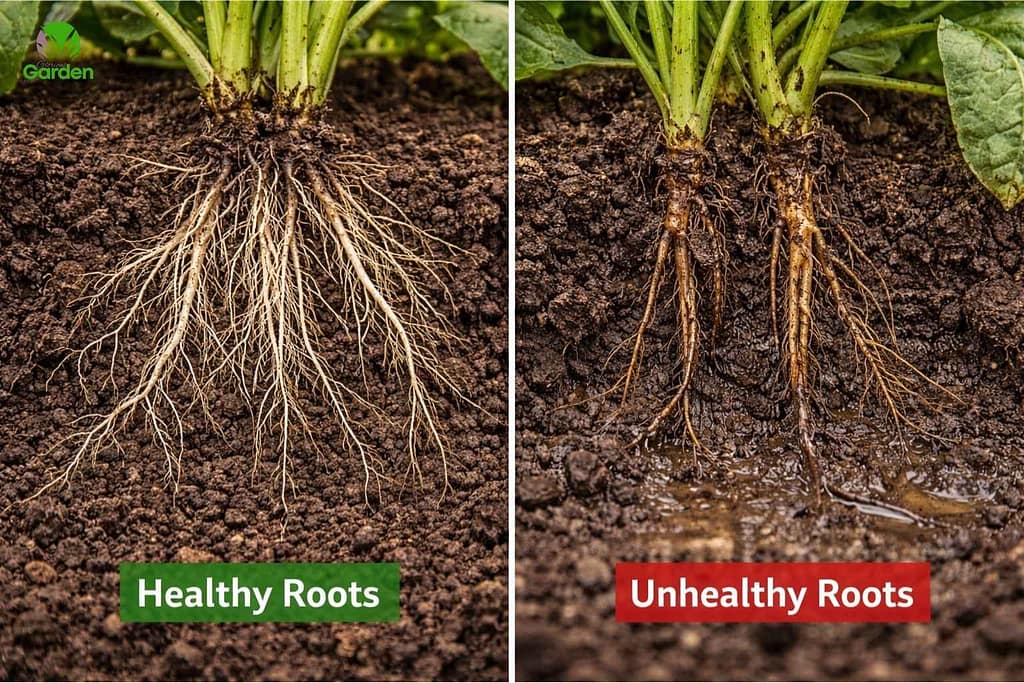
Common root issues include:
• compacted layers blocking depth
• waterlogged zones causing rot
• shallow root systems
• damage from digging or pests
Healthy roots are long, branching, and pale.
Unhealthy roots are short, dark, or twisted.
Stress After Transplanting (Very Common in the UK)
Transplant shock happens when:
• roots are disturbed
• soil temperature differs greatly
• moisture changes suddenly
Signs include:
• wilting
• stalled growth
• yellowing leaves in UK vegetable plants
Most plants recover naturally if soil conditions are calm and moisture steady.
Overwatering or heavy feeding often makes things worse.
Why Most Problems Appear in Patterns
If you see the same issues every year:
• yellowing after heavy rain
• wilting in heat
• slow spring growth
It’s almost always soil structure or moisture balance causing it.
Once those improve, the patterns fade.
The Big Takeaway From These Symptoms
Most vegetable plant problems in UK gardens are not:
❌ lack of effort
❌ lack of feeding
❌ bad luck
They are:
✅ soil condition issues
✅ moisture imbalance
✅ root stress
✅ environmental pressure
Fix the foundations and symptoms reduce naturally.
How to Prevent Vegetable Plant Problems in UK Gardens (The Soil-First Approach)
Most plant problems are easier to prevent than fix.
Once soil structure, moisture balance, and root conditions improve, many of the issues covered earlier simply stop appearing.
This doesn’t require complicated techniques — just steady, sensible habits.
Why Prevention Works Better Than Constant Fixing
Reacting to problems often leads to:
• overwatering
• overfeeding
• repeated digging
• product chasing
These actions frequently:
• stress roots further
• collapse soil structure
• create new problems
Prevention focuses on creating stable growing conditions that support plants naturally.
Improving Soil Structure for Long-Term Plant Health
Soil structure is the backbone of healthy vegetable growth.
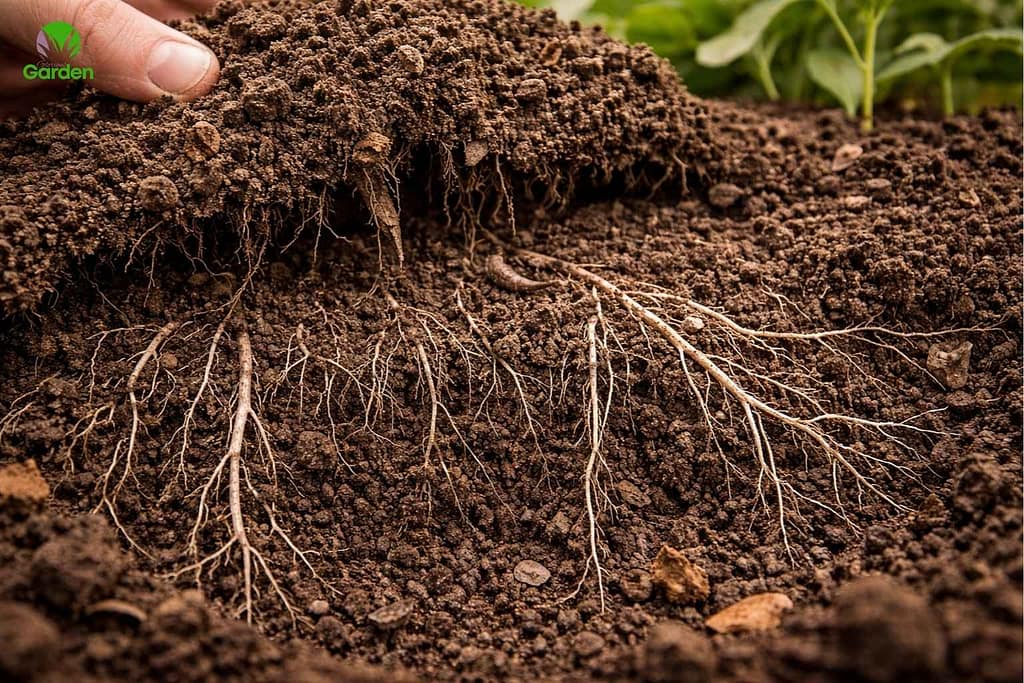
When structure improves:
• roots grow deeper
• water drains evenly
• moisture holds during dry spells
• oxygen reaches root zones
• soil life thrives
Simple ways to protect and rebuild structure
Avoid walking on growing beds
Don’t work soil when wet
Add organic matter gradually
Reduce frequent digging
Use surface mulches
These quiet habits steadily transform soil.
Why Organic Matter Is So Powerful for Plant Health
Organic matter improves almost every growing condition.
It:
• opens heavy soil
• stabilises light soil
• feeds microbes
• creates air spaces
• improves moisture balance
Small, regular additions work better than large occasional ones.
Think in seasons, not single fixes.
Watering in a Way That Strengthens Plants
Strong roots come from deep, steady moisture.
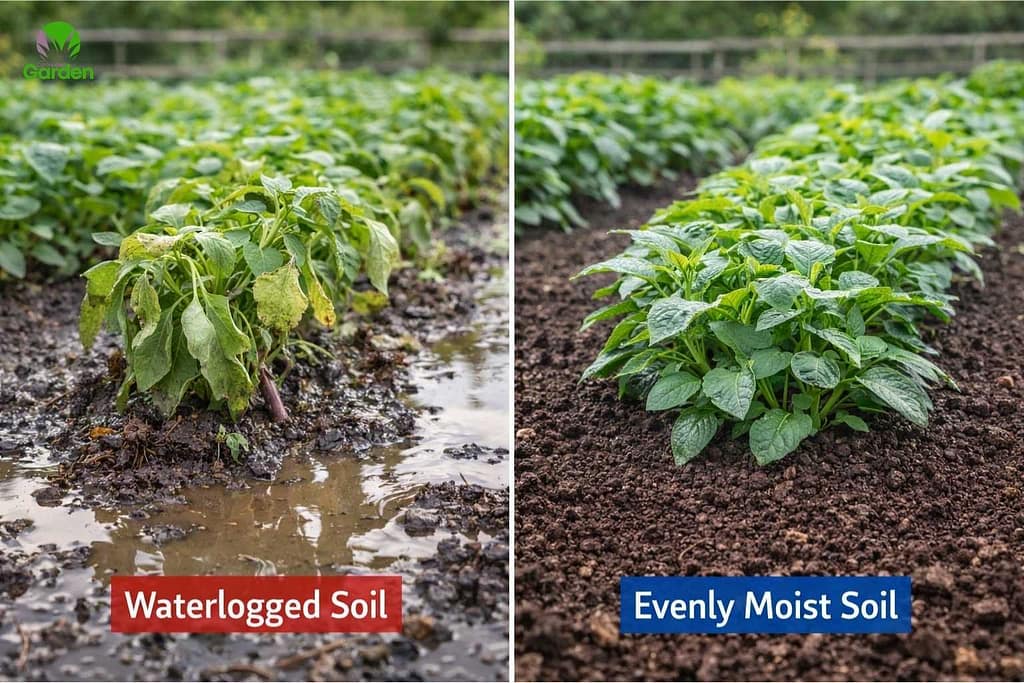
Better watering habits in UK gardens:
Water less often but thoroughly
Let soil dry slightly between waterings
Avoid constant surface dampness
Focus on soil moisture, not leaf appearance
This encourages deeper rooting and stronger growth.
Mulching to Protect Plant Health Naturally
Light mulch layers help by:
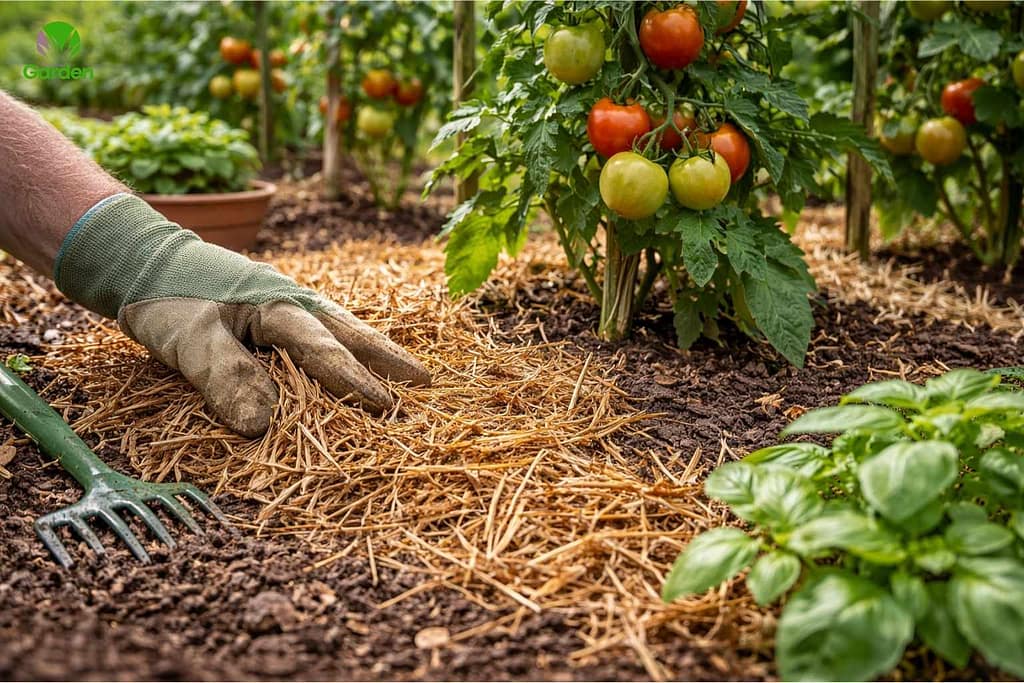
• reducing evaporation
• softening heavy rain impact
• feeding soil life slowly
• preventing surface compaction
Mulch also buffers temperature swings.
This is especially helpful in:
• summer heat
• winter rain
• spring cold spells
Reducing Root Stress Through Timing
Many plant health problems come from working soil at the wrong time.
Avoid:
• digging wet soil
• planting into cold saturated ground
• heavy disturbance mid-season
Instead:
• wait for workable conditions
• let soil warm naturally in spring
• disturb less overall
Plants establish far better in calm soil.
Using Plants Themselves to Improve Soil Health
Roots help improve structure naturally.
Growing plants continuously:
• creates channels
• feeds microbes
• stabilises soil
Even cover crops or leftover plants between seasons help.
Bare soil is more likely to compact and collapse.
How Healthy Soil Reduces Pest and Disease Pressure
Healthy soil leads to:
• stronger plants
• thicker cell walls
• steadier growth
• better recovery
This naturally reduces damage.
Pests still appear — but rarely overwhelm.
The Seasonal Approach to Plant Health in the UK
Each season affects plants differently.
Spring
Soil is cold and wet.
Focus on:
• gentle preparation
• minimal disturbance
• patience with planting
Summer
Soil dries quickly.
Focus on:
• steady watering
• light mulching
• moisture balance
Autumn
Best time for improvement.
Focus on:
• adding organic matter
• protecting soil
• preparing for winter
Winter
Soil needs rest.
Focus on:
• avoiding pressure
• keeping soil covered
• planning improvements
Working with seasons prevents many problems.
The Power of Consistency Over Effort
Healthy gardens are built through:
• small actions repeated
• patience
• observation
Not through constant fixing.
Most improvement happens quietly beneath the surface.
When Intervention Is Helpful (And When It Isn’t)
Intervene when:
• soil remains waterlogged for long periods
• compaction blocks roots
• growth consistently fails
Hold back when:
• problems follow weather events
• soil is slowly improving
• plants are recovering naturally
Observation beats reaction.
The Long-Term Effect of Soil-First Gardening
Over time gardeners notice:
• fewer plant failures
• steadier harvests
• less feeding needed
• easier watering
• fewer extreme symptoms
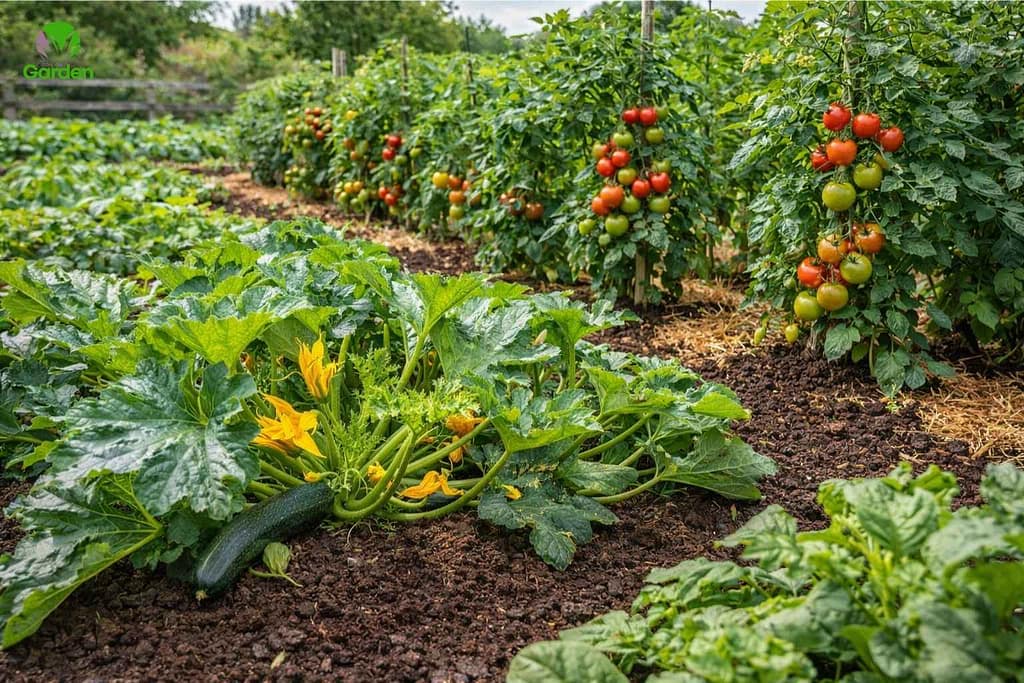
Plant health becomes the norm rather than the struggle.
A Simple System for Keeping Vegetable Plants Healthy in UK Gardens (Year After Year)
By now, one thing should be clear:
Healthy vegetable plants aren’t created by constant fixing.
They’re created by stable growing conditions.
Once soil structure, moisture balance, and root health improve, most common plant problems fade naturally.
This final section turns everything you’ve learned into a simple routine you can follow each season.
The Core Plant Health Routine (Keep This Simple)
You don’t need complicated schedules or products.
This routine alone prevents most issues in UK gardens.
1. Protect the soil first
• avoid walking on beds
• don’t dig when soil is wet
• disturb less overall
This preserves structure and prevents compaction.
2. Add organic matter steadily
• compost once or twice per year
• light layers, not huge piles
• let worms incorporate it
This improves drainage, moisture balance, and root health gradually.
3. Water deeply and calmly
• water thoroughly
• less often
• avoid daily surface watering
This builds strong root systems.
4. Keep soil lightly covered
• mulch when possible
• avoid bare soil for long periods
This protects structure and stabilises moisture.
5. Observe before reacting
When problems appear:
✔ check soil moisture
✔ consider recent weather
✔ think about root stress
❌ don’t instantly feed or dig
Most issues correct themselves when conditions stabilise.
A Simple Seasonal Plant Health Checklist
Spring
• wait for workable soil
• avoid compaction
• plant into warming ground
• add light compost
Summer
• water deeply
• mulch lightly
• reduce stress swings
Autumn
• add organic matter
• protect soil surface
• leave roots where possible
Winter
• avoid walking on beds
• don’t disturb wet soil
• let soil rest
This rhythm builds stronger soil every year.
How Long It Takes to See Results (Realistic Expectations)
Small changes appear quickly:
• less surface puddling
• easier planting
• steadier growth
Bigger improvements develop over:
• one growing season
• two seasons
• long-term consistency
Most gardeners feel a noticeable difference within the first year.
Why This Approach Works Better Than Quick Fixes
Quick fixes treat symptoms.
This system fixes foundations.
It:
• stabilises moisture
• improves drainage
• strengthens roots
• feeds soil life
• reduces stress
Which automatically improves plant health.
When Problems Still Happen (Because Gardening Isn’t Perfect)
Even healthy gardens experience:
• extreme weather
• occasional pests
• short-term stress
The difference is:
Healthy plants recover faster.
Instead of collapse, you get resilience.
The Biggest Shift That Makes Gardening Easier
Stop trying to control plants.
Start supporting soil.
Once soil is improving, everything else becomes simpler.
Vegetable Plant Health FAQs (UK Gardens)
Why do my vegetable plants struggle even when I water and feed them?
In most UK gardens, plant problems come from poor soil structure, compacted ground, or incorrect moisture balance rather than lack of nutrients. When soil stays too wet or roots can’t grow freely, plants can’t absorb water and nutrients properly, even if you feed regularly.
How often should I water vegetable plants in the UK?
Watering depends on soil type and weather, but most vegetables do better with deep, less frequent watering rather than little and often. Well-structured soil holds moisture longer, meaning you usually need to water less once soil health improves.
What is the fastest way to improve plant health in poor soil?
The most reliable improvement comes from protecting soil structure and adding organic matter such as compost regularly. Avoid working soil when wet, reduce digging, and mulch lightly to stabilise moisture levels.
Does adding fertiliser fix unhealthy vegetable plants?
Fertiliser can help temporarily, but it doesn’t fix underlying problems like compacted soil, poor drainage, or root stress. Improving soil structure and moisture balance usually solves plant health issues more effectively than feeding.
Why do my plants wilt even when the soil is wet?
This often happens when roots are sitting in waterlogged soil and can’t absorb moisture properly. Improving drainage, reducing overwatering, and rebuilding soil structure helps roots breathe and recover.
How long does it take to see improvements in plant health?
Small improvements can appear within weeks, such as less wilting and steadier growth. Bigger changes in soil structure and plant resilience usually develop over one to two growing seasons with consistent care.
Is mulch really necessary for healthy vegetable plants?
Mulch isn’t essential, but it greatly helps retain moisture, protect soil structure, reduce compaction, and support soil life. In UK conditions, light organic mulch can significantly improve plant health over time.
Can poor plant health be caused by UK weather alone?
Weather plays a role, but healthy soil buffers plants against extremes like heavy rain, cold springs, and short heatwaves. Most long-term problems come from soil condition rather than weather itself.
Should I dig my garden every year to keep plants healthy?
Frequent digging often damages soil structure and can increase compaction over time. Most UK gardens benefit from less disturbance and surface improvements rather than routine digging.
What’s the simplest place to start improving vegetable plant health?
Start by avoiding walking on beds, not working soil when it’s wet, adding compost once or twice a year, and watering deeply instead of little and often. These small habits make the biggest long-term difference.
A Sensible Place to Start
If your vegetables struggle year after year, don’t overhaul everything.
Start with:
• keeping feet off beds
• avoiding wet soil work
• adding compost gently
• watering deeply
• reducing disturbance
Then give it time.
Those small steps quietly transform gardens.
Healthy vegetable plants aren’t about effort.
They’re about conditions.
Build calm, stable soil.
Support roots.
Work with the seasons.
And plant health follows naturally.
That’s the sensible place to start.