

Many gardeners experience the same frustrating problem season after season.
Vegetable plants grow strongly, develop healthy green leaves, and produce plenty of flowers — yet harvests remain poor or fail completely.
Blossoms drop off, pods remain small, fruits stop developing, or crops that should be abundant deliver very little.
This often leads to confusion and wasted effort.
Some assume pollination has failed. Others believe plants need more fertiliser or constant watering. Many change varieties or feeding routines without lasting improvement.
In reality, the most common cause sits below the soil surface.
In many gardens, root stress caused by heavy soil, poor drainage, compaction and unstable moisture levels prevents plants from supporting crop development properly.
This underlying pattern is explored in Why Vegetables Fail in UK Gardens, where soil structure is shown to control most vegetable performance issues.
When roots struggle, plants simply cannot maintain flowering and fruit formation — no matter how healthy the foliage appears.
Why Vegetables Flower But Don’t Produce Crops – Quick Answer
- Waterlogged soil removes oxygen from roots
- Compacted soil restricts root growth
- Shallow roots dry out quickly
- Cold soil slows nutrient uptake
- Root stress interrupts crop development
In most gardens, poor crop production is caused by stressed roots rather than lack of fertiliser or pollination. Improving soil structure, drainage and root depth usually restores reliable harvests.
Why Flowering Does Not Automatically Lead to Harvests
Flowering is only the first stage of crop production.
Once flowers appear, plants must maintain a steady supply of water, nutrients and energy to developing fruits or pods.
This process depends almost entirely on healthy roots.
Roots absorb moisture, take in nutrients and transport oxygen while interacting with soil organisms that release additional nutrition.
When this system runs smoothly, crops develop reliably.
When it becomes unstable, plants prioritise survival over reproduction.
Flowers may still form, but fruits fail to develop or are shed early.
How Root Stress Stops Crop Formation
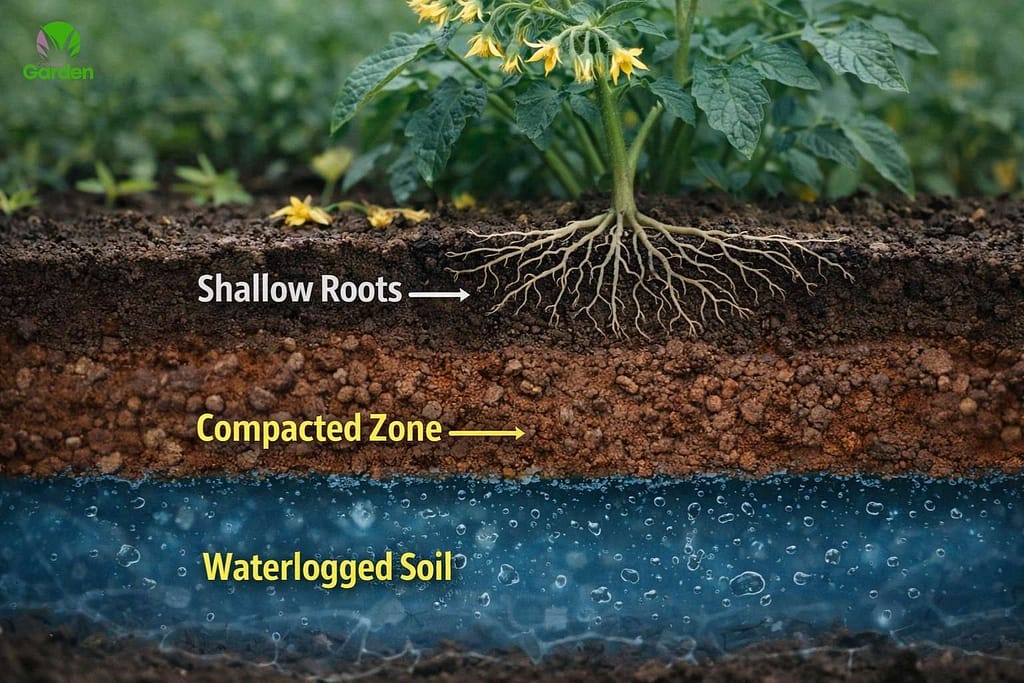
Root stress occurs when roots cannot function properly due to physical or environmental limitations.
Common causes include:
- Waterlogged soil
- Compacted layers beneath the surface
- Cold, slow-draining ground
- Shallow root systems
Each of these reduces the plant’s ability to absorb resources consistently.
Even short periods of stress can interrupt flower and fruit development.
Repeated stress events make poor cropping almost inevitable.
Why Heavy Soil Makes This Problem So Widespread
Across much of the UK, garden soil contains high levels of clay or becomes compacted over time.
These soils behave very differently from loose, well-structured growing ground.
Clay particles are extremely fine and pack tightly together when wet.
Rainfall fills pore spaces with water, pushing out oxygen.
Over time, foot traffic and digging compress soil even further.
The result is dense layers that roots struggle to penetrate.
This is closely linked to soil compaction in UK gardens, which quietly restricts root growth in many vegetable beds.
Poor Drainage and Crop Failure
One of the most common triggers for flower drop and poor fruit development is waterlogged soil.
When soil remains saturated, oxygen disappears from the root zone.
Roots rely on oxygen to absorb nutrients and grow new tissue.
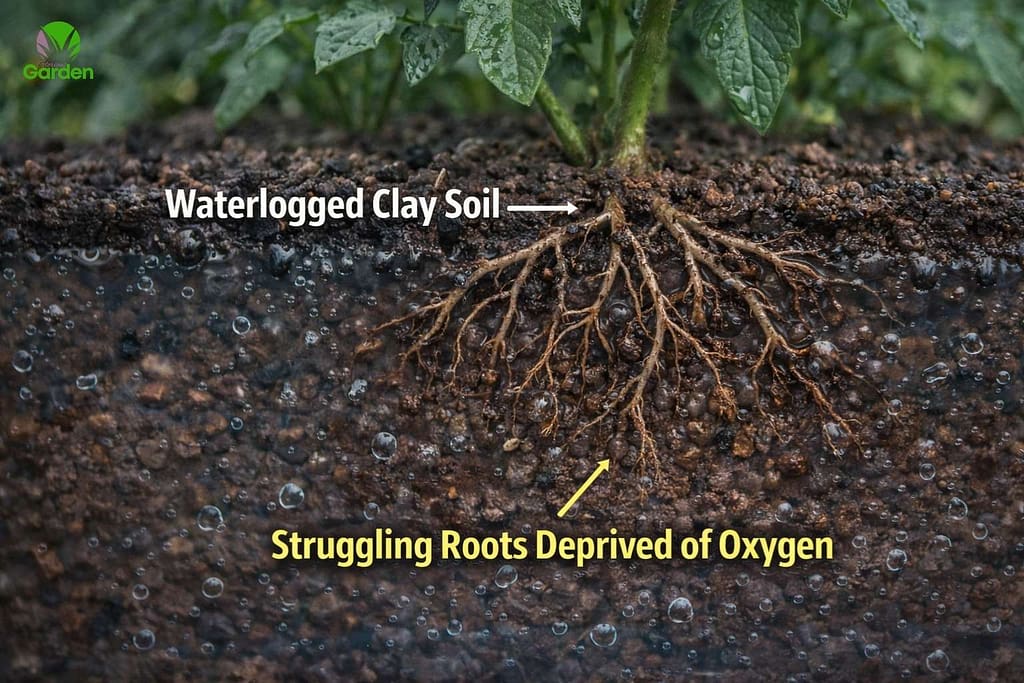
Without it, they weaken rapidly.
This leads to:
- Reduced nutrient uptake
- Damaged root tips
- Interrupted energy flow to crops
Plants may continue producing leaves while failing to support fruits or pods.
Long-term improvement usually requires correcting how water moves through soil.
Practical solutions are covered in How to Improve Garden Drainage in UK Soil.
How Compaction Disrupts Flower and Fruit Development
Compacted soil forms a physical barrier beneath the surface.
Roots grow downward until they reach this dense layer.
Once blocked, they spread sideways instead of deeper.
This creates shallow root systems that depend on surface moisture.
Surface soil dries quickly during warm or windy weather.
Each drying cycle stresses the plant.
Repeated stress interrupts crop formation and increases flower drop.
This shallow root pattern is explained fully in Why Roots Stay Small in Heavy UK Soil.
Cold Soil and Weak Early Cropping
Soil temperature plays a major role in root activity.
Cold soil slows root growth, nutrient absorption and microbial activity.
In heavy or poorly drained ground, soil warms far later than expected in spring.
This delays the plant’s ability to support early flowers and fruit development.
The temperature effect is explained in Cold Soil Problems in UK Gardens.
Improving structure allows soil to warm faster and stabilise earlier in the season.
Why Fertiliser Rarely Solves Poor Cropping
Adding feed is a common response to weak harvests.
While it may briefly boost leaf colour, it rarely fixes the underlying problem.
Roots in compacted or waterlogged soil cannot absorb nutrients efficiently.
This leads to repeated feeding with little lasting improvement.
This cycle is explained in Why Feeding Plants Often Doesn’t Fix Slow Growth in UK Soil.
Healthy soil conditions must come first for nutrition to work properly.
How to Fix Vegetables That Flower But Don’t Produce Crops
Once it becomes clear that poor crop production is usually rooted in soil conditions rather than feeding or pollination, the solution shifts from quick fixes to long-term improvement.
The goal is not to force plants into cropping, but to create root environments that naturally support flowering and fruit development.
This involves improving drainage, rebuilding soil structure, reducing compaction and encouraging deeper root growth.
Improve Drainage to Restore Root Oxygen
Roots cannot function properly without oxygen.
When soil remains saturated, oxygen is pushed out of pore spaces.
Even short periods of waterlogging weaken root systems.
Improving drainage allows excess water to move away from the root zone and air to return.
As oxygen levels rise, nutrient uptake improves and root growth strengthens.
Many gardeners notice better crop formation within a single growing season once drainage improves.
Long-term solutions are explained in How to Improve Garden Drainage in UK Soil.
Reduce Compaction Gradually
Compacted soil forms one of the biggest barriers to healthy cropping.
Rather than breaking soil repeatedly through deep digging, the aim is to allow natural structure to rebuild.
Key steps include:
- Avoid walking on beds when soil is wet
- Limit heavy cultivation
- Protect soil from pounding rain
As soil organisms create channels, roots begin penetrating deeper naturally.
Deeper roots stabilise moisture access and reduce stress events.
Build Soil Structure with Organic Matter
Organic matter is the most powerful long-term solution for heavy or compacted soil.
Compost, leaf mould and well-rotted manure gradually improve aggregation.
Worms and microbes form natural drainage pathways that loosen dense layers.
This increases oxygen flow, improves moisture balance and supports stronger roots.
The full process is covered in How to Improve Garden Soil in the UK Long Term.
Healthy soil structure is the foundation of reliable crop production.
Encourage Deeper Root Growth Naturally
As drainage and structure improve, roots naturally explore deeper soil layers.
This gives plants access to:
- More stable moisture reserves
- Wider nutrient zones
- More consistent temperatures
Plants become far less sensitive to weather swings.
Flowering becomes more reliable and fruit development steadier.
Seasonal Effects on Crop Formation
Understanding how soil behaves through the year helps explain why some seasons are worse than others.
Spring
Cold, wet soil slows root activity.
Early flowering is often weak in poorly structured soil.
Improved drainage and structure allow soil to warm faster and support early crop development.
Summer
Shallow-rooted plants suffer most during dry spells.
Stress during flowering often leads to flower drop or poor fruit set.
Deep-rooted plants in healthy soil remain stable and productive.
Autumn
Heavy rainfall highlights drainage and compaction problems.
Waterlogged roots struggle to support late-season crops.
This is the ideal time to add organic matter and protect soil structure.
How Long It Takes to See Lasting Improvements
Some improvements may appear within one growing season.
Major structural changes usually take one to three years depending on soil condition.
This timeline is realistic and sustainable.
Gardens that improve gradually become easier to manage each year.
Realistic expectations are explained in How Long It Takes to Improve Garden Soil.
Why Healthy Soil Transforms Harvest Reliability
Once soil structure improves and roots function normally, most cropping problems disappear naturally.
Benefits include:
- Consistent flowering and fruit set
- Reduced stress during dry spells
- Better nutrient efficiency
- Stronger plant growth
- Higher yields
Rather than reacting to problems each season, gardeners create conditions where vegetables thrive.
Common Questions About Vegetables Flowering Without Producing Crops
Why are my vegetables flowering but not producing fruit?
The most common cause is root stress. Poor drainage, compacted soil and shallow roots prevent plants from supporting fruit development properly.
Is poor pollination usually the reason crops don’t form?
Pollination can sometimes be a factor, but in most gardens soil structure and root health are the main causes of poor crop production.
Can overwatering cause flowers to drop?
Yes. Waterlogged soil removes oxygen from roots, weakens nutrient uptake and increases flower drop.
Does fertiliser fix poor fruit production?
Not if soil conditions are poor. Roots must function properly before fertiliser can be absorbed efficiently.
Why do heavy soils cause vegetables to fail after flowering?
Heavy clay soil drains slowly and restricts oxygen flow, limiting root growth and interrupting crop formation.
Why do tomatoes flower but not set fruit?
Inconsistent moisture, shallow roots or compacted soil can prevent fruit set even when flowers appear healthy.
Can shallow roots affect crop development?
Yes. Shallow roots rely on surface moisture and become stressed quickly during dry or warm conditions.
How long does it take to fix this problem?
Some improvement can occur within one season, but rebuilding soil structure usually takes one to three years.

A Sensible Place to Start
If your vegetables flower but fail to produce crops, focus first on improving soil structure rather than feeding more heavily.
Address drainage issues, reduce compaction and add organic matter regularly.
As roots become healthier and deeper, plants will naturally support reliable harvests year after year.
Healthy soil does most of the work for you.