

If your garden soil stays wet long after rain, you’re not alone.
Part of the Soil & Compost series:
Soil Health for UK Gardens — understanding what healthy soil looks like long term.
Should You Dig Your Garden Soil or Not? — how soil structure affects drainage and moisture.
Many UK gardeners struggle with soil that feels permanently damp, sticky underfoot, or slow to dry out — even weeks after rainfall. Plants may look unhappy, roots rot unexpectedly, and beds feel impossible to work at the right time of year.
It’s easy to assume this is just “bad drainage” or that the soil needs grit, sand, or digging — but most UK drainage problems come from soil structure. For the full picture of what causes drainage issues and how to fix them properly, see garden drainage problems in the UK: causes, fixes and long-term solutions, alongside this practical guide to improving garden drainage in UK soil.
If improving drainage and soil condition is your goal, this practical guide on how to improve garden soil in the UK walks through the most effective long-term fixes.
This guide explains why garden soil stays wet in UK gardens, what doesn’t help as much as people think, and what actually improves conditions over time.
Why Wet Soil Is So Common in UK Gardens
UK gardens are particularly prone to waterlogged conditions for a few reasons.
Regular rainfall
The UK climate brings:
- Frequent rain
- Long wet periods
- Mild winters with little drying
This means soil rarely gets a chance to fully dry and reset naturally.
Heavy and mixed soils
Many gardens sit on:
- Clay subsoil
- Compacted ground from construction
- Imported topsoil over hard layers
Water moves slowly through these layers, especially when structure is poor.
This is why issues discussed in soil compaction in UK gardens often show up as drainage problems first.
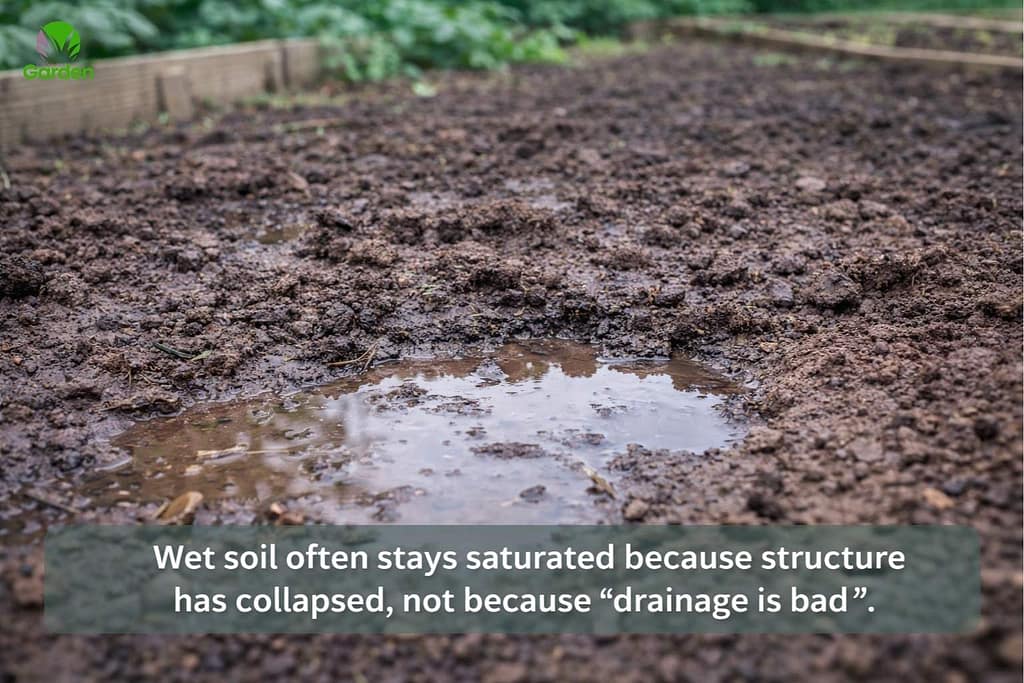
Wet Soil Is Not Always a Drainage Problem
This is an important distinction.
Soil can stay wet because:
- Water can’t move down
- OR water can’t move through the soil
True drainage problems involve:
- High water tables
- Poor site position
- Ground that never drains
But most home gardens don’t suffer from these extremes.
Instead, they struggle with soil structure.
How Soil Structure Affects Water Movement
Healthy soil contains the basics covered in Soil Health for UK Gardens:
- Pores for air
- Channels for water
- Stable aggregates that hold shape
When soil structure collapses:
- Air is pushed out
- Water fills the gaps
- Soil becomes sticky and slow
This often happens due to:
- Compaction
- Working soil when wet
- Frequent digging
Which is why waterlogging often links directly to whether you dig your garden soil or not.
Why Adding Sand or Grit Rarely Fixes Wet Soil
One of the most common bits of advice is:
“Add grit to improve drainage.”
In most UK gardens, this makes things worse.
Adding sand or grit to clay:
- Creates a dense, concrete-like mix
- Reduces pore space
- Locks water in
Unless soil is fully mixed in the correct proportions (which is rarely realistic), this approach backfires.
Why Compost Helps — But Only in the Right Way
Organic matter improves drainage by:
- Supporting soil life
- Creating natural channels
- Improving structure over time
But compost must be used correctly.
Problems occur when compost is:
- Mixed into wet soil
- Added too thickly
- Used to replace soil entirely
This is why gardeners sometimes feel compost “made things worse”, a frustration explained in is bagged compost worth it for UK home gardens
Why Digging Wet Soil Makes Drainage Worse
Digging when soil is wet:
- Smears soil particles
- Collapses structure
- Creates hard layers as it dries
This is one of the fastest ways to turn workable soil into waterlogged ground.
It also explains why soil can feel worse in spring after winter digging.
Raised Beds: Helpful, But Not a Cure-All
Raised beds can help wet soil by:
- Improving surface drainage
- Reducing foot traffic
- Warming up faster
However, they don’t:
- Fix compacted subsoil
- Solve structural problems underneath
- Replace good soil habits
Raised beds work best as part of a broader soil-health approach, not as a shortcut.
How Plants Can Help Dry Soil Naturally
Plant roots are powerful soil improvers.
Roots:
- Create channels for water
- Improve aggregation
- Feed soil organisms
Leaving soil planted — rather than bare — helps regulate moisture levels naturally.
This is one reason soil improves over time when gardeners follow feeding the soil vs feeding the plant principles.
Why Wet Soil Takes Time to Improve
There is no instant fix for waterlogged soil.
Real improvement often looks like:
- Less surface puddling
- Faster drying after rain
- Easier digging at the right time
- Healthier root systems
These changes happen gradually as structure rebuilds.
Understanding that soil improvement takes time helps set realistic expectations and prevents unnecessary interventions.
What Actually Helps Wet Soil Long-Term
The most effective steps are also the least dramatic — and they match the long-term approach in how to improve garden soil in the UK.
Reduce compaction
If your garden stays wet every winter, compaction is often the real culprit — this is explained in more detail in soil compaction in UK gardens.
- Avoid walking on wet beds
- Use boards if access is needed
- Keep heavy tools off soil
Add organic matter gently
- Apply compost as a surface layer
- Let soil life incorporate it
- Avoid mixing into wet ground
Disturb soil less
- Reduce digging
- Avoid routine turning
- Let structure stabilise
Work with timing
- Don’t rush spring soil
- Wait until soil is workable
- Accept seasonal limits
These habits quietly improve drainage without creating new problems.
When Wet Soil Is Something You Can’t Fix
Sometimes wet soil is caused by:
- Very high water tables
- Poor site position
- Land that naturally holds water
In these cases, adaptation matters more than correction.
That may mean:
- Choosing tolerant plants
- Using raised beds strategically
- Accepting seasonal limits
Not every garden needs to be “fixed” to be successful.
A Sensible Place to Start
If your soil stays wet for too long, resist the urge to force a solution.
Before digging, adding grit, or changing everything:
- Notice where water sits
- Check how soil behaves when left alone
- Observe root growth and structure
Start with:
- Less disturbance
- Gentle organic matter
- Better timing
Most UK garden soils improve not through effort, but through patience and consistency.
That’s a sensible place to start.
Why does my garden soil stay wet after rain?
Soil often stays wet due to poor structure or compaction rather than true drainage problems.
Does adding sand improve drainage?
In most UK gardens, adding sand or grit to clay soil makes drainage worse, not better.
How long does it take to fix wet soil?
Improvement usually takes months rather than weeks as soil structure rebuilds gradually.