
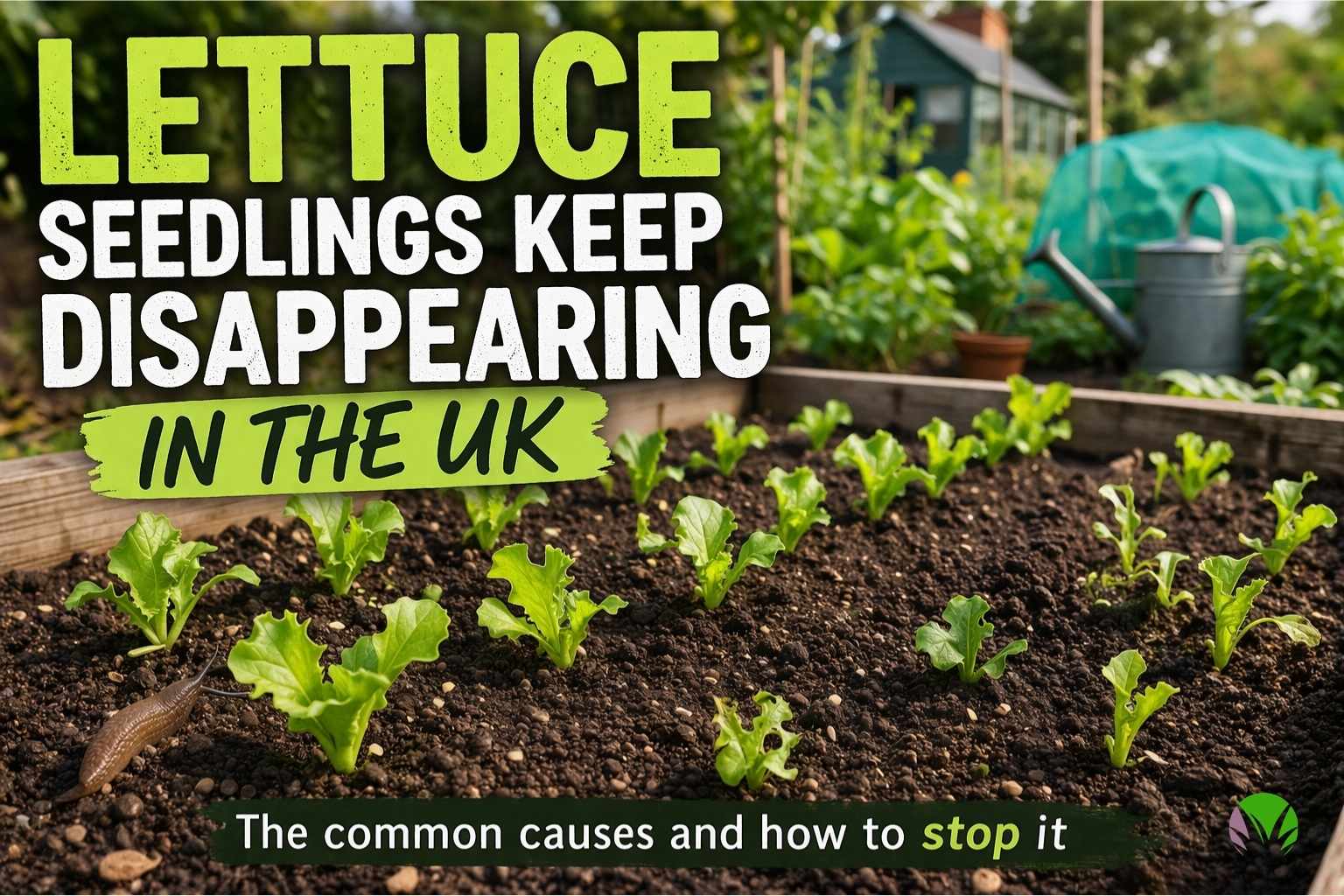
Lettuce is usually seen as one of the easiest crops to grow, which makes it especially annoying when the seedlings seem to vanish almost as soon as they appear.
One day you can see a neat little row of fresh green shoots. The next day there are gaps everywhere. Sometimes the seedlings are gone completely. Sometimes they are reduced to tiny stumps. Sometimes they look as though they were doing well, only to disappear overnight for no obvious reason.
This is one of the most common problems with lettuce in UK gardens, especially in spring and early summer when young growth is soft, tempting, and easy for pests to damage. The frustrating part is that it can feel mysterious at first. Seeds germinate well, the first leaves appear, and then the whole thing seems to unravel before the crop has even started.
The good news is that disappearing lettuce seedlings usually happen for a reason. In most cases, something is eating them, damaging them, or knocking them back so early that they never get the chance to establish properly.
If you are still at the planning stage, it helps to start with When to Plant Lettuce in the UK. If you want the full growing method from sowing to harvest, see How to Grow Lettuce in the UK.
Quick Answers
Why do lettuce seedlings disappear overnight?
The most common reason is slug or snail damage. Young lettuce seedlings are soft and easy for pests to eat quickly.
Can birds eat lettuce seedlings?
Yes, birds can peck at small seedlings, especially if the ground has just been disturbed or the seedlings are very exposed.
Why are there gaps in my lettuce row?
Gaps are often caused by slugs, snails, birds, poor germination, or seedlings drying out before they can establish.
Do lettuce seedlings need protecting?
Often yes, especially when they are very young. A little protection early on can make a big difference.
Can lettuce recover after pest damage?
Sometimes lightly damaged seedlings recover, but seedlings that have been eaten down to the base usually do not.
Slugs Are the Most Common Cause
If lettuce seedlings are disappearing in a UK garden, slugs are usually the first thing to suspect.
This is because young lettuce is exactly the sort of growth slugs love most. The leaves are soft, moist, and easy to chew through. A seedling that looked fine in the evening can be ragged, flattened, or completely gone by the next morning.
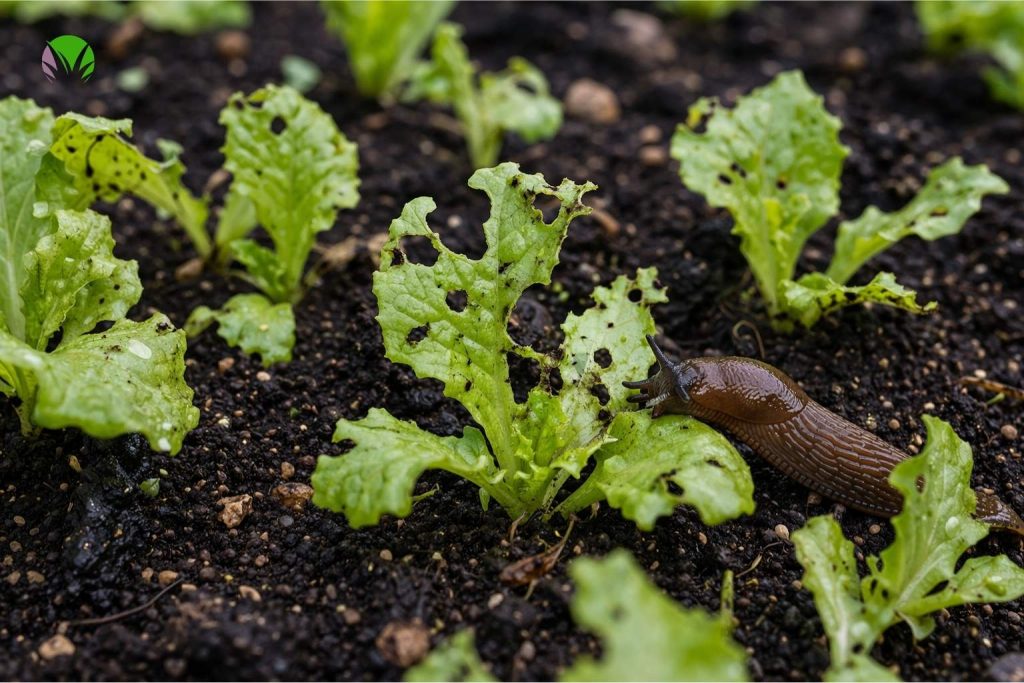
That is why this problem often feels so sudden. Slugs do not need long to do damage. A small seedling can be wiped out in one damp night, especially if conditions are mild and the soil surface stays moist.
Sometimes the evidence is obvious, with holes in the leaves or slime nearby. Sometimes it is less clear. The seedling may simply be missing, leaving only a tiny stem or a gap in the row. In those cases, gardeners often wonder whether the seed failed, when in fact the plant had already come up and been eaten.
If slugs are active in your garden more broadly, it is worth reading How to Get Rid of Slugs in the Garden alongside this article, because the same wider control methods often help protect lettuce too.
Snails Cause Similar Damage
Snails do much the same sort of damage as slugs, and with very young lettuce seedlings there is not much practical difference between them. Both can reduce a fresh sowing to patchy gaps in a short space of time.
The main problem is not always the number of pests you can see during the day. It is where they are hiding. Snails and slugs shelter under boards, around pots, near bed edges, in long grass, beneath trays, and in damp cracks where they are not especially obvious until the damage is already done.
This is why lettuce often struggles more in gardens with lots of cool, sheltered hiding places nearby. The crop may be perfectly healthy in itself, but it is sitting in the path of pests that only need one good night to cause trouble.
Birds Can Peck Out Seedlings Too
Although slugs get most of the blame, birds can also be responsible for missing lettuce seedlings.
Freshly sown or newly emerged rows can attract attention because the soil has been disturbed and the seedlings stand out clearly. Some birds peck at the young leaves, while others scratch around the row and pull seedlings loose while looking for insects or worms.
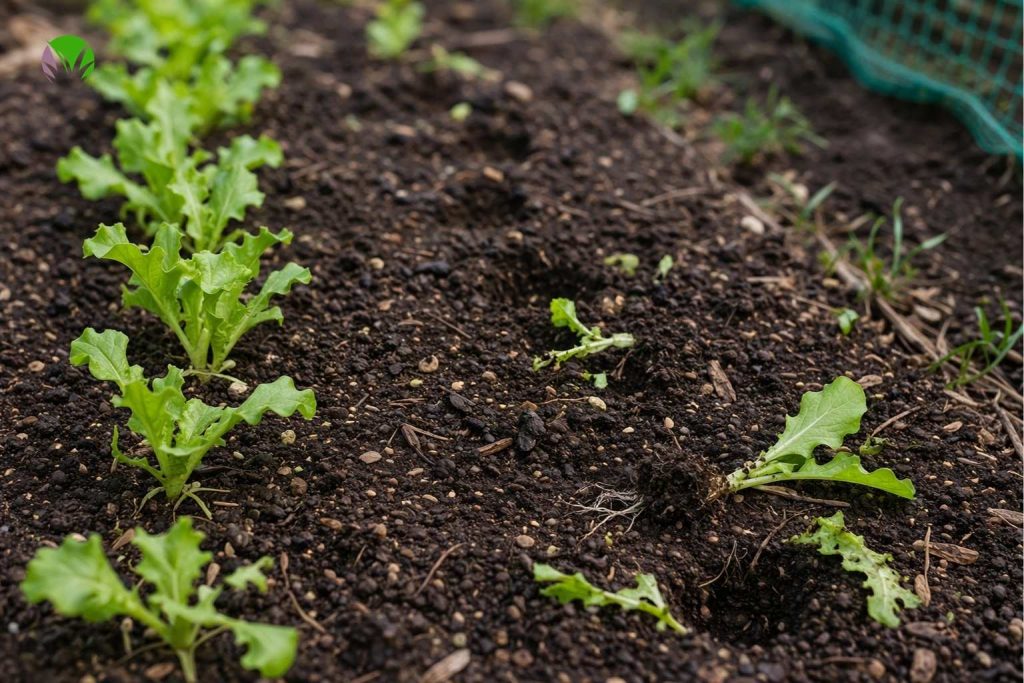
This sort of damage often looks a little different from slug damage. Instead of holes or chewed edges, you may see seedlings uprooted, snapped, or lying on the surface. In some cases the tops are missing while the rest of the tiny plant remains behind.
It is not always dramatic, but it can still thin a row badly enough to spoil the sowing.
Dry Soil Can Make Seedlings Vanish for a Different Reason
Not every disappearing lettuce seedling has been eaten. Some simply dry out so quickly that they fail before they really establish.
This is especially common with direct sowings in lighter soil, raised beds, or containers where the surface dries fast. The seeds may germinate well after watering or rain, and the first tiny seedlings appear looking healthy. Then a dry spell follows, the surface crusts or dries out, and the seedlings collapse before they can root down properly.
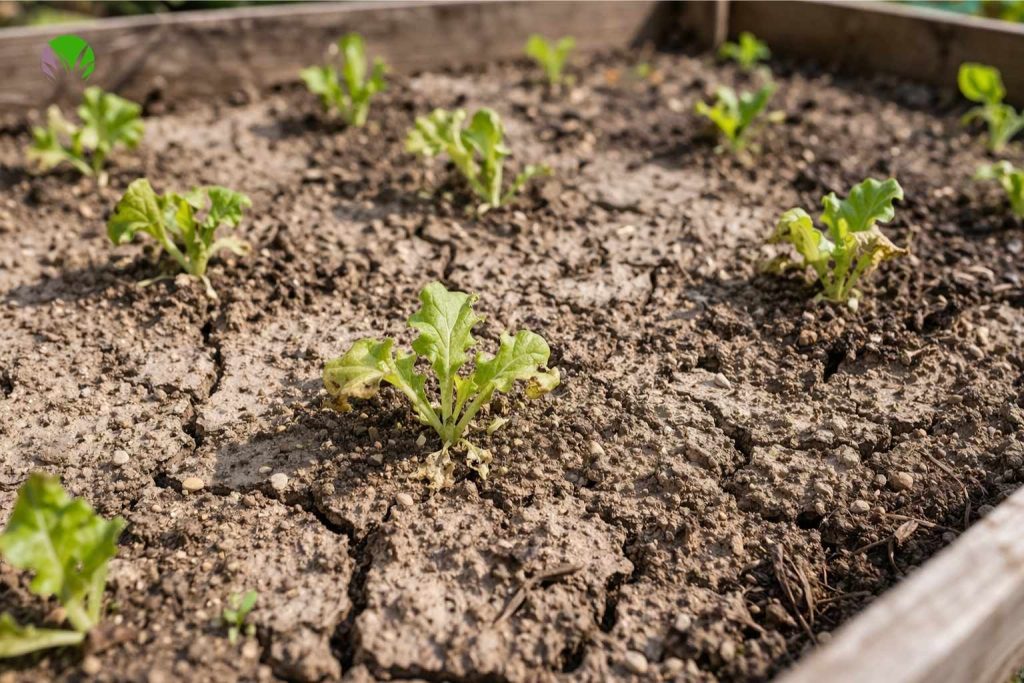
When that happens, it can look as though they vanished. What really happened is that they were too young and too shallow-rooted to cope with the sudden change.
This is one reason lettuce often does better with steady moisture than with stop-start watering. Even a short dry patch can make a young sowing much less reliable.
If watering is often uneven in your garden, it may also be worth reading How Often to Water Plants in the UK and Watering Mistakes That Stress Garden Plants in the UK, because lettuce is one of the first crops to show the effects of inconsistent moisture.
Poor Germination Can Be Confused With Pest Damage
Sometimes a row looks as though seedlings have disappeared, when the real problem is uneven germination.
If only some seeds came up in the first place, the row can already look patchy from the start. Then a little slug damage or a bit of drying out makes the gaps feel even worse. Because lettuce seedlings are small and delicate early on, it is not always easy to tell whether you had a germination problem, a pest problem, or a bit of both.
This is why it helps to check carefully before assuming one single cause. If no seedlings appeared in certain patches at all, germination may be part of the issue. If seedlings did appear and then vanished, pests or drying out are more likely.
Crowded Sowing Can Make the Problem Worse
Lettuce is often sown a bit too thickly, especially by beginners who understandably want a full, productive row. The trouble is that crowded seedlings can be more vulnerable than people expect.
When too many seedlings are packed close together, airflow is reduced and watering becomes harder to manage evenly. Some seedlings stay small and weak. Others get shaded or pushed aside. If pests arrive, they can move through the row very easily, and the whole sowing becomes less resilient.
Thinning can feel wasteful, but a little space often makes lettuce far more dependable.
Containers Can Dry Out Faster Than You Think
Lettuce grows well in containers, but young seedlings in pots and planters often need more attention than those in open ground. The compost surface dries more quickly, especially in warm or breezy weather, and that makes early losses more likely.
This is one reason gardeners sometimes find lettuce easy in the ground but unreliable in containers. It is not that lettuce dislikes pots. It is that the growing conditions change faster in them.
If you grow a lot in containers, Can You Grow Vegetables in Pots in the UK? is a useful companion because the same general watering and spacing issues often show up there too.
Shady, Damp Spots Can Be a Mixed Blessing
Lettuce often appreciates a bit of shelter from strong sun, but very shady, damp corners can create their own problems. They can stay attractive to slugs for longer, especially if airflow is poor and the soil surface never really dries.
That means the ideal spot is not simply the dampest one available. It is a balanced one. Lettuce likes steady moisture, but not a permanently soggy or pest-heavy corner where slugs have every advantage.
Choosing the right place can make more difference than many people realise.
How to Tell What Is Really Happening
If lettuce seedlings keep disappearing, the best approach is to slow down and look closely rather than guessing.
Check the row early in the morning. Look for ragged edges, missing tops, slime trails, disturbed soil, or uprooted seedlings. Look under nearby pots, boards, trays, and bed edges. See whether the gaps are random or whether they appear more in damp spots, near shelter, or along the edges of the bed.
That quick bit of detective work often tells you a lot. Cleanly missing seedlings with slime nearby usually point to slugs or snails. Pulled or pecked seedlings suggest birds. A whole row fading in a dry patch points more toward moisture stress.
If several things seem to be happening at once, that is not unusual. Lettuce seedlings are small enough that more than one problem can affect them in the same week.
How to Protect Lettuce Seedlings Early On
The simplest way to reduce losses is to protect lettuce most carefully at the seedling stage. Once plants are a bit bigger, they are usually far less vulnerable.
That can mean checking for slugs regularly, keeping the area tidy, watering steadily, and using simple barriers or coverings where needed. Even a basic level of attention during the first stage of growth often gives much better results than trying to rescue a damaged sowing later.
It also helps to sow little and often rather than relying on one big row. That way, if one batch gets hit, you are not left waiting too long for the next chance.
Why Timing Still Matters With Lettuce
Lettuce is generally forgiving, but it still does better when sown into conditions that suit it. If the soil is too cold, too dry, or too exposed, seedlings are more likely to struggle before they get going properly.
This is one reason timing helps with pest pressure too. A healthy seedling that comes up and grows away quickly is much more resilient than one that sits still for days at the vulnerable stage. That is why the right sowing window is not only about germination. It is also about helping the plant get past its weakest moment.
If you want to tighten the timing side, go back to When to Plant Lettuce in the UK and use that as your base.
When It Is Better to Sow Again
If a sowing has been heavily thinned, badly chewed, or reduced to scattered gaps, it is often easier to start another short row than to keep hoping the damaged one will somehow fill out.
Lettuce is quick enough that resowing is usually practical. In fact, that is one of its great strengths. You do not have to treat every failed row as a disaster. A fresh sowing under slightly better conditions often overtakes a damaged one surprisingly fast.
This is particularly true if the original problem was slug damage or drying out at the surface. Once those are improved, the next batch often looks much more reliable.
Frequently Asked Questions
Why do lettuce seedlings disappear overnight?
The most common reason is slug or snail damage. Young lettuce seedlings are soft and easy for pests to eat quickly, especially in mild and damp conditions.
Can birds eat lettuce seedlings?
Yes. Birds can peck at young lettuce seedlings or pull them loose while searching for food in freshly disturbed soil.
Why are there gaps in my lettuce row?
Gaps are often caused by slugs, snails, birds, poor germination, or seedlings drying out before they can establish properly.
Do lettuce seedlings need protection?
Often yes, especially when they are very young. A little protection early on can make a big difference to how well they establish.
Can lettuce seedlings recover after being eaten?
Lightly damaged seedlings sometimes recover, but seedlings eaten down to the base usually do not.
Can dry soil make lettuce seedlings disappear?
Yes. If the soil surface dries out too quickly, very young seedlings can collapse before they root down properly.
Are lettuce seedlings harder to grow in containers?
They can be. Containers dry out faster than open ground, so seedlings often need steadier watering and closer attention.
What is the best way to stop lettuce seedlings disappearing?
The best approach is to protect them early, watch for slug and bird damage, keep moisture steady, and sow little and often so one failed batch does not set you back too much.
A Sensible Place to Start
If lettuce seedlings keep disappearing, the most likely cause is usually slugs or snails, followed by birds, drying out, or patchy germination. The key is not to treat it as a mystery for too long.
Look closely at the pattern, check for signs early in the day, and protect the seedlings while they are still small. Once lettuce gets a little size on it, it is usually much easier to manage.
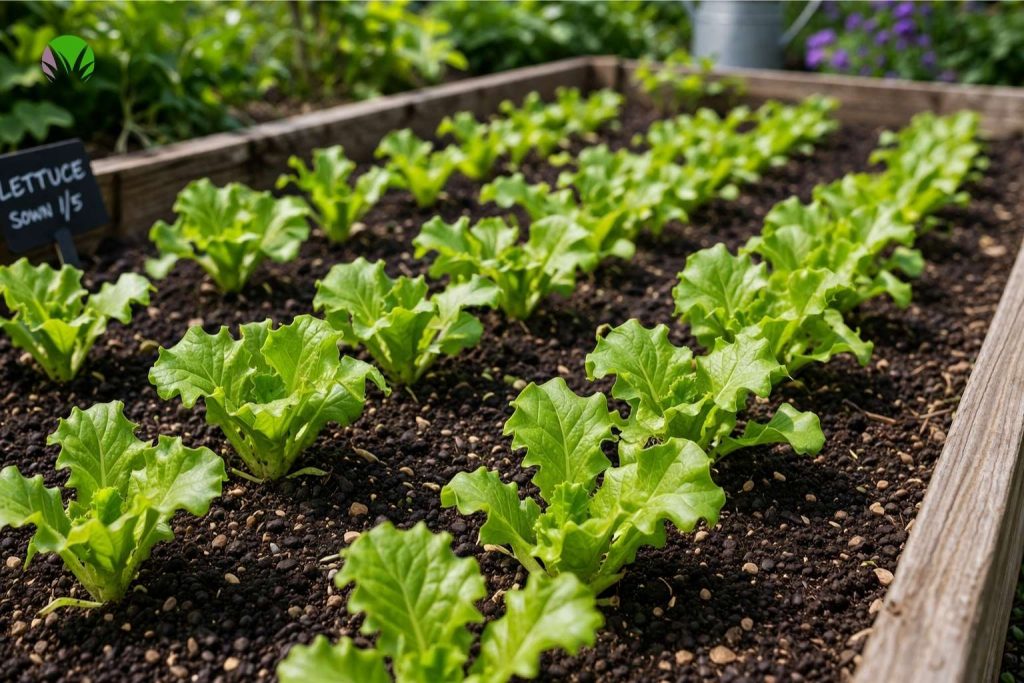
If you are starting again, begin with When to Plant Lettuce in the UK, then use How to Grow Lettuce in the UK for the full method once the seedlings are established. If slug pressure is part of the problem, How to Get Rid of Slugs in the Garden is the next place to go.