

Many UK gardeners put real effort into their vegetable patches. Beds are prepared carefully, seeds are sown at the right time, plants are watered regularly, and fertiliser is often added when growth seems slow.
Yet despite all this care, crops frequently struggle.
Leaves remain small, plants stall for weeks, roots fail to spread properly, and harvests are disappointing or non-existent. In some cases plants look healthy but never produce much food at all.
This can feel confusing and frustrating, especially when neighbouring gardens appear to thrive.
In most UK gardens, vegetable failure is not caused by laziness, poor seed quality, or a lack of feeding. The real problems sit deeper in the soil, where water movement, structure, temperature and oxygen availability quietly control how well roots can function.
Once these hidden issues are understood, most struggling gardens can be improved steadily and reliably.
This guide explains the real reasons vegetables fail in UK conditions and what actually fixes them long term.
Why Vegetables Fail in UK Gardens – Quick Answer
- Heavy UK soils hold too much water and too little oxygen
- Poor drainage keeps roots waterlogged for long periods
- Compacted soil blocks deep root growth
- Cold spring soil slows nutrient uptake
- Shallow roots dry out quickly in warm weather
Most vegetable problems in UK gardens are caused by poor soil structure rather than lack of fertiliser. Improving drainage, reducing compaction and rebuilding soil with organic matter usually restores healthy growth.
The Common Signs Vegetables Are Struggling
Vegetable failure rarely happens suddenly. Most gardens show warning signs long before crops fully collapse.
Common symptoms include:
- Very slow growth even in warm weather
- Small pale leaves
- Plants wilting despite frequent watering
- Roots staying shallow and compacted
- Flowering without forming crops
- Yellowing leaves after heavy rain
- Seedlings stalling or dying in spring
Many gardeners respond by watering more or adding fertiliser.
Sometimes this gives a short burst of improvement, but the problems soon return.
This happens because the underlying causes are structural, not nutritional.
Why UK Gardens Struggle More Than Many Others
UK growing conditions place unique pressure on vegetable roots.
Across much of the country soils are naturally heavy, slow draining, and prone to compaction. Winters are wet, springs are cold, and rainfall often arrives in sudden heavy bursts rather than gentle steady moisture.
These conditions create several connected problems:
- Water lingers in soil instead of draining freely
- Oxygen levels around roots drop quickly
- Soil particles pack tightly together
- Roots struggle to expand and explore for nutrients
Vegetables are far more sensitive to these issues than lawns, shrubs, or ornamental plants.
Most crops evolved in loose, well-aerated soils where water drains easily but moisture remains available below the surface.
When roots cannot breathe, expand, and warm properly, growth slows dramatically — no matter how much feeding or watering is applied.
The Root Zone Is Where Most Problems Begin
Healthy vegetable growth depends on three things happening underground:
- Water must move freely through soil
- Air must reach roots
- Roots must be able to spread deeply
In many UK gardens, all three are restricted.
Heavy rainfall fills soil pores with water, pushing out oxygen. Fine clay particles pack tightly together. Foot traffic, digging, and machinery compress soil further year after year.
The result is a dense layer that traps moisture while starving roots of air.
Roots respond by staying near the surface, where oxygen is slightly higher but moisture fluctuates rapidly.
This creates weak, shallow plants that struggle in dry spells, suffer in wet weather, and fail to access nutrients properly.
Poor Drainage Starves Roots of Oxygen
One of the most common causes of vegetable failure in UK gardens is slow drainage.
When soil remains wet for long periods, oxygen is forced out of the spaces between soil particles.
Roots need oxygen to absorb nutrients and grow new tissue. Without it, they begin to suffocate.
Early signs include:
- Yellowing leaves
- Weak stems
- Sudden wilting after rain
- Root rot in severe cases
Even when plants do not die outright, oxygen-poor soil dramatically slows development.
This is why many gardens appear permanently behind schedule compared to healthier soils.
Improving how water moves through soil is often the single biggest step toward reliable vegetable growth.
Compacted Soil Blocks Root Expansion
Compaction occurs when soil particles are pressed tightly together.
This can be caused by:
- Walking on beds when wet
- Repeated digging
- Wheelbarrows and tools
- Natural settling of clay soils
Over time a dense layer forms just below the surface.
Roots reach this barrier and stop.
Instead of growing downward, they spread sideways in a shallow mat.
This limits access to moisture in dry weather and keeps plants trapped in unstable surface conditions.
Compacted soil also holds water longer, worsening drainage problems.
The two issues usually exist together.
Cold Soil Slows Everything in Spring
UK springs are often damp and slow to warm.
Wet soil heats far more slowly than dry, airy soil.
When soil remains cold:
- Roots grow very slowly
- Nutrient uptake drops sharply
- Seeds may rot instead of germinating
This is why many gardens see plants stall for weeks even when daytime temperatures rise.
Feeding during this period rarely helps because cold roots cannot absorb nutrients efficiently.
Until soil structure improves and drainage allows warmth to build naturally, spring growth will remain unreliable.
Nutrient Lock-Up in Heavy Wet Soils
Many UK soils contain plenty of nutrients.
The problem is that roots cannot access them.
In compacted, waterlogged soil:
- Oxygen-loving microbes decline
- Nutrient cycling slows
- Roots lose absorption efficiency
This creates the illusion of poor soil fertility.
Gardeners add fertiliser repeatedly, yet plants continue to struggle.
Until soil structure improves, much of that nutrition remains locked away.
Why Quick Fixes Rarely Work
Common reactions to poor growth include:
- More watering
- Extra fertiliser
- Digging beds repeatedly
- Adding sand or grit
Unfortunately these often make conditions worse.
Overwatering increases oxygen loss. Repeated digging breaks down soil structure further. Sand mixed into clay can harden soil like concrete.
True improvement comes from restoring soil structure slowly and allowing water and air to move properly again.
This takes patience, but the results are long lasting and transformational.
Once roots can breathe, expand and warm naturally, vegetable growth becomes faster, stronger and far more reliable.
How Water Actually Moves Through UK Soil
To understand why vegetables fail, it helps to understand how water behaves underground.
In healthy soil, water moves steadily downwards through open pore spaces between soil particles. Some moisture remains behind, held lightly around roots. Excess drains away.
In many UK gardens, especially those with clay-heavy soil, those pore spaces are small and easily blocked.
Instead of draining smoothly, water lingers. It fills air gaps. It moves slowly or not at all.
This is where growth problems begin.
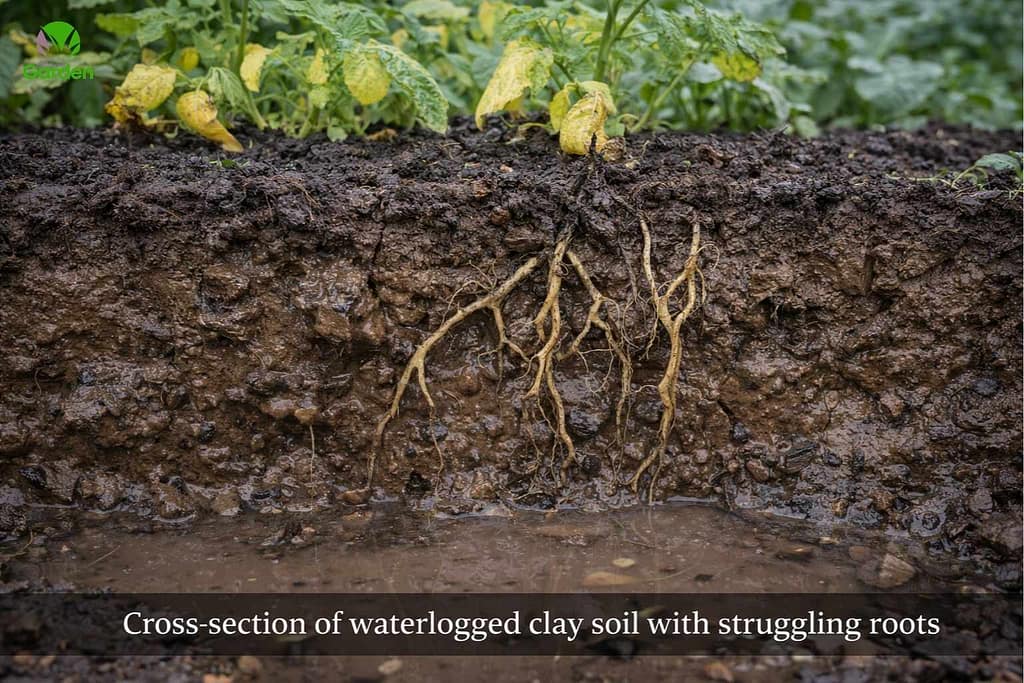
When soil stays saturated for long periods, roots sit in waterlogged conditions. Oxygen disappears. Microbial balance shifts. Nutrient uptake slows dramatically.
This is explored in more detail in How to Improve Garden Drainage in UK Soil, but the key point is simple: vegetables cannot thrive in soil that behaves like a sponge.
Why Clay Soil Holds Water for Days
Clay particles are extremely small and flat. When wet, they stick together tightly. This creates dense layers that trap water between them.
After heavy UK rainfall, these layers can remain saturated for several days.
During that time:
- Roots lose oxygen
- Beneficial soil life declines
- Growth stalls
- Leaves begin to yellow
Gardeners often assume the solution is simply to water less. But when natural rainfall is high and drainage is poor, the real issue is soil structure.
This is why understanding soil compaction in UK gardens is so important. Compaction and drainage problems almost always exist together.
Surface Dry, Subsoil Wet — A Hidden Problem
One of the most misleading situations in UK vegetable beds is when the surface appears dry but the soil beneath remains saturated.
Gardeners feel the top layer, find it crumbly, and water again.
Below the surface, roots may already be sitting in stagnant moisture.
This cycle creates unstable root systems:
- Shallow root spread
- Frequent wilting in warm weather
- Sudden yellowing after rain
It is one of the main reasons vegetables appear inconsistent from week to week.
Why Compaction Makes Drainage Worse
Compaction does more than restrict roots.
It compresses soil pore spaces, reducing the channels that water needs to drain downward.
When soil is compacted:
- Water pools near the surface
- Rainfall runs off instead of soaking in evenly
- Roots hit dense layers and stop expanding
Over time, this creates a cycle of shallow rooting and poor resilience.
If vegetables cannot root deeply, they cannot stabilise themselves against moisture swings.
This explains why many gardens suffer in both wet winters and dry summers — the root system is never strong enough to cope.
Cold Soil and Slow Root Function
Drainage and compaction also influence soil temperature.
Wet soil warms slowly in spring. Air-filled soil warms much faster.
In the UK, where early spring is often damp and cool, this difference matters enormously.
When soil remains cold:
- Root growth is minimal
- Nutrient uptake is restricted
- Seedlings stall for weeks
This is why many gardeners experience frustration in March and April. Plants are technically alive, but they are not actively growing.
The issue is explained fully in Cold Soil Problems in UK Gardens, but it almost always links back to structure and drainage.
Why Feeding Often Doesn’t Fix the Problem
When vegetables fail to thrive, fertiliser is usually the first response.
Sometimes growth improves briefly. Often it does not.
In heavy, poorly drained soil, nutrients may already be present. The problem is that roots cannot absorb them efficiently.
Cold temperatures slow root metabolism. Oxygen-poor soil weakens absorption. Compaction prevents root expansion.
This is why adding more feed does not solve the core issue.
The underlying mechanisms are explored in Why Feeding Plants Often Doesn’t Fix Slow Growth in UK Soil, but the short explanation is this:
Healthy soil structure comes first. Nutrition only works properly once roots are functioning normally.
Why Roots Stay Shallow in Heavy Soil
Vegetables are designed to send roots downward in search of stable moisture and nutrients.
When they encounter compacted layers or saturated subsoil, they stop.
The root system spreads sideways instead.
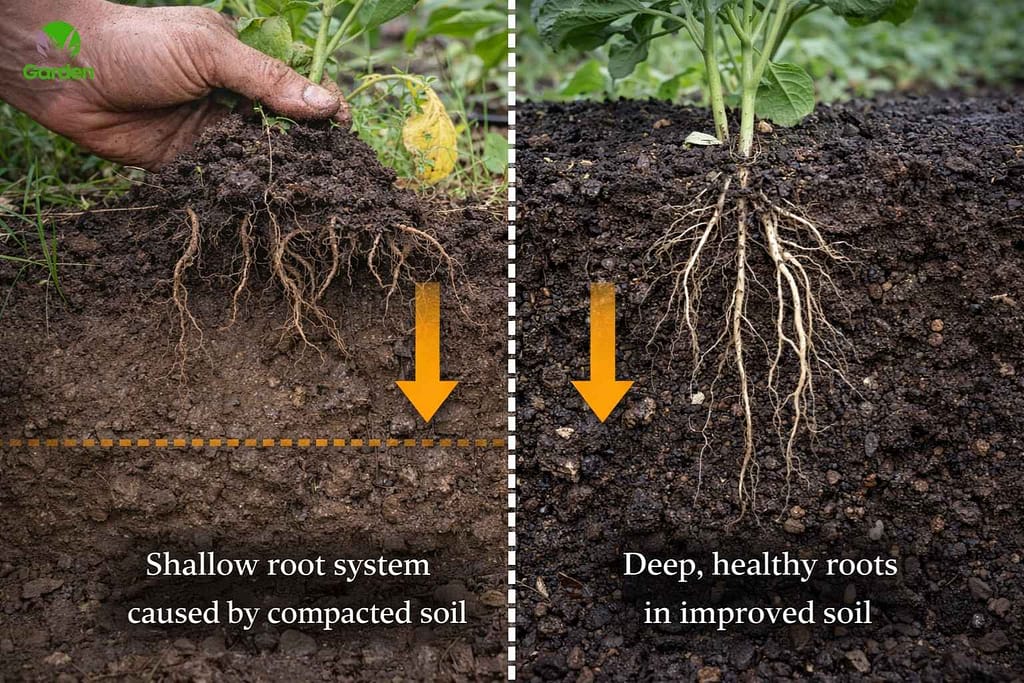
Shallow roots create several long-term problems:
- Plants dry out quickly in summer
- They become unstable in wind
- Nutrient access remains limited
- Yields are reduced
This pattern is examined closely in Why Roots Stay Small in Heavy UK Soil, but it is one of the most overlooked causes of poor harvests.
Healthy vegetables are built from deep, well-aerated root systems. Without that foundation, everything above ground remains limited.
Why Vegetables Flower But Do Not Produce
Another common symptom in UK gardens is flowering without proper fruit or crop formation.
Plants may produce blossoms, yet pods remain small, fruits drop, or harvests are disappointing.
This is rarely just a pollination issue.
Root stress caused by:
- Waterlogging
- Compaction
- Cold soil
- Moisture swings
can interrupt the plant’s ability to support developing crops.
This specific problem is explored further in Why Vegetables Flower But Don’t Produce Crops in UK Gardens, but again the root zone is usually responsible.
The Bigger Pattern Beneath the Surface
When you step back and look at these issues together, a clear pattern emerges.
Vegetable failure in UK gardens is rarely about individual mistakes.
It is about how soil behaves as a system.
If water cannot move properly, oxygen cannot circulate. If oxygen is limited, roots weaken. If roots weaken, nutrient uptake slows. If nutrient uptake slows, growth stalls.
Everything connects.
This is why treating symptoms individually rarely produces lasting results.
Instead of chasing each visible problem, it is far more effective to improve the soil environment as a whole.
The next section looks at what actually changes underground when soil structure begins to improve — and why patience matters more than quick fixes.
What Actually Improves Vegetable Growth Long Term
Once drainage, compaction and root restriction are understood, it becomes clear why quick fixes rarely work.
Vegetable success in UK gardens depends on rebuilding soil structure gradually.
This does not mean replacing soil or digging endlessly.
It means creating conditions where water can drain freely, air can circulate, and roots can spread naturally.
The most effective improvements always focus on structure first, not feeding.
Why Soil Structure Matters More Than Fertiliser
Soil structure refers to how soil particles clump together to form small aggregates with spaces between them.
In healthy soil, these spaces allow:
- Water to drain evenly
- Air to reach roots
- Microbes to function efficiently
- Roots to move freely
In many UK gardens, especially clay-based soils, structure has collapsed over time.
Particles pack tightly together, eliminating air spaces and trapping water.
No amount of fertiliser can overcome this physical barrier.
Restoring structure is what allows everything else to work properly again.
How Organic Matter Changes Soil Over Time
Organic matter is the most powerful long-term tool for improving UK soils.
Compost, leaf mould, well-rotted manure and mulches slowly work their way into the soil profile.
As they break down, they encourage earthworms and soil organisms to create natural channels.
These channels:
- Improve drainage
- Increase oxygen flow
- Loosen compacted layers
- Allow roots to penetrate deeper

This process is gradual but incredibly effective.
Rather than forcing soil open with digging, nature rebuilds structure from within.
This approach is explained in more depth in How to Improve Garden Soil in the UK Long Term, where the focus is on steady, sustainable improvement.
Why Improvement Takes Time (But Lasts)
One of the most common frustrations for gardeners is expecting immediate results.
After adding compost or mulch, many expect drainage and growth to improve within weeks.
In reality, structural change happens over seasons, not days.
Early changes include:
- Better surface crumb structure
- Increased worm activity
- Less surface pooling after rain
Deeper improvements follow gradually as organic matter moves downward and channels expand.
This timeline is covered realistically in How Long It Takes to Improve Garden Soil, which helps set proper expectations.
While slow, the results are long-lasting and transformative.
Why Digging Often Makes Soil Worse
Many gardeners try to solve poor soil by digging deeply every year.
While this may loosen soil temporarily, it often breaks apart developing structure.
Repeated digging:
- Destroys natural soil aggregates
- Disrupts worm channels
- Encourages compaction as soil settles again
- Creates hard layers beneath the dug zone
This is one reason beds can feel soft at the surface but remain dense underneath.
Long-term improvement comes from building structure, not constantly breaking it.
Why Sand and Grit Rarely Fix Clay Soil
A common recommendation is to add sand to heavy soil to improve drainage.
In practice, this often creates a dense, cement-like texture.
Fine clay particles mix with sand to form a hard mass that drains even worse.
True drainage improvement requires organic matter and structural rebuilding, not mineral additives.
This mistake is discussed fully in How to Improve Garden Drainage in UK Soil, but it remains one of the most widespread myths.
How Mulching Accelerates Soil Recovery
Applying organic mulches on the soil surface is one of the easiest ways to improve structure without disturbance.
Mulch protects soil from compaction by heavy rain, feeds organisms slowly, and maintains moisture balance.
Over time it is pulled downward by worms and soil life.
Benefits include:
- Improved drainage
- Better root penetration
- More stable moisture levels
- Healthier microbial activity
Regular mulching builds soil steadily year after year.
How Drainage Improvements Support Structure
In some gardens, structural rebuilding alone is not enough.
Where water naturally pools due to slope, heavy subsoil or high water tables, targeted drainage solutions may be needed.
These allow excess water to move away from growing areas, giving soil a chance to remain aerated.
Once waterlogging is reduced, organic matter can do its job far more effectively.
This combination is what produces lasting results.
What Healthy Soil Starts to Look Like
As structure improves, gardeners usually notice several changes:
- Water drains more evenly after rain
- Soil becomes easier to work without sticking
- Worm activity increases
- Roots penetrate deeper and wider
- Plants grow faster and sturdier
Vegetable growth becomes more consistent across seasons.
Spring stalls shorten. Summer stress reduces. Yields improve steadily.
This is when feeding begins to work properly again, because roots are finally able to absorb nutrients efficiently.
Why This Approach Works in All UK Soil Types
Whether your garden is heavy clay, compacted loam or mixed subsoil, the same principles apply.
Improving structure and drainage allows soil to function as a living system.
Once that system is restored, most vegetable problems resolve naturally.
Rather than fighting symptoms each year, gardeners create conditions where crops thrive on their own.
The final section brings all of this together and explains how to start improving your garden practically and realistically.
Common Mistakes That Keep Vegetables Struggling
Most vegetable failure in UK gardens continues because gardeners unknowingly treat symptoms instead of causes.
These patterns are extremely common.
Watering More When Soil Is Already Saturated
When plants wilt or look weak, extra watering feels logical.
In heavy or compacted soil, this often makes conditions worse.
Water fills remaining air spaces and pushes oxygen out of the root zone.
Roots become weaker, not stronger.
Wilting in these conditions is usually a sign of root stress, not drought.
Adding Fertiliser to Structurally Poor Soil
Feeding struggling plants can give a short boost, but it rarely solves the underlying problem.
When soil is cold, compacted or waterlogged, roots cannot absorb nutrients efficiently.
This leads to repeated feeding with little lasting improvement.
Healthy structure always needs to come first.
Digging Repeatedly to “Loosen” Soil
Deep digging feels productive, but it often damages developing soil structure.
It breaks worm channels, collapses aggregates and encourages future compaction.
While beds may feel loose briefly, they often settle back harder than before.
Long-term improvement comes from building soil, not constantly disturbing it.
Expecting Immediate Results
Soil improvement is a gradual process.
Drainage and root health change over seasons, not weeks.
Gardeners who persist steadily see major improvements within one to three years, depending on starting conditions.
Those who chase quick fixes usually remain stuck in the same cycle.
How Vegetable Performance Changes Once Soil Improves
When structure, drainage and root health begin to recover, most gardeners notice several consistent improvements.
- Spring growth starts earlier
- Plants establish faster
- Leaves become darker and sturdier
- Roots penetrate deeper
- Watering becomes easier to manage
- Harvests become heavier and more reliable
Vegetables no longer stall for long periods.
Weather fluctuations cause less stress.
Feeding works more effectively when needed.
The entire garden becomes more forgiving and easier to manage.
Seasonal Expectations in UK Gardens
Understanding how soil behaves through the year helps avoid frustration.
Spring
Cold, wet soil slows root activity. Early planting often struggles unless structure and drainage are already strong.
Improved soils warm faster and drain better, allowing earlier growth.
Summer
Shallow-rooted plants suffer quickly in dry spells.
Deep-rooted vegetables in healthy soil access moisture reserves and remain stable.
Autumn and Winter
Heavy rainfall tests drainage and structure.
Well-structured soil drains freely while retaining enough moisture for organisms to remain active.
This is when organic matter additions are most effective.
Putting It All Together
Vegetable failure in UK gardens is rarely caused by one single issue.
It is usually the combined effect of:
- Poor drainage
- Compacted soil layers
- Cold, oxygen-poor root zones
- Restricted root growth
These conditions quietly limit plant performance year after year.
Once soil structure begins to recover, most problems gradually disappear.
Growth becomes stronger, harvests increase, and gardening becomes far less frustrating.
UK Vegetable Gardening Problems – Frequently Asked Questions
Why are my vegetables not growing in the UK?
Most UK vegetable problems are caused by poor drainage, compacted soil and cold spring conditions that restrict oxygen and root growth.
Why do my plants look healthy but produce no crops?
Root stress from waterlogging, compaction and moisture swings often prevents proper fruit and pod development.
Does fertiliser fix slow vegetable growth?
Not if soil structure is poor. Roots in waterlogged or compacted soil cannot absorb nutrients efficiently.
How can I tell if my soil is compacted?
Signs include pooling water after rain, shallow roots, hard soil beneath the surface and plants that wilt quickly.
Why is clay soil bad for vegetables?
Clay holds water tightly, drains slowly and restricts oxygen flow, which weakens roots and slows growth.
How long does it take to improve UK garden soil?
Most gardens see major improvement within one to three seasons with regular organic matter and better drainage.
Can overwatering cause vegetables to fail?
Yes. In heavy UK soils, excess water removes oxygen from roots and causes stress even when soil looks dry on the surface.
A Sensible Place to Start
If your vegetables consistently struggle, focus first on improving how your soil handles water and air.
Add organic matter regularly. Avoid working soil when wet. Reduce heavy digging. Use mulches to protect structure. Address serious drainage issues where water pools.
These changes may feel slow, but they produce the most reliable improvements possible.
Once roots can breathe, spread and warm properly, vegetables begin to thrive naturally.
Healthy soil does most of the work for you.