
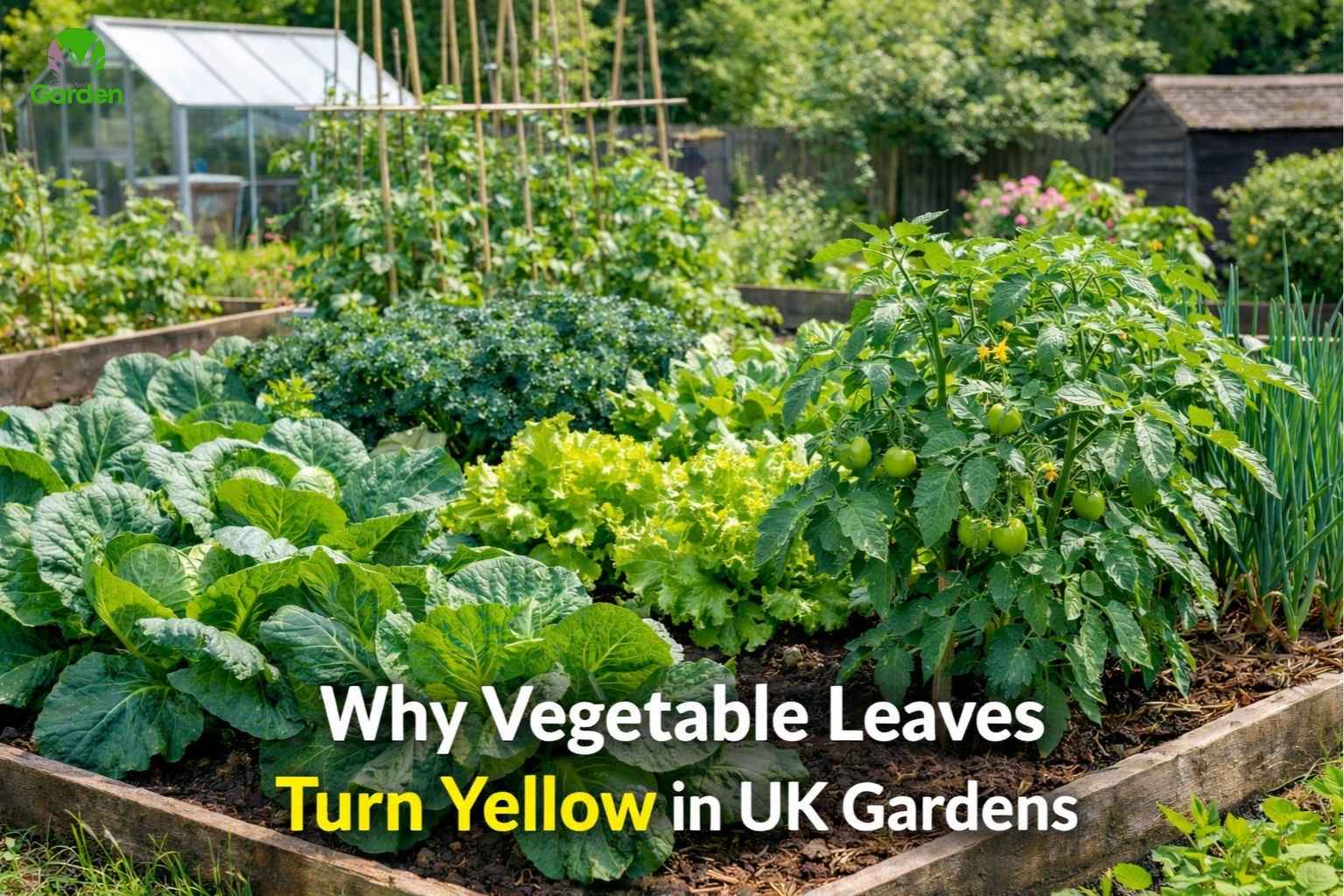
Why vegetable leaves turn yellow in UK gardens is one of the most common signs that something below the surface isn’t quite right.
Few things worry gardeners more than watching healthy green plants slowly fade to pale yellow. Leaves lose colour, growth slows, and crops often struggle to recover.
Many people assume yellow leaves mean plants are hungry and reach straight for fertiliser.
Sometimes feeding helps briefly. More often, it doesn’t solve the problem at all.
In UK gardens, yellowing leaves are usually linked to soil conditions, moisture balance, root stress, or poor structure rather than simple nutrient shortages.
Once you understand what causes leaf yellowing, fixing it becomes far easier and far more reliable — and our practical guide to keeping vegetable plants healthy in the UK shows how the pieces fit together.
What Yellow Leaves Are Telling You
Leaves turn yellow when plants struggle to move nutrients, oxygen, or water effectively.
This can happen when:
- soil stays too wet
- roots lack oxygen
- nutrients become unavailable
- soil is compacted
- watering patterns stress plants
In many UK gardens, the issue isn’t lack of nutrients — it’s that roots can’t access what’s already in the soil.
The Most Common Yellow Leaf Causes in UK Gardens
Waterlogged soil
When soil stays wet for long periods, air is pushed out of root spaces.
Roots struggle to function properly and nutrient uptake slows.
This often leads to pale yellow leaves, especially on lower parts of the plant.
Compacted soil
Compaction blocks water movement and restricts roots.
Shallow, stressed roots struggle to support healthy leaf growth.
This is one of the most common hidden causes of ongoing yellowing in UK vegetable beds.
Unstable moisture levels
Repeated cycles of very wet followed by dry conditions can make plants wilt in UK gardens, even when you feel like you’re watering enough.
This interrupts nutrient flow and often shows first as yellowing leaves.
Why Feeding Often Fails to Fix Yellow Leaves
Many gardeners add fertiliser when leaves turn yellow.
This sometimes gives short-term greening but rarely solves the underlying issue.
In damaged or poorly structured soil:
- nutrients move poorly
- roots cannot absorb efficiently
- microbial activity slows
This is why plants can look hungry even when soil contains nutrients.
How Soil Conditions Trigger Yellowing Leaves
Soil plays a much bigger role in leaf colour than most gardeners realise.
Healthy soil allows roots to access water, oxygen, and nutrients steadily.
When soil structure breaks down, all three become unstable.
Why Wet Soil Causes Leaves to Turn Yellow
When soil stays saturated:
- oxygen levels drop
- root function slows
- nutrient uptake becomes difficult
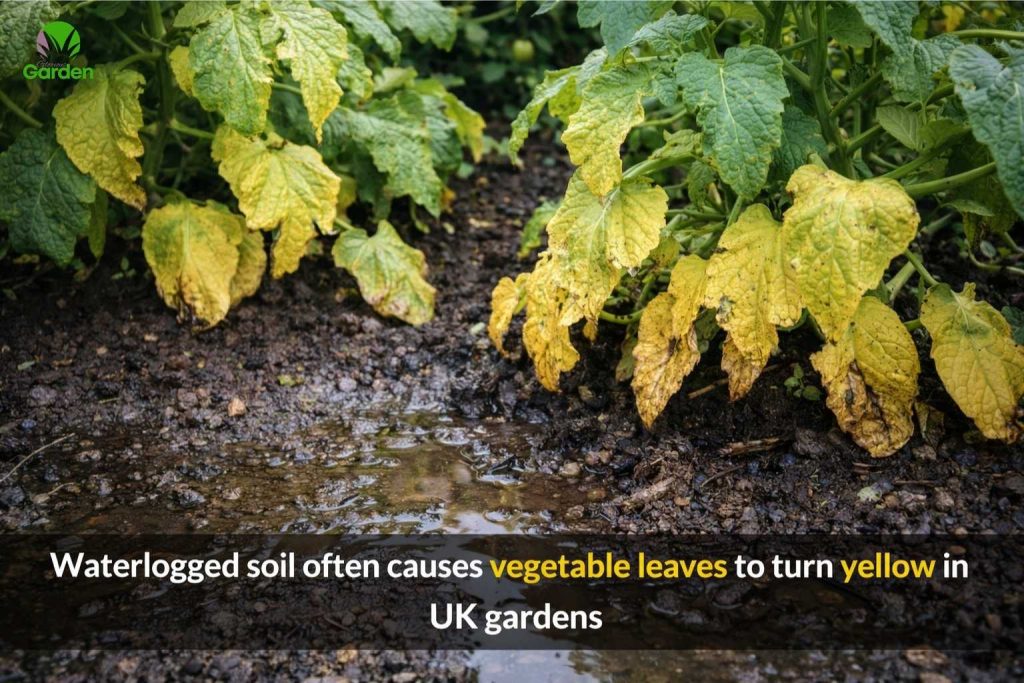
This often results in pale or yellow leaves, particularly on lower growth.
UK gardens with heavy rainfall and clay-based soil are especially prone to this problem.
How Compaction Affects Leaf Colour
Compacted soil squeezes air spaces out of the ground.
This limits:
- root expansion
- water movement
- microbial activity
As roots struggle, leaves often lose their healthy green colour.
This problem commonly develops slowly and worsens each season if not addressed.
The Role of Organic Matter in Preventing Yellowing
Organic matter improves soil structure by creating stable air spaces and improving water movement.
Soil with good organic content:
- drains excess water more evenly
- retains moisture during dry spells
- supports nutrient availability
This balanced environment helps leaves stay healthy and green.
Why Lower Leaves Yellow First
Plants often sacrifice older lower leaves when stressed.
They redirect resources to newer growth in an attempt to survive.
This is why yellowing often begins at the bottom of plants rather than the top.
Moisture Swings and Leaf Stress
Repeated cycles of soaking wet soil followed by dry conditions are common in UK weather. Leafy crops such as spinach often react quickly to this kind of stress, becoming more likely to bolt instead of continuing steady leaf growth. If that is happening in your garden, read why spinach bolts quickly in the UK.
These swings stress roots and disrupt nutrient movement.
Yellow leaves are often the first visible symptom.
Simple Ways to Diagnose the Cause of Yellow Leaves
Check soil moisture
Feel the soil several centimetres down.
Sticky and wet indicates drainage issues.
Dry and crumbly points to moisture loss.
Observe where yellowing starts
Lower leaves usually indicate root or moisture stress.
Upper leaves may point to other issues.
Watch drainage after rain
Pooled water or slow soaking suggests poor soil structure.
Quick drainage suggests lighter soils.
Why Yellow Leaves Often Return Each Season
If soil structure isn’t improved, stress patterns repeat every year.
This leads gardeners to chase feeding schedules rather than solving the real cause.
Long-term soil care breaks this cycle.
How to Stop Vegetable Leaves Turning Yellow in UK Gardens
Once you understand why yellowing is happening, correcting it becomes far simpler.
The solution is rarely more fertiliser. It is usually better soil conditions and steadier moisture levels.
Improve Drainage and Soil Structure Gradually
Many gardeners try to fix yellowing leaves by digging deeply or adding sand.
In most UK gardens, this worsens soil structure rather than improving it.
Soil improves best when organic matter is added steadily at the surface.
- apply compost once or twice per year
- avoid mixing into wet soil
- let worms and soil life work it in naturally
This improves both drainage and nutrient availability over time.
Reduce Compaction Wherever Possible
Stopping further soil damage allows roots to recover naturally.
- avoid walking on beds
- use boards if access is needed
- never work soil when wet
- reduce routine digging
These small habits make a huge difference within a growing season.
Water More Effectively
Deep watering less often encourages stronger root systems.
This helps plants cope better with both wet spells and dry periods.
Avoid frequent light watering that keeps roots shallow.
Use Mulch to Stabilise Soil Conditions
Mulching helps:
- reduce evaporation
- protect soil structure
- prevent moisture swings
Organic mulches such as compost or leaf mould work best.
A thin layer is enough to support healthy soil.
When Yellow Leaves Are Normal
Occasional yellowing of older leaves late in the season is natural.
Concern arises when yellowing spreads quickly or affects young growth.
Signs Conditions Are Improving
- new growth appears greener
- less repeated yellowing
- stronger plant recovery after rain or heat
- more even soil moisture
These indicate soil health is improving.
Common Mistakes That Keep Yellowing Coming Back
- overwatering
- adding fertiliser instead of improving soil
- working soil when wet
- compacting beds by walking on them
Avoiding these speeds recovery dramatically.
Vegetable Leaf Yellowing FAQs
Why do vegetable leaves turn yellow in UK gardens?
In most UK gardens, yellow leaves are caused by wet soil, compacted ground, or unstable moisture levels rather than a lack of nutrients. These conditions stress roots and limit proper nutrient uptake.
Is yellowing always a sign that plants need feeding?
No. While nutrient shortages can cause yellowing, feeding often doesn’t fix the problem if soil structure or drainage is poor. Improving soil conditions usually works better long term.
Can overwatering cause vegetable leaves to turn yellow?
Yes. Overwatering is one of the most common causes of yellow leaves in UK gardens. When soil stays saturated, roots lose oxygen and plants struggle to stay healthy.
Does compacted soil affect leaf colour?
Yes. Compacted soil restricts root growth and water movement, which often leads to stressed plants and pale or yellowing leaves over time.
How long does it take for yellow leaves to improve once soil conditions are fixed?
Small improvements often appear within a few weeks, but consistent soil care usually leads to noticeably healthier growth within one growing season.
Should I remove yellow leaves from my plants?
You can remove badly yellowed leaves to tidy plants and improve airflow, but focus on fixing the underlying soil and watering issues to prevent new yellowing.
A Sensible Place to Start
If your vegetable leaves keep turning yellow, don’t rush to feed.
Start with:
- checking soil moisture
- improving soil structure gradually
- reducing compaction
- watering deeply but less often
As soil conditions stabilise, leaf colour usually improves naturally.
Healthy soil creates healthy plants — and most yellowing problems fade once roots are properly supported.