

Clay soil is one of the most common soil types in UK gardens.
For many gardeners, it quickly becomes a source of frustration.
After rain it turns sticky and slow to drain. In dry weather it sets hard and cracks. Plants struggle to root deeply, growth slows, and harvests often disappoint.
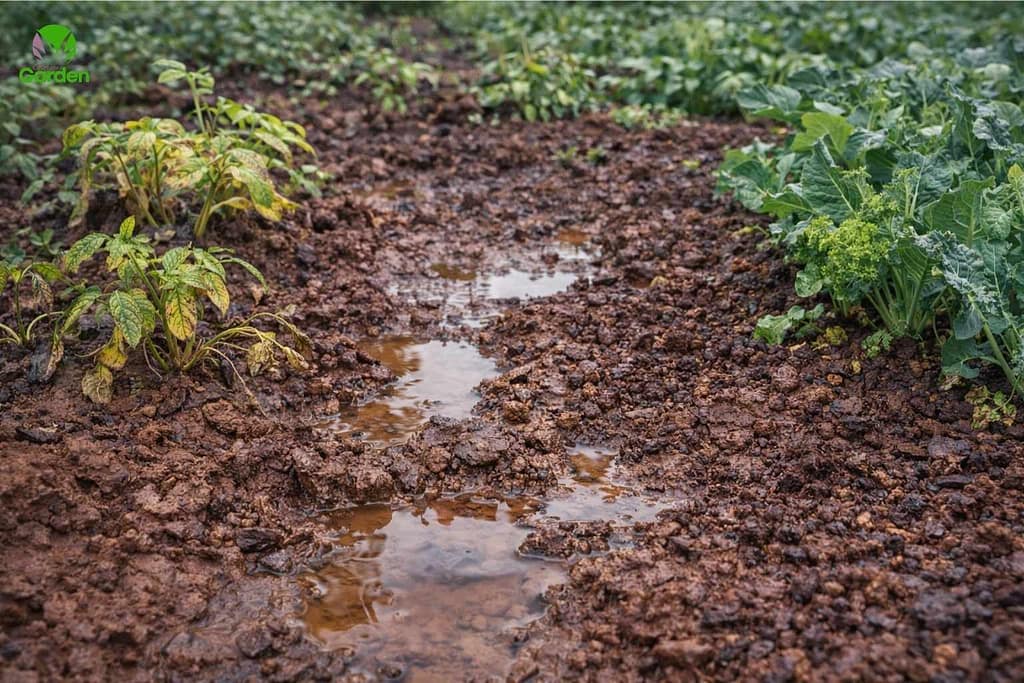
This leads many people to believe clay soil is poor soil.
In reality, clay soil is naturally rich in nutrients and can be extremely productive when managed properly.
The key is understanding which vegetables cope well with clay conditions and how to improve structure so roots can breathe and spread.
This guide explains the best vegetables to grow in clay soil in UK gardens, why some crops thrive while others struggle, and how to prepare clay beds for reliable long-term success.
Quick Questions Answered
Is clay soil bad for growing vegetables?
No. Clay soil holds nutrients very well, but poor structure and drainage can restrict roots if not improved.
Can compost improve clay soil?
Yes. Regular organic matter improves drainage, aeration and root penetration over time.
Which vegetables grow best in clay soil?
Many brassicas, beans, potatoes and leafy greens perform very well once soil structure improves.
Should clay soil be dug regularly?
No. Frequent digging often worsens compaction and structure. Gentle improvement works better long term.
Why clay soil behaves the way it does in UK gardens
Clay particles are extremely fine and pack tightly together.
This creates soil that:
- Holds water for long periods
- Drains slowly after rain
- Becomes hard when dry
- Restricts oxygen movement
These traits explain why many UK gardens stay wet after rainfall.
The drainage problem is covered in why garden soil stays wet after rain in the UK.
Clay soil itself is not the enemy.
The real issue is structure — how tightly particles are packed and whether air channels exist for roots and water movement.
When structure improves, clay becomes one of the most fertile garden soils available.
Common problems gardeners face with clay soil
Poor drainage and waterlogging
Water sits on the surface or remains trapped below ground.
This stresses roots and slows nutrient uptake.
Compaction
Clay compresses easily, especially when walked on wet.
This forms dense layers that block root growth.
Compaction is explained fully in compacted soil in UK gardens.
Slow early growth
Cold wet clay in spring delays root activity.
This is why crops often grow slowly in clay-heavy beds.
The pattern is explained in why vegetables grow slowly in UK gardens.
Vegetables that grow particularly well in clay soil
Brassicas (cabbage, broccoli, cauliflower, sprouts)
These crops develop strong root systems and tolerate heavier soil well once drainage improves.
Clay’s nutrient-holding ability actually benefits brassica growth.
Potatoes
Potatoes cope well with moisture-retentive soil when beds are loosened and well amended with compost.
They benefit from clay’s steady nutrient supply.
Beans and peas
These plants perform well once soil is structured properly.
They also help improve soil naturally through nitrogen fixation.
Leafy greens
Spinach, chard, lettuce and kale thrive in fertile clay soil when drainage is managed.
Vegetables that struggle most in clay soil
Root crops (carrots, parsnips, beetroot)
These require loose soil to grow straight and deep.
In compacted clay they fork, shorten and distort.
Onions and garlic
These prefer lighter soil and often rot in heavy wet beds unless drainage improves.
In the next section we’ll look at how to prepare clay soil properly so more crops can thrive instead of struggle.
How to prepare clay soil properly for vegetables
The goal with clay soil is not to turn it into something else.
The aim is to improve structure so air, water and roots can move through it naturally.
This happens gradually through organic matter, reduced compaction and consistent soil care.
Start by improving drainage and oxygen flow
If clay beds stay wet for days after rain, roots will always struggle regardless of what you plant.
Before focusing on crops, address drainage first.
Key improvements include:
- Adding compost to build structure
- Avoiding walking on wet soil
- Reducing heavy digging
- Keeping soil covered with mulch
If water regularly pools or soil stays sticky, follow why garden soil stays wet after rain in the UK to fix the underlying issue.
Relieve compaction gently
Clay compresses easily, especially when wet.
Breaking compacted layers allows roots and water to move again.
Effective methods include:
- Using a garden fork to loosen soil vertically
- Creating permanent walking paths
- Avoiding heavy machinery on beds
- Top-dressing rather than turning soil
Compaction recovery is explained step by step in compacted soil in UK gardens.
Add organic matter regularly (this is the real solution)
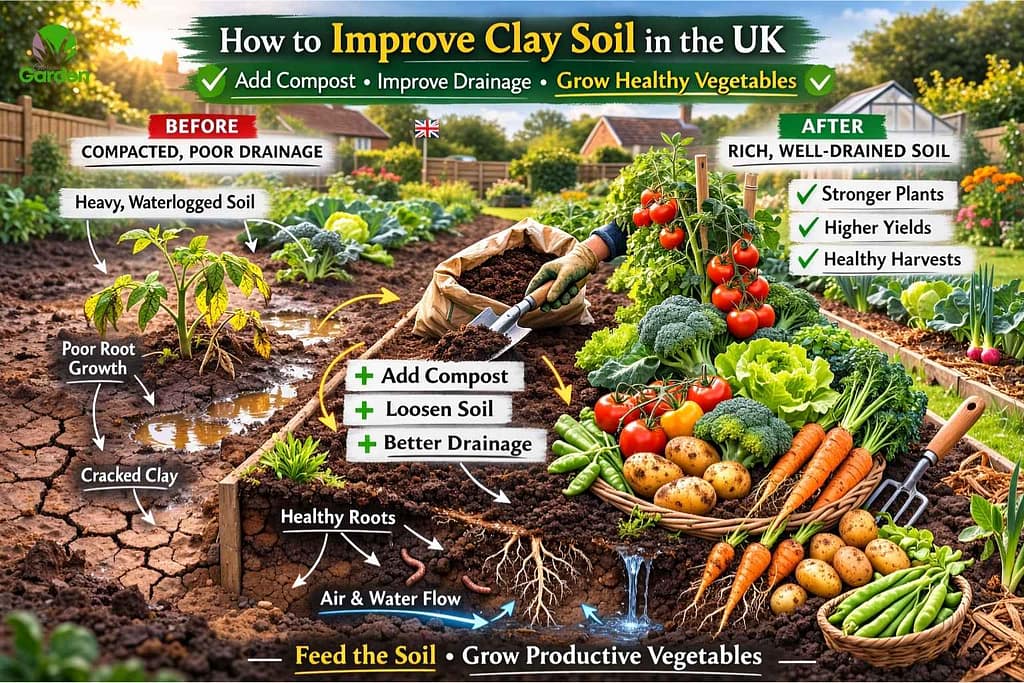
Organic matter is what transforms clay from sticky and airless into fertile, workable soil.
It:
- Creates air spaces
- Improves drainage
- Encourages worms and microbes
- Prevents hard setting in dry weather
Best materials for UK clay soil include:
- Garden compost
- Well-rotted manure
- Leaf mould
- Composted bark fines
Apply 5–8cm as a surface layer once or twice per year and allow natural processes to work it in.
For a full soil improvement system, use how to improve garden soil in the UK.
Why sand rarely helps clay soil
Many gardeners try to improve clay by mixing in sand or grit.
Without very large amounts of organic matter, this often creates a dense, cement-like texture that drains even worse.
Structure comes from organic matter, not mineral additives.
Should you use raised beds on clay soil?
Raised beds can be very helpful in heavy clay gardens, especially where drainage is poor.
They:
- Lift roots above saturated ground
- Warm faster in spring
- Allow easier structure improvement
However, even raised beds benefit from long-term clay improvement underneath.
Think of them as a shortcut, not a permanent replacement for healthy soil.
How long does clay soil take to improve?
Some improvement in workability happens within months.
However, real structural change usually takes a year or more of consistent organic matter addition.
Long-term timelines are explained in how long it takes to improve garden soil in the UK.
In the final section, we’ll look at long-term strategies for turning clay soil into productive vegetable beds and common mistakes to avoid.
Long-term strategies for turning clay soil into productive vegetable beds
Clay soil does not change overnight, but when managed consistently it becomes one of the most fertile soils for vegetable growing in the UK.
The key is working with its natural properties rather than fighting them.
Keep organic matter flowing into the soil
One compost application improves surface conditions.
Repeated applications over time transform structure throughout the root zone.
Best long-term routine:
- Add compost every spring before planting
- Add mulch again in autumn to protect soil over winter
- Leave soil covered whenever possible
- Allow worms to do the mixing
This approach steadily improves drainage, aeration and nutrient availability.
Avoid practices that collapse soil structure
Clay soil is easily damaged when wet.
Try to avoid:
- Walking on beds after rain
- Digging in saturated conditions
- Leaving soil bare during winter
- Breaking up aggregates through constant disturbance
Protecting structure is just as important as building it.
Use plants to improve clay soil naturally
Roots help open soil channels that water and air can move through.
Good soil-improving plants include:
- Legumes such as beans and peas
- Deep-rooting crops like sweetcorn
- Green manures such as clover and rye
These gradually loosen soil and feed soil life.
Planting tips that work better in clay soil
Plant slightly higher than soil level
Raising plants a few centimetres improves oxygen around roots and reduces waterlogging risk.
Space crops generously
Better airflow helps soil dry between rainfall and reduces disease.
Mulch heavily
Mulch protects structure, moderates moisture swings and feeds soil organisms.
Common mistakes with clay soil
Trying to fix it quickly with sand
This often worsens structure without organic matter.
Overwatering heavy beds
Clay holds moisture longer than lighter soils.
Overworking the soil
Frequent digging breaks natural drainage channels.
Giving up on productive crops too early
Clay soil improves dramatically with time and care.
Frequently Asked Questions About Growing Vegetables in Clay Soil in the UK
Is clay soil good for growing vegetables in the UK?
Yes. Clay soil is naturally rich in nutrients and can be very productive once soil structure and drainage are improved.
Which vegetables grow best in clay soil?
Brassicas, potatoes, beans, peas and leafy greens perform particularly well in improved clay soil.
How can I improve drainage in clay soil naturally?
Adding organic matter such as compost regularly, reducing compaction and protecting soil with mulch improves drainage over time.
Should I add sand to clay soil to improve drainage?
No. Sand often makes clay soil harder and less workable unless very large amounts of organic matter are also added.
How long does it take to improve clay soil?
Some improvement is seen within months, but major structural improvement usually takes a year or more of consistent compost additions.
Are raised beds better for clay soil gardens?
Raised beds can help improve drainage quickly, but long-term soil improvement underneath still gives the best results.
A Sensible Place to Start
If you garden on clay soil, don’t try to replace it or fight it.
Instead, focus on improving structure step by step:
- Add organic matter regularly
- Reduce compaction
- Protect soil with mulch
- Be patient with improvements
As structure improves, drainage increases, roots spread more easily, and a wider range of vegetables begin thriving.
For a complete soil-first system that works with UK clay conditions, follow how to improve garden soil in the UK.