

French beans are one of the most rewarding vegetables to grow in a UK garden.
They are productive, satisfying, and surprisingly manageable once the weather is warm enough for them to get going properly. Whether you want compact bush beans for a small bed or climbing beans for a taller growing space, French beans can give you a steady harvest through summer without needing a huge amount of room.
They are also a good crop for gardeners who want something practical rather than fussy. French beans do not need a greenhouse, they can work well in beds, raised planters, and large containers, and they usually make their point quite clearly. If they are happy, they grow well and crop well. If they are not happy, it is usually because the conditions are too cold, too wet, or too cramped.
That is why timing and steadiness matter so much.
In this guide, we will look at how to grow French beans in the UK, where they grow best, how to sow them, and how to keep them cropping well. If you want the broader growing basics first, read How to Grow Vegetables in the UK. For sowing and planting timing, it also helps to read When to Plant French Beans in the UK and When to Plant Vegetables in the UK.
Quick Answers
Are French beans easy to grow in the UK?
Yes, once the weather is warm enough. They are usually straightforward if they are not sown or planted into cold conditions too early.
Can you grow French beans in pots?
Yes. Bush French beans are especially good in large pots and raised planters, as long as they have enough compost and steady moisture.
Do French beans need full sun?
They grow best in a warm, bright position with as much light as you can reasonably give them.
Are bush beans or climbing beans easier?
Bush beans are usually simpler for beginners because they stay compact and do not need tall supports. Climbing French beans can be very productive too, but they need structure from the start.
Why do French beans fail early?
Usually because they are started too early, exposed to cold, or grown in soil that stays too wet and slow to warm.
Why French Beans Need Warm Conditions
French beans are not difficult in the same way some vegetables are difficult. They simply dislike cold starts.
This is where many problems begin. A few mild spring days arrive, everything in the garden starts moving, and it becomes tempting to sow or plant beans before conditions are properly ready. The result is often disappointing. Seeds may rot or sit still, seedlings can stall, and young plants may never really develop the strong early momentum you want.
This is why French beans usually do much better when they are given a cleaner, warmer start instead of being pushed too early.

Unlike peas, broad beans, or lettuce, French beans are a genuinely tender crop. They do not enjoy cold soil, cold nights, or repeated checks in growth. Once that is understood, they become much easier to manage.
If your garden is often slow to warm up, it also helps to understand the wider issue through articles like When to Plant French Beans in the UK and When to Plant Vegetables in the UK, because timing solves a surprising number of bean problems before they start.
Where French Beans Grow Best
French beans grow best in a warm, bright, sheltered position.
They do not need the hottest wall in the garden, but they do benefit from somewhere that receives good light and is not battered constantly by cold winds. A sheltered vegetable bed, a raised planter in a sunny part of the garden, or a large container on a warm patio can all work very well.
This is one reason French beans often succeed in smaller gardens. They do not need a huge growing area, but they do benefit from a site that feels settled rather than exposed.
If the position is bright but windy, plants often become harder to establish and keep cropping well. Warmth is helpful, but warmth plus shelter is even better.
French beans also work well in containers, especially bush varieties. If you grow a lot this way or want the wider container basics, read Can You Grow Vegetables in Pots in the UK?.
What Soil Do French Beans Like?
French beans prefer soil that is workable, reasonably fertile, and able to hold moisture without becoming heavy and stagnant.
They do not need especially rich or complicated ground, but they do perform better when roots can move comfortably and the soil is not constantly swinging between soggy and bone dry. If the ground is compacted, poorly drained, or hard to work, beans often struggle more than people expect.
This is especially true early on, when the roots are still establishing and the plant has very little resilience.
If your soil needs work first, it is worth sorting that before blaming the beans. A better root zone makes watering easier, growth steadier, and cropping more reliable. For that side of things, read How to Improve Garden Soil in the UK.
Can You Grow French Beans in Pots?
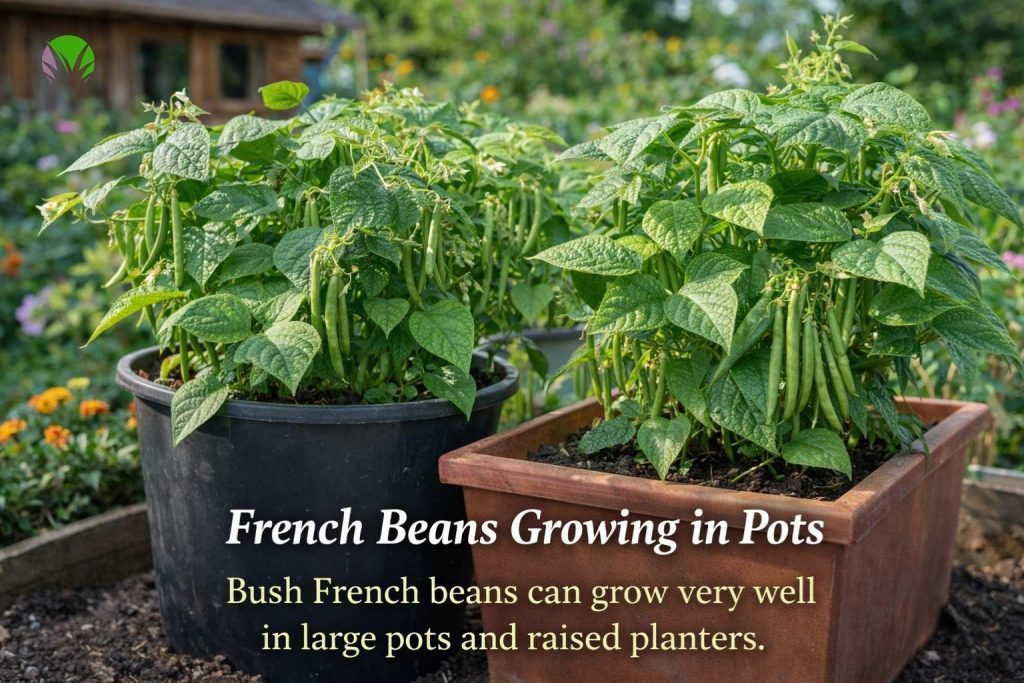
Yes, and many gardeners get very good results this way.
Bush French beans are especially suited to pots because they stay compact and do not need a big framework of supports. They can work well in large containers, troughs, and raised planters as long as the compost is good and the moisture does not swing too wildly.
The biggest issue with container-grown French beans is usually drying out.
Once they begin growing strongly and flowering, they need reasonably steady moisture. Small pots make that much harder. Larger containers are far more forgiving and usually lead to better plants.
If watering in containers is something you are still getting used to, it also helps to read How Often to Water Plants in the UK.
Bush Beans or Climbing French Beans?
This depends on your space and the kind of growing setup you want.
Bush French beans are often the easiest place to start. They stay lower, crop over a shorter period, and suit beds and pots well. They are tidy, practical, and good for smaller spaces.
Climbing French beans can also be excellent, but they need support from the beginning. They take up less ground space overall, but more height, and they tend to feel slightly more structured as a crop. In return, they can be very productive if they are grown well.
Neither is automatically better. Bush beans are often simpler. Climbing beans often give you more from a smaller footprint if you are happy to build supports.
How to Sow French Beans Properly
French beans are best sown when you can give them warmth and a steady start.
You can sow them under cover in pots or modules first, or direct sow them outside once the weather and soil are properly warm enough. In most UK gardens, the choice depends on how early you want to begin and how reliable your outdoor conditions are.
If you are sowing under cover, use a decent compost and do not overwater. Cold, soggy compost is one of the easiest ways to lose bean seed before it even gets moving. The aim is lightly moist, warm conditions rather than a wet setup.
If you are direct sowing, wait until the soil is genuinely ready. French beans resent being rushed into cold ground just because the calendar says late spring. A later sowing into warmth is usually stronger than an earlier sowing into cold soil.
This is one of those crops where patience pays off.
Should You Start French Beans Indoors?
Starting under cover can be useful if you want a head start or if your garden is slow to warm in spring.
It gives you more control over the early stage and can reduce the risk of seed loss in cold wet ground. But it only helps if the setup is good enough. Poor light, cold nights, or overly wet compost can still create weak seedlings, so indoor sowing is not automatically better just because it is indoors.
In many gardens, direct sowing works perfectly well once the weather has settled.
The key is not whether the beans begin inside or outside. It is whether they begin in the right conditions.
How Far Apart Should French Beans Be?
French beans need enough room to grow strongly, but not so much that valuable space is wasted.
Bush types can be grown more closely than climbing types because they stay compact. Climbing French beans need more room around the base and enough space for air to move through the plants once they get going properly.
This matters more than people sometimes expect. Beans that are too crowded become harder to water properly, slower to dry after rain, and more awkward to harvest. They can also become less productive because the plants end up competing for the same light, water, and root space.
That is why slightly more generous spacing often gives a better crop than squeezing in extra plants.
Do French Beans Need Support?
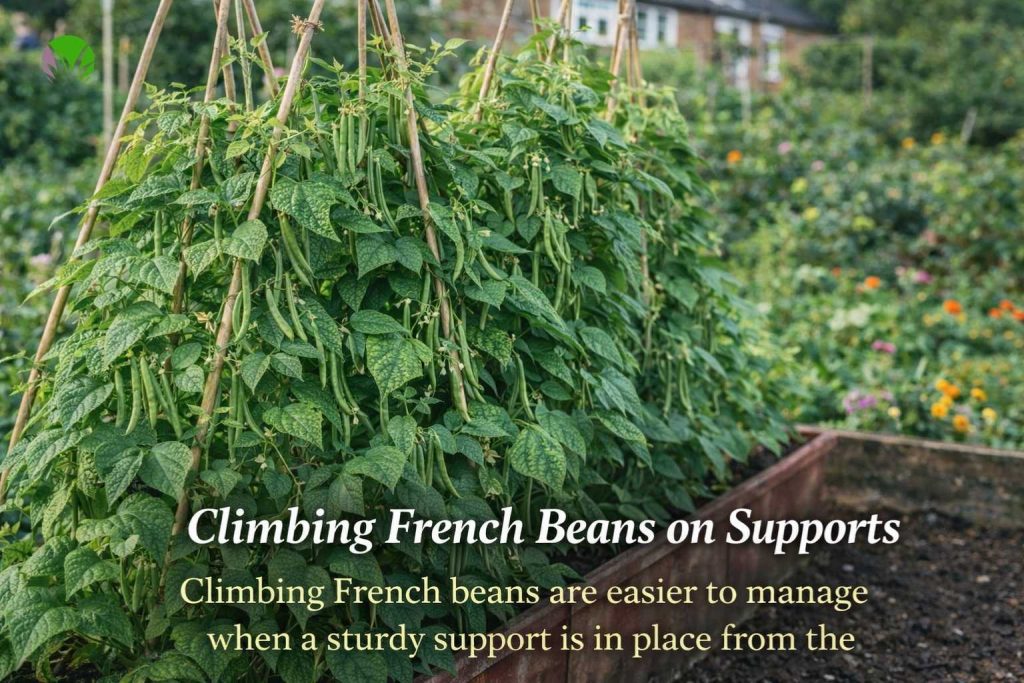
Bush French beans usually need little or no support, although a few short twigs or light canes can help keep plants tidy if they become heavy with pods.
Climbing French beans are different. They need support from the start, and it is much easier to put that structure in place before the plants begin scrambling everywhere.
Bamboo canes, netting, or a simple frame can all work well. The exact setup matters less than making sure it is sturdy enough and easy to pick from later.
One of the easiest ways to make climbing beans annoying rather than enjoyable is to let them become a tangled mess too early. A tidy support system makes the whole crop easier to manage.
How to Water French Beans Properly
French beans like steady moisture once they begin growing strongly, especially when they are flowering and forming pods.
They do not want to sit in soggy ground, but they also do not perform well if the roots keep drying out badly. The aim is consistency rather than extremes.
This is where many gardeners get mixed results. A plant that dries out repeatedly may still survive, but cropping often becomes poorer and the pods can be smaller or less reliable. On the other hand, a plant sitting in heavy, wet soil may struggle from the roots upward.
Good watering is really about keeping the plant moving steadily.
This matters even more in containers, where compost dries faster and the margin for error is smaller. If watering is something you are still getting used to, read How Often to Water Plants in the UK.
Do French Beans Need Feeding?
Usually not much at the beginning if the soil or compost is already in reasonable condition.
French beans do not need the same kind of heavy feeding that some fruiting crops do, but they do still benefit from decent growing conditions. If the root zone is poor, cold, or repeatedly stressed, feeding will not solve the deeper problem.
Once plants are growing strongly and beginning to crop, a sensible feeding approach can help if growth looks tired or the compost in containers is becoming exhausted. But it works best as support, not rescue.
Beans usually respond better to steadier moisture and better soil than to being pushed with feed when something else is wrong.
Why French Beans Sometimes Struggle
Most French bean problems come back to one of a few simple causes: cold starts, poor soil conditions, weak early growth, inconsistent watering, or overcrowding.
When beans fail, it is often because they were checked at the beginning and never really gained momentum afterwards. This is especially common when they are sown into cold ground or planted out before the weather is stable enough.
This is one reason bean problems can feel a bit unfair. The plant may survive perfectly well, yet still disappoint later because of something that happened weeks earlier.
If you keep running into repeated issues across different crops, it also helps to read Common Vegetable Growing Problems in UK Gardens, because many bean problems are really wider growing-condition problems in disguise.
Why Are My French Beans Growing Slowly?
Slow French bean growth is usually caused by cold conditions, poor soil structure, or a plant that has been checked early and never really settled afterwards.
Beans want warmth and reasonably active soil. If they are sitting in cold ground, repeatedly exposed to chilly nights, or trying to root through poor structure, they often just sit there looking hesitant.
This is one reason they can feel misleading. They may still look alive and not especially damaged, but they are not moving properly either.
If the plants are simply stuck or underwhelming, go back and check the basics. Was the timing right? Is the soil workable? Are they drying out too much in containers? Are they crowded? Those questions usually tell you more than adding feed straight away.
Why Are My French Beans Flowering But Not Cropping Well?
If beans flower but do not produce well, the cause is often stress rather than total failure.
Poor pollination, erratic watering, or a plant that never established strongly can all reduce cropping. Sometimes the plant simply does not have enough steady strength behind it to carry the harvest well.
This is why French beans often do best when everything is reasonably even rather than perfect. They do not need pampering, but they do appreciate warm, stable growing conditions and regular attention once they begin flowering.
Can You Grow French Beans in a Small Garden?
Yes, very easily.
That is one of their biggest strengths. Bush beans fit neatly into small beds, raised planters, and larger pots. Climbing types can make excellent use of vertical space if you would rather grow upward than outward.
This makes French beans a very good choice for smaller gardens where every bit of room needs to work hard. They are also productive enough to feel worthwhile without needing a large traditional vegetable patch.
If you are still deciding which crops suit smaller spaces best, the broader principles in How to Grow Vegetables in the UK are useful because they help place crops like French beans into a bigger beginner-friendly system.
When to Harvest French Beans

French beans are best harvested while the pods are still young, firm, and tender.
Do not leave them on the plant for too long hoping they will somehow become better. In most cases, older pods simply become tougher and more stringy, and the plant slows down because it thinks its job is done.
Regular harvesting encourages the plant to keep producing.
This is one of the reasons French beans can be such a satisfying crop. Once they begin properly, the job becomes less about waiting and more about keeping up.
How to Keep French Beans Cropping for Longer
The best way to keep beans productive is to keep the plant moving steadily.
That means giving it enough warmth, reasonably even moisture, enough room, and picking regularly once pods begin forming. Beans that are left with mature pods hanging on the plant often slow down much faster than those that are picked frequently.
It also helps not to let the plant go through repeated checks. A healthy bean plant that keeps moving tends to reward you much better than one that has been pushed, stalled, dried out, and then expected to recover fully.
French Beans FAQs
Are French beans easy to grow in the UK?
Yes. French beans are usually easy to grow in the UK once the weather is warm enough. They dislike cold starts, but in the right conditions they are productive and straightforward.
Can you grow French beans in pots?
Yes. Bush French beans grow especially well in large pots and raised planters, as long as they have enough compost and steady moisture.
Do French beans need full sun?
French beans grow best in a warm, bright position with as much light as you can reasonably give them. Shelter from strong winds also helps.
Should French beans be started indoors or outside?
Both can work. Starting under cover can help if your garden is slow to warm up, but direct sowing works well once outdoor conditions are properly suitable.
Do French beans need support?
Bush French beans usually need little support, while climbing French beans need a sturdy support structure from the beginning.
Why are my French beans growing slowly?
Slow growth is usually caused by cold conditions, poor soil structure, or early setbacks that stopped the plants settling properly.
When should French beans be harvested?
French beans are best picked while the pods are still young, firm, and tender. Regular harvesting helps keep the plants productive.
A Sensible Place to Start
If you want to grow French beans well in the UK, keep the basics simple.
Wait until conditions are warm enough, give the plants a bright and sheltered position, use workable soil or a good-sized container, and keep moisture reasonably steady once growth gets going properly.
Do not rush them into cold conditions, do not crowd them too tightly, and do not assume a weak start will sort itself out on its own.
Once those basics are in place, French beans are one of the most rewarding summer vegetables you can grow.
If you want to build from here, the most useful next reads are When to Plant French Beans in the UK, How to Grow Vegetables in the UK, and Common Vegetable Growing Problems in UK Gardens.