
Lettuce is one of the easiest vegetables to grow in the UK.
It is quick, useful, and well suited to beginners. You do not need a big garden or a greenhouse, and it grows well in beds, raised planters, and containers. If you want a crop that starts giving something back fairly quickly, lettuce is a very good choice.
It also suits British growing conditions well.
Lettuce prefers cooler weather to intense heat, which makes it a good crop for spring and early summer. In warmer dry spells, it can become stressed, bolt, or turn bitter, so steady growing conditions matter.
In this guide, we will look at how to grow lettuce in the UK, where to grow it, how to sow it, and how to keep it growing well. If you want the wider basics first, read How to Grow Vegetables in the UK.
If you want the timing side in more detail, it also helps to read When to Plant Lettuce in the UK.
Quick Answers
Is lettuce easy to grow in the UK?
Yes. Lettuce is one of the easiest vegetables to grow and is very good for beginners.
Can you grow lettuce in pots?
Yes. Lettuce grows very well in pots, troughs, and raised planters.
Does lettuce need full sun?
Lettuce likes a bright spot, but in warmer weather it often benefits from a little relief from the hottest sun.
Why does lettuce bolt?
Lettuce often bolts because of heat, dryness, or being left too long without harvesting.
Can you harvest lettuce more than once?
Yes. Loose-leaf types can often be picked leaf by leaf or cut more than once.
Why Lettuce Is Good for UK Gardens
Lettuce is one of the most practical vegetables you can grow.
It does not need much room, it suits smaller gardens, and it is useful in the kitchen almost immediately once it starts producing. That makes it a very handy crop if you want something simple and worthwhile.
It is also good for learning.
Lettuce teaches you about watering, spacing, repeat sowing, and harvesting at the right stage. Those are useful habits for growing other vegetables too.
If you are still building confidence, it fits very naturally with the crops in Easy Vegetables to Grow in the UK.
Where to Grow Lettuce
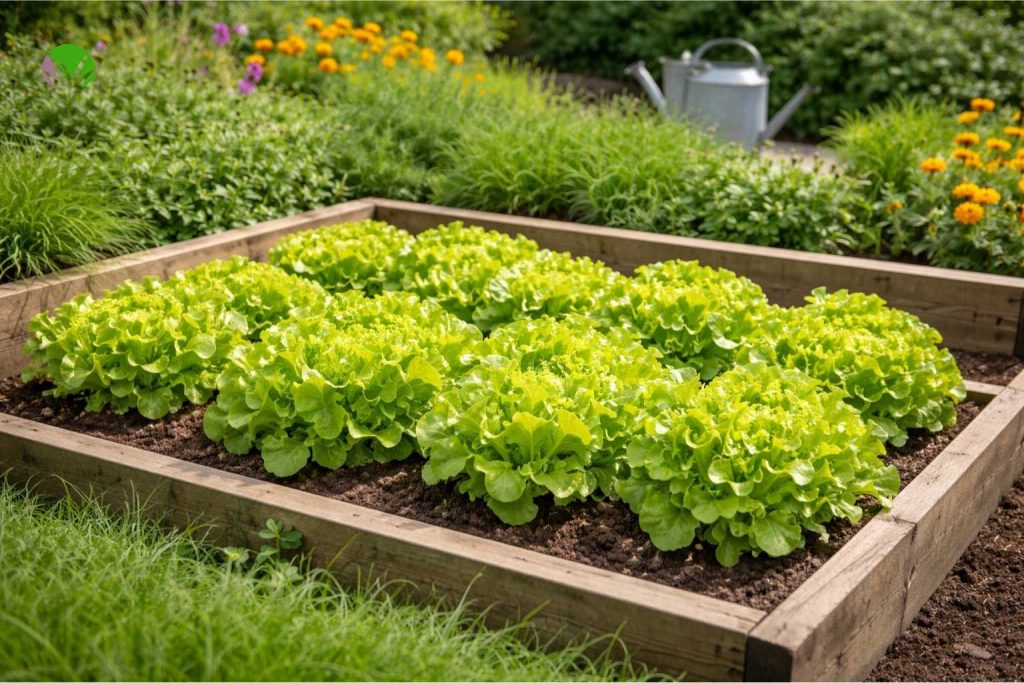
Lettuce grows best in a bright spot with easy access to water.
It does not need the hottest part of the garden. In fact, a very hot dry spot often makes lettuce harder to keep soft and leafy. A bright bed, raised planter, or container near the house usually works well.
Convenience matters with lettuce.
You will get better results if it is somewhere you can check often. Lettuce benefits from steady moisture and regular harvesting, so it is much easier to manage if it is close at hand rather than hidden away.
What Soil Does Lettuce Like?
Lettuce likes soil that stays workable and holds moisture reasonably well.
Because it is grown for soft leafy growth, it does not do its best in dry, poor, or neglected ground. If the roots keep drying out, the plants usually become stressed and less useful.
This is why organic matter helps.
Soil improved with compost is often better at holding moisture evenly, which makes lettuce easier to grow well. If your garden soil needs improving first, read How to Improve Garden Soil in the UK.
Can You Grow Lettuce in Pots?
Yes, and lettuce is one of the best vegetables for containers.
Loose-leaf lettuces are especially good in pots, troughs, and window boxes because they do not need much room and can be harvested little and often. This makes them ideal for patios and small gardens.
The main thing to remember is that containers dry out faster than the ground.
That means watering matters more. If you are using pots regularly, it also helps to read Can You Grow Vegetables in Pots in the UK?
What Type of Lettuce Should You Grow?
There are two simple ways to think about lettuce.
Some types are loose-leaf lettuces, which are picked leaf by leaf or cut and allowed to grow again. Others are heading lettuces, which are usually harvested whole once ready.
Loose-leaf types are often easiest for beginners.
They are flexible, quick, and very useful if you want regular small harvests. Heading lettuces are also worth growing, but they usually need a little more space and patience.
When to Sow Lettuce in the UK
Lettuce is usually grown in the cooler and milder parts of the UK growing season.
It is a crop that does best in steady conditions rather than intense heat. That is why repeat sowing often works better than sowing a huge amount all at once.
For full timing advice, read When to Plant Lettuce in the UK.
Should You Sow Lettuce Direct or Start It in Trays?
Both methods work.
Direct sowing is simple and works well for short rows or small patches. Starting lettuce in trays or modules gives you a bit more control and can help if you want tidier planting or fewer gaps.
For most gardeners, either option is fine.
What matters most is that the seedlings do not dry out and that they are not left overcrowded for too long.
In the next part, we’ll cover how to sow lettuce properly, how far apart to space it, how to water it well, and how to keep it cropping for longer.
How to Sow Lettuce Properly
Lettuce is easy to sow, but it grows better if you keep it simple and do not overdo it.
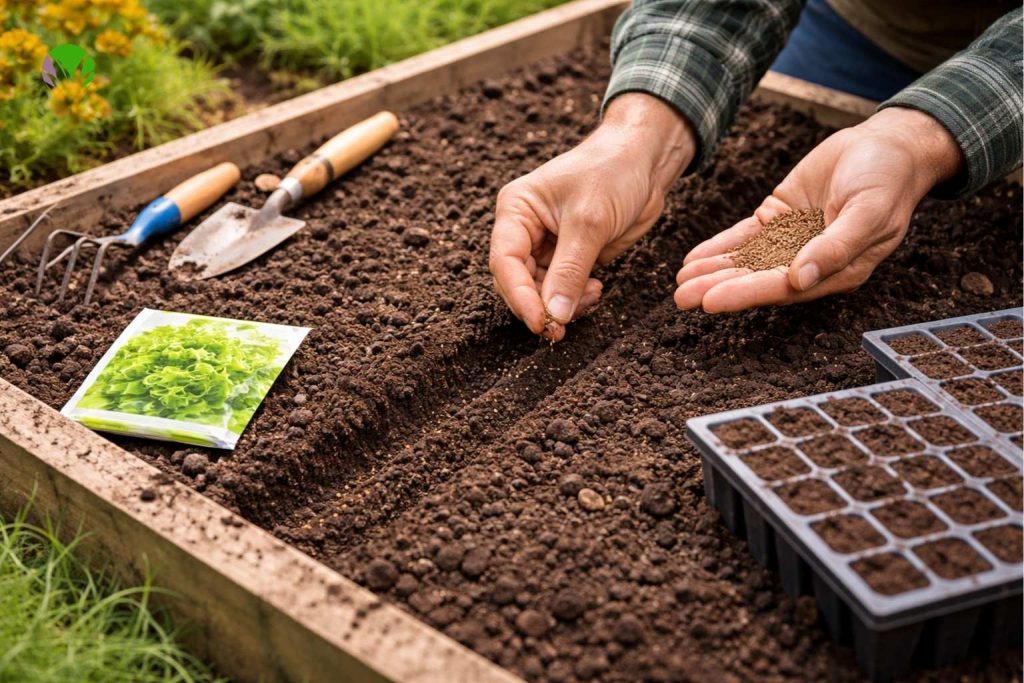
If you are sowing in the ground, prepare the soil first so the surface is loose, level, and not full of weeds. Then sow thinly rather than scattering too much seed into one spot. A crowded row often leads to weak seedlings and more thinning than you really want.
Water gently if the soil is dry and keep the surface from drying out while the seedlings are coming up.
If you are sowing in trays or modules, use a decent compost and keep them in a bright place. Once the seedlings are large enough to handle, they can be planted into beds, raised planters, or containers.
The main thing is to give lettuce a tidy start.
It is a simple crop, but it responds well to even sowing and steady early moisture.
How Far Apart Should Lettuce Be?
That depends on the type you are growing.
Loose-leaf lettuce can be grown more closely because you are often picking leaves little and often rather than waiting for a full heart. Heading lettuces need more room so they can form properly without crowding each other.
This is where many beginners go wrong.
They sow or plant too thickly because the bed looks empty at first. Later on, the plants compete for light, air, water, and root space. Instead of a better crop, you usually get a crowded one.
Giving lettuce a bit of room makes it easier to keep healthy and easier to harvest.
It also helps the leaves dry more quickly after rain or watering, which keeps the crop cleaner and less stressed.
How to Water Lettuce Properly
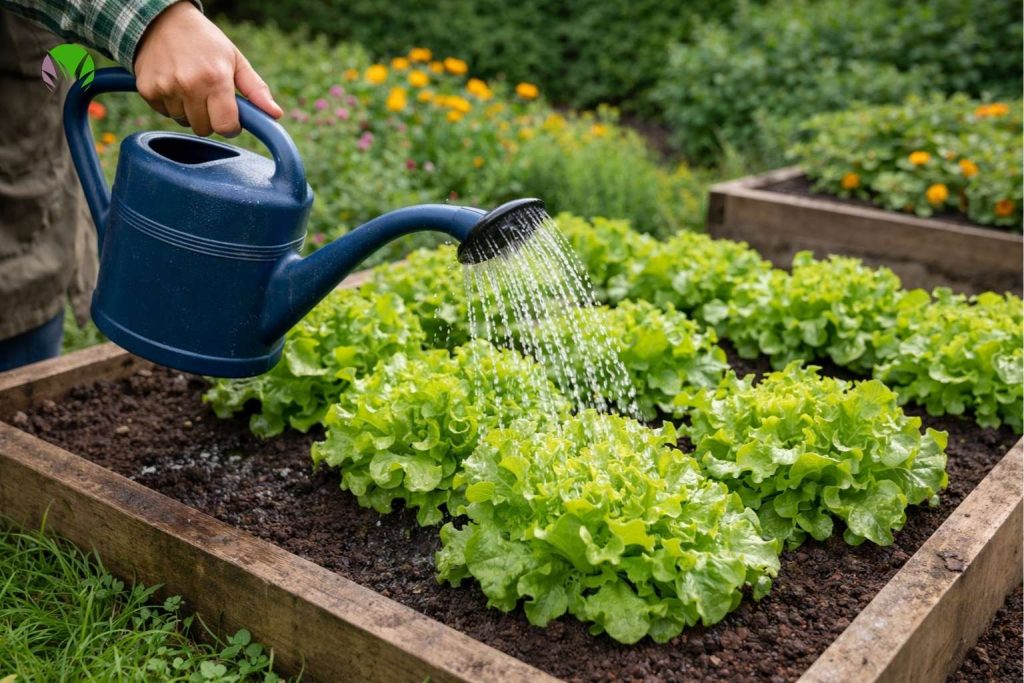
Watering matters a lot with lettuce.
Because lettuce is grown for soft leafy growth, it does best when moisture stays fairly steady. If the soil swings from very dry to very wet, the plants often become stressed. Growth slows, leaves become tougher, and bolting becomes more likely.
This is why regular checking is better than guessing.
You do not need to water constantly, but you do need to stop the roots drying out badly. This is especially important in containers, raised planters, and lighter soils, where moisture disappears faster.
The aim is steady growth, not soggy ground.
If the soil stays waterlogged, lettuce struggles for a different reason. The roots still need air as well as moisture. Good watering is about balance, not extremes.
If watering is something you are still getting used to, read How Often to Water Plants in the UK.
Does Lettuce Need Feeding?
Usually not much, if the soil or compost is in decent condition.
Lettuce is not one of the hungriest crops in the garden, but it does grow best when the soil has enough goodness to support steady leafy growth. In most cases, soil improved with compost or a reasonable potting mix is enough to get good results.
If lettuce looks weak, it is often better to check moisture, spacing, and growing conditions first.
Dryness, crowding, heat, or poor soil structure are often bigger problems than lack of feed. In containers, nutrients can run out more quickly, so lettuce in pots may need a little more attention than lettuce in open ground.
Even then, the basics still matter more than pushing extra feed.
Can You Grow Lettuce All Summer?
Sometimes, but it usually becomes harder in hot dry weather.
Lettuce is at its best in cooler, steadier conditions. Once summer becomes hot and dry, plants are more likely to bolt, turn bitter, or struggle to stay soft and leafy. That does not mean you cannot grow it at all, but it does mean conditions become more important.
In warmer periods, lettuce often does better with a little shelter from the harshest sun and more careful watering.
This is another reason repeat sowing is so useful. Instead of one huge batch, smaller sowings give you a better chance of having some plants at the right stage at the right time.
Why Repeat Sowing Works So Well With Lettuce
Lettuce is one of the best vegetables for repeat sowing.
If you sow everything at once, you often end up with more lettuce than you can use for a short period, followed by nothing. Smaller sowings spaced through the season usually make far more sense.
This keeps the harvest steadier and makes better use of space.
It also lowers the risk. If one sowing suffers from slugs, dry weather, or poor germination, you have not lost the whole crop.
This is one of the reasons lettuce suits beginners so well.
You do not need to get everything perfect in one go. You can keep sowing small batches and improve as you go.
Can You Harvest Lettuce More Than Once?
Yes, depending on the type.
Loose-leaf lettuces are often the most flexible because you can pick outer leaves as needed and let the plant continue growing. Some can also be cut and allowed to regrow if they are healthy and not cut too harshly.
Heading lettuces are different.
These are usually grown to form a full head and then harvested whole once they are ready. They are still worthwhile, but they do not usually give the same repeated picking pattern as loose-leaf types.
If you want regular little harvests, loose-leaf lettuce is usually the most practical choice.
In the next part, we’ll cover the most common lettuce problems, when to harvest it, and how to keep it useful for as long as possible.
Common Problems When Growing Lettuce
Lettuce is usually easy to grow, but a few common problems can make it disappointing.
One of the biggest is dryness.
If lettuce dries out too often, it quickly becomes stressed. Growth slows, leaves lose their softness, and plants are more likely to bolt. This is especially common in containers and raised planters, where compost dries faster than open ground.
Crowding is another frequent issue.
If seedlings are too close together, they compete for light, moisture, and space. The result is usually weak growth rather than a better crop. A little thinning or better spacing often makes a big difference.
Heat can also be a problem.
Lettuce prefers steady, mild growing conditions. In hot weather, especially if the roots are drying out too, plants often run to seed more quickly and become bitter.
Slugs can be troublesome as well, especially while plants are still small.
Young lettuce is soft and attractive to them, so regular checking matters. Damage is often worst when seedlings are tiny and the weather is damp.
Why Does Lettuce Bolt?
Bolting means the plant starts to run to seed instead of putting its energy into leafy growth.
This usually happens because the lettuce has become stressed or overmature. Heat, dryness, overcrowding, and being left too long without harvesting can all encourage bolting.
Once lettuce starts to bolt, it usually becomes less useful.
The leaves often turn more bitter and the plant stops being the kind of soft, tender crop you wanted in the first place. That is why steady growth and timely harvesting matter so much.
Repeat sowing helps here too.
Instead of relying on one big batch, smaller sowings give you fresh lettuce coming through while older plants are finishing.
Why Is My Lettuce Bitter?
Bitter lettuce is usually a sign that the plant has become stressed or overgrown.
Hot weather, dry soil, and delayed harvesting are the usual causes. Lettuce is best when it grows steadily and is picked while still fresh and tender.
This is why regular watering and timely harvesting make such a difference.
If the plant is left too long in poor conditions, it often stops tasting the way you want it to.
When to Harvest Lettuce
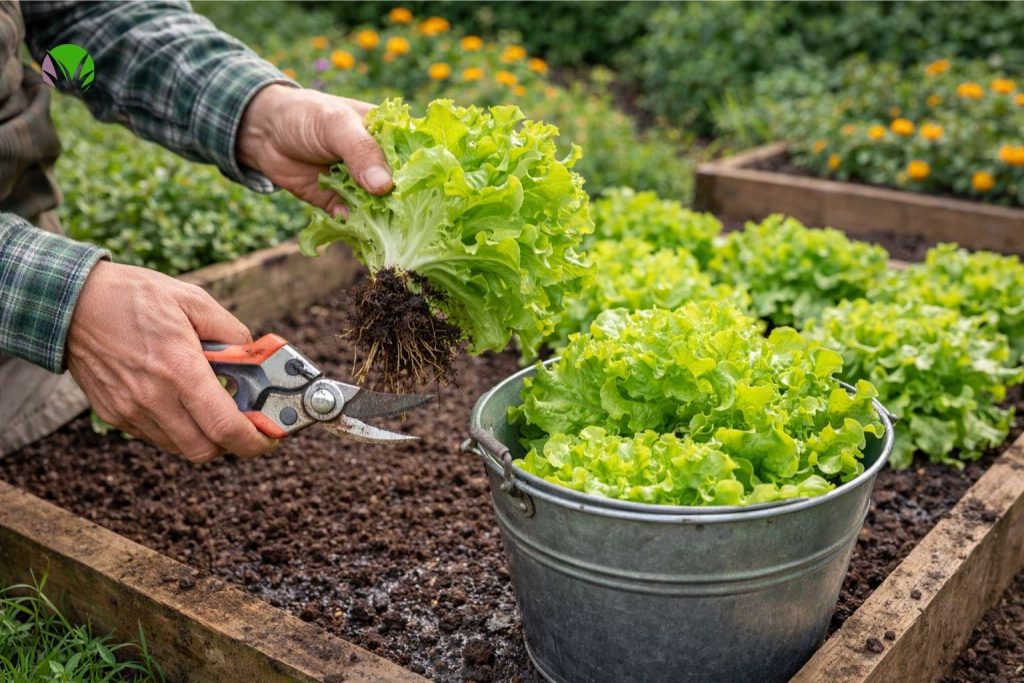
Lettuce is best harvested before it becomes old, tough, or stressed.
Loose-leaf types can often be picked as soon as the leaves are large enough to use. You do not need to wait for the plant to become huge. In fact, smaller regular harvests are often the best way to keep it useful.
Heading lettuces should be picked once the heart has formed properly but before the plant begins to decline.
The exact timing depends on the type, but the main idea is the same: do not leave lettuce standing too long once it is ready.
Regular checking makes this much easier.
That is another reason lettuce is such a good crop near the house or in containers by the kitchen. If you see it often, you are much more likely to harvest it at the right stage.
How to Keep Lettuce Growing for Longer
The best way to keep lettuce useful for longer is to sow it in small batches rather than all at once.
This avoids the usual problem of having far too much lettuce for one short period and then none at all. Smaller sowings give you a steadier flow of leaves and make much better use of space.
Regular picking also helps.
With loose-leaf types especially, harvesting little and often keeps the plants productive and stops them becoming overgrown too quickly.
Good watering matters too.
If lettuce keeps drying out badly, it becomes much harder to keep it soft, leafy, and worth picking. Steady moisture is one of the biggest keys to success with this crop.
Is Lettuce Worth Growing?
Yes, especially in a UK garden.
It is easy, quick, useful, and fits almost any size of growing space. You do not need a large vegetable patch to enjoy it, and it is one of the few crops that can keep giving regular harvests without a huge amount of effort.
It is also one of the best vegetables for beginners.
It teaches good habits, suits containers well, and gives you something practical to harvest without waiting too long. For many gardeners, that makes it one of the most worthwhile crops to grow.
Frequently Asked Questions
Is lettuce easy to grow in the UK?
Yes, lettuce is one of the easiest vegetables to grow in the UK. It suits beginners well, grows quickly, and works in beds, raised planters, and containers.
Can you grow lettuce in pots?
Yes, lettuce grows very well in pots, troughs, and window boxes. Loose-leaf types are especially useful for containers because they do not need much room and can be harvested little and often.
Does lettuce need full sun?
Lettuce grows best in a bright position. In cooler parts of the season, a sunny spot works well, but in warmer weather it often benefits from a little relief from the hottest sun.
What soil does lettuce like?
Lettuce likes soil that is workable and holds moisture reasonably well. It usually grows best in soil improved with compost or in good container compost that does not dry out too quickly.
How often should I water lettuce?
Lettuce needs fairly steady moisture to stay soft and leafy. It should not be allowed to dry out badly, especially in containers, raised planters, or warm weather.
Why does lettuce bolt?
Lettuce usually bolts because it has become stressed or overmature. Heat, dry soil, crowding, and leaving plants too long before harvesting can all encourage bolting.
Why is my lettuce bitter?
Lettuce often turns bitter when it is stressed by heat or dryness, or when it is left too long before picking. Regular watering and timely harvesting usually improve flavour.
Can you harvest lettuce more than once?
Yes, loose-leaf lettuces can often be picked leaf by leaf or cut and allowed to regrow. Heading lettuces are usually harvested whole once they are ready.
Can you grow lettuce all summer in the UK?
Sometimes, but it often becomes harder in hot dry spells. Lettuce is usually easier to grow in cooler, steadier conditions, which is why repeat sowing through the season works well.
Should I sow lettuce direct or in trays?
Both methods work. Direct sowing is simple and suits short rows or small patches, while trays or modules give you a bit more control and can help with tidier planting.
How far apart should lettuce be planted?
Loose-leaf lettuce can be grown more closely than heading types. Heading lettuces need more room so they can form properly and stay healthy.
Is lettuce worth growing in a small garden?
Yes, lettuce is one of the best vegetables for smaller gardens because it takes up little space, grows quickly, and can be grown very successfully in containers.
A Sensible Place to Start
If you want to grow lettuce well in the UK, keep it simple.
Choose a bright spot, give the plants moisture-retentive soil or compost, sow small amounts rather than too much at once, and do not let the crop dry out badly. Harvest it while it is still fresh and tender, and keep repeat sowing through the season instead of relying on one big batch.
That is usually enough to make lettuce a very successful crop.
You do not need a complicated setup or a lot of space. You just need steady conditions and a little regular attention. Once those basics are in place, lettuce is one of the easiest and most rewarding vegetables to grow in a UK garden.