

Is bagged compost worth it for UK home gardens? It’s one of the most common questions gardeners ask when soil looks tired or plants fail to thrive, and the answer is more nuanced than a simple yes or no.
The exact blend varies by brand and even by batch. This is why gardeners sometimes notice that one bag performs very differently from another, even when the label looks the same. Compost behaves very differently depending on the soil beneath it, which is why it’s best understood as part of overall soil health for UK gardens and longer-term efforts to improve garden soil in the UK, rather than as a standalone solution.
This guide looks at bagged compost honestly, from a home gardener’s point of view. No hype, no scare tactics, and no assumption that everyone has space for compost bins or allotments. Just a clear explanation of what bagged compost can do, what it can’t, and how to use it sensibly if you choose to.
What Bagged Compost Actually Is
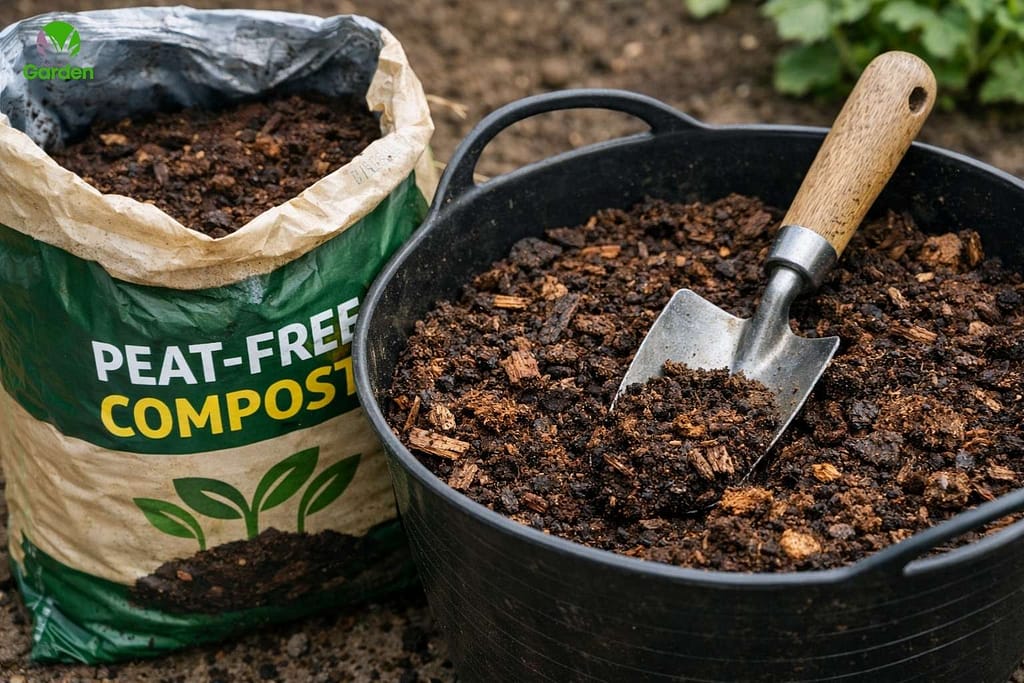
Bagged compost sold in UK garden centres is usually a blend of organic materials that have been processed and partially broken down.
Most peat-free composts in the UK contain some combination of:
- Green waste compost
- Wood fibre
- Composted bark
- Coconut coir
- Food waste compost
The exact blend varies by brand and even by batch. This is why gardeners sometimes notice that one bag performs very differently from another, even when the label looks the same.
It’s important to understand that bagged compost is not the same thing as garden soil. It’s lighter, more uniform, and designed primarily as a growing medium rather than a long-term soil replacement.
Why Bagged Compost Is So Popular in the UK
Bagged compost fits neatly into modern UK gardening for a few reasons.
Convenience
Not everyone has:
- Space for compost bins
- Time to manage compost properly
- Enough garden waste to produce compost
Bagged compost offers an easy alternative.
Predictability
In theory, bagged compost provides:
- A consistent texture
- Fewer visible weeds
- A ready-to-use material
This makes it appealing to beginners, especially those gardening in containers or raised beds.
Availability
It’s sold everywhere:
- Garden centres
- DIY stores
- Supermarkets in spring
For many people, it’s the only compost they ever encounter.
What Bagged Compost Is Good For
Bagged compost does have genuine uses in UK home gardens — when used in the right way.
Containers and pots
This is where bagged compost performs best.
In pots, compost:
- Provides a light growing medium
- Holds moisture without becoming waterlogged
- Supports young plants
Most container-grown vegetables, herbs, and flowers rely on bagged compost as their main growing medium.
Topping up raised beds
Bagged compost can be useful for:
- Adding organic matter to the surface
- Refreshing beds that have settled
- Supporting shallow-rooted crops
Used as a top dressing, it can help improve surface conditions without disturbing deeper soil.
Improving planting holes (with care)
In poor or compacted soil, a small amount of compost mixed into the top layer can:
- Help young plants establish
- Improve moisture retention around roots
This works best when compost is used sparingly and blended with existing soil rather than replacing it entirely.
What Bagged Compost Does NOT Do Well
This is where expectations often go wrong.
It does not fix poor soil structure
Bagged compost:
- Does not break up deep compaction
- Does not improve drainage below the surface
- Does not replace long-term soil care
If soil is hard, waterlogged, or compacted underneath, adding compost on top may temporarily mask the problem rather than solve it. In many gardens this comes down to soil compaction in UK gardens rather than a lack of organic matter.
It does not last forever
Most bagged compost:
- Breaks down quickly
- Loses structure within months
- Needs topping up regularly
This is especially noticeable in raised beds, where compost settles and shrinks over time.
It does not guarantee nutrients
Despite marketing claims, many composts:
- Contain limited nutrients
- Lose fertility quickly
- Require feeding later in the season
Healthy plant growth still depends on overall soil health — and understanding feeding the soil vs feeding the plant — not just what comes out of a bag.
Peat-Free Compost: Why It Behaves Differently
Most UK compost is now peat-free, which is a positive environmental change — but it does affect how compost behaves.
Peat-free compost often:
- Dries out more quickly
- Feels coarser
- Drains faster
This can surprise gardeners used to older peat-based mixes. It doesn’t mean peat-free compost is worse — it just needs different expectations and watering habits.
Why Bagged Compost Sometimes Causes Problems
Many gardeners report issues after adding compost, such as:
- Seedlings failing
- Soil staying too wet
- Poor root growth
These problems often come from how compost is used rather than the compost itself.
Too much compost
Adding thick layers can:
- Smother soil
- Reduce oxygen
- Hold excess moisture
This is particularly risky in already damp UK gardens.
Understanding whether is bagged compost worth it depends largely on how it’s used, what problem you’re trying to solve, and the condition of the soil underneath.
Mixing compost into wet soil
Working compost into soil when it’s wet:
- Encourages compaction
- Damages soil structure
- Creates dense layers
This can make drainage worse, not better.
Using compost as soil replacement
Filling beds entirely with compost:
- Leads to rapid settling
- Creates unstable growing conditions
- Often disappoints after the first season
Soil and compost play different roles and work best together, not as substitutes.
Homemade Compost vs Bagged Compost
Both have a place, but they behave differently.
Homemade compost
- Improves soil biology over time
- Breaks down more gradually
- Reflects your garden’s conditions
Bagged compost
- Convenient and consistent
- Limited long-term impact
- Best for targeted use
Many UK gardeners use a combination of both, which is usually the most realistic approach.
Cost vs Benefit: Is Bagged Compost Worth the Money?
Whether bagged compost is “worth it” depends on how you’re using it.
It’s generally worth buying if:
- You garden mainly in pots
- You’re topping up beds lightly
- You need compost occasionally
It’s less worthwhile if:
- You’re trying to fix deep soil problems
- You’re filling large beds regularly
- You expect permanent improvement
In those cases, focusing on long-term soil care often delivers better results.
How to Use Bagged Compost Sensibly in UK Gardens
If you choose to use bagged compost, a few simple habits make a big difference.
Use it as a surface layer
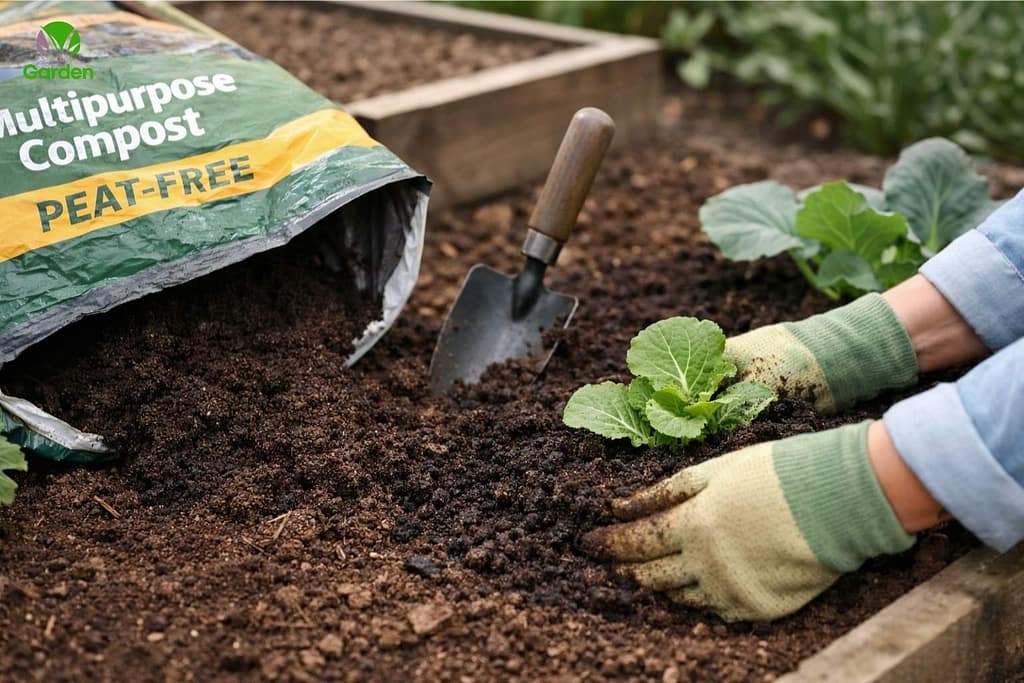
Applying compost on top:
- Protects soil
- Feeds soil life
- Avoids structural damage
This mirrors natural soil processes and works well in UK conditions.
Keep layers thin
A few centimetres is usually enough. Thick layers rarely improve results and often cause problems.
Combine with patience
Compost works best alongside:
- Reduced digging
- Minimal soil disturbance
- Consistent planting
It supports soil health — it doesn’t replace it.
When Bagged Compost Is Not the Right Choice
There are times when compost simply isn’t the answer.
If soil:
- Stays waterlogged
- Is heavily compacted
- Has drainage problems
Then addressing structure and pressure matters more than adding organic material.
In these cases, compost should be part of a broader soil-care approach, not the first or only response.
The Role of Compost in Long-Term Soil Health
Compost supports soil health when:
- Used consistently
- Applied gently
- Combined with good soil habits
It plays a supporting role, not a starring one.
This is why compost is discussed throughout the wider topic of soil health, rather than treated as a standalone solution.
A Sensible Place to Start
If you’re unsure whether bagged compost is worth it in your garden, start small.
Use it:
- In pots and containers
- As a thin top dressing
- To support young plants
Avoid using it to:
- Replace soil
- Fix compaction
- Solve drainage problems
Bagged compost is most useful when it supports soil health, not when it’s expected to create it.
That’s a sensible place to start.
Is bagged compost good for garden soil?
Bagged compost can help improve surface conditions but does not fix deep soil problems on its own.
Can I use compost instead of soil?
Compost is not a replacement for garden soil and works best when used alongside existing soil.
Is peat-free compost worse than peat compost?
Peat-free compost behaves differently but works well when used correctly and watered appropriately.