

One of the most common planting mistakes gardeners make is relying on warm days rather than warm soil.
Sunshine may return, temperatures may rise, and gardens can look ready for planting — yet vegetables often struggle, stall, or fail entirely.
This happens because soil warms far more slowly than the air above it.
While spring weather can fluctuate wildly, soil temperature controls root activity, seed germination, nutrient uptake and early growth strength.
Planting before the soil is warm enough leads to slow growth, weak roots, poor harvests and higher failure rates.
This is one of the key timing problems explained in When to Plant Vegetables in the UK, where soil readiness is more important than calendar dates.
Understanding soil temperature transforms planting success.
Once gardeners work with warm soil rather than rushing early, vegetables establish faster, grow stronger and produce far better harvests.
Quick Answers
- Most vegetables need soil temperatures of at least 8–10°C to germinate reliably
- Warm-season crops prefer 12–15°C or higher
- Cold soil slows roots and nutrient uptake
- Planting too early often causes stalling or failure
- Well-drained soil warms faster than heavy wet ground
For reliable planting, soil should feel cool but not cold to the touch and stay consistently above 8–10°C for hardy crops, and 12°C or more for tender vegetables.
Why Soil Temperature Matters More Than Air Temperature
Many gardeners watch daily weather forecasts closely in spring.
Warm afternoons often create the impression that planting season has arrived.
However, soil responds far more slowly to changing conditions.
After winter, ground holds cold deep below the surface.
Even after several sunny days, soil can remain too cold for root activity.
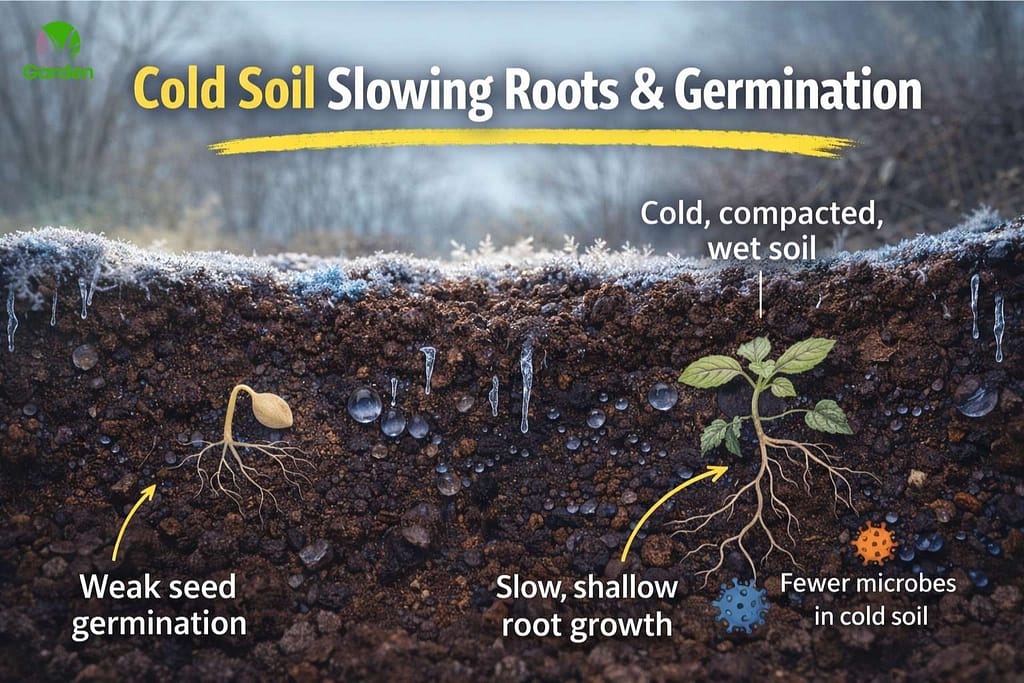
Seeds planted into cold soil may rot, germinate slowly or fail completely.
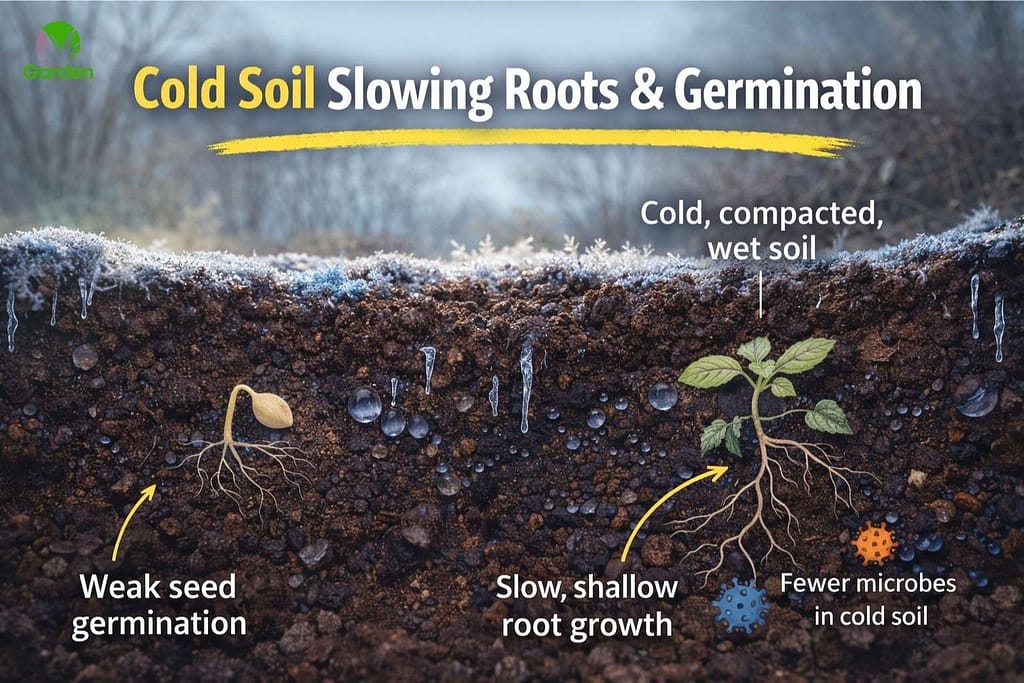
Young plants placed into cold ground often sit without growing for weeks.
This early stress weakens development for the entire season.
What Happens When Vegetables Are Planted in Cold Soil
Cold soil affects vegetables in several critical ways.
Slow or Failed Germination
Seeds require warmth to activate enzymes that trigger growth.
When soil remains cold:
- Germination slows dramatically
- Seeds may rot before sprouting
- Emergence becomes uneven
This leads to weak, patchy beds.
Restricted Root Growth
Roots grow very slowly in cold conditions.
Instead of spreading deeply, they remain short and shallow.
This reduces water and nutrient access.
Root restriction is one of the underlying issues explored in Why Roots Stay Small in Heavy UK Soil.
Poor Nutrient Uptake
Cold soil reduces microbial activity.
Nutrients remain locked in organic matter.
Plants struggle to absorb what they need.
This often causes pale leaves and slow growth even when soil is fertile.
Long-Term Weakness
Early stress reduces plant vigour permanently.
Even when soil warms later, development rarely catches up fully.
This results in smaller plants and reduced yields.
Minimum Soil Temperatures for Common Vegetables
Different crops tolerate different soil warmth levels.
As a general guide:
Hardy vegetables (8–10°C)
- Peas
- Broad beans
- Spinach
- Radishes
- Onions
Moderate warmth vegetables (10–12°C)
- Carrots
- Beetroot
- Lettuce
- Potatoes
- Brassicas
Warm-season vegetables (12–15°C+)
- Tomatoes
- Courgettes
- Cucumbers
- Beans
- Sweetcorn
Planting below these ranges usually leads to problems.
Why Heavy or Wet Soil Stays Cold Longer
Soil structure plays a major role in how quickly ground warms in spring.
Well-drained soil warms quickly as water drains away and air fills pore spaces.
Heavy clay or compacted soil behaves very differently.
It holds moisture tightly and drains slowly.
Water absorbs heat and keeps soil cold far longer.
This is why many gardens feel permanently behind in spring.
Poor drainage is explained in detail in How to Improve Garden Drainage in UK Soil.
Until excess moisture is reduced, soil will always warm slowly.
Compaction and Cold Ground
Compacted soil contains fewer air spaces.
Water fills remaining pores.
This further slows warming.
Roots also struggle to grow through dense layers.
This double effect keeps plants weak early in the season.
Compaction effects are covered in Soil Compaction in UK Gardens.
How to Tell If Your Soil Is Warm Enough Without a Thermometer
While soil thermometers are useful, gardeners can judge warmth naturally.
Touch Test
Push fingers several inches into the soil.
If it feels icy cold, it is too early.
If it feels cool but not cold, hardy crops can usually be planted.
If it feels slightly warm, most vegetables will thrive.
Weed Growth Indicator
When weeds begin growing strongly, soil has warmed enough for most planting.
Consistent Night Temperatures
If nights remain above freezing for several weeks, soil is usually warming steadily.
Why Waiting Often Produces Faster Results
Planting later into warm soil almost always outperforms early planting into cold ground.
Seeds germinate quickly.
Roots spread rapidly.
Growth becomes vigorous.
Plants planted two weeks later in warm soil often overtake early plantings within days.
This leads to stronger crops and better harvests.
The next section explains how to warm soil naturally and prepare beds properly for planting.
How to Warm Soil Faster for Earlier Planting
While patience is often the best solution, gardeners can encourage soil to warm more quickly using simple techniques.
Improve Drainage First
Excess moisture keeps soil cold.
Allowing water to drain freely lets soil warm naturally as air replaces water in pore spaces.
Once drainage improves, spring soil temperatures rise noticeably faster.
Long-term methods are covered in How to Improve Garden Drainage in UK Soil.
Reduce Compaction
Looser soil contains more air spaces.
Air warms faster than waterlogged ground.
Reducing compaction allows heat to penetrate deeper and roots to grow more freely.
This process is explained in Soil Compaction in UK Gardens.
Use Mulch Strategically
In early spring, temporarily pulling mulch back from beds allows sunlight to warm the soil surface.
Once soil warms, mulch can be replaced to conserve moisture.
Cover Beds to Capture Heat
Clear plastic, fleece or cloches trap solar warmth.
This can raise soil temperature by several degrees.
Even small increases make a major difference to germination success.
How Soil Structure Controls Spring Warm-Up Speed
Healthy soil warms faster every year.
As organic matter increases and compaction reduces, water drains better and air circulation improves.
This creates soil that responds quickly to spring sunshine.
Gardens with strong structure often plant weeks earlier than heavy untreated soil.
The long-term rebuilding process is explained in How to Improve Garden Soil in the UK Long Term.
Seasonal Planting Strategy for Best Results
Rather than following fixed calendar dates, successful gardeners work with soil conditions.
Early Spring
Wait until soil reaches minimum temperatures for hardy crops.
Focus on improving drainage and preparing beds.
Mid Spring
Plant most cool-season vegetables once soil warms steadily.
Growth will be faster and stronger.
Late Spring to Early Summer
Plant warm-season crops once soil reaches higher temperature ranges.
This avoids stalling and weak root systems.
Why Rushing Planting Causes Long-Term Problems
Early planting into cold soil often leads to:
- Weak root development
- Slower growth all season
- Higher disease risk
- Lower yields
Even when weather improves, stressed plants rarely catch up fully.
Waiting for warm soil creates stronger crops that outperform early plantings.
How Long It Takes to Improve Cold Spring Soil
Some warming improvement occurs within one season once drainage improves.
Major structural changes take one to three years.
Each year soil warms faster and supports earlier planting.
This realistic timeline is explained in How Long It Takes to Improve Garden Soil.
Why Warm Soil Creates Better Harvests
Once soil reaches proper temperatures:
- Seeds germinate quickly
- Roots grow deeper
- Nutrients become available
- Plants establish strongly
This leads to healthier crops and higher yields.
Common Questions About Soil Temperature and Planting Vegetables
Is air temperature more important than soil temperature?
No. Soil temperature controls seed germination and root growth. Warm days do not guarantee warm soil.
How can I check soil temperature without a thermometer?
Push your fingers several inches into the soil. If it feels icy cold, it is too early. If it feels cool but not cold, hardy crops can usually be planted.
Why do seeds fail in cold soil?
Cold soil slows enzyme activity needed for germination. Seeds may rot or emerge unevenly.
Does heavy clay soil warm slower in spring?
Yes. Clay retains moisture and drains slowly, which keeps soil colder for longer.
Can I warm soil faster in early spring?
Improving drainage, reducing compaction and using cloches or clear covers can help raise soil temperature more quickly.
What happens if I plant too early?
Plants may stall, develop shallow roots and produce lower yields throughout the season.
How long does it take to improve cold spring soil?
Some improvement can happen within one season, but major structural changes usually take one to three years.

A Sensible Place to Start
If vegetables struggle after planting, focus first on soil temperature rather than planting dates.
Improve drainage, reduce compaction and build soil structure gradually.
As soil warms faster each spring, planting becomes easier and harvests more reliable.