

Correct spacing is one of the most overlooked aspects of growing brassicas well. Plants that are too close together may look productive early on, but they almost always disappoint later.
Brassicas are large, long-season plants. They expand steadily over time and rely on space to develop strong roots, good airflow, and even growth. Crowding them early creates competition that cannot be corrected once the plants are established.
If you have not already read the wider guide on how brassicas behave as a crop group, it is worth starting with growing brassicas in the UK. This article focuses specifically on spacing and why it matters across all brassica crops.
Why Spacing Matters More Than You Expect
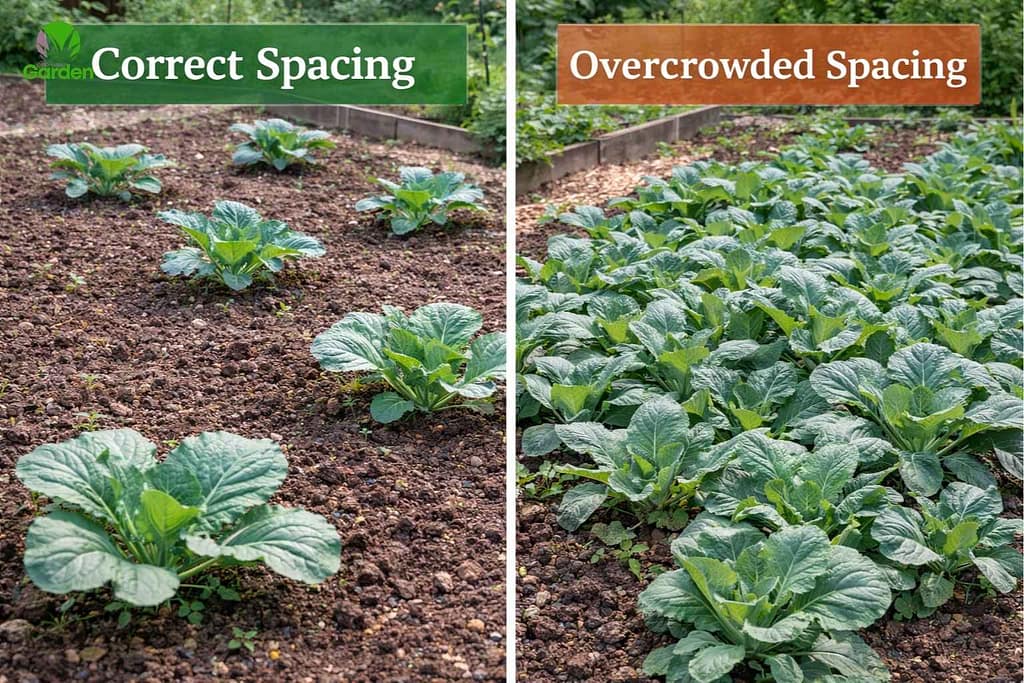
Brassicas respond directly to the space available to them. When plants are crowded, roots compete for water and nutrients, leaves overlap, and airflow is reduced.
These pressures build slowly. Early growth may appear healthy, but problems often show up later as loose heads, small curds, or uneven sprout formation. By that stage, spacing cannot be corrected without damaging the crop.
Correct spacing allows brassicas to grow steadily without interruption. This produces stronger plants that cope better with pests, weather, and minor mistakes elsewhere.
Recommended Spacing for Common Brassicas
Spacing recommendations only work when they reflect how large brassicas become over a full growing season. Many spacing failures happen because plants are spaced for their seedling size rather than their final size.
If your soil is weak or poorly structured, spacing becomes even more important. Brassicas growing in marginal conditions need room to compensate. If you are unsure whether your soil is suitable, soil preparation for brassicas explains what matters most before planting.
Broccoli and Calabrese
Calabrese and heading broccoli generally perform best with 30–45 cm between plants, depending on variety vigour. Purple sprouting broccoli needs more space and should be given around 60 cm to develop strong stems and produce reliable spears.
Brussels Sprouts
Brussels sprouts are tall, long-season plants with extensive root systems. They should be spaced at around 60 cm to maintain stability, airflow, and even sprout formation, particularly in exposed gardens.
Cauliflower
Cauliflowers need steady, uninterrupted growth. Most maincrop types require around 60 cm between plants to avoid checks that lead to small or uneven curds.
Kale
Kale is often under-spaced because young plants look manageable. Most large-leaved and curly kale varieties benefit from up to 60 cm between plants to allow full canopy development and good airflow.
Cabbage
Cabbage spacing varies widely depending on variety. Compact spring cabbages can be planted closer, while large autumn and winter cabbages need significantly more room. Always space based on expected head size rather than planting date.
Plant Spacing vs Row Spacing
Plant spacing alone is not enough. Adequate row spacing improves access for watering, weeding, and harvesting, and helps maintain airflow through the crop. If rows are too tight, even correctly spaced plants can suffer later in the season.
How Brassicas Use Space as They Grow
Young brassica plants are deceptively small. At planting time, it is easy to underestimate how much room they will need several months later.
As plants grow, they expand both above and below ground. Roots spread widely, while leaves form dense canopies that require airflow to remain healthy.
Spacing that feels generous at planting time often turns out to be just right by mid-season. Spacing that feels tight early on almost always becomes a problem later.
The Relationship Between Spacing and Crop Quality
Spacing affects not just yield, but quality. Well-spaced plants produce firmer heads, more uniform curds, and better-formed sprouts.
Crowded plants tend to produce smaller, looser harvests. They are also more prone to disease, pest pressure, and stress-related problems.
Giving brassicas enough space is one of the simplest ways to improve results without adding extra work.
Why Overcrowding Is Hard to Fix
Once brassicas are established, thinning or moving them is rarely successful. Disturbing roots at this stage usually causes setbacks that plants never fully recover from.
This is why spacing decisions must be made early. Trying to correct overcrowding later often creates more damage than leaving plants where they are.
Planning spacing properly from the start avoids this problem entirely.
Common Spacing Mistakes
The most common spacing mistake is planting brassicas too close together in the hope of increasing yield. This often produces the opposite result, with smaller plants and poorer-quality harvests.
Another frequent error is judging spacing by how plants look when young. Because brassicas grow steadily over many months, early appearances are misleading. Plants that seem comfortably spaced at planting time often end up competing heavily later.
Spacing mistakes are difficult to correct once plants are established. This is why careful planning before planting matters more than adjustments later.
Spacing Brassicas in Small Gardens
Limited space does not mean brassicas cannot be grown well. It does mean that choices must be more selective.
Growing fewer plants with correct spacing nearly always produces better results than overcrowding many plants. Quality improves, plants are easier to manage, and problems are reduced.
In smaller gardens, prioritise crops that give the most return for the space they occupy. Long-season brassicas should be given the room they need rather than squeezed into unsuitable gaps.
Spacing and Long-Term Planning
Spacing decisions affect the entire growing season. Brassicas that are correctly spaced are easier to water, feed, and harvest. They also respond better to changing weather and minor stresses.
Thinking about spacing as part of long-term planning helps avoid frustration later. Beds remain accessible, airflow stays good, and plants reach their full potential.
Spacing is not wasted space. It is an investment in healthier plants and more reliable harvests.
How Spacing Affects Feeding and Watering
Spacing has a direct effect on how efficiently brassicas use water and nutrients. Plants that are correctly spaced access moisture more evenly and are less prone to sudden stress during dry periods.
When brassicas are crowded, roots compete in the same narrow zone. Water is taken up quickly, soil dries unevenly, and plants experience repeated checks in growth. This often leads gardeners to increase watering and feeding, which rarely solves the underlying problem.
Well-spaced plants make better use of moderate feeding. Nutrients are distributed more evenly through the soil, and roots can explore a wider area. This produces steadier growth and reduces the risk of soft, pest-prone foliage.
Spacing and Pest Pressure
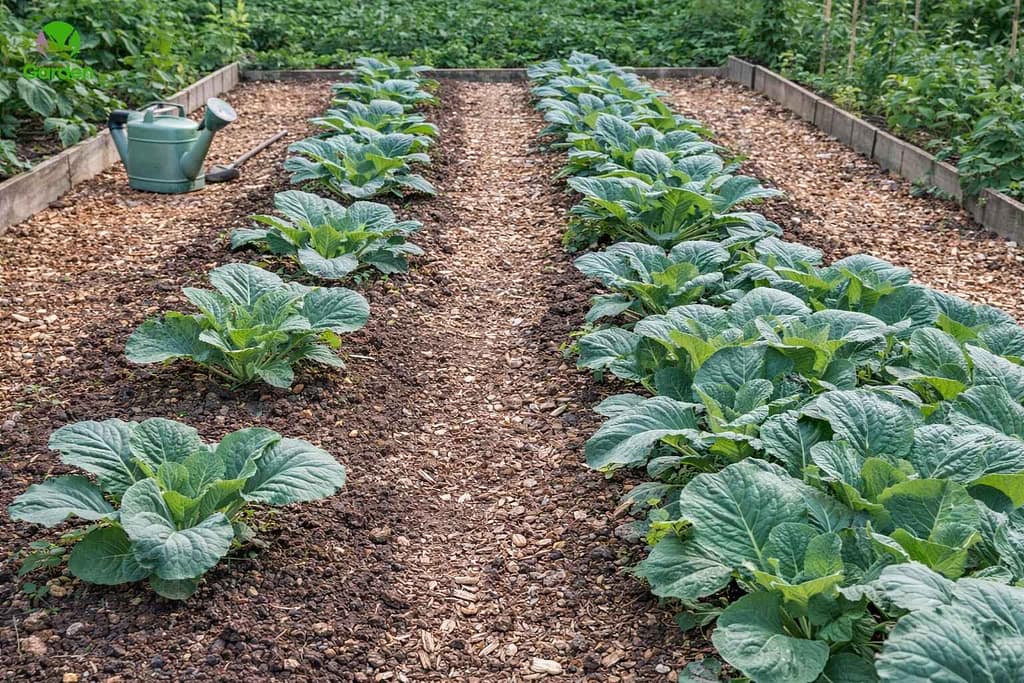
Crowded brassicas are far more attractive to pests. Dense foliage creates sheltered, humid conditions where pests can establish unnoticed.
Correct spacing improves visibility and airflow. Leaves dry more quickly after rain, and pests are easier to spot before damage becomes serious.
Spacing alone will not prevent pest problems, but it reduces pressure and makes control far easier without heavy intervention.
Spacing Over a Long Growing Season
Many brassicas remain in the ground for several months. Spacing that looks adequate early in the season may become restrictive later as plants reach full size.
This is particularly important for winter crops. Plants must cope with changing weather, lower light levels, and slower growth. Crowding at this stage increases stress and reduces final crop quality.
Planning spacing with the end of the season in mind rather than the start leads to more reliable results.
Using Spacing to Simplify Garden Management
Correct spacing makes all other tasks easier. Weeding, watering, feeding, and harvesting become simpler when plants are not competing for the same space.
Beds remain accessible throughout the season, and plants are less likely to suffer accidental damage during routine care.
Spacing is not about wasting space. It is about creating conditions where brassicas can grow without constant correction.
Spacing Brassicas: Common Questions
Can I plant brassicas closer together in raised beds?
Raised beds often have better drainage and soil structure, but this does not significantly reduce how much space brassicas need. Plants may establish more quickly, but their final size is largely unchanged. Correct spacing is still important to avoid competition later in the season.
Does spacing change for early and late brassica varieties?
Early varieties are sometimes slightly smaller, but spacing should still be based on expected mature size rather than planting date. Late and winter varieties usually need full spacing because they remain in the ground longer and grow larger over time.
What happens if I plant brassicas too close together?
Brassicas planted too close compete for water, nutrients, and light. This often leads to smaller heads, looser curds, uneven sprout formation, and increased pest pressure. These problems usually appear later and cannot be corrected once plants are established.
A Sensible Place to Start
If spacing has been an issue in the past, start by planting fewer brassicas rather than more. Give each plant enough room to grow fully and observe the difference this makes.
Use recommended spacing as a baseline, adjust slightly for your conditions, and resist the temptation to overcrowd. With correct spacing, brassicas grow more evenly and are far easier to manage throughout the season.