

Spinach is a fast-growing leafy vegetable that thrives in the cool conditions common in many UK gardens. Because spinach prefers mild temperatures, it can be planted both in spring and again later in the year for autumn harvests.
Understanding when to plant spinach in the UK depends mainly on temperature and daylight length. In warm summer conditions spinach can bolt quickly, which is why many gardeners grow it during the cooler parts of the growing season.
If you want a broader overview of vegetable sowing times throughout the year, see our guide on when to plant vegetables in the UK.
The Simple Answer: When Should You Plant Spinach in the UK?

In most UK gardens spinach is planted twice a year.
- Spring planting: March to May
- Autumn planting: August to September
These cooler planting windows allow spinach to grow steadily without bolting too quickly.
If you’re unsure when frosts typically finish in your area, you can use the UK Last Frost Date Checker to help plan early sowings.
Why Spinach Grows Best in Cool Weather
Spinach is naturally suited to cool growing conditions. Unlike warm-season vegetables such as tomatoes or courgettes, spinach grows best when temperatures are moderate.
When temperatures rise too high, spinach plants may bolt. Bolting means the plant quickly produces flowers and seeds instead of leaves.
- Cool spring weather encourages leafy growth
- Shorter autumn days also produce good harvests
- Extreme heat can cause plants to bolt quickly
This is why spinach is often planted earlier in the year alongside crops like peas and lettuce.
Growing Spinach from Seed
Spinach is usually grown directly from seed. Seeds germinate quickly when soil temperatures are cool and moisture is consistent.
If spinach seedlings seem slow or hesitant after planting, the issue is often soil conditions rather than timing. Our guide on why vegetable plants grow slowly in UK gardens explains the underlying soil factors that affect early growth.
Sowing Spinach Seeds Outdoors
Spinach seeds are typically sown directly into garden beds once soil becomes workable in early spring.
If soil remains wet or compacted after winter rain, improving drainage and soil structure can help seedlings establish successfully. See how to improve garden drainage in UK soil.
Understanding Your Soil Before Planting Spinach
Spinach grows best in fertile, well-drained soil that contains plenty of organic matter. Poor soil structure can slow early growth and lead to weaker plants.
If you’re unsure what type of soil you have in your garden, this guide explains how to identify it: how to tell if your garden soil is clay, loam or sand.
Healthy soil structure allows spinach roots to develop properly and supports consistent leaf growth.
Regional Guide: When to Plant Spinach Across the UK
Although spinach grows well across most of the UK, the exact planting time can vary slightly depending on your location. Climate, soil temperature, and exposure to wind can influence how early seeds can be sown.
South West England
In milder coastal regions such as Cornwall and Devon, spinach can often be planted from early March. The relatively warm climate allows early spring crops to establish quickly.
London and South East
Across London and the South East, spinach is commonly planted between March and May for spring harvests, with a second sowing period in late summer.
If you want to check the typical frost timing in your area, the UK Last Frost Date Checker can help you plan early planting.
Midlands
In the Midlands, spinach is usually planted from late March onwards once soil becomes workable after winter rain.
Soil that has become compacted during winter can slow spinach growth. Understanding soil compaction in UK gardens can help improve early crop establishment.
Northern England
In northern regions, spinach planting often begins in late March or early April. Cooler temperatures may delay early sowing slightly.
Scotland
In Scotland, spinach is usually planted from April onwards once soil temperatures begin rising in spring.
How Far Apart Should Spinach Be Planted?
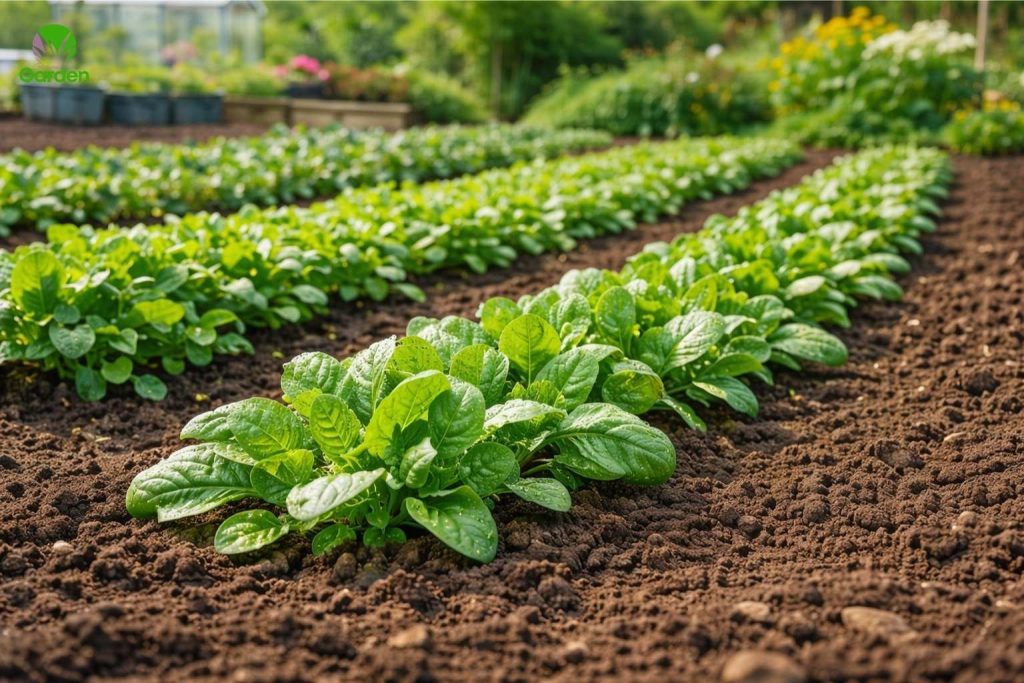
Proper spacing allows spinach plants to grow strong leaves and reduces competition for nutrients.
- Plant spacing: 10–15 cm between plants
- Row spacing: 25–30 cm between rows
Thinning seedlings after germination helps plants grow larger leaves and improves airflow.
Types of Spinach Commonly Grown in the UK
Several spinach varieties grow well in UK gardens and are suited to different seasons.
Summer Spinach
These varieties are usually grown during spring and early summer and are harvested before hot weather arrives.
Perpetual Spinach
Perpetual spinach is actually a type of chard but is often grown in the same way as spinach. It produces leaves for a longer period and tolerates warmer weather.
Winter Spinach
Winter spinach varieties are planted in late summer or early autumn and harvested during cooler months.
Common Spinach Planting Mistakes
Planting Too Late in Spring
If spinach is planted too late in the season, warmer temperatures may cause plants to bolt quickly.
Allowing Soil to Dry Out
Spinach prefers consistent moisture. Dry soil can slow growth and produce smaller leaves.
Poor Soil Structure
Spinach grows best in soil rich in organic matter. Improving soil structure helps retain moisture and supports healthy root development. See how to improve garden soil in the UK.
Growing Spinach in Containers
Spinach grows well in containers, raised beds, and small garden spaces.
Containers should be at least 15–20 cm deep and placed in a sunny or lightly shaded location. Regular watering helps maintain steady growth.
In the next section we’ll cover harvest timing, how long spinach takes to grow, and how to keep plants producing leaves for longer.
When Will Spinach Be Ready to Harvest in the UK?

Spinach grows quickly in the cool conditions common in UK gardens. In most cases leaves can be harvested around 4 to 6 weeks after sowing.
- Early spring sowing: harvest from April onwards
- Main spring sowing: harvest during May and June
- Late summer sowing: harvest from September into autumn
Leaves can be picked individually from the outside of the plant while allowing the centre to continue producing new growth.
How Planting Time Affects Spinach Growth
The timing of planting has a big influence on how spinach grows.
Early spring planting
- Produces tender leaves
- Plants grow steadily in cool temperatures
- Lower risk of bolting
Late spring planting
- Plants grow faster as temperatures rise
- More watering may be needed
- Greater risk of bolting during hot weather
Autumn planting
- Cooler conditions slow bolting
- Leaves often remain tender
- Harvests can continue well into autumn
If soil remains wet or compacted, spinach growth may slow. Improving soil structure helps plants develop strong roots and steady leaf growth. See how to improve garden drainage in UK soil for practical steps.
How to Keep Spinach Producing Leaves
Many gardeners grow spinach throughout the growing season by sowing small batches every few weeks.
This method is known as succession planting and ensures a steady harvest.
- Sow spinach every 2–3 weeks during spring
- Harvest outer leaves regularly
- Keep soil evenly moist
Following this approach can provide fresh spinach leaves from spring through autumn.
Quick Reference: When to Plant Spinach in the UK
- Sow spinach seeds: March to May
- Second sowing window: August to September
- Harvest spinach: April to October
If you are planning a full vegetable garden, it helps to understand planting times for other crops as well. See our guides on when to plant peas in the UK, when to plant lettuce in the UK, and when to plant carrots in the UK.
When to Plant Spinach in the UK – Frequently Asked Questions
When should spinach be planted in the UK?
Spinach is usually planted in the UK between March and May for spring harvests. A second planting window occurs between August and September for autumn crops when temperatures are cooler.
Can spinach grow in cold weather in the UK?
Yes. Spinach grows well in cool temperatures and can tolerate light frost. This makes it suitable for early spring planting and late summer sowing in many UK gardens.
How long does spinach take to grow?
Spinach typically grows quickly and can be ready to harvest within 4 to 6 weeks after sowing. Leaves can often be harvested earlier if picked individually.
Can spinach be grown all year in the UK?
Spinach can be grown during much of the year in the UK, especially during spring and autumn. With protection such as cold frames or greenhouses, some gardeners grow spinach even during winter.
Why does spinach bolt in summer?
Spinach bolts when temperatures become too warm or days become very long. When this happens the plant quickly produces flowers and seeds instead of leaves.
Does spinach grow better in sun or shade?
Spinach grows best in full sun during spring and autumn. During warmer weather, partial shade can help prevent bolting and keep leaves tender.
A Sensible Place to Start
If you’re unsure when to plant spinach in your garden, start with a small sowing in April once soil becomes workable.
Choose a sunny location, keep soil evenly moist, and harvest leaves regularly to encourage continued growth.
With the right timing and consistent care, spinach becomes one of the easiest leafy vegetables to grow in UK gardens.