
Courgettes are one of the most rewarding vegetables you can grow in a UK garden.
Once they get going, they grow quickly, look productive, and can give you a very useful harvest from just one or two plants. That is one reason so many beginners want to grow them. They feel generous.
But courgettes are not a crop that likes a poor start.
If they are sown too early, planted into cold soil, or checked by bad weather, they often struggle before they ever become the easy summer crop people were hoping for. That is usually where the problems begin.
The good news is that courgettes are straightforward once the basics are right.
They need warmth, enough room, steady moisture, and a position that lets them grow without constant setbacks. Get those things in place, and they are often far easier than they first seem.
In this guide, we’ll look at how to grow courgettes in the UK, where they grow best, how to sow them, and how to keep them growing strongly.
If you want the wider edible-growing basics first, read How to Grow Vegetables in the UK. If you want the timing side in more detail, it also helps to read When to Plant Courgettes in the UK and When to Plant Vegetables in the UK.
Quick Answers
Are courgettes easy to grow in the UK?
Yes, once the weather is warm enough. The main difficulties usually come at the seed or seedling stage, not later on.
Can you grow courgettes outside in the UK?
Yes. In most UK gardens, courgettes are grown outside once the weather has settled and the soil is warm enough.
Can courgettes be grown in pots?
Yes, but they need a large container, steady moisture, and enough feeding to stay productive.
Do courgettes need full sun?
They grow best in a bright, warm position with as much sun and shelter as you can give them.
Why do courgettes fail early?
Usually because the compost or soil is too cold, too wet, too dim, or the plants are moved out too early.
Why Courgettes Need a Good Start
Courgettes are fast growers, but they are not cold-weather plants.
This catches people out because spring can feel quite warm in the UK for a few days, then suddenly turn cool again. Courgettes do not usually enjoy that kind of stop-start pattern. If they are sown or planted out too early, they often become weak, slow, or miserable before they have really begun.
That is why a slightly later, stronger start often works better than a rushed early one.
Courgettes usually want warmth that lasts, not just one warm afternoon. If cold ground is a problem in your garden, it also helps to read Cold Soil Problems in UK Gardens, When Is Soil Warm Enough to Plant Vegetables, and Signs Soil Is Ready for Planting Vegetables.
Where Courgettes Grow Best
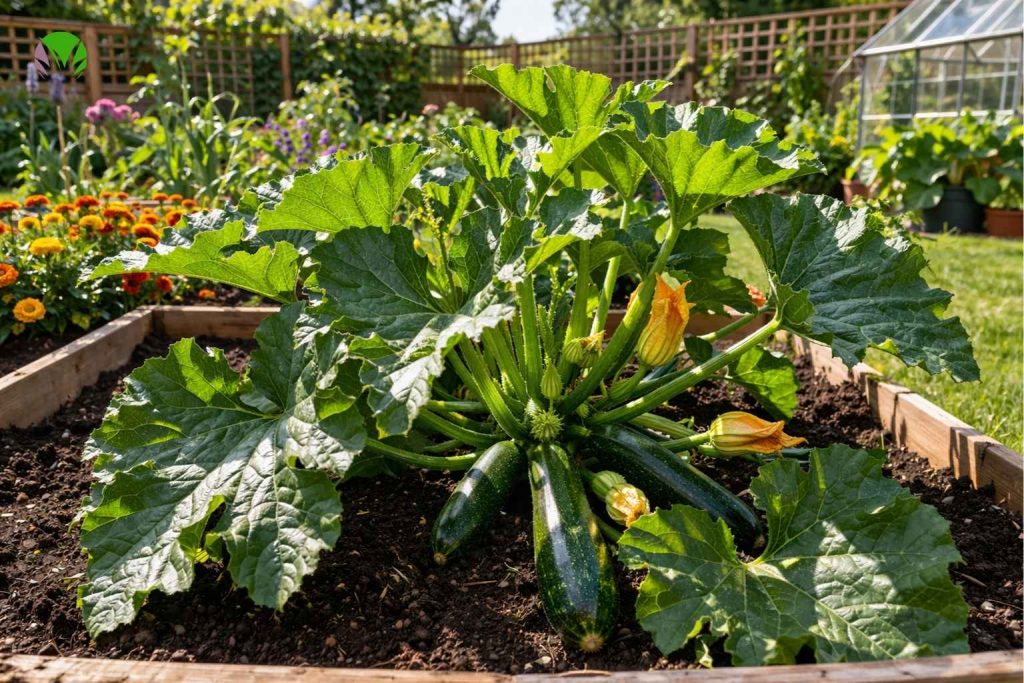
Courgettes grow best in a warm, bright, sheltered position with enough room around them.
They are not a crop for cold, cramped corners. They want light, warmth, and a growing space where they can spread without immediately competing with everything around them. A sunny bed, a well-positioned raised planter, or a large container in a sheltered spot can all work well.
Shelter matters more than some gardeners expect.
A site can look bright enough but still be awkward if it catches cold wind all the time. Courgettes usually do better where they can grow steadily rather than being checked by every weather shift.
Can You Grow Courgettes Outside in the UK?
Yes, and that is how most gardeners grow them.
In many UK gardens, courgettes do very well outside once conditions are warm enough. The main thing is not to rush them. They are much happier going out into genuinely settled weather than being pushed out because the calendar says it should be time.
If you tend to plant warm-season crops early and regret it later, it also helps to read What Happens If You Plant Vegetables Too Early.
What Soil Do Courgettes Like?
Courgettes like fertile, moisture-retentive soil that stays workable.
Because they grow quickly and produce a lot of leafy growth, they do best when there is enough goodness in the ground to support that pace. Poor, dry, or compacted soil usually makes them harder to keep happy.
This is one reason preparation matters.
You do not need perfect soil, but you do want ground that can hold moisture reasonably well and support strong root growth. If your soil needs work first, it also makes sense to read Best Compost for Vegetables in the UK and How to Improve Garden Soil in the UK.
Can You Grow Courgettes in Pots?
Yes, but they need a proper container.
Courgettes are not a crop for a small pot on a whim. They can grow very well in containers, but only if the pot is large enough and you stay on top of watering and feeding. The bigger the root run, the easier the plant usually is to manage.
This is why larger containers are usually far more forgiving.
If you are using pots a lot, it also helps to read Can You Grow Vegetables in Pots in the UK?.
Are Courgettes Good for Beginners?
Yes, as long as you respect the early stage.
Once the plant is established in warm conditions, courgettes are one of the most satisfying vegetables to grow. The mistake is assuming they are carefree from the very first seed. They are much easier later than they are right at the beginning.
If you have struggled with the first stage already, it also helps to read Why Courgette Seeds or Seedlings Fail in the UK.
Get the early conditions right, and courgettes usually become one of the most productive and worthwhile crops in a UK garden.
How to Sow Courgettes Properly
Courgettes are best sown simply, in warm and steady conditions.
In most UK gardens, they are started under cover first rather than sown straight outside early in the season. That gives you much more control over warmth and early growth, which is usually what makes the difference between a strong plant and a weak one.
Use a decent compost and sow into pots or modules with enough room for the seedling to get going properly.
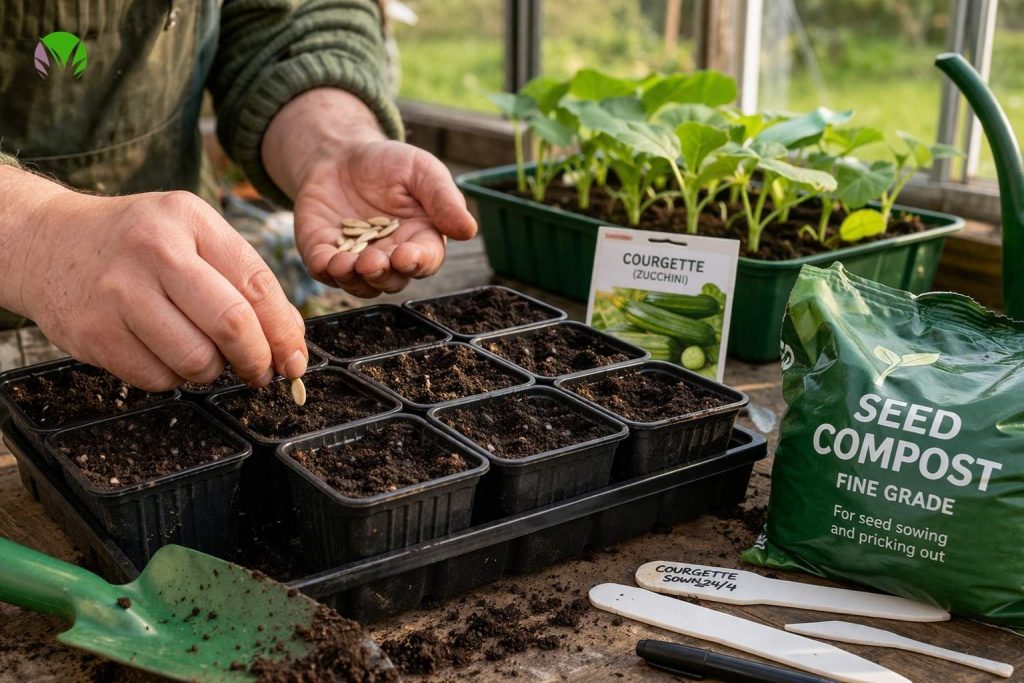
You do not need to make the setup complicated, but you do need to avoid cold, soggy conditions. Courgette seeds usually germinate well when they are warm enough. When they fail, it is often because they have been left sitting too cold or too wet for too long.
The compost should feel lightly moist, not soaked.
One of the easiest mistakes is watering too heavily after sowing and then leaving the pots in weak conditions. Seeds need moisture, but they also need air. Wet compost and poor warmth are a bad combination for courgettes.
Should You Start Courgettes Indoors or Outside?
In most cases, starting them under cover first is the safer option.
This is mainly because UK spring weather is so changeable. Even when days begin to feel pleasant, the nights and the soil can still be too cold for strong courgette growth. Starting under cover helps you avoid that weak, checked beginning.
That said, indoor sowing only helps if the conditions are actually suitable.
If the pots are in a dim place, if the compost stays cold, or if the seedlings become soft and stretched, the advantage quickly disappears. The aim is not just to start early. It is to start properly.
Direct sowing outside can work later in the season once the weather and soil are warm enough, but it is usually less forgiving earlier on.
How Far Apart Should Courgettes Be?
Courgettes need more room than many beginners expect.
They may start as one neat little seedling, but once they get going they quickly produce a lot of leaf and take up a fair amount of space. If they are crowded, airflow becomes worse, watering becomes harder to judge, and the plants can feel more difficult than they need to.
This is one crop where giving it room really does make life easier.
A courgette with enough space around it is easier to water, easier to inspect, and usually more productive.
How to Water Courgettes Properly
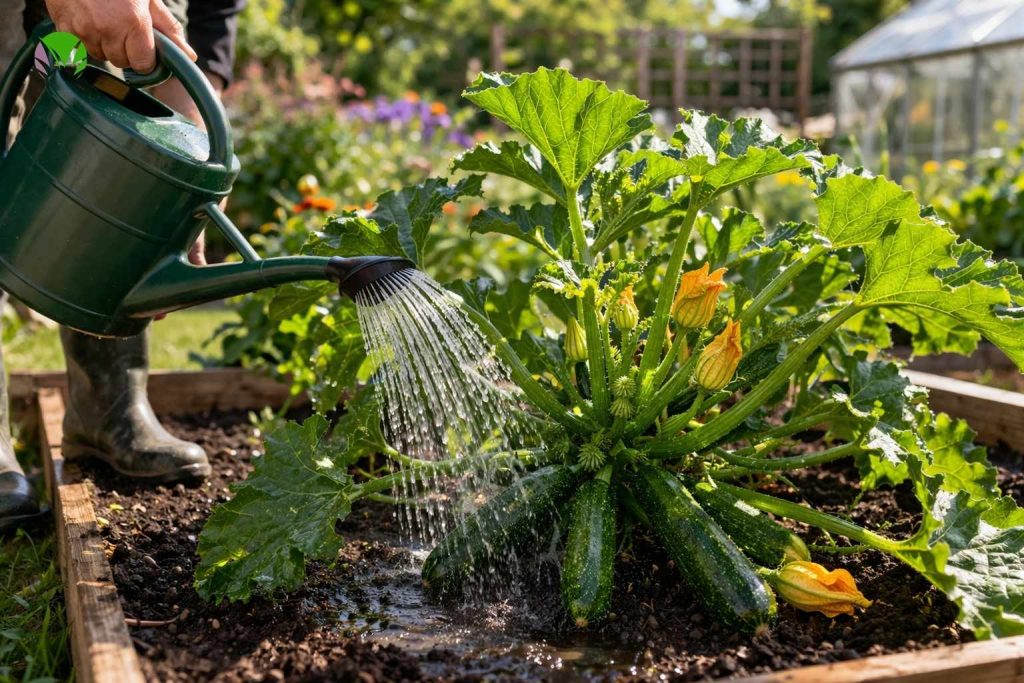
Once courgettes start growing strongly, watering becomes very important.
They are fast-growing plants with large leaves, which means they can use a lot of water once the weather warms up. If they keep drying out badly, growth becomes uneven and the plant is much more likely to feel stressed.
The aim is steady moisture, not constantly soggy soil.
Courgettes do not want to sit in stagnant wet ground, but they also do not enjoy sharp swings between very dry and very wet. Consistency matters much more than random heavy watering followed by neglect.
This is even more important in containers.
If you are growing courgettes in pots, the compost can dry out quickly once the plant is large. That means regular checking matters. If you want the wider watering guide, read How Often to Water Plants in the UK.
Do Courgettes Need Feeding?
Yes, more than many smaller crops do.
Courgettes are productive plants, and once they start growing properly they need enough support to keep producing strong leaves and healthy fruits. That is why rich soil, good compost, and sensible feeding later on all help.
But the basics still come first.
Feeding does not fix cold roots, weak plants, or a bad start. It helps when the plant is already growing well enough to use that support properly.
Why Courgettes Sometimes Stall
Courgettes often stall because they have been checked by cold, poor light, or uneven moisture.
This is very common when they are planted out too early. The plant may stay alive, but it just sits there, making very little real progress. That is usually a sign that the conditions are still not quite right.
Warmth, patience, and steadier moisture usually help much more than trying to push the plant along.
If slow growth is a repeated issue, it also helps to read Why Vegetable Plants Grow Slowly in UK Gardens.
Can You Grow Courgettes in a Small Garden?
Yes, as long as you are realistic about space.
You probably do not want lots of courgette plants in a very small area, but one or two well-grown plants can still be very worthwhile. In a compact garden, it is often better to grow fewer plants properly than to squeeze in too many and make everything harder to manage.
Courgettes also work well in larger containers if ground space is limited.
That makes them more flexible than some gardeners first assume.
Get the early conditions right, and courgettes usually become one of the most productive and worthwhile crops in a UK garden.
Common Problems When Growing Courgettes
Courgettes are usually generous once established, but they do have a few common problems.
The main ones are poor early growth, stress from cold conditions, uneven watering, and low productivity if the plant never really settles. Most of these problems begin with the same issue: the plant was checked early and never got into strong, steady growth.
That is why the beginning matters so much.
A courgette that starts well is usually much easier to manage than one that spends weeks trying to recover from cold compost, weak light, or an early move outside.
Why Are My Courgette Plants Growing Slowly?
Slow growth is usually caused by cold soil, poor light, or uneven moisture.
If a courgette plant is moved outside before conditions are warm enough, it often just sits there. It may stay alive, but it does not push on properly. Cold roots are one of the biggest reasons for this.
Poor soil can also hold it back.
If the ground is compacted, dry, or low in goodness, the plant often struggles to build strong growth. This is one reason why preparation helps so much with courgettes.
If slow growth is a wider issue in your garden, it also helps to read Why Vegetable Plants Grow Slowly in UK Gardens.
Why Are My Courgette Leaves Yellowing?
Yellow leaves can happen for a few different reasons.
Sometimes it is just older growth ageing as the plant gets bigger. But if yellowing is more general, it often points to stress. Common causes include cold roots, overwatering, poor nutrition, or a plant that never settled well after planting.
This is why it helps to look at the whole plant, not just one leaf.
If the whole plant is unhappy, the answer is usually in the growing conditions rather than one dramatic disease problem.
Why Are My Courgettes Not Producing Much?
If the plant looks healthy but cropping is poor, the usual cause is that it never really built enough strength in the first place or has gone through repeated stress.
Courgettes need warmth, water, feeding, and steady growth to keep producing properly. If they keep drying out, were planted too early, or are growing in a poor spot, they often produce less than gardeners expect.
This is one more reason a strong start matters so much.
A healthy, settled plant usually becomes very productive. A weak plant often remains disappointing even if it survives.
When to Harvest Courgettes
Courgettes are best picked while they are still young and tender.
Many beginners leave them too long because they think bigger must be better. Usually, it is not. Older courgettes become less useful, and leaving them on the plant can slow down further production.
Regular harvesting is one of the easiest ways to keep the plant productive.
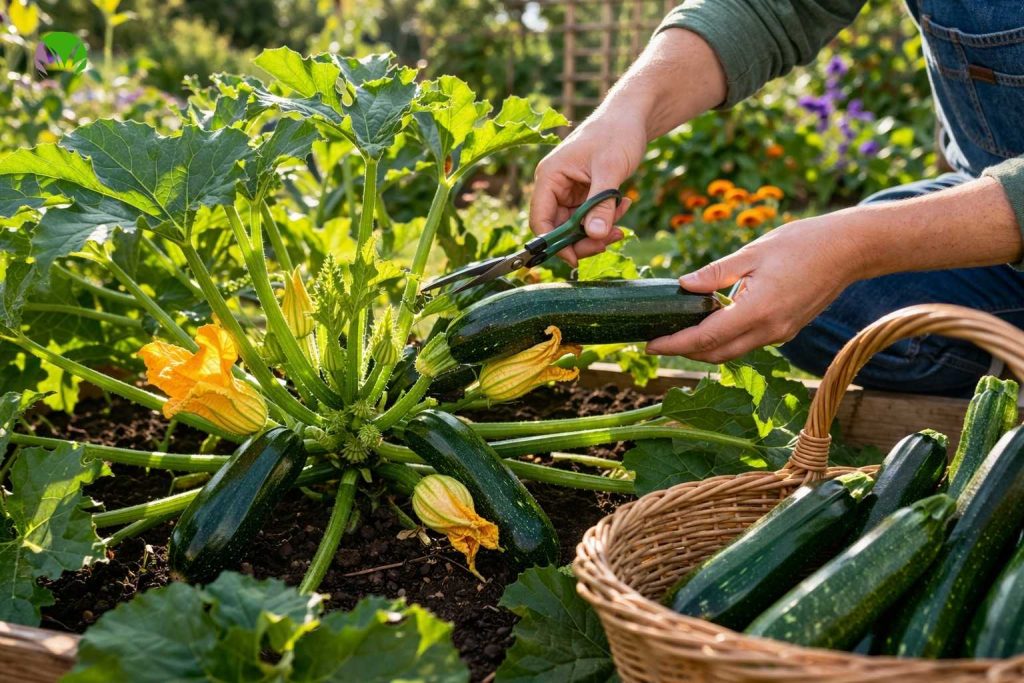
Once courgettes get going, it is worth checking them often because they can size up quickly.
How to Keep Courgettes Producing for Longer
The best way is to keep the plant steady and keep harvesting.
That means regular watering, sensible feeding once the plant is established, and not letting large fruits sit on the plant for too long. A courgette that is repeatedly stressed or left overloaded with old fruit often becomes less productive.
Healthy ongoing growth is what supports a longer harvest.
Are Courgettes Worth Growing?
Yes, absolutely.
They are one of the best vegetables for giving a lot back from a small number of plants. Once they are happy, they often feel generous and productive in a way that is very satisfying for beginners.
They are not difficult so much as particular about the start.
Once you understand that, they become much easier to grow well.
Frequently Asked Questions
Are courgettes easy to grow in the UK?
Yes, once the weather is warm enough. The main problems usually happen early, when seeds or seedlings are started in poor conditions.
Can you grow courgettes outside in the UK?
Yes. In most UK gardens, courgettes are grown outside once the weather has settled and the soil is warm enough.
Can courgettes be grown in pots?
Yes, but they need a large container, steady moisture, and enough feeding to stay productive.
Do courgettes need full sun?
Courgettes grow best in a bright, warm position with as much sun and shelter as you can give them.
Why are my courgette plants growing slowly?
Slow growth is usually caused by cold soil, poor light, or uneven moisture, especially if the plants were moved outside too early.
Why are my courgette leaves turning yellow?
Yellow leaves are often caused by stress such as cold roots, overwatering, poor nutrition, or a plant that never settled properly after planting.
When should courgettes be harvested?
Courgettes are best picked while they are still young and tender. Leaving them too long can reduce quality and slow further production.
How do I keep courgettes producing for longer?
Keep the plant growing steadily with regular watering, sensible feeding, and frequent harvesting so older fruits do not sit on the plant too long.
A Sensible Place to Start
If you want to grow courgettes well in the UK, focus on the beginning.
Give them warmth at the sowing stage, do not rush them into cold soil, and make sure they have enough room, moisture, and feeding once they start growing strongly. If the early conditions are right, courgettes are usually far easier and more productive than they first seem.