
Peas are one of the best vegetables to grow in a UK garden.
They are easy to understand, do well in cool conditions, and do not need a huge amount of space to give a worthwhile harvest. Fresh peas also taste far better straight from the plant than most people expect. They are sweeter, softer, and much more enjoyable when picked young.
That makes them a very good crop for beginners.
They are not difficult, but they do grow better when a few basics are right. Peas need a bright spot, workable soil, steady moisture, and some kind of support. If those things are in place, they are usually reliable and rewarding.
In this guide, we will look at how to grow peas in the UK, where to grow them, how to sow them, how to support them, and how to avoid the most common problems.
If you want the timing side in more detail, it also helps to read When to Plant Peas in the UK.
Quick Answers
Are peas easy to grow in the UK?
Yes. Peas are one of the easier vegetables to grow in the UK, especially in spring and early summer.
Do peas need full sun?
Peas grow best in a bright, open spot with good light. They can cope with a little light shade, but heavy shade usually gives weaker growth.
Do peas need support?
Yes. Most peas grow better with support, even shorter varieties.
Can you grow peas in pots?
Yes. Dwarf peas are especially good for pots and containers if they are watered properly.
Why are my peas not growing well?
Poor growth is often caused by cold wet soil, lack of support, drying out, or sowing into poor conditions.
Why Peas Grow Well in UK Gardens
Peas suit British growing conditions better than many people realise.
They prefer cooler weather, which makes them a good fit for spring and early summer. Unlike warm-season crops such as tomatoes or peppers, peas do not need a hot greenhouse or a very warm wall to get going well.
That makes them useful in ordinary gardens, raised beds, allotments, and even larger containers.
They are also a good crop for smaller spaces because they grow upwards rather than spreading too far across the ground. With a simple support, you can get a decent crop from a fairly modest area.
If you are still building confidence with vegetables, peas are a sensible crop to grow alongside other reliable choices in Easy Vegetables to Grow in the UK.
Where to Grow Peas
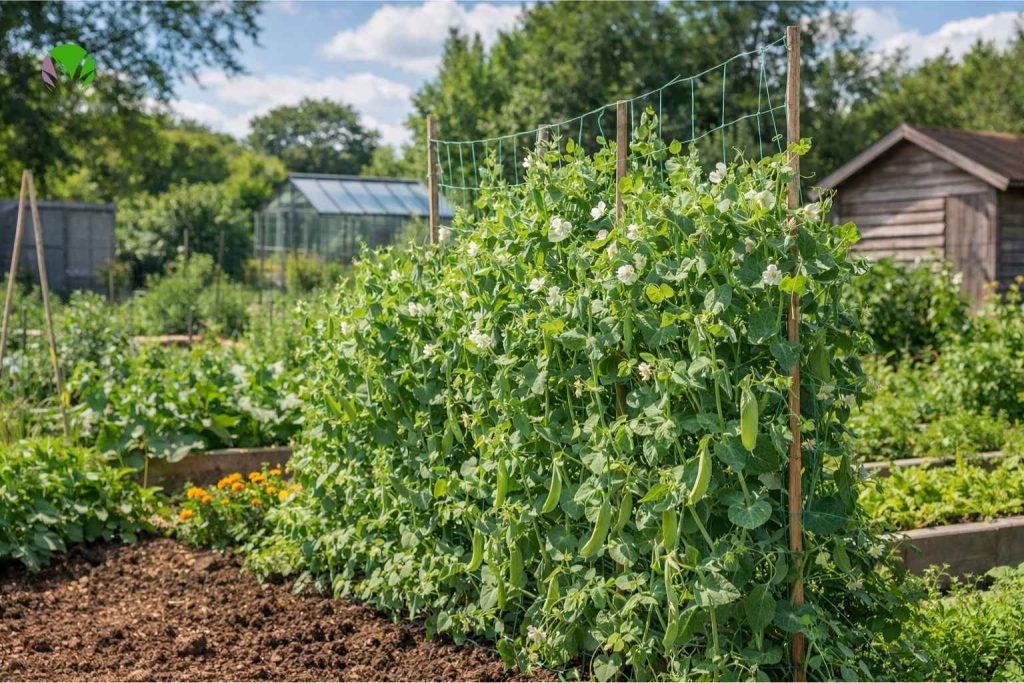
Peas grow best in a bright, open position with some shelter from strong wind.
They like plenty of light, but they do not need the hottest part of the garden. In fact, a very dry, exposed spot can make them harder to manage, especially later on when the weather warms up.
The best place is somewhere you can reach easily.
That matters because peas benefit from regular checking. You will want to keep an eye on watering, support, and picking. A crop that is close at hand is much easier to manage properly than one hidden away at the far end of the garden.
If your garden is windy, try to grow peas near a fence, hedge, or another sheltered spot without putting them into heavy shade. Too much exposure can flatten soft growth and make the plants harder to support neatly.
What Soil Do Peas Like?
Peas like soil that is workable, reasonably fertile, and able to hold moisture without staying soggy.
They do not need perfect soil, but they do struggle in ground that is badly compacted or constantly wet. If the roots cannot move properly, the plants often stay weak and disappointing.
This is why soil structure matters just as much as feed.
If your soil is difficult, it helps to improve it gradually with compost or other organic matter. That makes it easier for roots to establish and helps the bed hold moisture more evenly.
If you need to improve the growing area first, read How to Improve Garden Soil in the UK.
If your soil stays dense and hard, it is also worth looking at How to Tell If Your Soil Is Compacted.
Should You Grow Peas in the Ground or in Pots?
Both can work well.
Growing peas in the ground is often the simplest option if your soil is in decent condition. The roots have more room, the bed usually holds moisture better, and the plants are easier to support in a row.
Pots and containers are a good choice if space is limited or if your garden soil is awkward. Dwarf peas are usually the best fit for containers because they stay more manageable and do not need such large support structures.
The main thing to remember is that peas in pots dry out faster than peas in the ground. That means watering becomes more important, especially once the plants start growing strongly.
If you are using containers a lot, it also helps to read Can You Grow Vegetables in Pots in the UK?
When to Sow Peas in the UK
Peas are usually sown in the cooler part of the growing season, which is one reason they are so useful in UK gardens.
They are a spring and early summer crop rather than a high-summer heat crop. The exact timing depends on your area, your soil, and how cold or wet your garden tends to be.
The most important thing is not to rush into obviously poor conditions.
If the soil is cold, sticky, and waterlogged, peas often get off to a weak start. A slightly later sowing into better ground usually gives much stronger plants than sowing too early just because the calendar says you can.
For full timing advice, read When to Plant Peas in the UK.
Should You Sow Peas Direct or Start Them in Modules?
Both methods work.
Direct sowing is the most straightforward. You sow the peas where they are going to grow and let them establish there from the start. This works well when the soil is ready and the weather is settled enough.
Starting peas in modules gives you more control early on. It can be useful if your soil is still cold, if pests are a problem, or if you simply want a neater start.
For most gardeners, the best option is whichever one suits the current conditions best.
There is no need to be rigid about it. If the bed is ready, direct sow. If the garden is still awkward, start a batch in modules and plant them out once they are established.
What Type of Pea Should You Grow?
There are a few main types of peas, and the best one depends on the space you have and how you want to use them.
Some peas are grown for shelling, where you remove the peas from the pod. Some are mangetout, where the whole flat pod is eaten young. Others are sugar snap types with fuller edible pods.
You will also find that some varieties stay short and compact while others climb much taller.
Dwarf peas are useful for pots, smaller gardens, and simpler support systems. Taller peas can be very productive, but they need more room and stronger support.
The right choice is usually the one that matches your space and the kind of harvest you actually want.
In the next part, we’ll cover how to sow peas properly, how far apart to space them, and the best way to support them so they grow strongly and stay easy to pick.
How to Sow Peas Properly
Peas are simple to sow, but they do better when the row or container is prepared properly first.
If you are sowing in the ground, start by clearing weeds and loosening the surface so the soil is workable and not crusted or lumpy. You do not need to overwork it, but you do want a bed that is easy for young roots to move into.
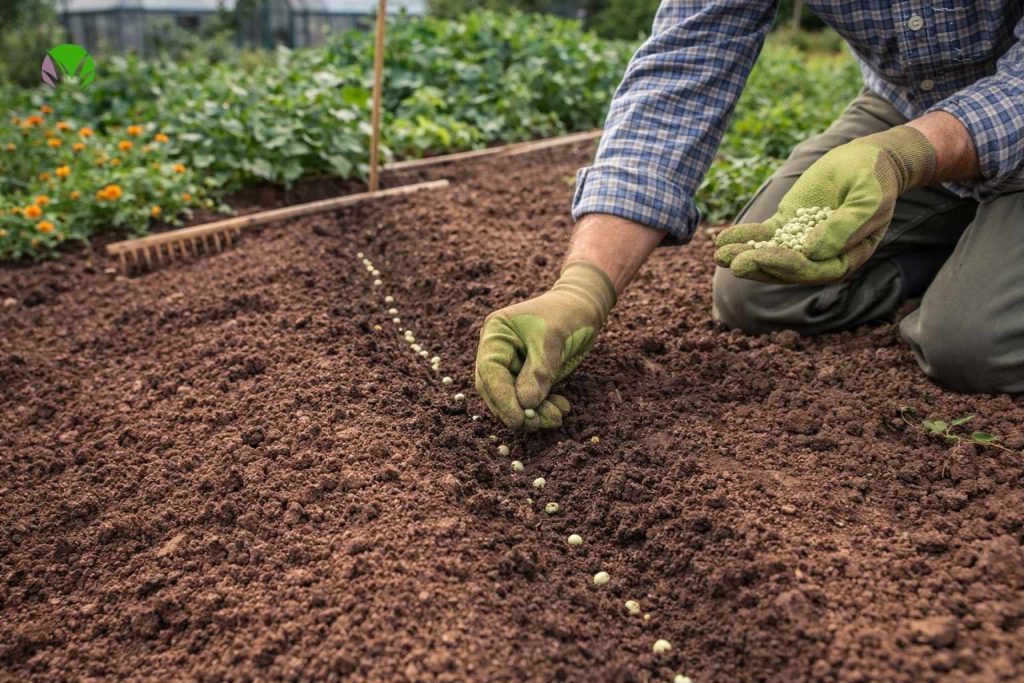
Once the bed is ready, sow the peas in a neat row and cover them with soil. Water gently if the ground is dry.
The exact spacing depends on the variety, but the main thing is not to sow too thickly. Crowded peas compete with each other, get tangled more easily, and are harder to keep healthy and easy to pick.
If you are sowing in modules, use a decent seed compost and keep the trays in a bright, cool place rather than somewhere too warm. Once the seedlings are established and the ground outside is ready, they can be planted out carefully.
Whichever method you use, try to give the plants a straightforward start. Peas do not need fuss, but they do respond well to tidy sowing and good growing conditions from the beginning.
How Far Apart Should Peas Be?
Spacing matters more than many beginners expect.
It is easy to think that squeezing in more plants will give a bigger harvest, but peas that are too crowded often become messy, harder to support, and less productive overall. They also dry poorly after rain and can be harder to inspect or pick.
A neat row with sensible spacing usually performs much better than an overcrowded patch.
You want enough plants to make good use of the space, but also enough room for airflow, light, and access. This becomes even more important once the plants start climbing and producing pods.
If you are growing peas in containers, spacing still matters. Do not fill the pot so tightly that every plant is fighting for root room and moisture. A slightly less crowded container is usually easier to manage and gives a better result.
Do Peas Always Need Support?
In most cases, yes.
Even shorter pea varieties usually do better with at least some support. Without it, the stems can flop onto the soil, tangle together, and become harder to keep clean and productive. Pods are also more likely to sit low down, where they are awkward to pick and more exposed to damp.
Support does not have to be complicated.
Taller varieties often need netting, string, twiggy sticks, or a simple frame. Dwarf peas may only need a low mesh, short sticks, or light twiggy support to keep them upright. The best support is usually the one that suits the height of the variety without becoming a bigger project than the crop itself.
It is much easier to put support in early than to try to fix the plants once they have already started sprawling.
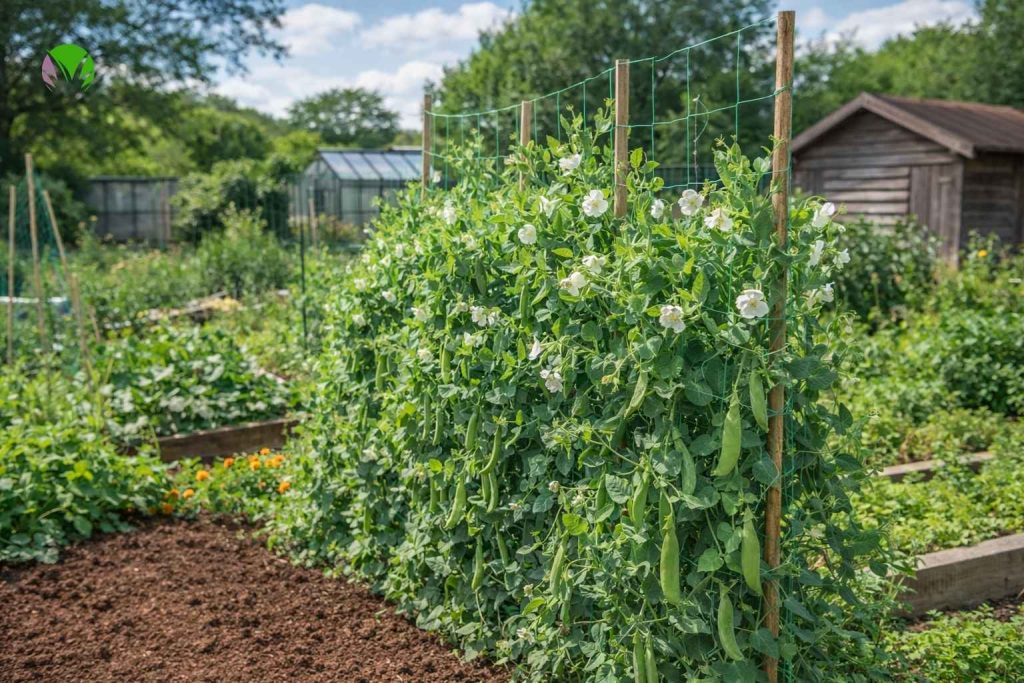
If you wait too long, stems can break or become tangled very quickly. Getting the support in place before the peas really need it is one of the easiest ways to keep the row tidy and productive.
The Best Support Ideas for Peas
You do not need anything fancy to support peas well.
Some gardeners use pea netting stretched between posts. Others use twiggy prunings pushed into the ground to create a natural climbing structure. Bamboo canes and string also work, especially in smaller spaces or raised beds.
The best support is simply one that is stable, the right height for the variety, and easy for the plants to cling to.
Many peas climb best when they have something fine enough to grab onto. A single thick cane is often less helpful than netting, brushwood, or strings arranged in a usable pattern.
If you are growing peas in a decorative kitchen garden or patio area, twiggy supports can look especially good and still work very well. In a more practical bed, netting is often the neatest and easiest option.
What matters most is not the style. It is that the plants stay upright, well spaced, and easy to harvest.
How to Water Peas Properly
Peas like steady moisture, especially while they are establishing and once they start flowering and forming pods.
That does not mean constantly wet soil. It means the roots should not dry out badly or sit in soggy ground for long periods. A steady, even moisture level helps plants grow more strongly and pod more reliably.
Young plants are the most vulnerable stage.
If seedlings dry out hard early on, they can be checked quite badly. Once peas are established, they are more resilient, but they still crop better when water is reasonably consistent.
This becomes more important in lighter soils and containers.
Peas grown in pots can dry out much faster than peas in the ground, especially in sunny or windy weather. That means they need checking more often. A plant in a container may need attention even when the garden bed nearby is still holding enough moisture.
The key is not to water automatically every day. The key is to check the soil and respond to what the plants actually need.
If you are still unsure about that side of things, read How Often to Water Plants in the UK. It helps make watering much easier to judge properly.
Do Peas Need Feeding?
Usually not much, if the soil is in reasonable condition.
Peas are not one of the hungriest crops in the garden. If they are growing in decent soil with some organic matter and good structure, they often do perfectly well without heavy feeding.
This is why it makes more sense to focus on the soil first.
If the plants are struggling, the problem is often poor growing conditions rather than a lack of fertiliser. Cold ground, compacted soil, dryness, crowding, or weak support are all more common causes of poor pea growth than simple lack of feed.
That said, peas in containers may need a little more attention than peas in open ground, because nutrients are used up faster in pots. Even then, the aim is steady, healthy growth rather than overfeeding.
If you are ever unsure whether to improve the soil or feed the crop, Feeding the Soil vs Feeding the Plant is worth reading.
Can You Grow Peas in Pots?
Yes, and peas can actually work very well in pots if you choose the right type.
Dwarf or compact varieties are usually the easiest option because they stay more manageable and do not need large support systems. A container can be a very good solution if you have a patio, a small garden, or awkward soil in the ground.
The pot needs to be large enough to hold moisture reasonably well and give the roots enough room.
Small containers dry too quickly and make the crop harder to manage. A deeper, more generous pot is usually a better choice, especially if you want more than a token harvest.
You will also need some sort of support, even for shorter peas.
This can be as simple as short twiggy sticks, a small trellis, or light netting fixed into the pot. The aim is to stop the plants collapsing over the side and turning into a tangled mess.
The main challenge with container-grown peas is watering.
As long as you stay on top of that, peas can be a very useful crop for smaller spaces. If you are growing lots of vegetables this way, it also helps to read Can You Grow Vegetables in Pots in the UK?
How Long Do Peas Take to Grow?
Peas are not instant, but they are not a painfully slow crop either.
Once they germinate and settle in, they usually move at a satisfying pace, especially in good spring growing conditions. The exact speed depends on the variety, the sowing time, and the weather, but peas generally feel rewarding because you can see steady progress once they are up and climbing.
This is another reason they are good for beginners.
They do not usually sit around for months doing nothing obvious, and they give visible signs of development as they grow. You can see the plants climb, flower, and then begin setting pods, which makes them a nice crop for learning the rhythm of the season.
In the next part, we’ll cover the most common problems with peas, how to know when to harvest them, and how to keep plants cropping well for as long as possible.
Common Problems When Growing Peas
Peas are usually straightforward, but a few common problems can hold them back.
One of the biggest is sowing into poor conditions. If the soil is cold, sticky, or waterlogged, germination can be patchy and young plants may stay weak for too long. A later sowing into better ground often gives stronger results.
Another common problem is poor support.
If peas are left without enough structure to climb, they quickly become tangled, flop onto the soil, and are much harder to manage. This also makes harvesting less pleasant and can leave pods sitting in damp conditions.
Dryness is another issue, especially in containers or lighter soils.
If peas dry out badly while young, growth can stall. If they dry out when flowering and setting pods, cropping may be reduced. That is why steady moisture matters more than occasional heavy soaking.
Birds, slugs, and mice can also cause trouble at the early stages.
Sometimes seeds disappear before they even germinate properly. Other times, tender young shoots are nibbled off as they emerge. This is one reason some gardeners prefer to start peas in modules when the garden is difficult early in the season.
If you are dealing with wider crop issues, it also helps to read Common Vegetable Growing Problems in UK Gardens and Common Vegetable Growing Mistakes in the UK.
Why Are My Pea Plants Yellow or Weak?
Yellowing or weak growth usually points to poor growing conditions rather than one single dramatic cause.
The soil may be too wet, too compacted, or too cold. The plants may be crowded, drying out too often, or sitting in a spot that does not give them enough light. Sometimes peas simply get off to a poor start and never become as strong as they should have been.
This is why it helps to check the basics first.
Look at the soil. Check the moisture level. Make sure the plants have support. See whether the row is too crowded or the spot too exposed. In many cases, the problem becomes clearer once you stop assuming it must be a feed issue.
When to Harvest Peas
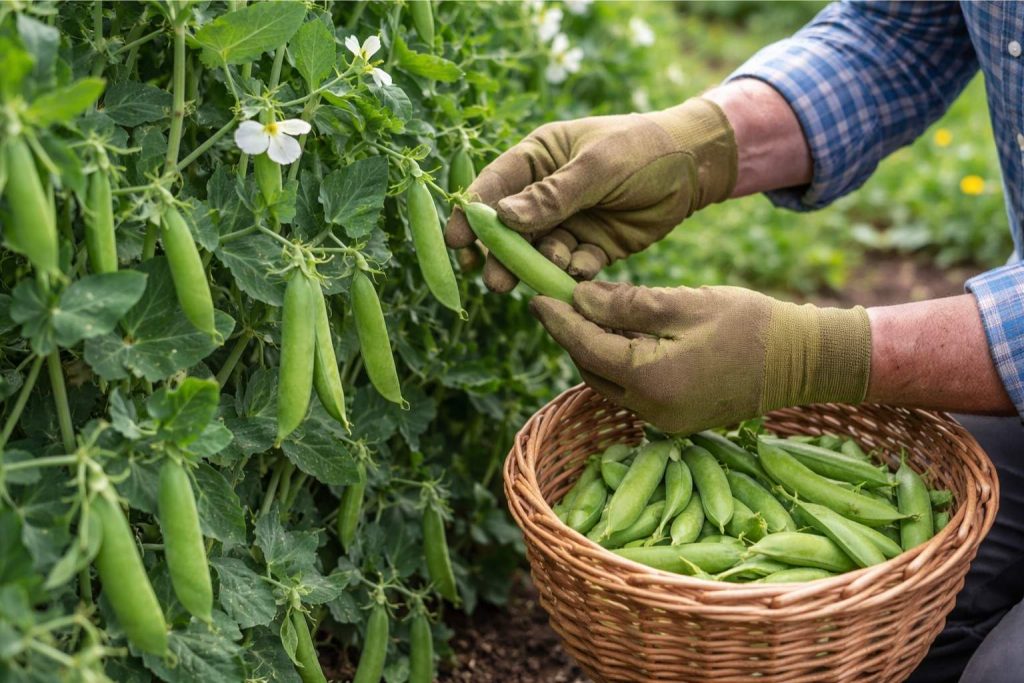
Peas are best harvested little and often.
The exact stage depends on the type you are growing. Mangetout should be picked while the pods are still young and flat. Sugar snap peas are usually best when the pods are fuller but still tender. Shelling peas are picked once the pods are nicely filled but before they become tough and starchy.
The main thing is not to leave them too long.
Older peas quickly lose the sweetness and tenderness that make them so enjoyable in the first place. Checking the plants regularly and picking at the right stage gives you a much better harvest than waiting for everything to become oversized.
This is another reason peas are a good crop near the house or along a path you pass often. The more regularly you notice them, the easier it is to pick them at their best.
How to Keep Peas Cropping for Longer
The easiest way to keep peas producing is to pick them regularly.
Once plants start forming pods, leaving mature pods on the plant often slows further production. Regular picking encourages the plant to keep going for longer.
Good watering also helps.
If peas are allowed to dry out badly once they start flowering and podding, the crop can finish earlier than it should. Keeping moisture reasonably steady helps support a longer, better harvest.
You can also extend the season a little by sowing in batches rather than all at once.
A few smaller sowings often work better than one large sowing if you want a longer run of fresh peas rather than a short glut. This approach is especially useful in smaller gardens where you want a steadier harvest from limited space.
Can You Grow Peas More Than Once in a Season?
In some gardens, yes.
This depends on the sowing time, the variety, and how your local season behaves, but peas can sometimes be grown in more than one batch rather than as a single one-off crop. What matters most is whether the conditions still suit them. Peas prefer cooler growing weather, so they are not usually at their happiest in the hottest part of summer.
That is why they fit so well into spring and early summer gardening in the UK.
They are often one of the crops that help bridge the gap between the coldest months and the peak summer vegetables that need more warmth.
Are Peas Worth Growing?
Yes, especially if you enjoy eating them fresh.
Peas are one of those crops that feel more special once you grow them yourself. Shop-bought peas are convenient, but garden peas picked young and eaten soon after harvest are much sweeter and softer. That alone makes them worthwhile for many people.
They are also a very practical crop.
They do not need a huge amount of room, they suit UK conditions well, and they teach useful vegetable-growing habits without being too demanding. For beginners, that makes them a very sensible choice.
Frequently Asked Questions
Are peas easy to grow in the UK?
Yes, peas are one of the easier vegetables to grow in the UK. They suit cool spring and early summer conditions well, do not need much specialist equipment, and can crop very nicely if they have decent soil, support, and steady moisture.
When should I sow peas in the UK?
Peas are usually sown in the cooler part of the growing season. The exact timing depends on your area and the condition of the soil. It is usually better to wait until the ground is workable than to sow too early into cold, wet soil.
Do peas need full sun?
Peas grow best in a bright, open position with good light. They can cope with a little light shade, but deep shade usually leads to weaker growth and fewer pods.
Do peas always need support?
Most peas grow better with support, even shorter varieties. Support helps keep the stems upright, improves airflow, keeps pods cleaner, and makes harvesting easier.
Can I grow peas in pots?
Yes, peas can grow well in pots and containers, especially dwarf varieties. The container needs to be big enough to hold moisture and give the roots room, and you will still need to provide some support.
Why are my pea plants not growing well?
Poor growth is often caused by cold wet soil, compacted ground, lack of support, drying out, or a weak growing position. It is not always a feeding problem. In many cases, the conditions around the roots are the real issue.
Do peas need feeding?
Peas usually do not need heavy feeding if the soil is in reasonable condition. A bed improved with organic matter is often enough. Container-grown peas may need a little more help, but overfeeding is rarely the answer.
How often should I water peas?
Peas need steady moisture, especially while young and once they start flowering and forming pods. They do not want waterlogged soil, but they also crop poorly if they dry out too much.
How long do peas take to grow?
Peas are not instant, but they usually grow at a satisfying pace once they get going. The exact timing depends on the variety, the sowing date, and the weather, but they are generally considered a rewarding crop for beginners because you can see steady progress.
When should I pick peas?
Peas are best picked regularly and before they become too old. Mangetout should be picked young and flat, sugar snaps when the pods are fuller but still tender, and shelling peas once the pods are nicely filled but still soft and sweet.
How do I keep peas cropping for longer?
The best way is to pick them regularly and keep the plants from drying out badly. Leaving mature pods on the plant can slow further production, while regular picking encourages more pods to form.
Are peas worth growing in a small garden?
Yes, peas are a very good crop for smaller gardens because they grow upward rather than taking up too much ground space. They can also be grown in containers if you choose a suitable variety and provide support.
A Sensible Place to Start
If you want to grow peas well in the UK, keep it simple.
Choose a bright, reasonably sheltered spot. Prepare the soil so it is workable and not waterlogged. Sow when the conditions are right, not just when you feel impatient to begin. Give the plants support early, keep the moisture steady, and pick the pods regularly once they start forming.
That is usually enough to make peas a very successful crop.
You do not need a complicated setup or expert-level methods. You just need a sensible growing space and a little regular attention. Once you get those basics right, peas are one of the most rewarding vegetables you can grow in a UK garden.
If you want to build from here, the most useful next reads are:
When to Plant Peas in the UK
How to Grow Vegetables in the UK
Easy Vegetables to Grow in the UK
Can You Grow Vegetables in Pots in the UK?
How Often to Water Plants in the UK