
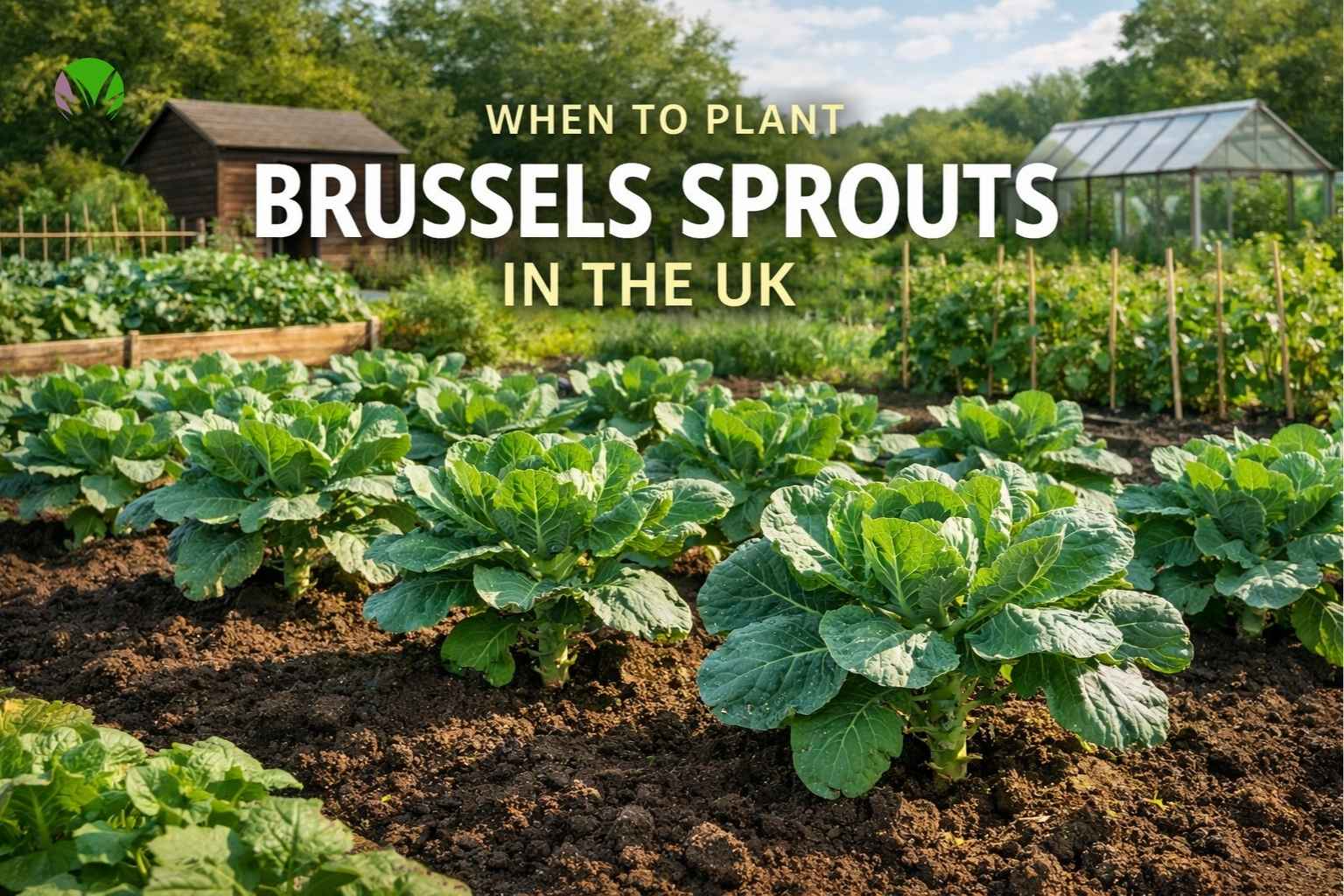
Knowing when to plant Brussels sprouts in the UK is one of the most important parts of growing this crop successfully. Brussels sprouts take a long time to mature, which means timing matters far more than many beginners expect.
Unlike quick crops that can be sown and harvested within a few weeks, Brussels sprouts are a long-season brassica. They need to be started early enough to establish strong plants before summer, then continue growing steadily through autumn and into winter.
Plant too late and plants may never reach a useful size before cold weather arrives. Plant at the right time and they can provide harvests well into the colder months, when many other crops are finished.
This guide explains exactly when to plant Brussels sprouts in the UK, how the sowing and planting timeline works, and how they fit into a wider brassica-growing plan. If you are building out your seasonal growing calendar, it also helps to understand the wider planting schedule covered in when to plant vegetables in the UK.
When to Plant Brussels Sprouts in the UK (Quick Answer)
Brussels sprouts are usually:
- sown indoors or in seed beds from March to April
- planted out from May to June
- harvested from autumn into winter
Because Brussels sprouts are a long-season crop, they should be started earlier than many vegetables. The goal is to give plants enough time to build strong stems and leafy growth before sprout formation begins later in the year.
Understanding Brussels Sprouts as a Long-Season Crop
Brussels sprouts are part of the brassica family, which also includes cabbage, cauliflower, and broccoli. These crops share some similarities, particularly in how strongly they depend on planting time and steady growth conditions.
Brussels sprouts are slower than many other brassicas. They do not usually provide quick results, but they reward patience with a harvest that stretches into late autumn and winter.
This long growing period is why early sowing matters.
Why Timing Matters for Brussels Sprouts
Brussels sprouts need:
- a long growing season
- steady development without major setbacks
- firm, well-prepared soil
If growth is interrupted by poor timing, cold shock, or poor soil conditions, plants often become weak and produce disappointing sprouts later on.
This is one reason brassicas are often more dependent on good preparation than beginner gardeners realise. Soil structure matters enormously for this crop family, as explained in growing brassicas in the UK.
Month-by-Month Guide to Planting Brussels Sprouts in the UK
March to April (Main Sowing Period)
This is the main sowing window for Brussels sprouts in most parts of the UK.
Seeds are usually started:
- in modules or trays indoors
- in a greenhouse
- in an outdoor seed bed once conditions improve
Starting during this period gives plants enough time to establish before being planted into their final growing position later in spring or early summer.
Earlier sowing can work under protection, but most gardeners find March and April the most practical and reliable starting point.
May to June (Planting Out)
Once seedlings are strong enough and conditions have stabilised, Brussels sprouts are planted out into prepared ground.
This usually happens from May to June depending on:
- regional climate
- seedling strength
- soil condition
By this stage, plants should have enough size to cope with outdoor conditions, but they still benefit from steady moisture and good soil preparation.
Because Brussels sprouts stay in the ground for a long time, planting position matters. They are not a crop you want to move later.
July Onwards (Too Late for Main Planting)
Starting Brussels sprouts after June is generally too late for a reliable crop in most UK gardens.
Late sowings usually do not have enough time to build strong plants before the cooler months arrive. This often leads to:
- small plants
- poor sprout formation
- low harvest quality
Because Brussels sprouts are a long-season vegetable, it is better to start on time than try to catch up later.
How Brussels Sprouts Compare With Other Brassicas
Brussels sprouts fit naturally into the wider brassica planting calendar.
They are closely related to:
However, Brussels sprouts usually need even more patience because their harvest comes much later.
Cabbages may provide spring, summer, or winter harvests depending on variety. Cauliflower and broccoli can also mature earlier. Brussels sprouts are usually grown with the expectation of a cold-season harvest.
This makes them particularly useful in a productive garden plan, because they keep food coming when many faster crops are long finished.
Where to Grow Brussels Sprouts in the UK
Brussels sprouts need the right position if they are going to grow strongly over such a long period.
Sunlight
They grow best in:
- full sun
- open beds with good light levels
Because they stay in the ground for months, choosing a bright position is especially important.
Shelter
Brussels sprouts should ideally be planted in a position with some protection from severe winds.
Strong winds can rock plants in the soil, which is a common problem with tall brassicas. This interferes with establishment and can reduce the quality of the final crop.
Firm planting and suitable shelter both help prevent this.
Soil Requirements for Brussels Sprouts
Brussels sprouts depend heavily on good soil.
They prefer soil that is:
- firm
- fertile
- moisture-retentive but not waterlogged
Loose, dry, or poorly structured soil often causes problems later on. This is why brassicas are often less forgiving than they first appear.
Why Soil Structure Matters So Much
Brussels sprouts are not just producing leaves or roots. They must grow into strong, upright plants capable of holding sprouts all the way up the stem.
If the soil is poor, plants may:
- grow weakly
- become unstable
- produce small or loose sprouts
Improving soil before planting is one of the best ways to improve results. If your soil needs work first, see how to improve garden soil in the UK.
Drainage and Moisture Balance
Brussels sprouts need consistent moisture, but they do not like sitting in waterlogged soil.
Poor drainage leads to weak growth and stress, especially early in the season. If your garden struggles with wet ground, this should be addressed before planting. See how to improve garden drainage in UK soil for the full guide.
How to Start Brussels Sprouts Indoors or in Seed Beds
Brussels sprouts are usually started from seed rather than being sown directly where they will grow.
This gives young plants a better start and allows you to plant them out once they are strong enough to cope with outdoor conditions.
Starting Indoors
Indoor sowing is useful in early spring, especially if outdoor conditions are still cold or wet.
Seeds can be started:
- in trays
- in modules
- on a bright windowsill
- in a greenhouse
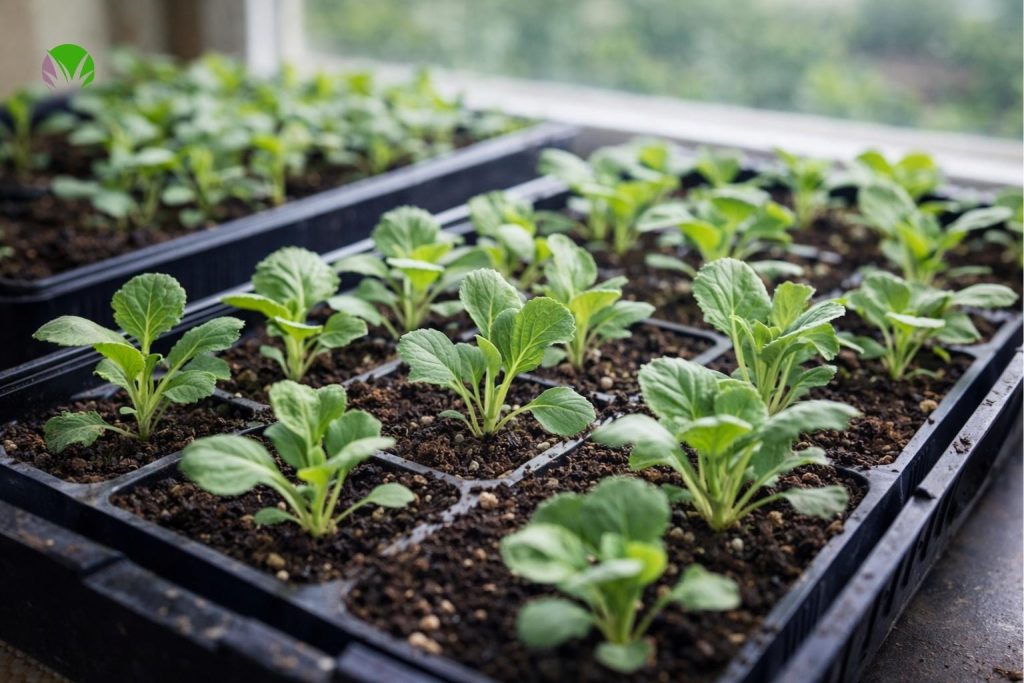
This method gives you more control over early growth, but seedlings still need enough light and steady temperatures to avoid becoming weak.
Starting in Outdoor Seed Beds
Many gardeners also sow Brussels sprouts in a separate seed bed outdoors once conditions improve. This is a traditional and reliable way to raise brassica seedlings before moving them into their final position.
A seed bed works well because:
- plants can be raised in a small space
- the main growing bed remains free until later
- seedlings can be transplanted once strong
This method is especially practical if you are growing several brassicas at once.
Planting Out Brussels Sprouts
Brussels sprouts are usually planted into their final position in late spring or early summer once seedlings are sturdy and well established.
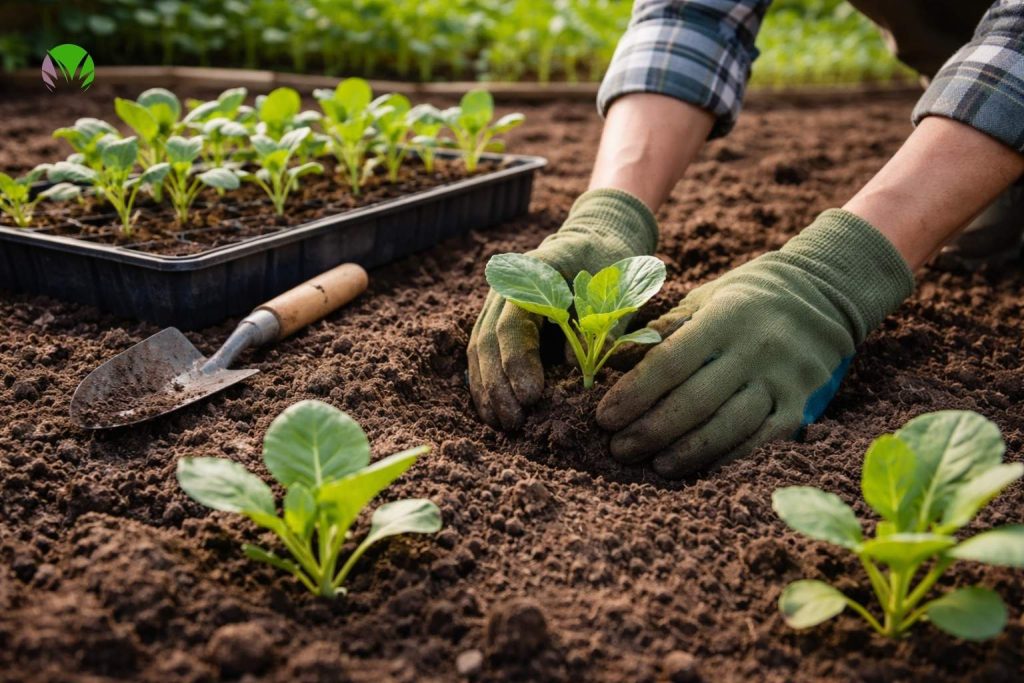
This is one of the most important stages of the growing process, because strong planting early on affects the whole crop later.
When Seedlings Are Ready
Seedlings are ready to plant out when they:
- have developed several true leaves
- look sturdy rather than thin or weak
- can handle outdoor conditions after hardening off
Planting out weak seedlings usually leads to weak mature plants.
Hardening Off
Before planting outside, Brussels sprout seedlings should be hardened off gradually over around a week. This means exposing them to outdoor conditions bit by bit so they can adjust without shock.
This matters because sudden changes in temperature, light, and wind can check growth badly.
Spacing
Brussels sprouts need more room than many beginners expect.
Plants are usually spaced widely enough to allow:
- good airflow
- strong root development
- room for a large mature plant
Crowding Brussels sprouts leads to competition, weak stems, and poor sprout formation later in the season.
Can You Grow Brussels Sprouts in Pots?
Brussels sprouts are not the easiest brassica to grow in containers, but it is possible if you use large pots and provide enough support.
Because plants become tall and remain in place for a long time, they need:
- deep containers
- good-quality compost
- steady watering
- firm support
For many gardeners, growing them in the ground is simpler and more reliable. However, if space is limited, containers can still work with careful management.
If you are gardening this way, it helps to understand how container growing changes watering and nutrient needs. This is explained in growing vegetables in pots in the UK.
Feeding and Watering Brussels Sprouts
Because Brussels sprouts remain in the ground for a long time, they benefit from soil that has been prepared properly before planting.
Healthy, fertile soil is more important than heavy feeding later on. In many cases, poor growth comes from soil issues rather than lack of fertiliser.
Watering
Brussels sprouts need steady moisture throughout the growing season.
Dry spells can slow growth, while repeated drying and soaking places plants under stress. A consistent approach is far better than reacting too late once plants begin to struggle.
If you are unsure how to judge watering properly, see how often to water plants in the UK.
Feeding
If soil has been improved well with compost or organic matter, extra feeding is often limited. However, if plants look weak or pale, they may benefit from additional nutrients during active growth.
The bigger priority is usually building better soil rather than relying on feeding alone.
Why Firm Planting Matters for Brussels Sprouts
Brussels sprouts are unusual because firm planting is strongly associated with better results.
Many vegetables prefer light, loose soil, but brassicas often do best when the soil is well prepared and then planted firmly enough to anchor the plant securely.
This is especially important for Brussels sprouts because they grow tall and are exposed to wind for months.
What Happens if Plants Are Loose
If Brussels sprout plants rock in the wind, this can disturb roots and weaken growth. Later in the season, this often shows up as:
- small sprouts
- poor stem strength
- uneven development
This is why brassica growers often pay so much attention to soil preparation and firm planting from the beginning.
How Weather Affects Brussels Sprout Planting
As with any planting guide, the month alone is not enough. Actual conditions matter just as much.
Cold Springs
In a cold spring, seedlings may need to stay protected for longer before being planted out. Rushing them into poor conditions rarely helps.
Wet Springs
If spring is very wet, planting into saturated soil can slow establishment and damage soil structure. Waiting for better ground conditions is usually the better option.
Warm Springs
In milder years, seedlings may be ready to plant slightly earlier, but it is still important not to sacrifice strong establishment for speed.
Healthy plants that go out a little later often outperform early plantings that struggled.
Regional Differences Across the UK
Brussels sprouts can be grown across the UK, but planting times vary slightly depending on region.
Southern England
Gardeners in the south may be able to sow a little earlier and plant out sooner because of milder spring conditions.
Midlands and Central Areas
In many central areas, March to April sowing and May to June planting out is usually the most reliable pattern.
Northern England and Scotland
Cooler regions often benefit from waiting until conditions are more settled before planting out. A slightly later but stronger start is usually more productive than forcing early growth.
How Brussels Sprouts Fit Into a Brassica Planting Plan
Brussels sprouts sit naturally alongside other brassicas in a UK vegetable garden. They can be planned as part of the same seasonal group as cabbage, cauliflower, and broccoli.
What makes Brussels sprouts slightly different is their long season and late harvest. This makes them especially useful for keeping a productive garden going into autumn and winter, long after many faster crops have finished.
If you are organising several vegetables together, it helps to think in terms of crop groups and planting windows rather than treating each crop in isolation.
Common Problems Caused by Planting Brussels Sprouts at the Wrong Time
Because Brussels sprouts take so long to mature, mistakes made at the start of the season often do not become obvious until much later.
Planting Too Late
This is one of the biggest causes of poor results.
If Brussels sprouts are started too late:
- plants stay small
- stems remain weak
- sprouts fail to develop properly before winter
Late starts usually lead to disappointment because there simply is not enough time for full development.
Poor Early Establishment
Even if plants are started on time, weak seedlings or poor planting-out conditions can slow development so much that final yields suffer.
Growth checks early in the season often lead to:
- uneven plants
- small sprouts
- reduced harvest quality
Wind Rock and Weak Stems
Brussels sprouts that are not planted firmly enough often suffer from root disturbance later on.
This can reduce vigour and make plants less productive, especially during exposed autumn weather.
How Long Brussels Sprouts Take to Grow
Brussels sprouts are one of the slower vegetables in a UK garden.
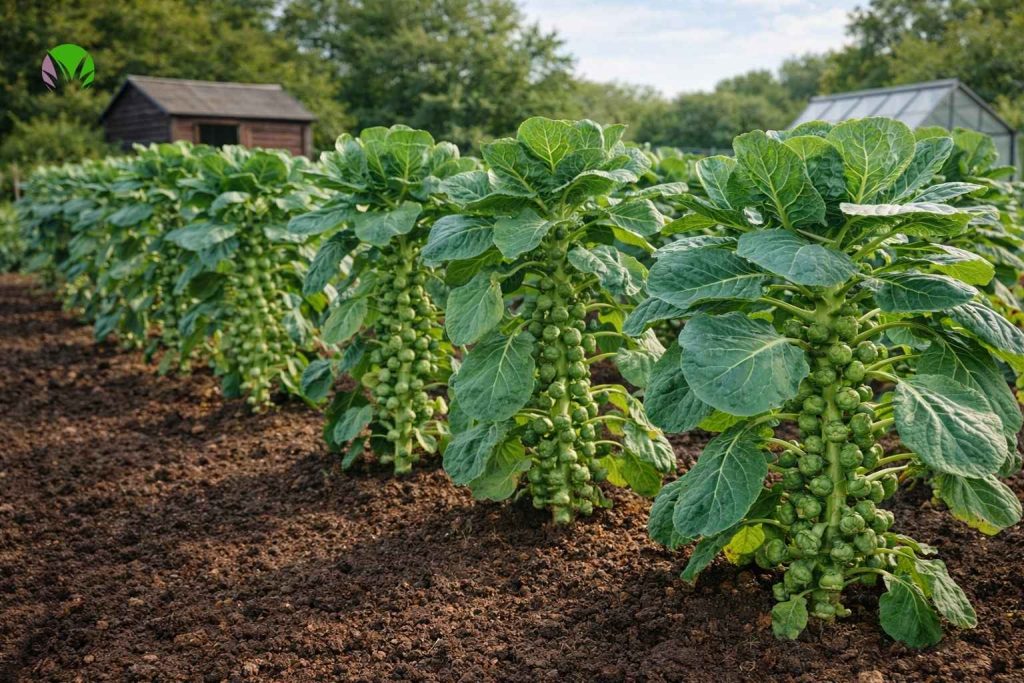
From sowing to harvest, they often take several months. This is why planting early and maintaining steady growth matters so much.
In general:
- seedlings are raised in spring
- plants grow through summer
- sprouts develop in autumn
- harvests continue into winter
Beginners are sometimes caught out by how long this process takes. Brussels sprouts are not difficult because they are complicated — they are difficult because they require patience and consistent conditions over a long period.
When to Harvest Brussels Sprouts in the UK
Brussels sprouts are usually harvested from autumn onwards, often continuing well into winter.
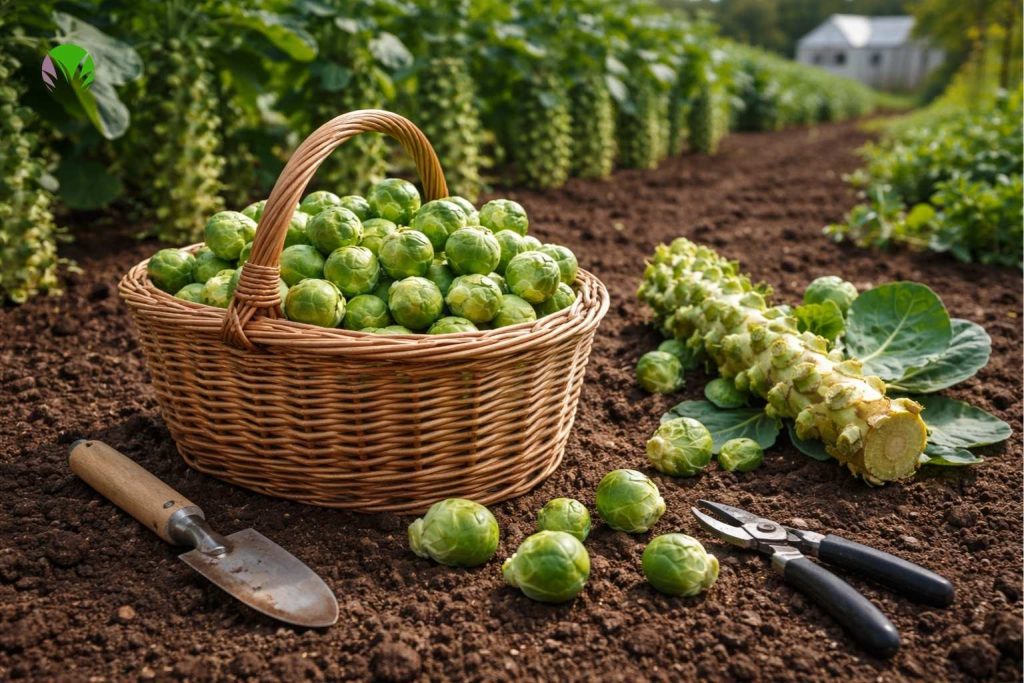
The exact timing depends on:
- sowing date
- weather conditions
- variety
- overall plant health
How to Tell When Sprouts Are Ready
Sprouts are ready when they are:
- firm
- compact
- well formed
Loose or open sprouts are usually a sign that the plant has not developed as well as it should have.
Harvesting is normally done from the bottom of the stem upwards, taking the largest sprouts first as they mature.
Can Brussels Sprouts Stay in the Ground Over Winter?
Yes, this is one of their main advantages.
Brussels sprouts are valued partly because they provide a harvest during the colder months, when many other vegetables are no longer productive.
In many UK gardens, plants can remain in place through much of winter, allowing sprouts to be picked as needed.
This makes them especially useful in a seasonal garden plan, alongside other crops that extend the harvest period beyond summer.
Are Brussels Sprouts Easy to Grow for Beginners?
Brussels sprouts can be rewarding, but they are not usually the easiest beginner crop.
This is not because they are especially delicate, but because they depend on:
- good timing
- strong soil preparation
- a long growing season
- steady care over many months
Beginners often do better with quicker vegetables first, then add Brussels sprouts once they are more comfortable managing a longer seasonal crop.
However, if you already understand the basics of soil, watering, and planting timing, Brussels sprouts can become a very useful part of the garden.
How Brussels Sprouts Compare With Faster Crops
Brussels sprouts are very different from quick or short-season vegetables.
For example, crops like lettuce, spinach, or beetroot can often be sown and harvested in a much shorter timeframe.
Brussels sprouts take the opposite approach. They occupy space for a long period, but repay that space with valuable winter harvests.
This is why they fit best into a well-planned vegetable garden rather than being treated as an afterthought.
How Brussels Sprouts Fit Into a Year-Round Vegetable Garden
One of the best reasons to grow Brussels sprouts is that they help extend productivity across the whole gardening year.
Instead of relying only on spring and summer crops, a balanced garden includes vegetables that mature later and keep producing into the colder months.
Brussels sprouts work particularly well in a growing plan that also includes earlier planting guides such as cabbage, cauliflower, broccoli, and quicker crops like lettuce.
Thinking in terms of seasonal overlap helps build a more productive and better-organised vegetable garden.
Signs You Have Planted Brussels Sprouts at the Right Time
When Brussels sprouts are planted at the right time and in good soil, you will usually see:
- strong, steady growth through summer
- thick stems
- healthy leaf development
- firm sprouts forming later in the year
Plants that establish strongly early on usually perform much better later, even if weather becomes less predictable in autumn.
Signs Timing or Conditions Were Wrong
Problems often show up as:
- small plants
- thin stems
- loose or poor-quality sprouts
- slow development late into the season
These issues are often blamed on feeding, but they usually begin much earlier with timing, planting firmness, or soil condition.
If plants in your garden often seem to stall or underperform generally, it may help to read why vegetable plants grow slowly in UK gardens.
FAQs
When should I sow Brussels sprouts in the UK?
Brussels sprouts are usually sown in the UK from March to April, either indoors, in a greenhouse, or in an outdoor seed bed once conditions improve.
When should Brussels sprouts be planted out in the UK?
Brussels sprout seedlings are usually planted out from May to June, once they are strong enough and outdoor conditions are stable.
Is June too late to plant Brussels sprouts in the UK?
June is usually the latest sensible time to plant out Brussels sprouts for a reliable crop. Starting them later than this often leads to weak plants and poor sprout formation.
Can Brussels sprouts stay in the ground over winter?
Yes, Brussels sprouts can stay in the ground over winter in many UK gardens, allowing you to harvest sprouts as needed during the colder months.
Do Brussels sprouts need full sun?
Brussels sprouts grow best in full sun, where they can build strong plants over their long growing season.
A Sensible Place to Start
If you want reliable results, a sensible place to start is by sowing Brussels sprouts from March to April, then planting them out from May to June once seedlings are strong and conditions are suitable.
Choose a sunny position, prepare the soil thoroughly, plant firmly, and give the crop time. Brussels sprouts are not a quick vegetable, but they are a valuable one when grown as part of a well-planned seasonal garden.
They reward patience, structure, and good timing more than speed. Get those basics right, and Brussels sprouts can become one of the most useful winter crops in a UK garden.