
Garlic is one of the easiest crops to grow in UK gardens and produces reliable harvests when planted at the right time. Unlike many vegetables, garlic can be planted in both autumn and spring depending on the variety and growing conditions.
Understanding when to plant garlic in the UK depends on soil conditions, temperature, and whether you are planting autumn or spring varieties.
Most gardeners start with quality seed garlic bulbs, which are selected for reliable growth and stronger yields compared to supermarket garlic.
If you want a full seasonal overview for many crops, see our guide to when to plant vegetables in the UK. Garlic fits into both the autumn and early spring planting calendar.
This article may contain affiliate links. As an Amazon Associate, we earn from qualifying purchases. This comes at no extra cost to you and helps support the site.
The Simple Answer: When Should You Plant Garlic in the UK?
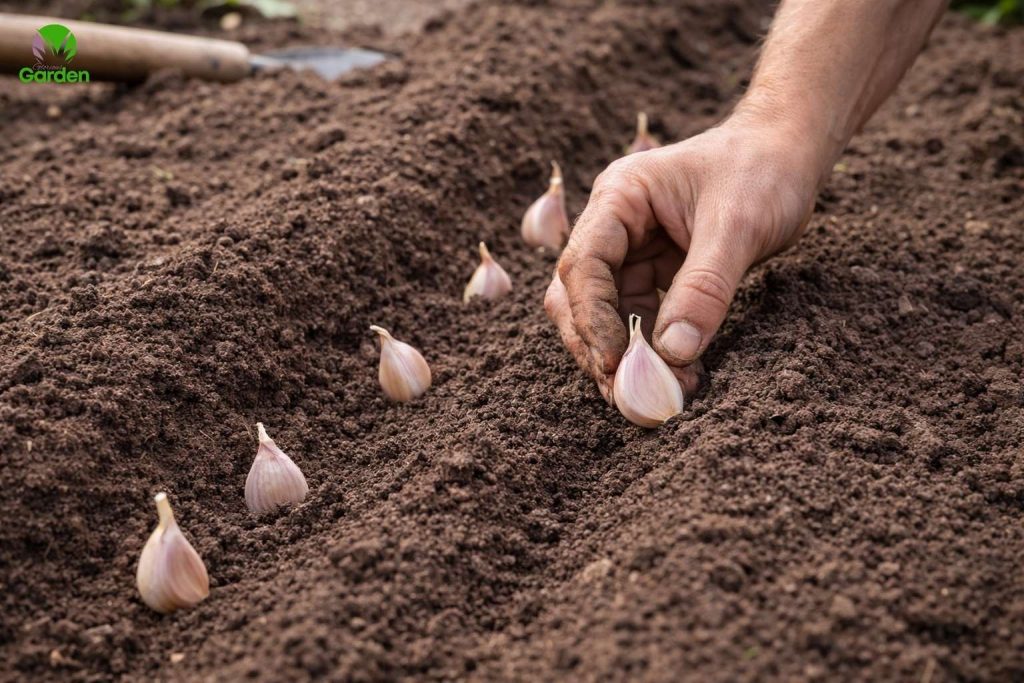
To make planting quicker and more consistent, some gardeners use a simple garden dibber to create evenly spaced holes at the right depth for each clove.
Garlic is usually planted in the UK during two main periods:
- Autumn planting: October to November
- Spring planting: January to March
Autumn planting is generally preferred because it gives garlic a longer growing season and often produces larger bulbs.
If you want to check frost timing in your region before planting early crops, you can use the UK Last Frost Date Checker. Garlic tolerates cold conditions well but extremely wet soil can slow early growth.
Why Garlic Is Often Planted in Autumn
Garlic benefits from a period of cold weather, which helps bulbs divide into individual cloves. This natural process is known as vernalisation.
Planting garlic in autumn allows roots to develop before winter while the plant remains mostly dormant during colder months.
When temperatures rise again in spring, garlic begins growing quickly and forms larger bulbs.
Spring Garlic Planting
Garlic can also be planted in early spring if autumn planting was missed.
Spring-planted garlic usually produces slightly smaller bulbs but still grows well in many UK gardens.
The key is planting as early as possible once soil becomes workable.
Choosing the Right Soil for Garlic
Garlic grows best in well-drained soil with plenty of organic matter. Heavy soil that remains wet through winter can cause cloves to rot.
If your soil drains poorly, improving structure before planting makes a big difference. See how to improve garden drainage in UK soil.
It also helps to understand the basic soil type in your garden. If you’re unsure, see how to tell if your garden soil is clay, loam or sand.
Month-by-Month Garlic Planting Guide
October
One of the best months to plant garlic in the UK. Soil is still warm and cloves establish roots before winter.
November
Garlic can still be planted in many regions provided the soil is not waterlogged.
January to March
Spring garlic planting window once soil becomes workable again.
In the next section we’ll look at regional planting differences across the UK, spacing garlic properly, and common mistakes that reduce harvest size.
Regional Guide: When to Plant Garlic Across the UK
The best planting time for garlic varies slightly depending on where you live in the UK. Soil temperature, rainfall, and winter conditions all influence how well garlic establishes.
South West England
In mild coastal regions such as Cornwall and Devon, garlic is commonly planted from October through November. Winters are generally mild enough for garlic to establish roots before spring growth begins.
London and South East
Across London and the South East, garlic is typically planted between mid October and late November. These regions warm slightly earlier in spring, which can encourage faster growth.
If you want to check the frost timing for your area before planting early crops, use the UK Last Frost Date Checker.
Midlands
In the Midlands garlic is usually planted between October and early November. Heavy winter rain can sometimes make soil too wet, so choosing well-drained areas is important.
If your soil becomes compacted during winter, it may affect root growth. See soil compaction in UK gardens to understand how this impacts vegetable crops.
Northern England
In northern England garlic is usually planted during October. Planting slightly earlier helps cloves establish roots before colder winter weather arrives.
Scotland
In Scotland garlic is often planted during late September through October so plants have enough time to develop before winter sets in.
How Far Apart Should Garlic Be Planted?
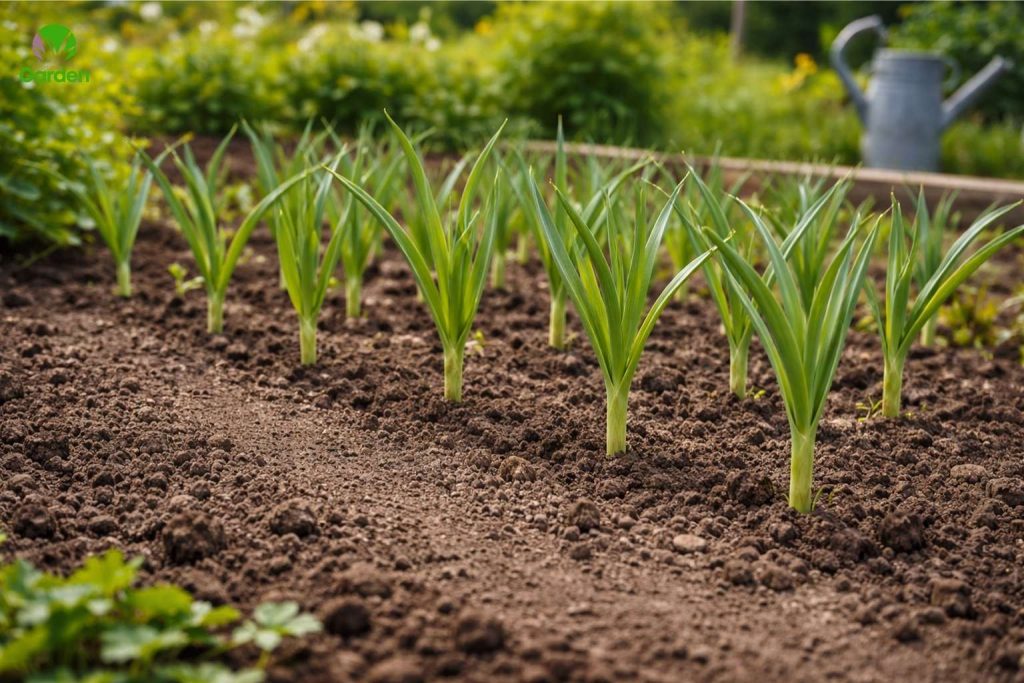
Spacing garlic properly helps bulbs develop to a good size.
- Clove spacing: around 10–15 cm apart
- Row spacing: 25–30 cm between rows
- Planting depth: about 5 cm below soil surface
Plant garlic cloves with the pointed end facing upward and the flat base facing downward.
Choosing the Right Garlic Varieties
Two main types of garlic are grown in UK gardens.
Hardneck Garlic
Hardneck varieties tolerate colder climates well and often produce stronger flavours. They also produce garlic scapes during early summer.
Softneck Garlic
Softneck varieties store longer and are often easier to grow in milder regions of the UK.
Common Garlic Planting Mistakes
Planting Garlic in Waterlogged Soil
Garlic does not tolerate soil that stays wet for long periods. Improving soil drainage helps prevent cloves from rotting.
If your soil remains wet after rain, see how to improve garden soil in the UK.
Planting Grocery Store Garlic
Garlic from supermarkets may not grow well because it can be treated to prevent sprouting. Using seed garlic from garden suppliers usually produces better results.
Planting Cloves Too Close Together
Crowded plants compete for nutrients and space, which often leads to smaller bulbs at harvest time.
Can Garlic Be Grown in Containers?
Garlic can grow successfully in large containers provided the pots are deep enough and have good drainage.
Container growing can be particularly useful in gardens with heavy clay soil or areas that remain wet during winter.
In the final section we’ll cover harvest timing, how long garlic takes to grow, and how to maximise bulb size.
When Will Garlic Be Ready to Harvest in the UK?
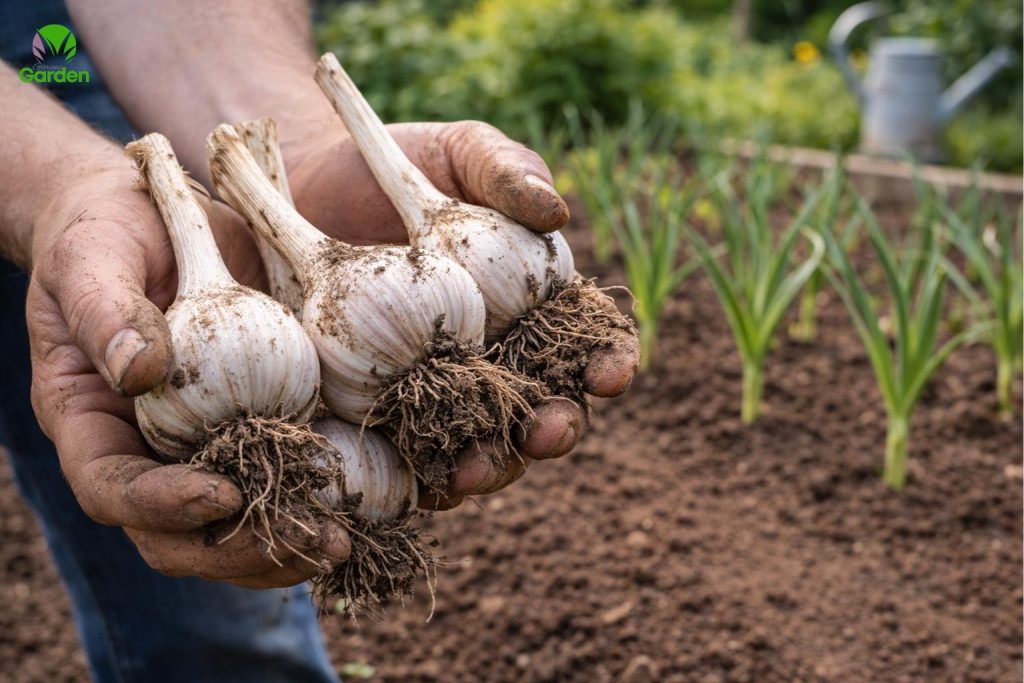
Garlic typically takes around 8 to 9 months to mature when planted in autumn. In most UK gardens garlic is harvested between June and July.
- Autumn planting: harvest in June or July
- Spring planting: harvest in July or August
The exact timing depends on weather conditions, soil quality, and the garlic variety being grown.
How to Tell When Garlic Is Ready to Harvest
Garlic is usually ready to harvest once the lower leaves begin turning yellow and dry.
This signals that the bulb underground has reached maturity.
A good rule of thumb is to harvest when around one third to one half of the leaves have turned yellow.
Leaving garlic in the ground too long can cause bulbs to split, which reduces storage life.
How to Harvest Garlic
Harvest garlic carefully to avoid damaging the bulbs.
- Loosen soil gently with a fork
- Lift bulbs from the soil without pulling the stems
- Shake off loose soil but avoid washing bulbs immediately
Once harvested, garlic should be cured for several weeks in a dry, well-ventilated place.
To improve airflow during curing, some gardeners use a mesh drying rack to help garlic dry evenly and store more successfully.
Curing Garlic for Storage
Curing allows the outer layers of the bulb to dry and protects the garlic during storage.
Hang garlic plants in bunches or lay them on racks in a dry location for 2 to 3 weeks.
Once cured, garlic can store for several months in a cool and dry environment.
How Planting Time Affects Garlic Bulb Size
Garlic planted in autumn usually produces larger bulbs because plants have more time to establish roots before spring growth begins.
Spring planting can still produce good harvests but bulbs may be slightly smaller.
Healthy soil structure also plays a major role in bulb development. If soil becomes compacted during winter, roots may struggle to expand properly. See soil compaction in UK gardens to understand how this affects vegetable crops.
Quick Reference: When to Plant Garlic in the UK
- Plant garlic cloves: October to November
- Alternative spring planting: January to March
- Harvest garlic: June to July
If you are planning a full vegetable garden, it also helps to understand planting times for other crops. See our guides on when to plant onions in the UK, when to plant peas in the UK, and when to plant potatoes in the UK.
When to Plant Garlic in the UK – Frequently Asked Questions
When is the best time to plant garlic in the UK?
Garlic is usually planted in the UK during autumn, typically between October and November. Planting in autumn allows garlic to establish roots before winter and often produces larger bulbs the following summer.
Can garlic be planted in spring in the UK?
Yes, garlic can also be planted in early spring between January and March if autumn planting was missed. Spring-planted garlic may produce slightly smaller bulbs but still grows well in many UK gardens.
How long does garlic take to grow in the UK?
Garlic usually takes around 8–9 months to mature when planted in autumn. Harvest normally occurs between June and July depending on weather conditions and the garlic variety.
Does garlic need full sun to grow?
Garlic grows best in full sunlight with at least 6 hours of direct light per day. Sunny locations help bulbs develop properly and improve harvest size.
Can garlic grow in heavy clay soil?
Garlic prefers well-drained soil. Heavy clay soil can cause bulbs to rot if it stays too wet through winter. Improving soil structure with organic matter can help garlic grow successfully in heavier soils.
Can you plant garlic from supermarket bulbs?
Supermarket garlic sometimes grows, but it may be treated to prevent sprouting. Seed garlic from garden suppliers usually produces more reliable results and larger bulbs.
A Sensible Place to Start
If you’re unsure when to plant garlic in your garden, start with a simple autumn planting in October when soil is still workable.
Choose healthy seed garlic, plant cloves at the correct spacing, and ensure soil drains well through winter.
With the right timing and a little patience, garlic becomes one of the easiest and most reliable crops for UK gardeners to grow.