

Onions are one of the most dependable crops in UK gardens. They tolerate cool weather, store well, and fit neatly into most vegetable rotations. But planting at the right time makes a noticeable difference to bulb size, disease resistance, and storage quality.
Plant too early into saturated soil and sets can rot. Plant too late and bulbs may not size up properly before summer heat arrives.
Understanding when to plant onions in the UK depends on the method you are using: sets, seeds, or overwintering varieties.
If you want the broader planting calendar first, see When to Plant Vegetables in the UK. Onions follow a predictable seasonal pattern, but soil condition matters just as much as timing.
The Simple Answer: When Should You Plant Onions in the UK?
In most UK gardens, onions are planted between February and April.
- Onion sets: February to April
- Onion seeds (indoors): January to February
- Onion seeds (direct sow): March to April
- Overwintering varieties: September to October
Exact timing depends on soil temperature, drainage, and frost exposure. Onions tolerate cold better than many crops, but prolonged waterlogging causes more problems than frost.
Before planting outdoors, confirm your regional frost pattern using the UK Last Frost Date Checker.
Onion Sets vs Onion Seeds: Does Timing Change?
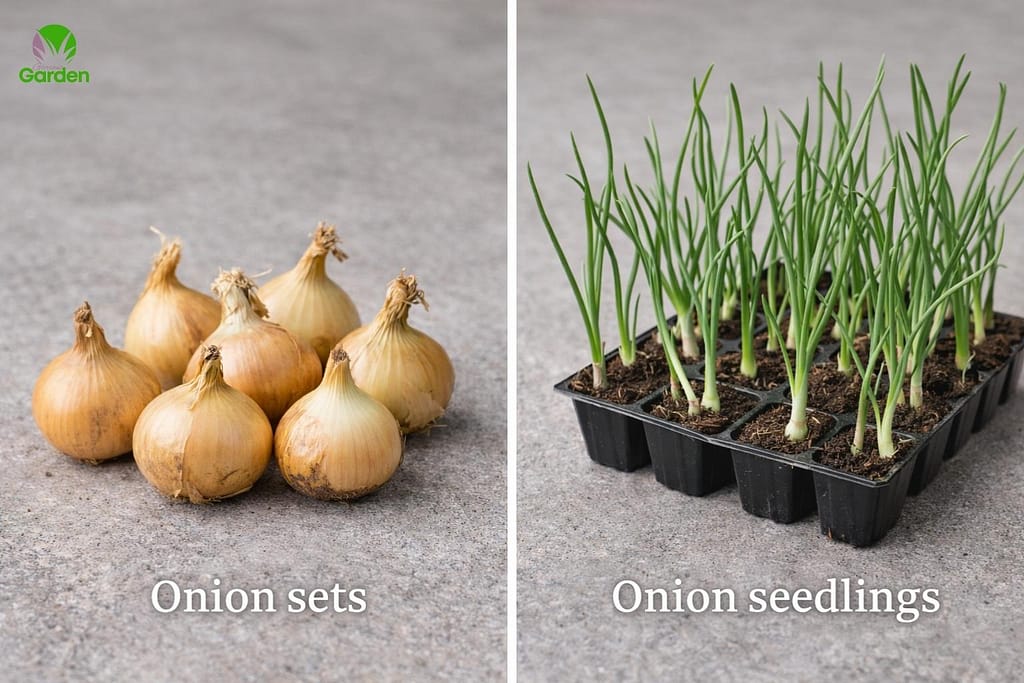
Onion Sets
Onion sets are small immature bulbs grown the previous season. They are the easiest and most reliable method for beginners.
Most gardeners plant sets between late February and early April. In southern areas, late February is often suitable if soil is workable.
In colder or heavier soil, early to mid March is usually safer.
Onion Seeds
Growing from seed gives more variety choice and can produce larger bulbs, but requires more time.
- Start indoors in January or February.
- Transplant outside in March or April.
- Or direct sow outdoors from March onwards.
Seeds need steady warmth for germination and even moisture once transplanted.
Why Drainage Matters More Than Frost for Onions
Onions tolerate cool conditions surprisingly well. What they dislike most is sitting in cold, wet soil.
If the base of the bulb remains constantly damp:
- Rot becomes more likely.
- Growth slows significantly.
- Roots struggle to establish properly.
If your beds stay wet after rain, address soil structure first rather than rushing to plant. See How to Improve Garden Drainage in UK Soil for long-term solutions.
Month-by-Month Onion Planting in the UK
January
Start onion seeds indoors in modules or trays. Provide bright light and avoid overwatering.
February
In mild southern regions, onion sets can be planted late in the month if soil is not frozen or saturated.
March
Main planting month for onion sets across most of the UK. Soil should be workable and beginning to warm.
If unsure about your soil type and how it drains, review How to Tell If Your Garden Soil Is Clay, Loam or Sand before planting.
April
Still suitable for sets and direct sowing in northern regions. Later planting may slightly reduce bulb size but can still produce good crops.
Overwintering Onions
Overwintering varieties are planted in early autumn (September to October). They establish before winter, pause growth during cold weather, and resume in spring for an early summer harvest.
Good drainage is especially important for overwintering onions, as prolonged winter saturation increases rot risk.
In the next section, we’ll cover regional timing differences, spacing, soil preparation, and common onion planting mistakes in UK gardens.
Regional Guide: When to Plant Onions Across the UK
Although February to April is the general planting window, regional climate differences can shift safe planting dates by several weeks.
Soil temperature, drainage, elevation, and exposure all influence when beds are ready for onions.
South West England
In Cornwall, Devon, and sheltered coastal areas, onion sets can often be planted from late February if the soil is workable and not saturated.
However, heavy winter rainfall can leave beds waterlogged. If soil remains sticky beneath the surface, review How to Improve Garden Drainage in UK Soil before planting.
London and South East
Urban areas often warm slightly earlier in spring. In many South East gardens:
- Onion sets: late February to March
- Seedlings transplanted outdoors: March
- Direct sowing: March to early April
Although onions tolerate cold, exposed gardens may still experience late frosts. Check local timing using the UK Last Frost Date Checker.
Midlands
Midlands gardens often have heavier clay soils that warm more slowly. In many areas:
- Onion sets: early to mid March
- Direct sowing: late March
If the soil feels dense or compacted below the surface, drainage may be restricting root development. See Soil Compaction in UK Gardens for practical signs and solutions.
Northern England
In northern regions, patience usually improves results.
- Onion sets: mid to late March
- Direct sowing: late March to April
Planting into cold, wet soil rarely improves growth speed. Waiting for workable conditions typically leads to larger, healthier bulbs.
Scotland
In central and southern Scotland:
- Onion sets: mid to late March
- Direct sowing: April
In exposed or Highland areas, early April is often safer than March.
How Deep Should You Plant Onion Sets?
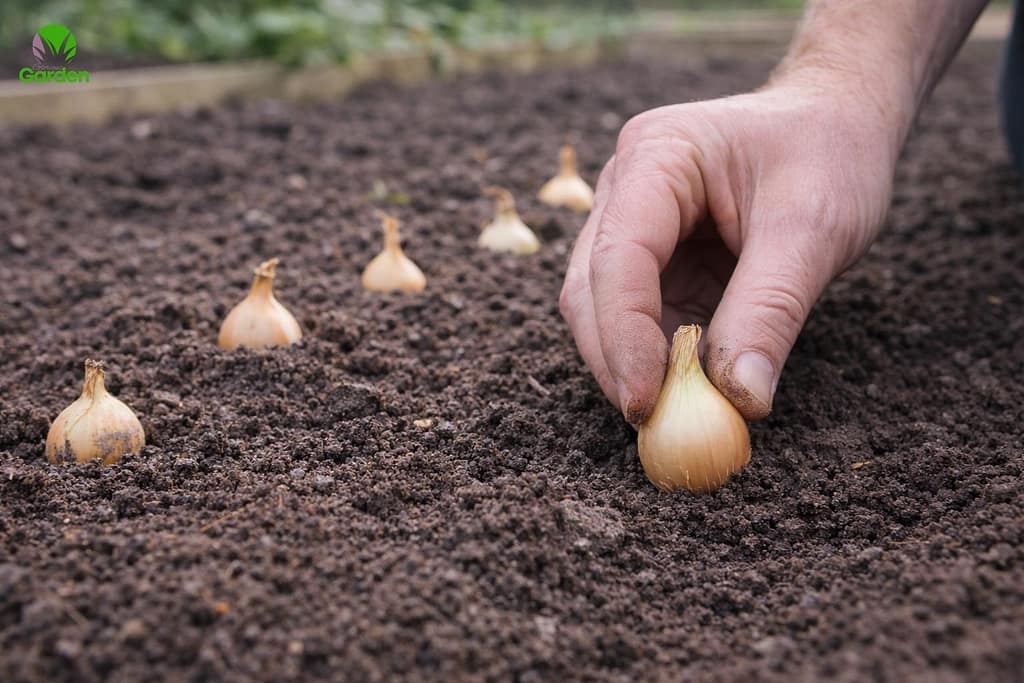
Correct planting depth supports steady growth and reduces rot risk.
- Plant onion sets so the tip just shows at the surface.
- Space around 10–15 cm apart.
- Leave 25–30 cm between rows.
Planting too deeply can slow growth and increase moisture retention around the bulb.
If you are unsure about how your soil behaves, confirm your base soil type first in How to Tell If Your Garden Soil Is Clay, Loam or Sand.
Does Planting Time Affect Bulb Size?
Yes — but soil condition plays an equally important role.
Onions planted early into cold soil may sit inactive for weeks. Growth only accelerates once soil temperatures rise and drainage improves.
Steady establishment in workable soil usually produces larger bulbs than rushing to plant early.
Building soil structure over time improves root spread and nutrient uptake. For long-term improvement, see How to Improve Garden Soil in the UK.
Common Onion Planting Mistakes in UK Gardens
Planting into saturated soil
Onion sets rot easily in waterlogged ground. If beds remain wet long after rain, structure rather than timing is usually the issue.
Over-firming the soil
Onions prefer firm but not compacted soil. Excessive trampling or digging when wet can reduce drainage and root growth.
Planting too deeply
The tip of the set should remain visible. Fully burying sets can slow emergence and increase disease risk.
Ignoring crop rotation
Avoid planting onions in the same spot year after year. Rotating crops helps reduce disease build-up and maintains soil balance.
Onions in Raised Beds or Containers
Raised beds often warm earlier in spring and improve drainage in heavy soil areas.
Containers can also work well, provided they have good drainage holes and consistent watering.
If your soil struggles with persistent winter wetness, combining raised beds with gradual soil improvement is often more effective than repeated deep digging.
In the final section, we’ll cover harvesting timelines, curing for storage, and how planting month influences keeping quality.
When Will Onions Be Ready to Harvest in the UK?
Harvest timing depends on whether you grew onions from sets, seeds, or overwintering varieties, but in most UK gardens onions are lifted between July and September.
- Onions from sets planted in March: usually ready July to August
- Onions from seed started indoors: often ready August to September
- Overwintering onions: often ready June to July
Weather and soil conditions influence this. In cool, wet summers, onions may take longer to mature. In warm dry summers, bulbs often size up faster but can bolt if stressed.
How to Know When Onions Are Ready to Lift
Onions are usually ready when:
- Most tops have yellowed and flopped over naturally
- Bulbs feel firm and well-formed
- The neck (where leaves meet bulb) begins to dry
Avoid forcing the tops down early. The plant uses green leaves to feed the bulb. If you push them over too soon, bulbs often store poorly.
How Planting Time Affects Storage Quality
Planting time influences storage in two main ways: bulb maturity and stress during growth.
Earlier planting
- Often produces larger bulbs if soil conditions are suitable
- May increase risk of rot if planted into wet ground
- Can be more likely to bolt if plants experience stress after early growth
Mid-season planting (March)
- Most reliable balance for the UK
- Good bulb size without excessive early-season risk
- Strong storage potential if cured properly
Later planting (April)
- Still produces a good crop, especially in cooler regions
- May result in slightly smaller bulbs
- Can still store well if fully matured and cured
Whatever your planting month, the biggest storage factor is curing and keeping bulbs dry. Soil structure also matters because onions grown in poorly draining soil are more prone to rot and poor neck drying.
If your soil stays wet for long periods, improving structure steadily makes a noticeable difference to onion health. See How to Improve Garden Drainage in UK Soil for long-term fixes.
Curing Onions Properly for Storage

After lifting onions, curing dries the outer skins and neck so the bulb can store safely.
For most UK gardens:
- Lift onions on a dry day if possible.
- Brush off loose soil (do not wash).
- Leave them in a warm, airy place for 1 to 2 weeks.
- Ensure good airflow and keep rain off.
Once cured, trim the roots and either trim the tops or braid them if you prefer.
Store onions somewhere cool, dark, dry and well ventilated.
Bolting: Why It Happens and How Planting Time Influences It
Bolting is when onions produce a flower stalk instead of forming a proper bulb. It is usually triggered by stress, often a combination of cold periods followed by warming.
To reduce bolting risk:
- Do not plant sets too early into cold, saturated soil.
- Choose bolt-resistant varieties where possible.
- Keep growth steady with consistent moisture and spacing.
If you suspect soil is causing repeated problems, confirm what you are working with using How to Tell If Your Garden Soil Is Clay, Loam or Sand.
Quick Reference: When to Plant Onions in the UK
- Onion sets: February to April (March is most reliable)
- Onion seeds indoors: January to February
- Direct sow outdoors: March to April
- Overwintering varieties: September to October
Onions tolerate cold better than many crops, but they hate sitting wet. Always prioritise workable soil conditions over a specific date.
When to Plant Onions in the UK – Frequently Asked Questions
When is the best month to plant onions in the UK?
March is the most reliable month to plant onion sets in most UK gardens. Soil is usually workable, temperatures are rising, and growth establishes steadily.
Can I plant onion sets in February in the UK?
Yes, in mild southern areas you can plant onion sets in late February if the soil is not frozen or waterlogged. In colder regions, early to mid March is usually safer.
How late can you plant onions in the UK?
Onion sets can be planted as late as April. Later planting may result in slightly smaller bulbs, but you can still grow a good crop if soil conditions are suitable.
Do onions need frost protection in the UK?
Onions tolerate cold weather well and usually do not need frost protection. However, prolonged waterlogging is more damaging than frost.
Should I grow onions from sets or seeds?
Onion sets are easier and more reliable for beginners. Seeds offer more variety choice and can produce larger bulbs but require earlier starting and more care.
Why are my onions rotting after planting?
The most common cause is planting into cold, wet soil. Poor drainage and compacted ground increase rot risk. Onions prefer firm but well-draining soil.
When should I plant overwintering onions in the UK?
Overwintering onions are usually planted in September or October. They establish before winter and are harvested early the following summer.
Related planting guides: For other early-season crops, see when to plant carrots in the UK and when to plant potatoes in the UK.
A Sensible Place to Start
If you are unsure when to plant onions in your garden, start with onion sets in March.
Wait until the soil is workable and not saturated, plant sets so the tips just show, and avoid over-firming the bed. If your garden struggles with drainage in winter and spring, focus on soil structure improvements rather than forcing planting dates.
With steady growth and proper curing, onions become one of the easiest UK crops to grow and store successfully.