

Potatoes are one of the most popular crops grown in UK gardens. They are reliable, productive, and well suited to British conditions — but planting at the right time makes a significant difference to yield, disease resistance, and harvest timing.
Plant too early and cold, wet soil can cause rot before growth even begins. Plant too late and crops may struggle in summer heat or mature too quickly.
Understanding when to plant potatoes in the UK depends on soil temperature, frost timing, and the type of potato you are growing.
If you want the broader seasonal overview first, see When to Plant Vegetables in the UK. Potatoes follow a predictable pattern within that schedule — but variety choice changes the timing.
The Simple Answer: When Can You Plant Potatoes in the UK?
In most UK gardens, potatoes are planted between March and May.
Exact timing depends on:
- First early, second early, or maincrop varieties
- Soil temperature (ideally 7°C or above)
- Local frost risk
- Drainage and soil structure
Potatoes are not frost hardy once shoots appear above ground. Before planting, confirm your regional frost pattern using the UK Last Frost Date Checker.
Understanding Potato Types and Planting Windows
First Early Potatoes
These are planted earliest, usually from mid to late March in southern areas and late March to early April in cooler regions.
They mature quickly (around 10–12 weeks) and are harvested in early summer. Because they are lifted earlier, they often avoid late blight pressure.
Second Early Potatoes
Typically planted late March through April.
They mature slightly later than first earlies and provide mid-summer harvests.
Maincrop Potatoes
Usually planted mid-April through early May.
Maincrop varieties take longer to mature (15–20 weeks) and are suited for storage. Because they grow through summer, correct spacing and soil health matter even more.
Why Soil Temperature Matters for Potatoes
Like carrots, potatoes respond to soil temperature more than calendar date.
Planting into cold, wet soil increases the risk of:
- Tuber rot
- Slow emergence
- Weak growth
If your soil remains waterlogged after winter, improve drainage first rather than rushing to plant. See How to Improve Garden Drainage in UK Soil for long-term structural fixes.
Month-by-Month Potato Planting in the UK
March
Suitable for first earlies in southern regions if soil is workable and not saturated. Raised beds warm faster and are often ready earlier.
In clay-heavy soil, waiting until late March is usually safer. If unsure about your soil type, review How to Tell If Your Garden Soil Is Clay, Loam or Sand.
April
The main planting month for most UK gardens. Soil is warming, daylight is increasing, and frost risk begins to reduce.
Both second earlies and maincrops are commonly planted during this month.
May
Still suitable for maincrop potatoes, especially in northern regions. Later planting may slightly reduce final size but can still produce good harvests if soil health is strong.
Should You “Chit” Potatoes Before Planting?
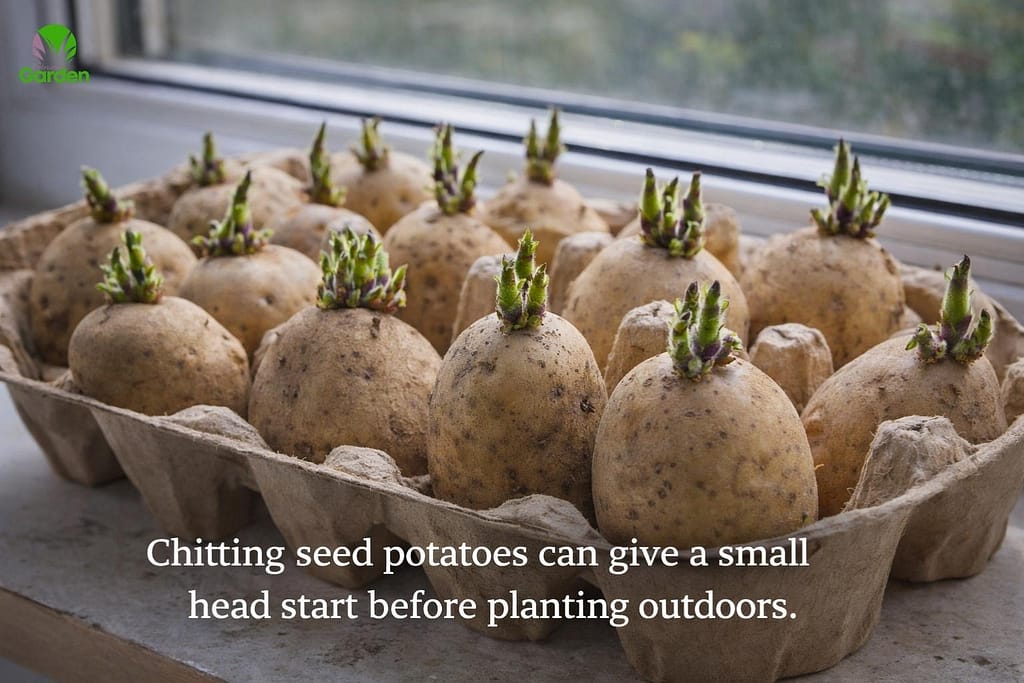
Chitting means allowing seed potatoes to sprout before planting. This can give plants a small head start, particularly in cooler regions.
Place seed potatoes in a cool, bright place in February or early March and allow short, sturdy shoots to develop.
Chitting does not replace correct soil conditions — planting into cold, wet ground still causes problems.
Common Potato Planting Mistakes
Planting into waterlogged soil
Potatoes rot easily in saturated ground. If your beds stay wet long after rain, address structure first. See Soil Compaction in UK Gardens if drainage seems slow beneath the surface.
Ignoring frost forecasts
Emerging shoots are vulnerable to late frost. Light earthing up can protect early growth if cold nights are predicted.
Overworking the soil
Repeated digging often collapses structure long term. Improve soil gradually instead. How to Improve Garden Soil in the UK explains how to build resilience over seasons.
In the next section, we’ll look at regional planting differences across the UK, spacing guidance, and how planting time affects yield and disease risk.
Regional Guide: When to Plant Potatoes Across the UK
Although March to May is the general planting window, regional climate differences shift the safest timing by several weeks.
Soil temperature, exposure, rainfall, and elevation all influence when potato beds are ready.
South West England
In Cornwall, Devon, and sheltered coastal areas, first early potatoes can often be planted from mid-March, provided the soil is workable and not waterlogged.
Coastal influence keeps temperatures milder, but heavy rainfall can delay planting if drainage is poor. If soil remains sticky beneath the surface, review How to Improve Garden Drainage in UK Soil before rushing to plant.
London and South East
Urban areas often warm slightly earlier due to retained heat. In many South East gardens:
- First earlies: mid to late March
- Second earlies: late March to early April
- Maincrop: mid-April
Always confirm frost patterns before planting, especially if shoots are likely to emerge early. Use the UK Last Frost Date Checker as a planning guide.
Midlands
Midlands gardens often have heavier clay soils, which warm more slowly. In many areas:
- First earlies: late March
- Maincrop: mid to late April
If soil feels dense below the surface, compaction may delay warming and restrict tuber development. See Soil Compaction in UK Gardens for signs and solutions.
Northern England
In northern regions, patience usually pays off.
- First earlies: late March to early April
- Maincrop: late April
Planting too early into cold ground can reduce overall yield more than waiting two weeks for better conditions.
Scotland
In central and southern Scotland:
- First earlies: late March to early April
- Maincrop: late April to early May
In Highland and exposed locations, early May is often the safest starting point for maincrop potatoes.
How Deep Should You Plant Potatoes?
Correct depth supports steady growth and protects developing tubers.
- Plant seed potatoes around 10–15 cm deep
- Space 30 cm apart for earlies
- Space 35–40 cm apart for maincrop
- Leave 60–75 cm between rows
Deeper planting in heavy soil can increase the risk of rot if drainage is poor. If unsure about your base soil type, review How to Tell If Your Garden Soil Is Clay, Loam or Sand before adjusting planting depth.
Does Planting Time Affect Yield?
Yes — but not in the way many gardeners assume.
Planting extremely early does not automatically produce bigger crops. In fact, potatoes planted into cold soil often:
- Emerge slowly
- Develop weaker root systems
- Produce fewer tubers
Steady growth in warming soil usually produces better results than forcing early planting dates.
Healthy soil structure also influences yield. If soil lacks resilience or organic matter, review How to Improve Garden Soil in the UK for long-term improvement.
How Frost Affects Newly Emerging Potatoes
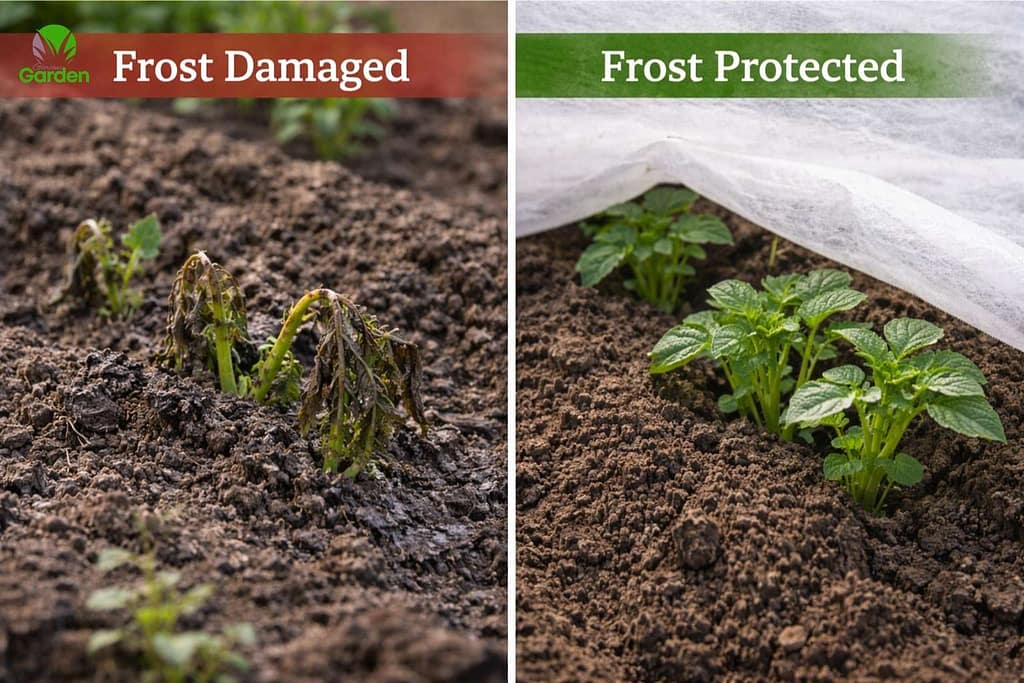
Potato foliage is vulnerable to frost once it breaks the soil surface.
If frost is forecast after planting:
- Earth up soil around emerging shoots
- Use horticultural fleece overnight
- Remove protection during the day to allow airflow
Light frost damage often looks dramatic but plants frequently recover if the roots remain healthy.
Spacing and Earthing Up
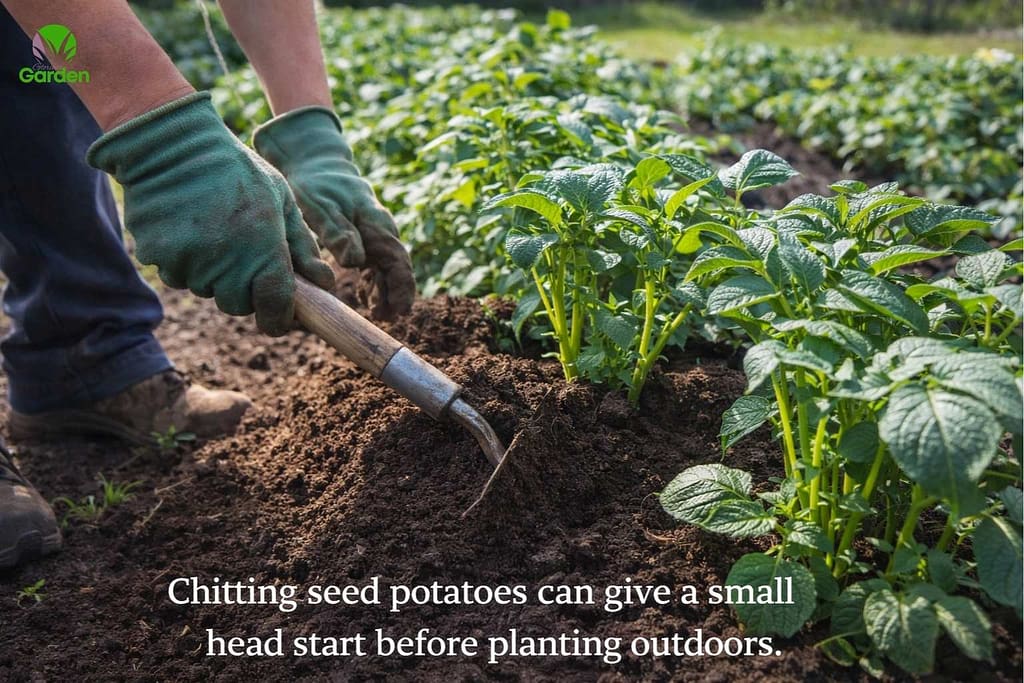
As plants grow, soil should be gradually drawn up around stems. This process, known as earthing up, protects developing tubers from light and reduces greening.
Start earthing up once plants reach around 15–20 cm tall.
Proper spacing at planting makes earthing up easier and reduces disease pressure later in the season.
Potatoes in Raised Beds or Containers
Raised beds warm earlier in spring and often allow slightly earlier planting, especially in regions with heavy clay soil.
Containers can be planted at similar times to ground planting but may require more consistent watering during dry spells.
If your soil struggles with drainage each winter, raised beds combined with long-term structure improvement can provide more consistent results than repeated deep digging.
In the final section, we’ll cover harvesting timelines, how planting month affects storage quality, and how to adapt potato planting to increasingly unpredictable UK weather patterns.
When Will Potatoes Be Ready to Harvest in the UK?
Harvest timing depends on whether you planted first earlies, second earlies or maincrop potatoes. In general:
- First earlies: 10–12 weeks after planting
- Second earlies: 12–14 weeks after planting
- Maincrop: 15–20 weeks after planting
A mid to late March planting of first earlies is often ready in June. Maincrop planted in mid to late April is typically harvested from late August through October, depending on variety and region.
If you want the full growing process after planting (watering, earthing up, blight management and harvesting steps), follow How to Grow Potatoes in the UK.
How Planting Month Changes the Type of Harvest You Get
Potatoes planted earlier usually produce an earlier harvest, but that does not always mean a bigger harvest.
Early planting (mid to late March)
- Earlier lifting window
- Often avoids peak blight pressure
- Higher risk of cold, wet soil problems
Mid-season planting (April)
- Most balanced timing for the UK
- More reliable emergence and steady growth
- Good yields in most soil types
Later planting (May)
- Useful in cooler regions
- Can reduce risk of early-season rot in wet springs
- May shorten the growing season for storage crops
If your spring soil tends to stay cold and sticky, improving drainage and soil structure usually delivers better results than forcing early planting dates. See How to Improve Garden Drainage in UK Soil for reliable fixes.
How to Know If Your Soil Is Ready for Potatoes
Potatoes do best when soil is workable, not saturated, and beginning to warm. A simple practical test is enough.
- If soil smears and sticks to tools, it is too wet.
- If soil crumbles when squeezed, it is usually workable.
- If water sits on the surface after rain for long periods, structure may be limiting drainage.
If you are unsure whether you have clay-heavy soil or simply poor structure, confirm your base soil type in How to Tell If Your Garden Soil Is Clay, Loam or Sand.
If the soil feels dense beneath the surface, compaction often prevents drainage and warming. See Soil Compaction in UK Gardens for a clear UK-specific guide.
Late Blight and Planting Time
Late blight is one of the main risks for potatoes in the UK, especially in warm, damp summers. Planting time influences your exposure.
- Early potatoes are often lifted before blight pressure peaks.
- Maincrop grows through the highest-risk part of summer.
Spacing, airflow, earthing up correctly, and removing infected foliage quickly all reduce risk. If you are growing in a humid or sheltered garden, blight risk is usually higher than open, breezy sites.
Growing Potatoes in Heavy Soil: Extra Practical Advice
Potatoes can still grow well in heavier soils, but the key is structure and drainage.
- Do not plant into wet, sticky ground.
- Use ridges to raise the planting area slightly.
- Top-dress with compost to improve structure over time.
- Avoid repeated deep digging that collapses soil biology.
If you want a structured long-term plan for improving soil resilience, see How to Improve Garden Soil in the UK.
Quick Reference: When to Plant Potatoes in the UK
- First earlies: mid March to early April (later in the North and Scotland)
- Second earlies: late March through April
- Maincrop: mid April to early May
If you are uncertain about frost timing where you live, check your postcode in the UK Last Frost Date Checker. Frost is mainly a risk once shoots emerge, so early planting may require protective earthing up if cold nights are expected.
When to Plant Potatoes in the UK – Frequently Asked Questions
When is the best month to plant potatoes in the UK?
April is the most reliable month to plant potatoes in most UK gardens. Soil temperatures are rising, frost risk is reducing, and conditions are usually suitable for steady growth.
Can I plant potatoes in March in the UK?
Yes, first early potatoes can often be planted in mid to late March in southern areas if the soil is workable and not waterlogged. In cooler regions, late March or early April is safer.
How late can you plant potatoes in the UK?
Maincrop potatoes can be planted as late as early May in most regions. Later planting may slightly reduce yield but can still produce a good harvest if soil conditions are strong.
Do potatoes need frost protection after planting?
Seed potatoes underground are usually safe from frost, but emerging shoots are vulnerable. If frost is forecast, earth up soil around shoots or use fleece protection.
Should I chit potatoes before planting?
Chitting (allowing seed potatoes to sprout before planting) can give plants a small head start, especially in cooler regions. However, it does not replace the need for suitable soil temperature and drainage.
What soil temperature is best for planting potatoes?
Potatoes grow best when soil temperatures reach around 7°C or above. Planting into cold, wet soil increases the risk of rot and slow emergence.
Does planting early give bigger potatoes?
Not necessarily. Planting into warming, workable soil usually produces better results than planting too early into cold ground. Steady growth is more important than early planting.
Related planting guides: If you’re planning your beds, also see when to plant carrots in the UK and when to plant onions in the UK.
A Sensible Place to Start
If you are unsure when to plant potatoes in your garden, start in April.
Wait until the soil is workable and beginning to warm. Avoid planting into saturated ground. Choose first or second earlies if you want an earlier harvest and lower blight risk, and choose maincrop if you want a larger storage crop.
Once planted, focus on steady growth through good spacing, earthing up, and building soil structure over time. Healthy soil will always deliver more reliable potato crops than rushing into cold, wet ground.