
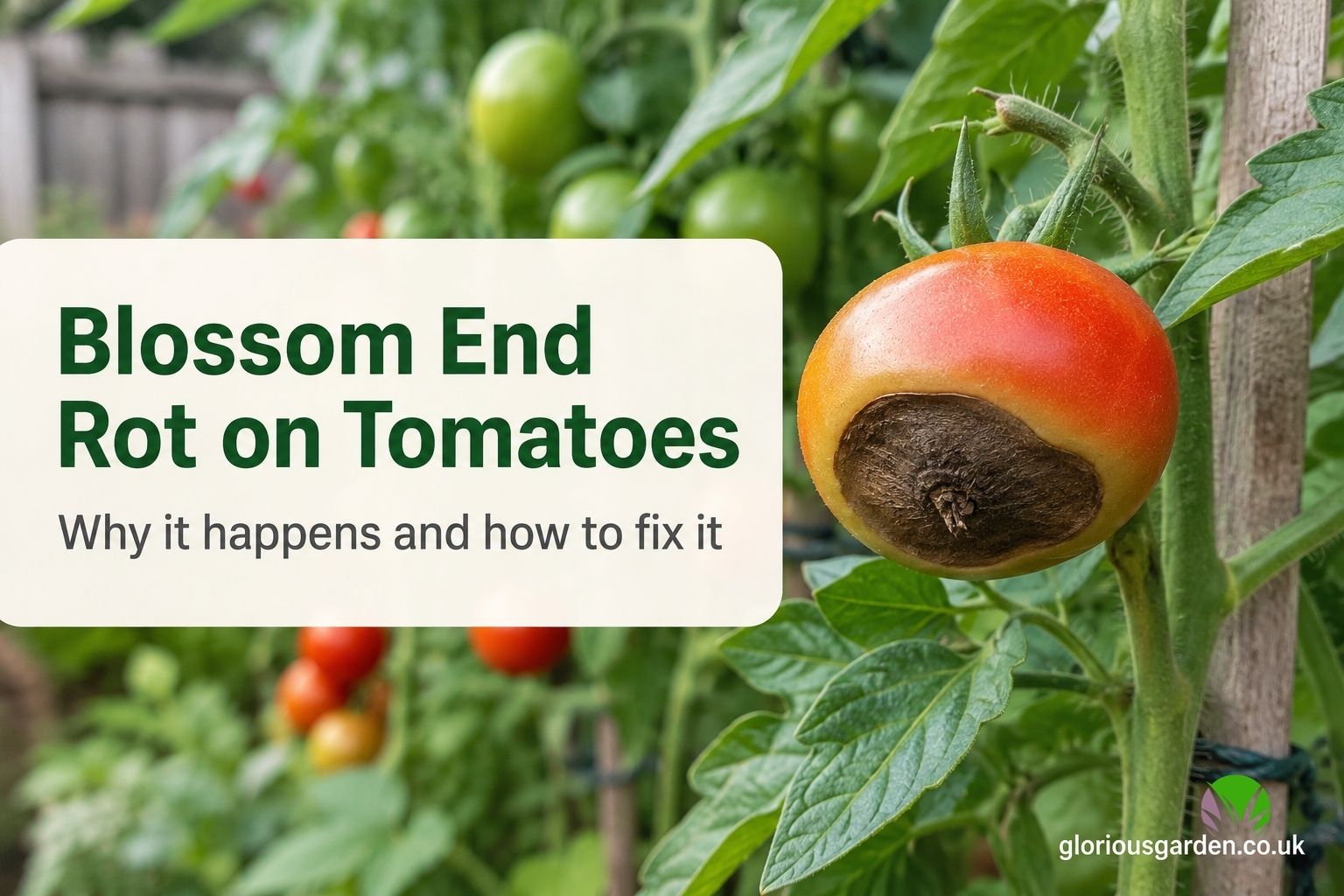
Blossom end rot on tomatoes shows up as a sunken, dark, leathery patch on the bottom of the fruit, and in UK gardens it is almost always caused by uneven watering rather than by any disease or pest. Despite the alarming name, it is not a rot you catch and it is not something spreading through your plants. It is the fruit’s way of telling you that the plant could not move enough calcium to the developing tomato at a critical moment, and the usual reason for that is the soil drying out and then getting soaked, over and over. The reassuring part is that it is very fixable, and often preventable, once you understand what is really going on. Steady the watering and most plants stop producing affected fruit within a couple of weeks.
I have grown tomatoes for over twenty years, in the greenhouse and outdoors on heavy Oxfordshire clay, and blossom end rot used to catch me out every summer, especially with plants in pots and grow bags. Once I understood it was a watering problem and not a disease, I stopped reaching for sprays and started fixing the actual cause, and it largely disappeared. Let me explain exactly what it is, how to be sure that is what you are looking at, and how to put it right.
What Blossom End Rot Looks Like
Blossom end rot is unmistakable once you have seen it. It starts as a small, water-soaked or pale patch at the blossom end of the fruit, which is the bottom, opposite the stalk. That patch then darkens, sinks inwards, and turns brown or black and leathery, sometimes covering a third or more of the tomato. It affects the fruit only, not the leaves or stems, and it appears on green, developing fruit rather than ripe ones. The affected area feels flat and dry rather than soft and mushy.
This is the key thing that tells it apart from an actual disease: it always appears on the bottom of the fruit, it is dry and leathery rather than fuzzy or oozing, and it does not spread from plant to plant. If you are seeing dark patches elsewhere, or mould, or affected leaves, you are likely looking at something else, which I cover in tomato diseases and the broader common tomato problems guide.
It Is Not a Disease
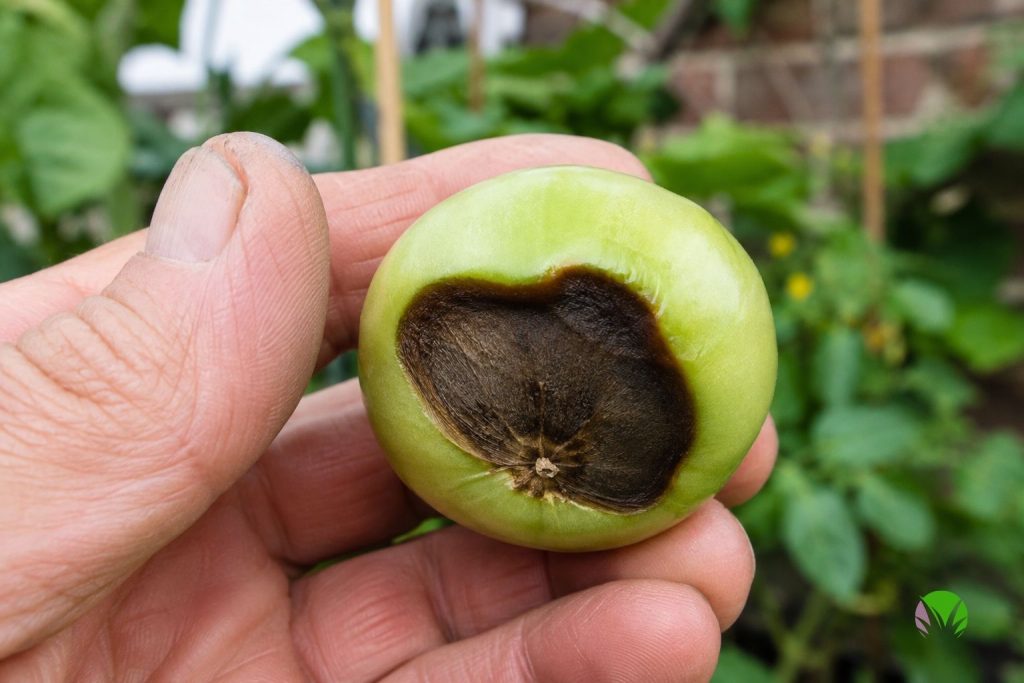
This is the single most important thing to understand, because it changes everything about how you deal with it. Blossom end rot is not caused by a fungus, bacteria, or pest. You cannot catch it, spray it away, or pass it between plants. It is what is called a physiological disorder, which is a fancy way of saying the plant’s growing conditions went wrong rather than something attacked it. So no fungicide will help, and reaching for one is wasted effort and money. The RHS advice on blossom end rot confirms it is a physiological disorder rather than a disease.
Because it is a conditions problem, the fix is always about how you are growing and watering the plant, never about treating a disease. That is genuinely good news, because it means the cause is within your control. Get the conditions right and the problem stops. This is a recurring theme with tomatoes, where most troubles trace back to growing conditions rather than infection, as I explain in why vegetables fail.
The Real Cause: Calcium and Water
Blossom end rot happens when the developing fruit cannot get enough calcium at the right moment. Calcium builds the cell walls in the growing tomato, and when there is a shortfall as the fruit swells, the tissue at the far end breaks down and you get that dark, sunken patch. So far so simple. But here is the part people miss: the problem is almost never a lack of calcium in your soil. UK garden soils, and shop-bought composts, nearly always contain plenty.
The real issue is that the plant cannot move the calcium it has to where it is needed, and the thing that carries calcium around a plant is water. When watering is erratic, the soil drying out and then being flooded, the plant’s uptake is disrupted and calcium delivery to the fruit stutters at exactly the wrong time. So blossom end rot is really a watering problem wearing a calcium costume. Fix the water and you fix the calcium delivery, which is why steady moisture matters so much, as covered in how often to water plants.
Why It Hits Pots and Grow Bags Most
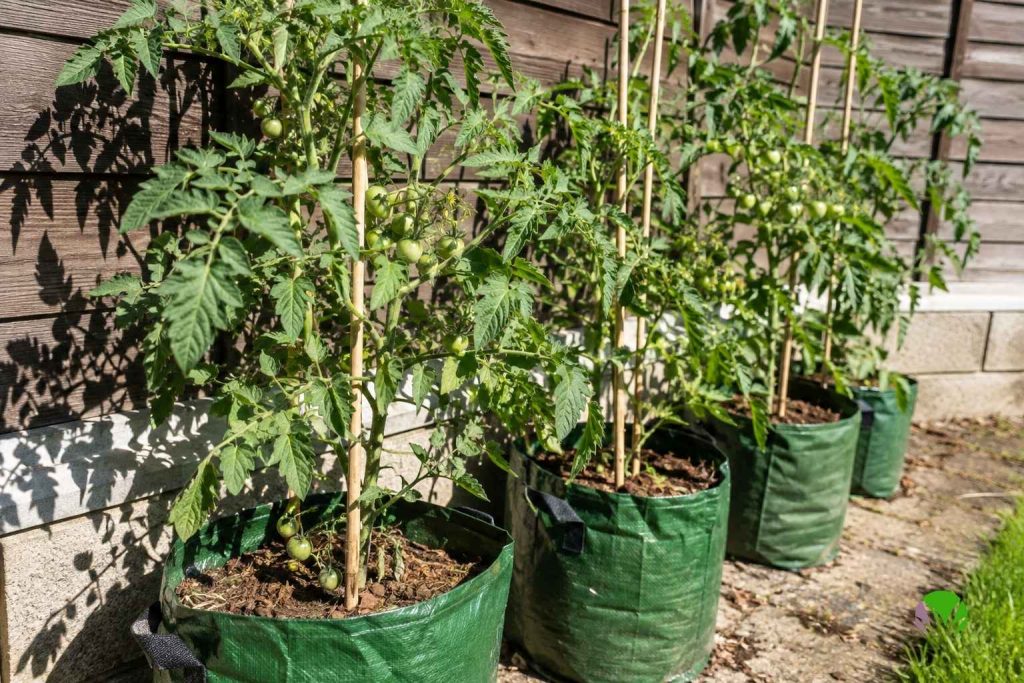
If your affected plants are in containers, grow bags, or pots, that is no coincidence. Container-grown tomatoes are far more prone to blossom end rot than those in the ground, and the reason is simple: pots and grow bags dry out fast, then get watered heavily, then dry out again, which is exactly the erratic moisture that triggers the problem. The limited compost cannot buffer the swings the way open ground can. Grow bags are the worst offenders because they hold so little compost.
This is why the same variety can be perfect in a border and plagued in a grow bag a few feet away. It is not the plant, it is the growing conditions. If you grow tomatoes in pots, you simply have to be more disciplined about consistent watering, and it helps to choose the largest containers you reasonably can. There is more on getting containers right in growing vegetables in pots.
How to Fix It
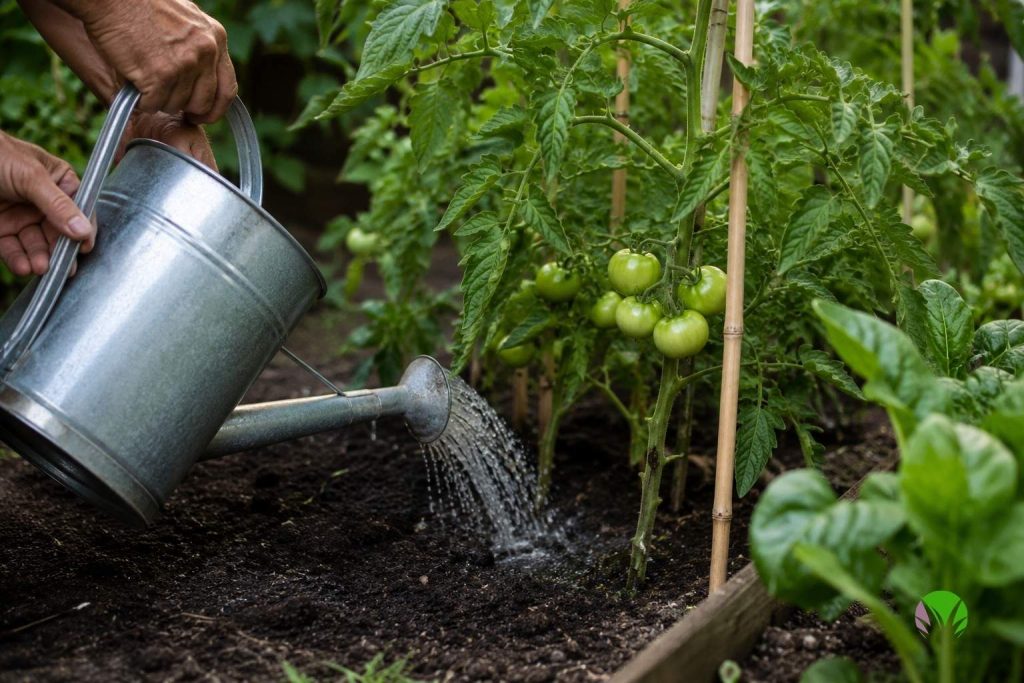
The fix is almost entirely about watering, so this is where to put your effort. Water regularly and consistently so the compost or soil never swings between bone dry and soaking, which for containers in warm weather usually means watering daily, sometimes twice a day in a hot spell. Aim to keep the soil evenly moist, like a wrung-out sponge, rather than alternating between drought and flood. This one change solves the majority of cases on its own.
Alongside steady watering, mulch the surface of beds and large pots to hold moisture and even out the swings, and avoid over-feeding with high-nitrogen fertiliser, which pushes fast growth that outpaces calcium delivery and makes things worse. Do not bother with calcium sprays or adding lime unless a soil test actually shows a deficiency, because the calcium is almost always already there. The affected fruit will not recover, so pick them off, but the plant’s future fruit should be fine once watering is steady.
How to Prevent It Next Time
Prevention is the same medicine as the cure, applied from the start. Set up for consistent watering before problems appear: choose large containers that dry out more slowly, or grow in the ground where you can, mulch to stabilise moisture, and get into a steady watering routine rather than watering only when you remember. A self-watering setup or even a simple timer can help enormously with container tomatoes, because consistency is everything.
Building good soil that holds moisture evenly also makes a real difference over time, because a soil rich in organic matter buffers the swings that cause the problem. That is another reason to keep improving your soil and to think in terms of feeding the soil rather than the plant. Strong, healthy plants in good soil rarely suffer badly, which ties into overall soil health.
Can You Still Eat Affected Tomatoes?
A common worry, and the answer is reassuring: yes, you can eat the unaffected part. Blossom end rot is not a disease or a toxin, so if you simply cut away the dark, leathery patch at the bottom, the rest of the tomato is perfectly good to eat. It will not taste any different. Many gardeners do exactly this with early affected fruit rather than waste it, though badly affected tomatoes with a large rotten area are usually best composted.
So there is no need to bin a whole crop over a few marked fruit. Cut, use what is good, and focus your attention on steadying the watering so the next flush comes through clean. Once you have the watering sorted, the later fruit almost always forms perfectly.
It Affects More Than Tomatoes
Although tomatoes are where most people meet it, blossom end rot shows up on other fruiting crops too, for exactly the same reason. Peppers, chillies, courgettes, and aubergines can all develop the same dark, sunken patch at the blossom end when watering is erratic, particularly in pots. So if you see it on your peppers as well as your tomatoes, it is the same problem and the same fix: steady the water.
Recognising it across different crops saves a lot of worry, because once you know the cause you treat them all the same way. It is one of those disorders that looks like several different problems but is really just one, showing up wherever fruit swells fastest and water is least consistent. This sits within the wider set of common growing problems that trace back to watering and soil.
When It Keeps Coming Back
If blossom end rot returns year after year despite your best efforts, the culprit is nearly always a growing setup that makes consistent watering hard, usually grow bags or small pots that dry out too fast to keep up with. The answer is to change the setup rather than fight it: move to larger containers or open ground, improve the soil so it holds moisture, and mulch well. Do not keep blaming the plant or the variety, because it is the conditions that need changing.
It is also worth remembering that a bad heatwave can trigger a flush of blossom end rot even in a well-run garden, simply because the plants cannot drink fast enough to keep up. That kind of weather-driven bout usually passes once conditions ease, so do not despair over it. For the rest, steady watering and good soil are the long-term answer, part of the same care routine as the rest of caring for tomato plants through the season.
Why Tomatoes Teach You to Water Well
Blossom end rot is annoying, but it is also a useful teacher, because it makes visible something that is true of all your growing: consistent watering matters more than almost anything else. A tomato showing blossom end rot is really just telling you, in dramatic fashion, that its watering has been up and down. Learn to keep it steady for your tomatoes and you will grow everything better, because the same principle applies right across the plot.
So do not be disheartened if it appears. Read it as feedback, steady the water, and move on. Every tomato grower has met it, and fixing it is one of those small skills that quietly makes you a better gardener. If you want the fuller picture of growing healthy plants from the start, my guide to growing tomatoes pulls it all together, and tomatoes not producing fruit covers the other big watering-related worry.
Blossom End Rot on Tomatoes: Frequently Asked Questions
What causes blossom end rot on tomatoes?
It is caused by the fruit not getting enough calcium at a critical moment, but the calcium is almost always present in the soil. The real cause is erratic watering, which stops the plant moving calcium to the fruit. Steady, consistent watering is the fix.
Is blossom end rot a disease?
No. It is a physiological disorder caused by growing conditions, not a fungus, bacteria or pest. You cannot catch it or spread it between plants, and fungicides do not help. The fix is always about watering and growing conditions.
How do I get rid of blossom end rot?
Water regularly and consistently so the soil never swings between bone dry and soaked, which for pots often means daily watering. Mulch to hold moisture, avoid high-nitrogen feed, and remove affected fruit. New fruit should form cleanly once watering is steady.
Can you eat tomatoes with blossom end rot?
Yes. It is not a disease or toxin, so you can cut away the dark patch at the bottom and eat the rest of the tomato safely. Badly affected fruit with a large rotten area is usually best composted, but lightly marked fruit is fine to use.
Does adding calcium stop blossom end rot?
Usually not, because the soil almost always has enough calcium already. The problem is delivery, not supply. Calcium sprays are not effective, and adding lime only helps in the rare case where a soil test shows a genuine deficiency. Fix the watering instead.
Why do my tomatoes in grow bags get blossom end rot?
Grow bags hold very little compost and dry out fast, sometimes within hours in warm weather, then get flooded when watered. That erratic moisture interrupts calcium delivery to the fruit. Water grow bags consistently, twice a day in hot spells, or move to larger containers.
Will blossom end rot spread to my other plants?
No. It is not infectious, so it cannot spread from plant to plant. If several plants have it, they are simply all experiencing the same erratic watering, not passing it between them. Treat them all the same way by steadying the water.
A Sensible Place to Start
If you spot blossom end rot on your tomatoes, do not panic and do not reach for a spray. Remember it is a watering problem, not a disease. Start by steadying your watering so the soil stays evenly moist rather than swinging between dry and soaked, which for pots and grow bags usually means watering daily, or twice a day in hot weather. Mulch the surface to help, and ease off any high-nitrogen feed.
Pick off the affected fruit, since it will not recover, and keep the watering consistent. Within a couple of weeks the new fruit should come through clean. Get into a steady watering routine and good soil, and blossom end rot usually stops being a problem at all. It is one of those garden worries that looks serious but turns out to be simple once you know what it is really telling you.