

Powdery mildew is that white, dusty coating you see spreading across the leaves of courgettes, cucumbers, squash, and many other plants in late summer, and in UK gardens it is one of the most common problems going. It is a fungal disease, but not the dramatic, plant-killing kind. It looks alarming, like someone has dusted your leaves with flour, yet it rarely kills an established plant outright and is very manageable once you understand what encourages it. The single most important thing to know is that powdery mildew thrives when a plant has dry roots but humid air around its leaves, which is exactly the situation a dry spell in a crowded bed creates. Keep the roots watered and the air moving, and you prevent most of it without reaching for a single spray.
I have battled powdery mildew for over twenty years on my Oxfordshire plot, and my courgettes get it almost every August like clockwork once the nights draw in. For years I assumed it meant the end of the plant, but I learned that a mildewed courgette will often keep cropping for weeks if you manage it sensibly. Let me explain what powdery mildew actually is, why it appears when it does, and the practical, mostly non-chemical ways to deal with it.
What Powdery Mildew Looks Like
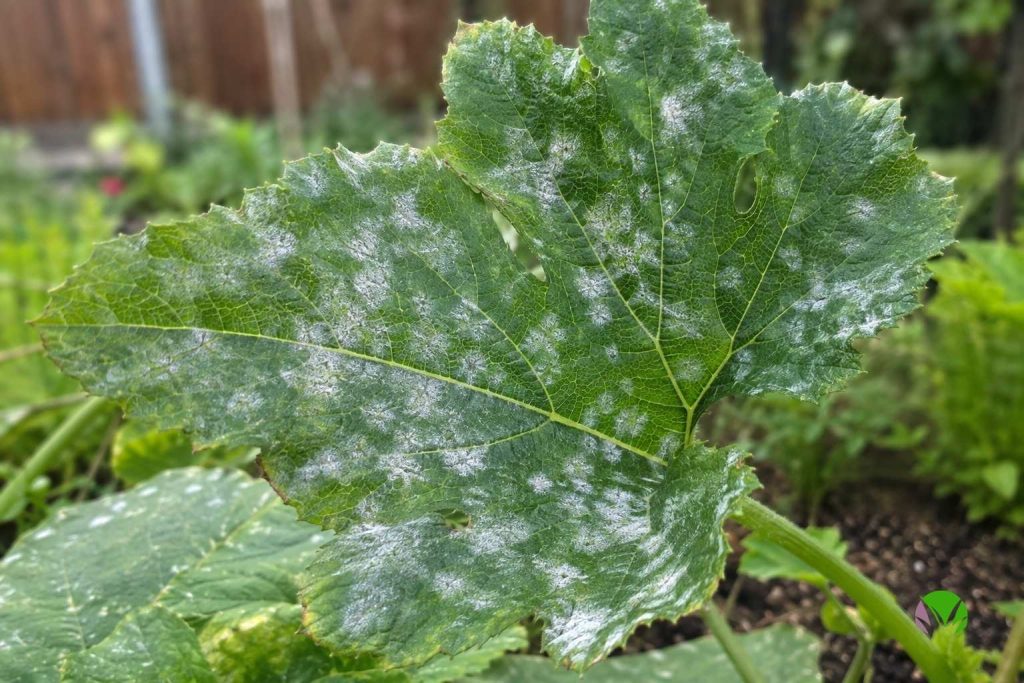
Powdery mildew is easy to recognise. It shows as a white or greyish, powdery coating on the surface of leaves, and sometimes on stems and flowers too. It usually starts as small patches, often on the upper side of older leaves, then spreads until whole leaves look dusted with white. As it worsens, affected leaves may yellow, turn brown and crisp, and die off. On a courgette or squash plant it often works its way up from the lower, older leaves first.
It is distinctive enough that you are unlikely to confuse it with much else, though it is worth knowing it sits on the leaf surface rather than within the tissue, which is why it can be rubbed off with a finger. That surface habit is also why it responds so well to good airflow and watering. If your leaves show different symptoms, spots, mould, or wilting rather than white dust, check the broader common growing problems guide instead.
Which Plants Get It
Powdery mildew affects a very wide range of plants, but some are far more prone than others. In the vegetable garden, the cucurbits are the classic victims: courgettes, cucumbers, squash, pumpkins, and marrows all get it readily, usually from midsummer onwards. Peas are another common target late in their season. Beyond vegetables, roses, apples, and many ornamentals suffer their own forms of it. Importantly, the mildew on your courgettes is a different species from the one on your roses, so it does not spread between unrelated plants.
That is a useful thing to know, because it means you do not need to panic that mildew on one crop will sweep through your whole garden. Each type is fairly specific to its host plants. The cucurbits are where most UK vegetable gardeners meet it, so if you grow courgettes, cucumbers, or pumpkins, this is a problem you will almost certainly meet at some point.
Why It Appears When It Does
Here is the part that really matters, because it holds the key to prevention. Powdery mildew is encouraged above all by dry soil at the roots combined with humid, still air around the leaves. This is why it takes hold in late summer, when plants are large and thirsty, the soil dries out between waterings, and cooler, damper nights raise the humidity around crowded foliage. Unlike most fungal diseases, powdery mildew does not need wet leaves to get going, in fact it dislikes direct water on the foliage. It is the stress of dry roots plus muggy air that lets it flourish.
That explains why the worst outbreaks come on plants that have been allowed to dry out, or that are packed too closely together with poor air movement. A well-watered plant with space around it and a breeze through its leaves is far more resistant. So the causes point straight at the cure: keep the roots consistently moist and the air moving. This is another problem that comes back to consistent watering, just as splitting and blossom end rot do on tomatoes.
How to Prevent Powdery Mildew
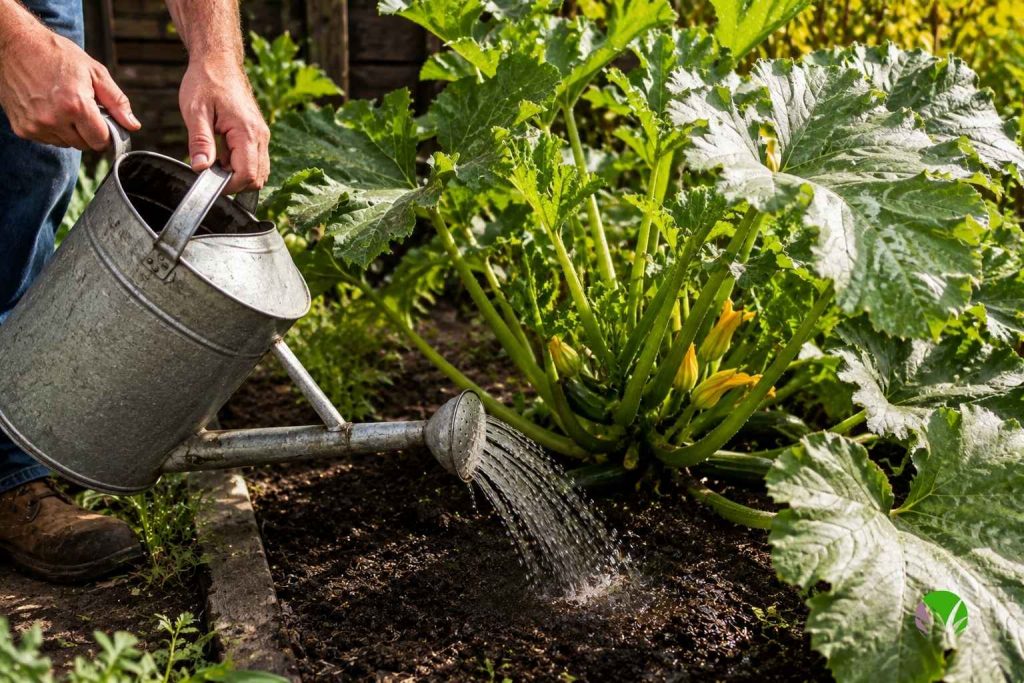
Prevention is far more effective than cure with powdery mildew, and it is mostly about growing conditions. Water consistently and deeply at the roots so plants never dry out and get stressed, which is the biggest single factor, and mulch around the base to hold that moisture in. Give plants plenty of space when you plant them so air can move freely through the foliage, because crowded, still air is what mildew loves. And water the soil rather than the leaves, keeping the foliage dry while the roots stay moist.
Good soil that holds moisture steadily makes a real difference too, since it stops the roots drying out in the first place, which is one more reason to keep improving your garden soil and building good soil health. Feeding sensibly rather than forcing lush, soft growth helps as well, as covered in feeding the soil not the plant. Get these conditions right and mildew becomes an occasional nuisance rather than an annual certainty.
How to Deal With It Once It Appears
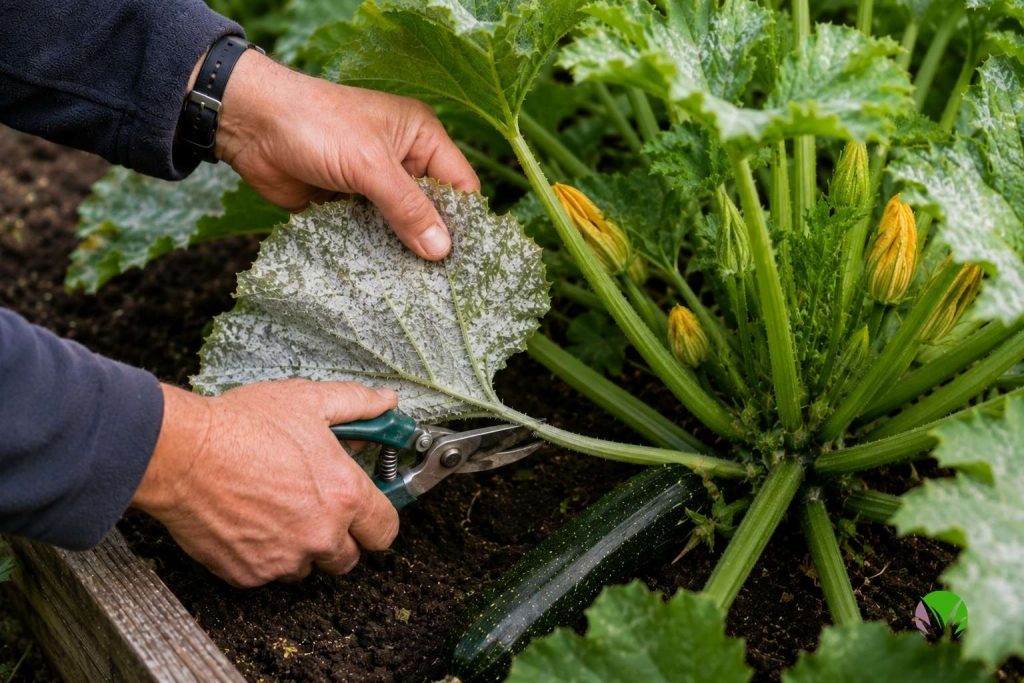
If mildew has already taken hold, do not despair, because you can slow it right down and often keep the plant cropping. Start by removing the worst-affected leaves, cutting off any that are heavily coated in white and disposing of them, not on the compost heap, to reduce the spores in the area. This also opens the plant up and improves airflow, which helps in itself. Then get on top of the watering, giving the roots a consistent deep drink, since a well-watered plant copes far better.
Improving air movement around the plant by thinning congested growth, and by not crowding neighbouring plants, slows the spread noticeably. On a plant like a courgette that is already well established, this management alone will often see it through to the end of the season still producing. The mildew may not vanish, but the plant keeps going, which is usually all you need in late summer, as I explain in caring for stressed plants and why plants struggle under stress.
Should You Use a Fungicide?
My honest view, which matches the RHS position, is that for edible crops in the home garden you are usually better off without fungicides. The RHS advice on powdery mildew actively recommends against using them, partly because they can harm the wider biodiversity and soil life of your garden, and partly because good cultural care, watering, spacing, and removing affected leaves, manages mildew perfectly well in most cases. By the time mildew appears on a late-summer courgette, the plant is often near the end of its productive life anyway, so spraying rarely earns its keep.
You may have heard of homemade milk or bicarbonate sprays. The evidence for these is mixed and the RHS does not recommend homemade preparations, since they are unregulated and untested, so I would not rely on them. Far better to put your energy into the watering, spacing, and airflow that genuinely work. Managing the conditions is the real answer, not a bottle, which fits the whole approach in why vegetables fail.
Can You Eat Affected Crops?
Yes, and this reassures a lot of worried gardeners. Powdery mildew grows on the surface of the plant, so courgettes, cucumbers, and squash from a mildewed plant are perfectly safe to eat. The fruit itself is rarely affected, and even where a little mildew is on the skin it can be washed or wiped off. There is no need to throw away your crop just because the leaves have gone white.
So keep picking and eating as normal. What mildew does over time is weaken the plant and reduce how much it produces, rather than making the existing crop inedible. Harvest what is there, manage the plant to keep it going as long as you can, and enjoy the produce. A mildewed courgette plant in September is still a courgette plant worth having.
Choosing Resistant Varieties
If powdery mildew is a yearly frustration on a particular crop, it is well worth seeking out varieties bred to resist it. Many modern courgette, cucumber, and squash varieties are described as mildew-resistant or mildew-tolerant, and while no plant is completely immune, these hold out noticeably longer and crop later into the season. It is one of the easiest wins available, since you simply choose a better variety at seed-buying time.
Combine a resistant variety with good watering and spacing and you may barely see mildew at all, or at least not until the very end of the season when it hardly matters. Choosing the right variety from the start saves a great deal of bother, a theme that runs through growing vegetables generally. It is prevention built in before you even sow.
Living With Late-Summer Mildew
The honest truth is that a bit of powdery mildew on your courgettes come late August is almost a rite of passage in a UK garden, and not something to lose sleep over. By that point in the season the plants have usually given you a generous crop already, and a little white on the leaves is the plant winding down rather than a disaster. Manage it, keep picking, and accept that some mildew at the tail end of summer is normal even in a well-run garden.
What matters is not letting it take hold early through dry, stressed, crowded growing, because that is when it genuinely costs you crop. Water well, space generously, choose resistant varieties, and you push mildew back to the very end of the season where it belongs. Do that and you will grow strong, productive courgettes and cucumbers year after year, mildew or no mildew, alongside everything else in your problem-solving toolkit.
Powdery Mildew: Frequently Asked Questions
What causes powdery mildew?
It is a fungal disease encouraged by dry soil at the roots combined with humid, still air around the leaves. This is why it strikes in late summer when plants are large and thirsty and nights turn damp. Unlike most fungi, it does not need wet leaves to spread.
How do I get rid of powdery mildew?
Remove the worst-affected leaves and dispose of them (not on the compost), water the roots consistently and deeply, and improve airflow by thinning crowded growth. Good cultural care usually keeps the plant cropping without any need for sprays.
Can you eat vegetables with powdery mildew?
Yes. The mildew grows on the plant surface, so courgettes, cucumbers and squash from an affected plant are safe to eat. The fruit is rarely affected, and any mildew on the skin washes off. There is no need to waste the crop.
Does powdery mildew spread to other plants?
Only to related plants. The mildew on courgettes is a different species from the one on roses or apples, so it does not spread between unrelated plants. You do not need to worry about it sweeping through your whole garden.
Should I use a fungicide on powdery mildew?
For edible crops in the home garden, usually not. The RHS recommends against fungicides, as they can harm garden biodiversity and soil life, and good watering, spacing and leaf removal manage mildew well. By the time it appears, the plant is often near the end of its season anyway.
Does milk or bicarbonate spray work on powdery mildew?
The evidence is mixed and the RHS does not recommend homemade sprays, as they are unregulated and untested. You are far better off focusing on consistent watering, generous spacing, and good airflow, which genuinely prevent and slow mildew.
How do I stop powdery mildew coming back?
Water consistently so roots never dry out, space plants generously for good airflow, water the soil not the leaves, and choose mildew-resistant varieties. Good soil that holds moisture helps too. These conditions push mildew back to the very end of the season.
A Sensible Place to Start
If powdery mildew has appeared, do not panic and do not reach for a spray. Remove the worst white-coated leaves, get on top of the watering so the roots stay consistently moist, and open the plant up to improve airflow. That management alone will usually keep a courgette or cucumber cropping to the end of the season.
To prevent it next year, the answer is watering, spacing, and a mildew-resistant variety. Keep the roots moist, give plants room to breathe, and choose varieties bred to resist it. Do that and mildew becomes a minor late-season nuisance rather than an annual problem. And remember, the crop is perfectly good to eat throughout, so keep picking and enjoy it.