
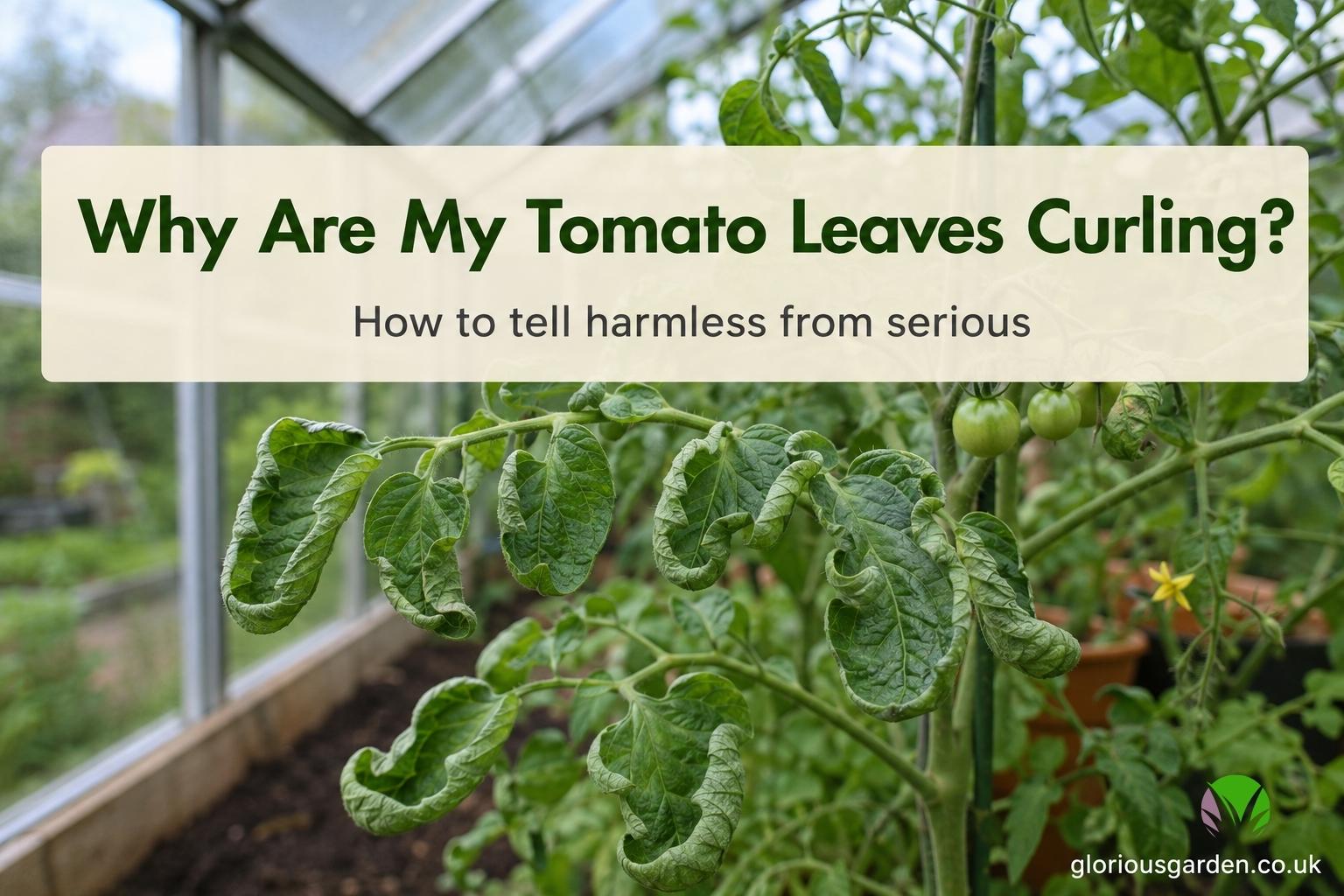
Tomato leaves curling is one of the most alarming-looking tomato problems, but in UK gardens it is usually one of the least serious. The great majority of leaf curl is physiological, meaning it is the plant reacting to its conditions rather than any disease, most often to swings in temperature, too much or too little water, wind, or hard pruning combined with heavy feeding. This kind of curl typically starts on the lower, older leaves, which cup or roll inwards and feel slightly leathery while staying green, and it usually rights itself once conditions settle, without affecting your crop. The much rarer and more serious causes are weedkiller drift and virus, which look different and need a different response. So the first job is not to panic, but to look closely and work out which kind of curl you are actually seeing, because the common one is nothing to worry about.
I have grown tomatoes for over twenty years on my Oxfordshire plot, and my greenhouse plants curl their lower leaves almost every year when we get a run of cold nights after warm days. The first time it happened I was convinced I had some dreadful disease, and I nearly pulled the plants. In fact they cropped perfectly well. Let me walk you through the causes, how to tell them apart, and what, if anything, you actually need to do.
First, Look Closely at the Curl
Diagnosing tomato leaves curling is all about detective work, and a few quick observations tell you most of what you need to know. Ask yourself: which leaves are affected, the old lower ones or the new top growth? Which way do they curl, upward and inward, or downward and twisted? And is anything else wrong, like distorted new shoots, odd colours, or malformed fruit? The answers point straight at the cause, because the harmless physiological curl and the serious causes affect different leaves in different ways.
As a rule of thumb, curl that starts on the lower, older leaves and leaves the plant otherwise healthy is almost always the harmless physiological kind. Curl or distortion on the new top growth, especially with twisting or strange fruit, is the warning sign that points to weedkiller or virus. Keep those two patterns in mind as you read the causes below, since telling them apart is the whole game. It fits the same diagnostic approach as the wider common tomato problems guide.
Cause 1: Temperature Swings (Most Common)
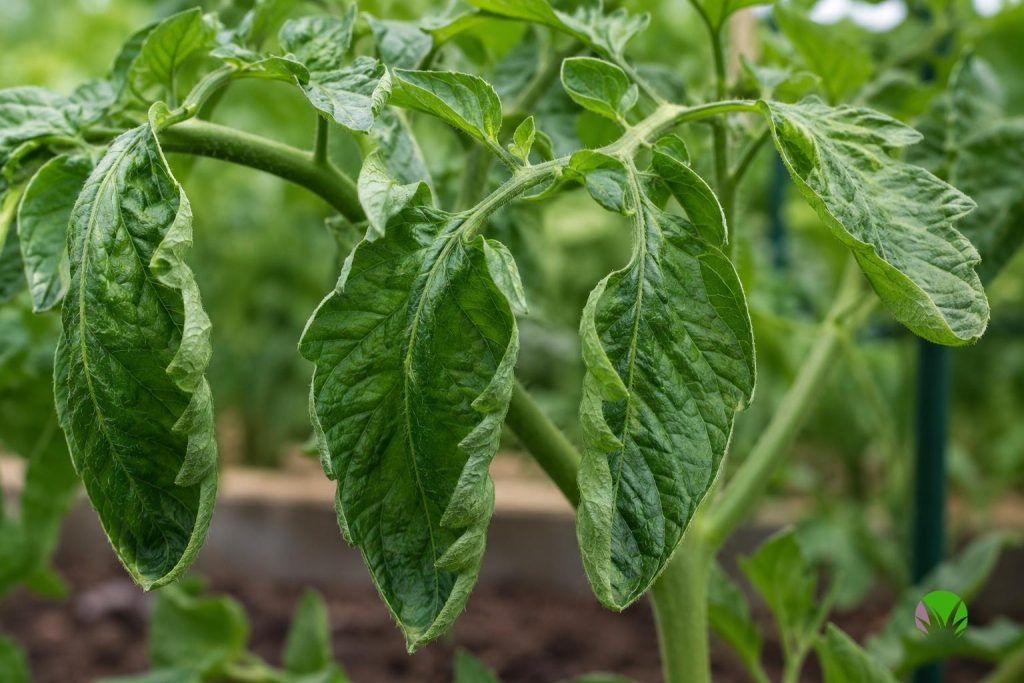
By far the most common cause of tomato leaf curl in the UK is fluctuating temperature, particularly warm days followed by cold nights. The plant cannot process the sugars it made during the day when the night turns too cold, and the leaves curl in response. This is exactly why it shows up so often in home greenhouses and polytunnels, which heat up dramatically by day and cool sharply at night, far more than a large commercial glasshouse would. It is the classic early-summer greenhouse tomato complaint.
The good news, and I cannot stress this enough, is that this kind of curl is harmless. The leaves stay green, the plant grows and crops normally, and it usually sorts itself out as the nights warm up in high summer. There is nothing you need to do beyond ventilating the greenhouse well to even out the temperature swings. The RHS advice on tomato leaf problems confirms this temperature-driven curl does not seem to cause any real loss of crop, so do not let it worry you.
Cause 2: Watering and Stress
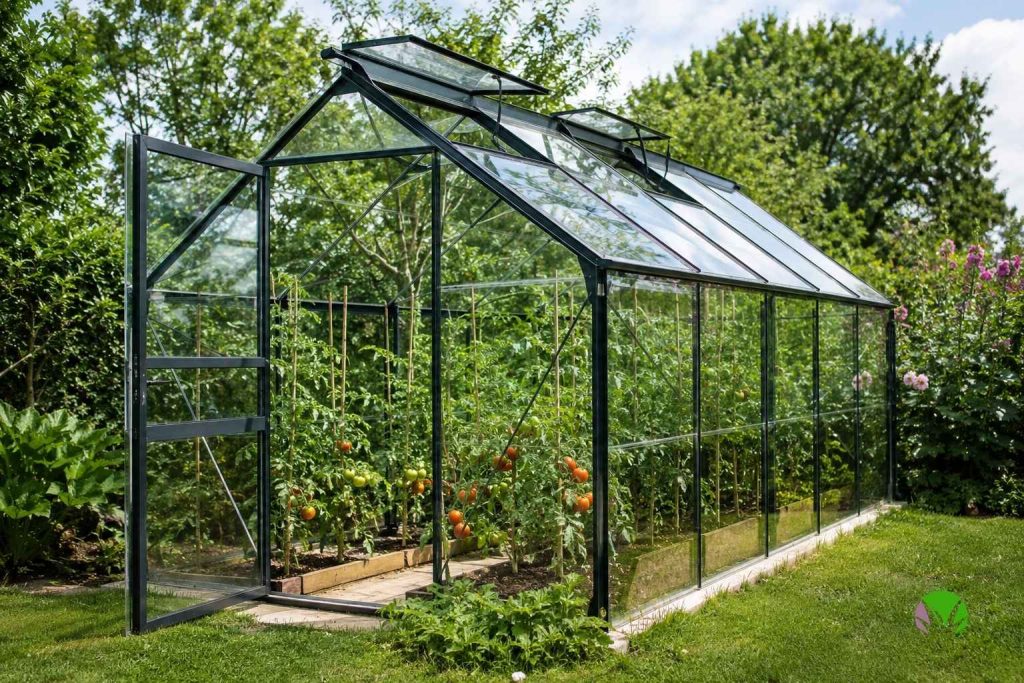
The next most common cause is water stress, and it works both ways. Too little water makes leaves curl to reduce their surface area and save moisture, a sensible survival response, while too much water and soggy roots can also trigger curling, since tomatoes hate sitting wet. Other stresses do the same thing: strong wind on unsupported plants, root disturbance from hoeing too close, transplant shock, and severe pruning, especially when combined with heavy nitrogen feeding, can all make leaves roll.
The fix here is simply to steady the conditions. Water consistently and evenly so the plant is neither parched nor waterlogged, as in how often to water, support and shelter plants from wind, avoid disturbing the roots, and do not go mad removing side shoots and leaves all at once. Ease off high-nitrogen feed too, feeding sensibly as in feeding vegetables properly. Remove side shoots gradually, as covered in removing side shoots, rather than stripping the plant in one go.
Cause 3: Weedkiller Damage
This is where curl stops being harmless, so it is worth knowing the signs. Tomatoes are extremely sensitive to weedkiller, particularly hormone types like those used on lawns, and even a tiny amount of drift or contamination can distort them badly. The tell-tale signs are different from physiological curl: the leaves twist and curl, often downward, the new growth becomes narrow, fern-like, and distorted, stems may thicken or split, and any fruit that forms can be malformed. Crucially, weedkiller damage hits the new growth, not just the old lower leaves.
The contamination can arrive in surprising ways: spray drifting from a neighbour treating their lawn on a breezy day, or, notoriously, through manure or compost made from grass or hay treated with persistent weedkillers. If you suspect weedkiller, there is no cure, but plants with mild exposure sometimes grow out of it, so keep them watered and wait. Do not eat fruit from badly affected plants. And be careful about the manure and compost you bring in, a real risk covered in feeding the soil.
Cause 4: Virus (Uncommon in the UK)
Viruses can cause leaf curl too, but they are genuinely uncommon in UK gardens, so this should be low on your list of suspects, not high. Where they do occur, the signs go well beyond simple curling: mottled or mosaic patterning on the leaves, yellowing, purple tints in the veins, badly stunted growth, and poor or distorted fruit. Tomato yellow leaf curl virus, spread by whitefly, causes cupped, pale new leaves and stunting, but it is far more a problem of hot climates than a typical British garden.
If you genuinely suspect virus, which again is unlikely here, there is no treatment, and affected plants should be removed and destroyed to protect others, not composted. But do not jump to this conclusion, because the overwhelming majority of curl you will see in a UK garden is the harmless physiological kind, not virus. Keeping whitefly under control helps as a precaution, and good all-round plant health, as in tomato diseases, makes plants more resilient.
How to Tell Them Apart
Pulling it together, here is the quick diagnostic. If the curl is on the lower, older leaves, they stay green and leathery, and the plant is otherwise healthy and growing well, it is physiological, harmless, and needs no action beyond steadying conditions. If the new top growth is twisted, narrow, and distorted, suspect weedkiller. And if you see mottling, yellowing, purple veins, and stunting alongside the curl, only then consider virus. Nine times out of ten in a UK garden, it is the first, reassuring answer.
This is why looking closely matters so much before you act. Pulling up a perfectly healthy plant that was only reacting to cold nights would be a real shame, and it is a mistake I nearly made myself. Take a breath, check which leaves and which direction, and let the plant tell you what is going on. It is the same calm, observant approach that solves most issues in why vegetables fail.
Curling With Other Symptoms
Sometimes leaf curl comes alongside other problems, and the combination helps you diagnose. Curling with yellowing lower leaves is often just age or a feeding issue rather than anything sinister, and is covered in why tomato leaves turn yellow. Curling in a plant that is also failing to set fruit points to general stress and conditions, as in tomatoes not producing fruit. And curling with splitting fruit after erratic watering is the same watering story showing up twice, covered in why tomatoes split.
Reading the whole plant rather than one symptom in isolation is the key to getting it right. A single curled lower leaf on an otherwise thriving plant means nothing; curl plus distorted new growth plus odd fruit means something. Learning to see the pattern is what turns worried guessing into confident diagnosis, and it ties into the wider common growing problems that all reward the same close look.
Preventing Leaf Curl
Since most tomato leaves curling is a stress response, prevention is really just good tomato growing. Ventilate greenhouses well to even out the day-to-night temperature swings that cause the commonest curl. Water consistently so plants are never parched or waterlogged, support them against wind, and feed sensibly rather than forcing soft growth with too much nitrogen. Prune and remove side shoots gradually rather than all at once. Do these and the physiological curl largely disappears, or at least stops worrying you when it briefly appears.
For the serious causes, prevention means vigilance: be very careful about weedkiller near your plants and about the manure and compost you bring in, and keep whitefly down as a virus precaution. Healthy, unstressed plants in good soil, as in growing tomatoes, shrug off far more than stressed ones. Good growing is the best prevention there is, and it is all part of caring for tomato plants through the season.
When Not to Worry
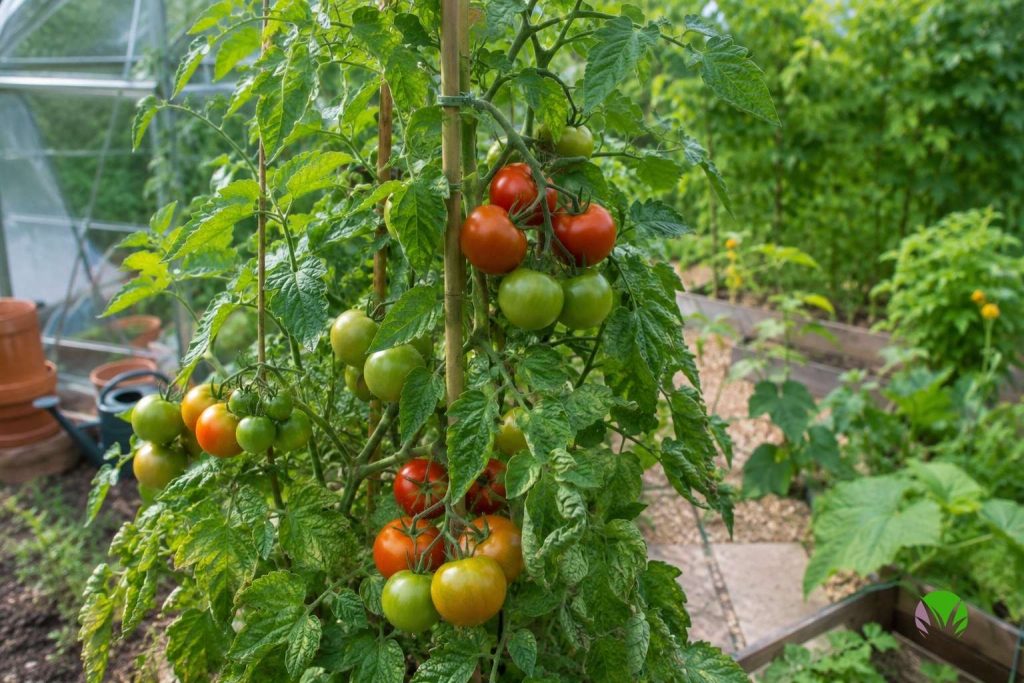
I will end where I began, because it is the most important point: most tomato leaf curl is nothing to worry about. If your plant is growing well, the curl is on the lower leaves, and everything else looks healthy, you almost certainly have harmless physiological curl that will pass on its own. Resist the urge to reach for a spray or to pull the plant, because there is genuinely nothing to treat and the crop will be fine.
Save your concern for the specific warning signs, distorted new growth, twisting, strange fruit, mottling, which point to the rare serious causes. Everything else is just a tomato being a tomato in a British summer of warm days and chilly nights. Learn to tell the difference and you will save yourself a great deal of needless worry, and grow better tomatoes for the calm, as the fuller how to grow tomatoes guide sets out from the start.
Tomato Leaves Curling: Frequently Asked Questions
Why are my tomato leaves curling?
Most often it is a harmless physiological response to conditions, especially swings between warm days and cold nights, or water stress. This kind of curl starts on the lower leaves, leaves them green, and passes on its own. Curl on distorted new growth is the rarer serious kind.
Are curling tomato leaves a serious problem?
Usually not. The common physiological curl does not affect your crop and the plant grows and fruits normally. Only curl with twisted, distorted new growth (weedkiller) or mottling and stunting (virus) is serious, and both are much less common in UK gardens.
How do I stop my tomato leaves curling?
For the common physiological curl, ventilate greenhouses to even out temperature swings, water consistently, support plants from wind, and avoid heavy pruning with high-nitrogen feed. There is often nothing to fix, as it passes on its own once conditions steady.
Do curled tomato leaves affect the fruit?
The common physiological curl does not affect fruit at all, the plant crops normally. Only weedkiller damage and virus harm the fruit, and both show extra symptoms like distorted new growth or mottling, not just curling of the lower leaves.
Why are my greenhouse tomato leaves curling?
Greenhouses and polytunnels heat up by day and cool sharply at night, and this temperature swing is the commonest cause of tomato leaf curl. It is harmless and passes as nights warm. Ventilate well to reduce the swings, but do not worry about the crop.
Can weedkiller cause tomato leaves to curl?
Yes, and tomatoes are extremely sensitive to it. Weedkiller drift or contaminated manure causes twisted, downward-curling, fern-like new growth and malformed fruit. There is no cure, though mild cases grow out of it. Do not eat fruit from badly affected plants.
Should I remove curled tomato leaves?
Not for the common physiological curl, the leaves are still working and the plant needs them. Only remove leaves that are clearly diseased or badly damaged. Resist pulling the plant, as most curl is harmless and the plant will crop perfectly well.
A Sensible Place to Start
If your tomato leaves are curling, take a close look before you do anything. If the curl is on the lower, older leaves, they are still green, and the plant is otherwise healthy and growing well, you almost certainly have the harmless physiological kind. Steady the conditions, ventilate the greenhouse, water consistently, and it will pass on its own with no effect on your crop.
Only worry if the new top growth is twisted and distorted, which points to weedkiller, or if you see mottling and stunting, which can mean virus. Both are uncommon in UK gardens. For the everyday curl that most of us see, the best thing you can do is nothing but grow the plant well. Do not let it worry you, and do not pull a perfectly good plant.