
Tomato plants not producing fruit is one of the most common frustrations in UK gardens.
You plant them carefully, they grow well, leaves look healthy, flowers appear — and then nothing happens. No tomatoes, or only a few small ones that never really develop properly.
This problem is surprisingly common, especially for beginners, and it often feels confusing because the plants look like they are doing everything right.
But in most cases, tomatoes are not failing. They are responding to conditions.
Tomatoes are warm-season crops, and they depend heavily on temperature, consistent watering, balanced feeding, and proper pollination. If one of those is slightly off, plants may grow well but struggle to produce fruit.
This guide explains why tomato plants are not producing fruit in UK gardens and how to fix the problem step by step using practical, real-world advice.
If you are planning your crops for the year, it also helps to understand when tomatoes should be planted in the first place, as timing is often part of the issue. You can read that here: When to Plant Tomatoes in the UK.
Quick Answer
Tomato plants usually fail to produce fruit in the UK due to temperature issues, poor pollination, inconsistent watering, too much leafy growth from excess nitrogen, or lack of sunlight. Fixing the growing conditions rather than adding more feed is usually the fastest way to improve fruit production.
Why Tomato Plants Grow But Do Not Produce Fruit
Tomatoes are relatively easy to grow, but fruit production is the stage where conditions matter most.
A plant can grow strong leaves and stems in average conditions, but fruiting requires more stability. If temperatures fluctuate, watering is inconsistent, or the plant is slightly stressed, it may still grow but struggle to set fruit.
This is why tomatoes often look healthy but underperform.
In many UK gardens, this comes down to a mismatch between what the plant needs at that stage and what it is actually getting.
If you are seeing slow growth alongside poor fruiting, it is worth also reading Why Vegetable Plants Grow Slowly in UK Gardens, as both problems are often linked.
Problem 1: Temperature Is Too Low or Unstable
The most common reason tomato plants fail to produce fruit in the UK is temperature.
Tomatoes need warmth to move from flowering to fruiting. If temperatures are too low, especially at night, flowers may drop without setting fruit.
In the UK, this often happens when:
- plants are put outside too early
- greenhouses are not warm enough at night
- there are sudden cold spells in late spring or early summer
Tomato plants generally need:
- daytime temperatures around 18–24°C
- night temperatures above 10–12°C
If temperatures drop below this, pollination becomes less effective and fruit set can fail completely.
This is why planting timing matters so much. Tomatoes planted too early often struggle later, even if they survive.
If you are unsure about your local timing, checking your frost window can help: UK Last Frost Dates by Postcode.
Problem 2: Poor Pollination
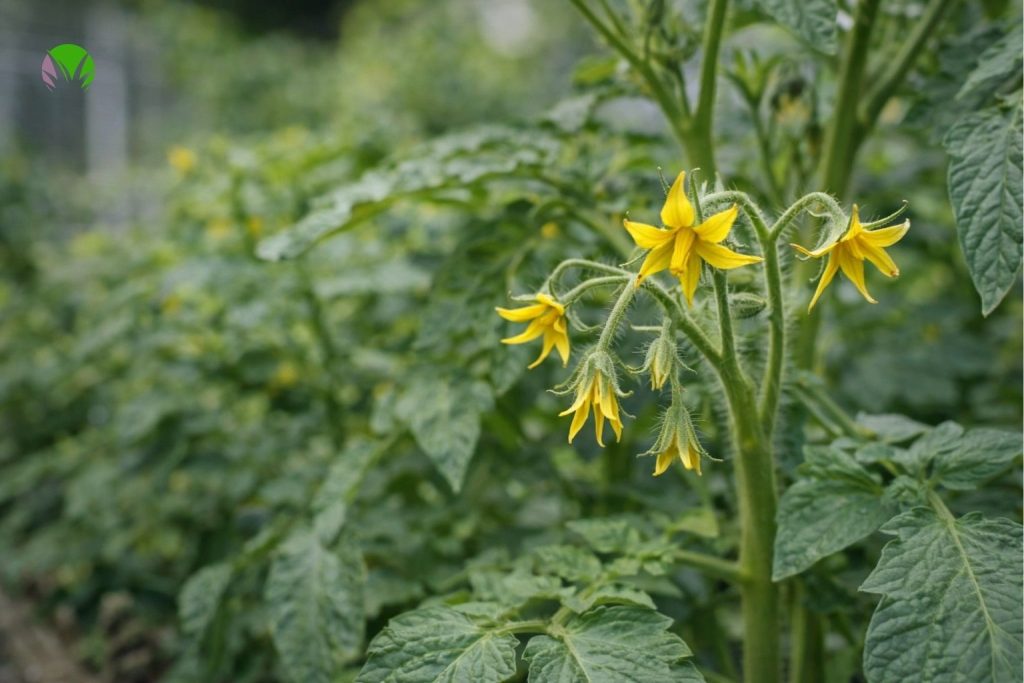
Even if your tomato plants are flowering well, fruit will not form unless those flowers are properly pollinated.
In outdoor gardens, pollination usually happens naturally with wind and insects. In greenhouses, this process is less reliable.
Common signs of poor pollination include:
- flowers appearing but dropping off
- flowers drying up without forming fruit
- very low fruit numbers despite healthy plants
This is especially common in still, humid greenhouse conditions where there is little airflow.
A simple fix is to gently shake the plants or tap the flower trusses to help release pollen. Improving ventilation also helps significantly.
This issue links closely with broader vegetable problems, especially when plants flower but do not produce crops. You can read more about that here: Why Vegetables Flower But Don’t Produce Crops in the UK.
Problem 3: Too Much Nitrogen (Too Many Leaves, Not Enough Fruit)
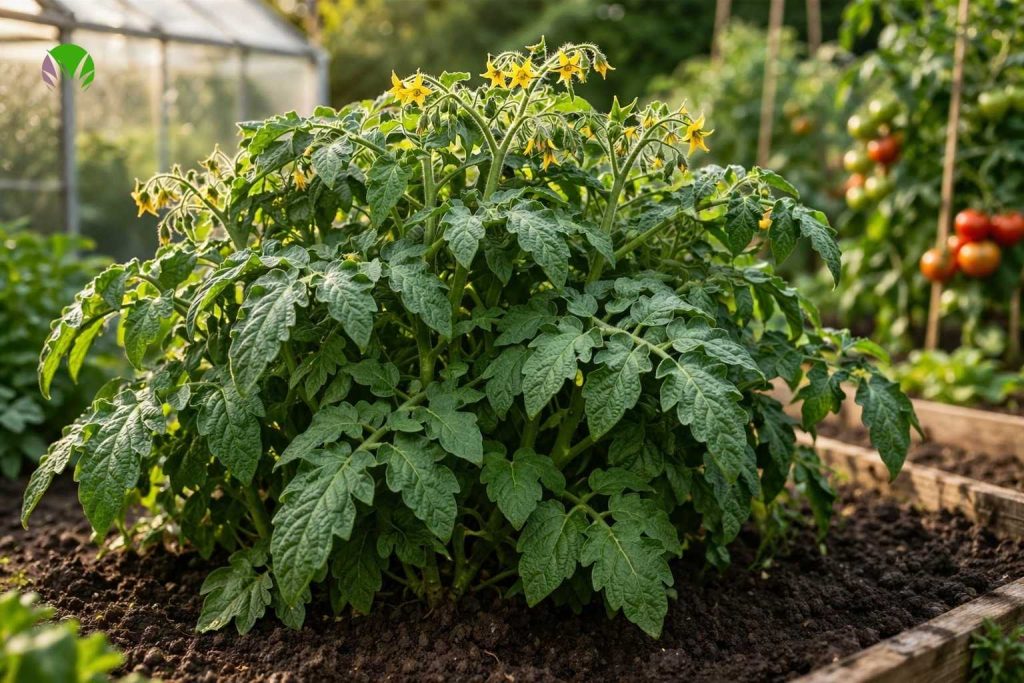
Tomato plants that grow large, leafy and impressive but produce little fruit are often being overfed.
This is one of the most common mistakes.
Too much nitrogen encourages leafy growth rather than fruiting. The plant puts energy into producing stems and leaves instead of tomatoes.
Signs of this include:
- very dark green leaves
- fast leafy growth
- few flowers or poor fruit set
This often happens when:
- rich compost is used without balance
- plants are fed too early
- general-purpose feed is used instead of tomato feed
The solution is not to feed more, but to rebalance growth. Once plants begin flowering, switching to a feed designed for fruiting crops helps support tomato production.
If your plants look healthy but are not producing, this is closely related to a wider issue covered here: Why Vegetables Grow Lots of Leaves But No Fruit.
Problem 4: Inconsistent Watering
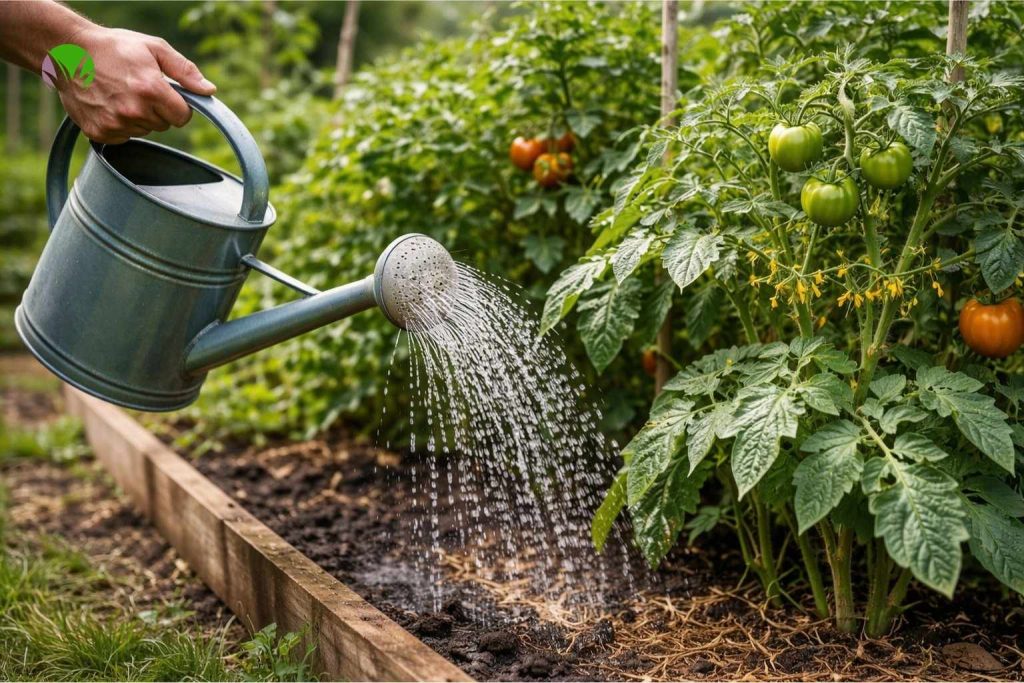
Tomatoes need consistent moisture to produce fruit properly.
If plants repeatedly dry out and then get heavily watered, they become stressed. This affects fruit development and can lead to poor fruit set.
Inconsistent watering can cause:
- flowers dropping
- poor fruit formation
- blossom end rot later on
This is especially common in containers, where soil dries out quickly in warm weather.
The goal is to keep soil evenly moist, not constantly wet and not allowed to dry out completely.
If watering is something you are unsure about, this guide explains it clearly: How Often to Water Plants in the UK.
Problem 5: Not Enough Sunlight
Tomatoes need full sun to produce fruit well.
In the UK, this means at least 6–8 hours of direct sunlight per day.
If plants are grown in shaded areas, against north-facing walls, or in overcrowded beds, they may grow but fail to fruit properly.
Signs of poor light include:
- thin, stretched growth
- slow development
- few flowers or weak fruit set
Choosing a sunny, sheltered position makes a significant difference to tomato yields.
How These Problems Often Combine
In many UK gardens, tomato fruiting problems are not caused by one issue alone.
For example:
- slightly cold conditions + poor pollination
- inconsistent watering + poor soil structure
- too much feeding + low sunlight
Each issue on its own might not stop fruiting completely, but together they reduce the plant’s ability to produce tomatoes properly.
This is why fixing the growing conditions as a whole usually works better than trying to fix one small symptom at a time.
How to Fix Tomato Plants That Are Not Producing Fruit
Once you understand what is holding your tomato plants back, the next step is not to rush into feeding or adding products. It is to correct the growing conditions so the plant can move from flowering into fruiting naturally.
Tomatoes respond quickly when conditions improve. Even plants that have struggled early can often recover and begin producing once the environment becomes more stable.
The key is to fix the cause, not just react to the symptom.
1. Improve Temperature Stability
If temperature is the issue, the solution is not complicated, but it does require patience.
For outdoor plants:
- wait until conditions are consistently warm before planting
- choose a sheltered, sunny position
- avoid exposed, windy areas
For greenhouse plants:
- keep ventilation steady but avoid cold drafts
- close vents in the evening if temperatures drop
- use thermal mass (water containers) to stabilise temperature
Tomatoes do not need extreme heat, but they do need stability. Sudden drops in temperature can interrupt pollination and fruit set very quickly.
This is why UK growing often improves significantly from June onwards, when night temperatures become more reliable.
2. Encourage Pollination
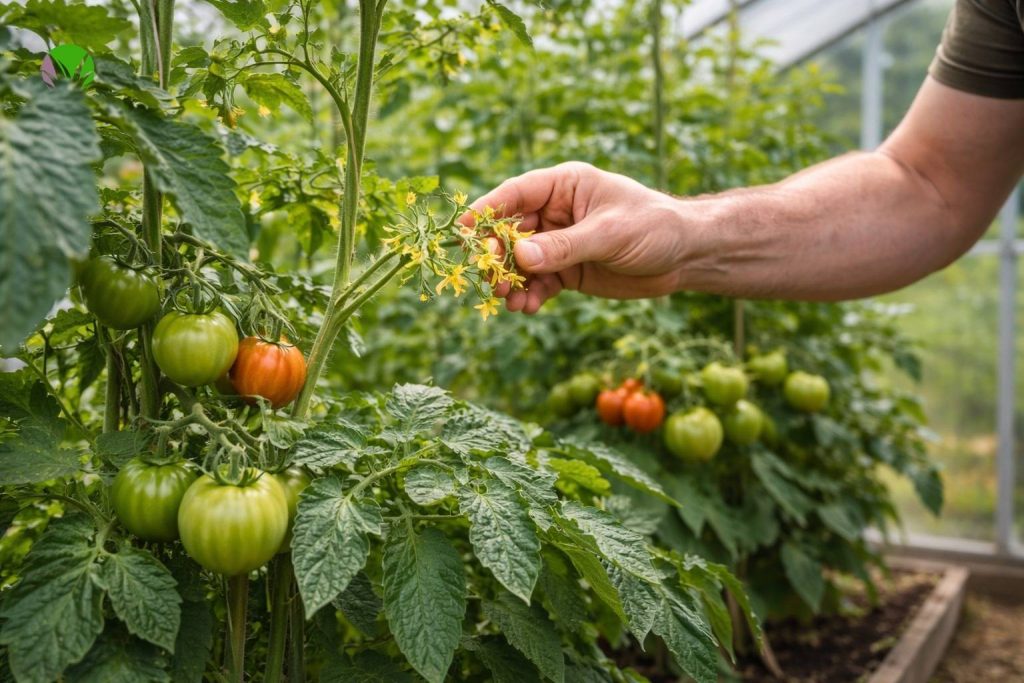
If your plants are flowering but not setting fruit, pollination is one of the easiest things to improve.
In outdoor gardens, natural airflow usually helps, but in greenhouses, you often need to assist slightly.
Simple ways to improve pollination include:
- gently shaking plants every few days
- tapping flower trusses lightly
- increasing airflow by opening vents or doors
This helps release pollen and increases the chance of successful fruit set.
In very still conditions, especially during warm weather, this small step can make a noticeable difference within a week or two.
3. Adjust Feeding (Do Not Overfeed)
If your plants are leafy but not fruiting, feeding is often part of the issue.
Instead of adding more general feed, switch to a tomato-specific feed once flowers begin to appear.
This helps redirect the plant’s energy toward fruit production rather than leaf growth.
Also avoid feeding too early. Feeding heavily before flowering often creates lush plants that struggle to fruit later.
Healthy soil plays a bigger role than most people expect. If your soil is poor, fixing that is often more effective than increasing fertiliser. You can read more about that here: How to Improve Garden Soil in the UK.
4. Water Consistently (Not More, Just Better)
Watering is not about giving more water — it is about giving it consistently.
Tomatoes prefer steady moisture levels. Letting soil dry out completely and then soaking it causes stress and affects fruit development.
To improve watering:
- water deeply rather than little and often
- keep soil evenly moist
- use mulch to reduce drying
Container-grown tomatoes need extra attention because they dry out much faster than ground-grown plants.
Inconsistent watering is one of the most common causes of poor fruiting, especially in warm weather.
5. Improve Light and Position
If sunlight is limited, tomato plants will struggle to produce strong crops.
Moving plants is not always possible, but you can improve light by:
- removing overcrowding around plants
- positioning containers in the sunniest area available
- avoiding shaded walls or fences
In the UK, light is often a limiting factor, especially early in the season. Plants that receive more direct sunlight consistently produce better yields.
Greenhouse vs Outdoor Tomatoes: Why Results Differ
Tomato fruiting problems often show up differently depending on where the plants are grown.
Greenhouse Tomatoes
Greenhouses provide warmth, which is helpful, but they also introduce new challenges.
Common greenhouse issues include:
- poor airflow affecting pollination
- humidity reducing pollen movement
- temperature spikes during sunny days
Plants may grow very well but still fail to set fruit if airflow is poor.
This is why simple actions like opening vents and gently shaking plants can make such a difference.
Outdoor Tomatoes
Outdoor tomatoes rely more heavily on the weather.
Common issues include:
- cold nights slowing fruit set
- wind exposure stressing plants
- short warm periods limiting growth
However, outdoor plants often benefit from better natural pollination compared to greenhouse-grown tomatoes.
The key outdoors is choosing the right position and planting at the right time.
Why Early Problems Affect Later Fruit Production
Tomatoes that struggle early in the season often continue to underperform later.
This is because early stress affects how the plant develops its structure and energy balance.
For example:
- plants checked by cold may remain weaker
- poor root development limits nutrient uptake
- early stress delays flowering and fruiting
Even if conditions improve later, the plant may never fully catch up.
This is why getting the early stages right is so important. Good establishment leads to better fruiting later.
If your plants have struggled from the start, the issue may not be just fruiting. It may be part of a wider pattern, which is explained here: Common Vegetable Growing Problems in UK Gardens.
Common Mistakes That Reduce Tomato Yields
Many tomato problems come from a few very common mistakes.
Planting Too Early
This is the biggest one.
Planting before temperatures are stable leads to slow growth and poor fruiting later.
Overfeeding Too Soon
Feeding heavily before flowering encourages leaves, not tomatoes.
Letting Plants Dry Out Repeatedly
Inconsistent watering stresses plants and affects fruit development.
Growing in Poor Soil or Small Containers
Restricted roots limit how well plants can produce fruit.
Ignoring Airflow in Greenhouses
Still air reduces pollination and fruit set.
Most of these mistakes are easy to fix once you recognise them.
When to Expect Tomatoes to Start Producing
Tomatoes take time to move from planting to fruiting.
In most UK gardens:
- flowers appear 4–6 weeks after planting
- fruit begins forming shortly after successful pollination
- harvest starts from mid to late summer
If your plants are still young, it may simply be too early.
However, if flowers have appeared and disappeared multiple times without fruit, then conditions are likely the issue.
Why Tomatoes Are So Sensitive Compared to Other Vegetables
Tomatoes are more sensitive than many crops because they depend heavily on stable conditions during flowering.
Unlike hardy vegetables, they do not tolerate cold or fluctuation well at this stage.
This is why they often appear in problem-based searches.
They are not difficult plants, but they are less forgiving if the environment is slightly off.
This is also why they are one of the most useful crops for learning how conditions affect plant behaviour.
How to Get Tomatoes Producing Again
If your tomato plants are not producing fruit, the good news is that they can often recover quickly once conditions improve.
Tomatoes respond fast to the right environment. Even if fruiting has been slow or inconsistent, correcting a few key issues can lead to a noticeable change within a couple of weeks.
The focus should be on creating steady, reliable conditions rather than trying to force results.
Start by checking:
- are temperatures stable, especially at night?
- are plants getting enough direct sunlight?
- is watering consistent rather than irregular?
- are plants overly leafy from too much nitrogen?
- is pollination likely to be happening properly?
Fixing even one of these can improve fruit set. Fixing several at once often transforms how the plant performs.
What to Do If Flowers Keep Falling Off
Flower drop is one of the clearest signs that something is not quite right.
If flowers appear but fall off before fruit forms, the plant is unable to complete the pollination and fruiting process.
This is usually caused by:
- low or fluctuating temperatures
- poor pollination (especially in greenhouses)
- watering stress
- general plant stress from earlier conditions
The solution is not to remove flowers or feed heavily. It is to improve the conditions around the plant so fruit can set naturally.
Once conditions stabilise, new flowers often begin to produce fruit successfully.
How Long It Takes to See Improvement
Tomatoes do not fix themselves overnight, but they do respond relatively quickly.
Once conditions improve:
- new flowers may begin setting fruit within 1–2 weeks
- existing flowers may still fail if already stressed
- overall plant performance improves gradually
This is why patience matters.
Focus on the new growth rather than what has already failed. Tomatoes produce continuously, so improving conditions now still leads to better harvests later.
When the Problem Cannot Be Fully Fixed
In some cases, early-season problems limit how much a plant can produce overall.
For example:
- plants badly checked by cold may never fully recover
- very late planting shortens the growing season
- poor early root development limits later performance
This does not mean the plant is useless, but it may produce less than expected.
Even in these cases, improving conditions still increases what the plant can give.
And more importantly, it helps avoid the same issue next season.
How This Fits Into the Bigger Picture
Tomato fruiting problems are rarely isolated.
They usually sit within a wider pattern of growing conditions that affect multiple crops.
If tomatoes are struggling, other vegetables may also be affected in different ways.
This is why it helps to step back and look at the garden as a whole rather than focusing on one plant.
If you are seeing multiple issues across different crops, this broader guide will help you connect the patterns: Common Vegetable Growing Problems in UK Gardens.
Understanding the bigger picture makes troubleshooting much easier and prevents the same problems repeating.
Why Tomatoes Are One of the Best Learning Crops
Tomatoes are often frustrating for beginners, but they are also one of the best crops for learning how gardening works.
They respond clearly to changes in:
- temperature
- watering
- feeding
- light
- timing
When something is slightly off, tomatoes show it. When conditions improve, they respond quickly.
This makes them one of the most useful crops for understanding how small changes in growing conditions affect results.
Once you get tomatoes right, many other vegetables become much easier to grow.
FAQs
Why are my tomato plants flowering but not producing fruit?
Tomato plants often flower without producing fruit due to poor pollination, low temperatures, or plant stress. In UK gardens, unstable temperatures and lack of airflow are common causes of flowers dropping before fruit forms.
What temperature do tomatoes need to produce fruit?
Tomatoes need daytime temperatures of around 18–24°C and night temperatures above 10–12°C to produce fruit properly. If temperatures drop below this, fruit set may fail.
Can overwatering stop tomatoes from producing fruit?
Yes, overwatering or inconsistent watering can stress tomato plants and affect fruit production. Tomatoes grow best when soil moisture is kept steady rather than fluctuating between dry and wet.
Why do my tomato flowers keep falling off?
Tomato flowers often fall off due to poor pollination, cold temperatures, or watering stress. This is common in UK gardens, especially early in the season or in poorly ventilated greenhouses.
Do tomatoes need feeding to produce fruit?
Tomatoes benefit from feeding once flowering begins, but too much nitrogen early on can reduce fruit production. Switching to a tomato-specific feed helps support fruiting rather than leafy growth.
Can lack of sunlight affect tomato fruiting?
Yes, tomatoes need at least 6–8 hours of direct sunlight per day. Without enough light, plants may grow but produce fewer flowers and less fruit.
Why are my tomato plants big but have no tomatoes?
Large, leafy tomato plants with no fruit are often overfed with nitrogen. This encourages leaf growth instead of fruit production, especially if feeding starts too early.
Do tomatoes need help with pollination in the UK?
Outdoor tomatoes usually pollinate naturally, but greenhouse tomatoes often need help. Gently shaking plants or improving airflow can increase fruit set.
How long after flowering do tomatoes produce fruit?
Once flowers are pollinated, small tomatoes usually begin forming within a few days. Full fruit development takes several weeks depending on temperature and conditions.
Can tomatoes recover if they are not producing fruit?
Yes, tomato plants can often recover if conditions improve. Fixing temperature, watering, feeding and pollination issues can lead to better fruit production within a couple of weeks.
A Sensible Place to Start
If your tomato plants are not producing fruit, start by focusing on the basics rather than trying to fix everything at once.
Check that plants are warm enough, getting enough sunlight, and not being stressed by irregular watering. Avoid overfeeding, especially early in the season, and make sure pollination can happen properly.
Most tomato problems in UK gardens come down to conditions rather than complicated mistakes.
Once those conditions improve, plants usually begin to correct themselves.
Tomatoes do not need perfect care — they need steady, suitable conditions at the right time. Get that right, and they quickly become one of the most rewarding crops in the garden.