
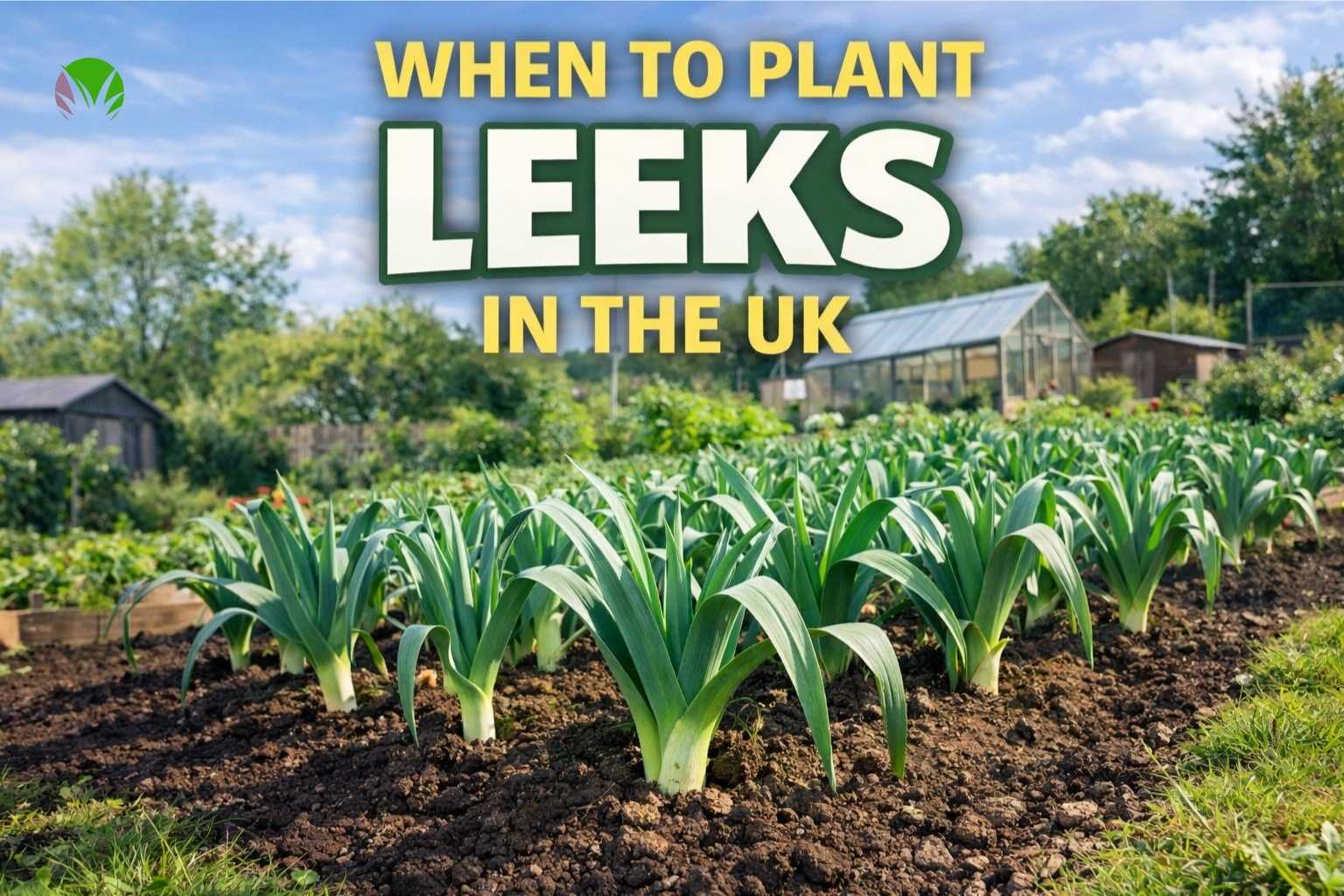
Knowing when to plant leeks in the UK is one of the main factors that determines whether you end up with strong, well-sized plants or thin stems that never really develop properly. Leeks are often seen as a straightforward crop, but they are slower and more structured in their timing than many beginners expect.
Unlike quick vegetables that are sown and harvested within a short period, leeks take patience. They are usually started in spring, planted out later, and harvested months afterwards. This long growing window means timing matters from the very beginning.
Plant too late and leeks may never bulk up properly before colder weather slows growth. Start them at the right time and they can provide a long, steady harvest stretching well beyond the main summer season.
This guide explains exactly when to plant leeks in the UK, how the sowing and planting process works, and how leeks fit into a wider vegetable growing plan. If you are building out your seasonal sowing schedule, it also helps to understand the bigger picture in when to plant vegetables in the UK.
When to Plant Leeks in the UK (Quick Answer)
Leeks are usually:
- sown from March to April
- planted out from May to June
- harvested from late summer through autumn and winter
Because leeks are a long-season crop, they need an early enough start to build strength and size before the colder part of the year.
Understanding Leeks as a Long-Season Crop
Leeks are one of those vegetables that reward patience. They do not grow quickly, and they are not usually a crop you sow directly into the ground and forget about. Most gardeners raise seedlings first, then transplant them into their final position once they are large enough.
This long, two-stage growing process is why timing matters so much. Leeks need enough time to:
- germinate well
- grow into sturdy seedlings
- establish after transplanting
- thicken steadily over the rest of the season
They are not difficult because they are fragile. They are difficult because they need structure and time.
Why Timing Matters for Leeks
If you sow leeks too late, they often stay narrow and underdeveloped. They may survive, but they do not produce the strong, useful stems most gardeners are aiming for.
If you sow them at the right time, then plant them out into suitable soil, they grow steadily and provide one of the most useful crops for extending the harvest season.
Month-by-Month Guide to Planting Leeks in the UK
March to April (Main Sowing Period)
This is the main sowing period for leeks in most UK gardens.
Seeds are usually started:
- indoors in trays or modules
- in a greenhouse
- in a sheltered seed bed outdoors later in spring
Starting leeks during this period gives them enough time to develop into strong seedlings before they are planted into their final growing position.
March is often suitable under protection, while April is usually the most practical month for many gardeners.
May to June (Planting Out)
Once seedlings are large enough, they are planted out into prepared soil.
This usually takes place from May to June depending on:
- the weather
- your region
- how quickly seedlings have developed
By this point, young leek plants should be strong enough to handle transplanting and outdoor conditions.
July Onwards (Too Late for Main Crops)
Starting leeks after June is usually too late for a strong main crop in most UK gardens.
Late-sown leeks often fail to develop good thickness before growth slows later in the year. You may still get small plants, but results are usually much less reliable.
For that reason, it is better to sow at the proper time and give the crop the full season it needs.
Where Leeks Fit in a UK Vegetable Garden
Leeks are particularly useful because they occupy a different place in the growing calendar from many quick vegetables.
They work well in a garden plan that includes crops such as:
They are slower than onions and do not fit as neatly into quick succession planting as beetroot or lettuce, but they make up for that by extending your harvest into colder months.
This makes leeks a very practical crop if you are trying to build a more productive year-round vegetable garden rather than focusing only on fast summer harvests.
Leeks Compared With Onions
Leeks and onions are related, so gardeners often group them together. However, they behave differently.
Onions are usually more sensitive to day length and bulb formation, while leeks are grown mainly for their thickened white stems. Leeks are also generally more tolerant of cold later in the year.
If you already grow onions, leeks are a logical next step. They fit well into the same broad planting season, but they offer harvests over a much longer period. If you are already planning onions, see when to plant onions in the UK for comparison.
Best Position for Growing Leeks
Leeks grow best in an open, sunny position where they can establish without too much competition.
Sunlight
They do best in:
- full sun
- open beds with good light
Although leeks will tolerate a little shade, stronger light generally gives steadier and more reliable growth.
Shelter
Leeks do not usually need the same level of shelter as more tender crops, but they still benefit from reasonably stable conditions. Very exposed sites can slow growth and increase stress, especially for young plants soon after transplanting.
Soil Requirements for Leeks
Leeks grow best in soil that is:
- fertile
- well prepared
- moisture-retentive but not waterlogged
Because they remain in the ground for a long time, they benefit from soil that has been improved properly before planting.
Why Soil Preparation Matters
Poor soil often leads to:
- thin stems
- slow growth
- patchy development
Leeks do not need extreme feeding, but they do need consistent, workable soil that supports steady growth for months.
If your soil is compacted or lacking structure, improving it first makes a big difference. This is covered in how to improve garden soil in the UK.
Drainage
Leeks like consistent moisture, but they do not grow well in ground that remains heavily waterlogged. If your beds tend to stay wet for long periods, this can reduce vigour and increase the chance of poor establishment.
If drainage is a recurring problem in your garden, it is worth dealing with that first. See how to improve garden drainage in UK soil for the full guide.
How to Start Leeks from Seed
Leeks are usually raised from seed before being planted out later in spring or early summer. This gives them time to develop into stronger young plants before they move into their final position.
Starting Indoors
Indoor sowing is common because it gives you more control over early growth. Seeds can be started:
- in trays
- in modules
- on a bright windowsill
- in a greenhouse
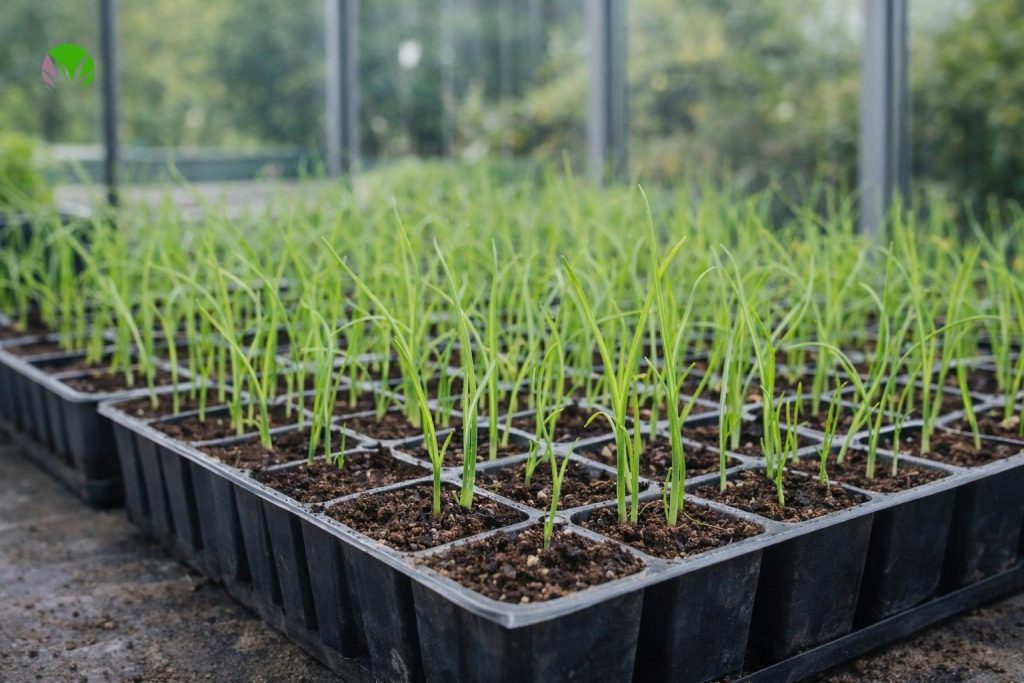
This method is especially useful when early outdoor conditions are still cold or unreliable.
Starting in Seed Beds
Some gardeners prefer to sow leeks in an outdoor seed bed once spring conditions improve. This is a traditional and practical method, particularly if you are growing larger numbers of plants.
A seed bed works well because:
- seedlings can be raised in a separate space
- the main growing bed can be prepared properly first
- plants can be moved once they are sturdy enough
This approach is reliable, provided seedlings are not left too long before transplanting.
When Leek Seedlings Are Ready to Plant Out
Leek seedlings are ready to plant out once they are sturdy enough to cope with the move and have developed beyond the earliest seedling stage.
In most cases, they should look:
- upright
- healthy green
- strong enough to handle transplanting
Very weak or underdeveloped seedlings often struggle after planting out and never fully catch up.
Hardening Off
If seedlings have been raised indoors or under cover, they should be hardened off before being planted into the garden. This means exposing them gradually to outdoor conditions over several days so they can adjust without shock.
Hardening off helps reduce setbacks caused by sudden changes in temperature, wind, and light.
How to Plant Leeks Out
Once seedlings are ready, the next step is transplanting them into their final growing position.
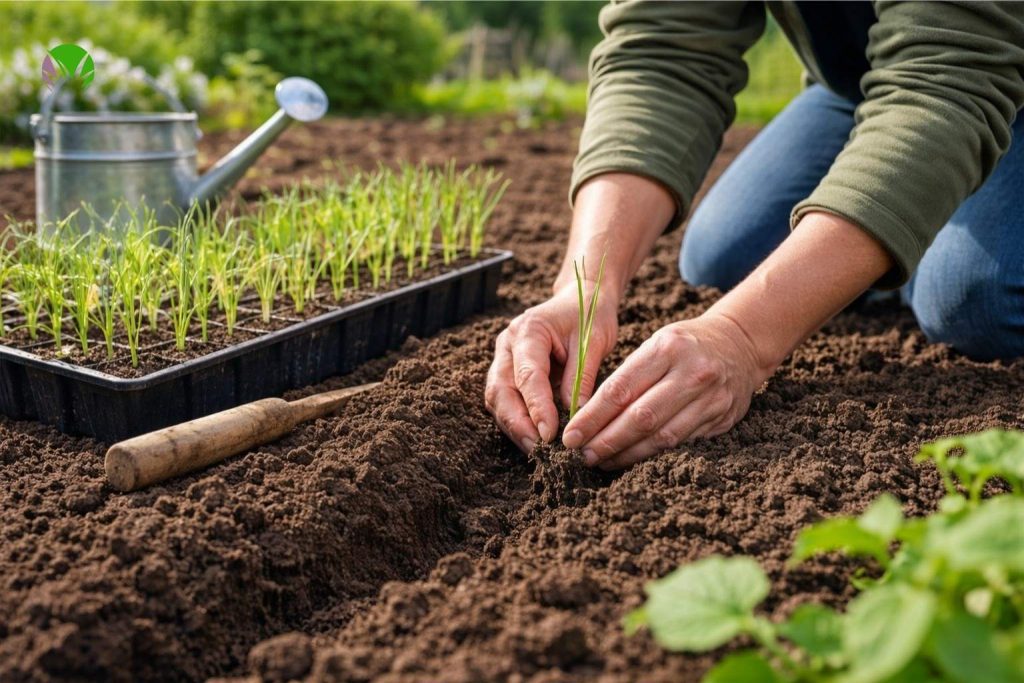
Leeks are often planted more deeply than many vegetables because this helps encourage the long white stem that gardeners usually want.
Spacing
Spacing matters because crowded plants compete for moisture, nutrients, and light.
Giving leeks enough room helps produce:
- thicker stems
- more even growth
- healthier plants overall
Overcrowded leeks may survive, but they rarely reach their full potential.
Planting Method
Many gardeners plant leeks into dibbed holes or narrow planting holes rather than setting them out like ordinary seedlings. This helps the stems develop properly and keeps the crop tidy.
The exact method varies, but the principle is the same: plant seedlings so they can establish well and develop a long, usable stem.
Can You Grow Leeks in Pots?
Leeks can be grown in containers, but they are usually easier in the ground because of their long growing season and need for consistent moisture.
If you do grow them in pots, use:
- deep containers
- good-quality compost
- regular watering
Because containers dry out more quickly than open soil, leek growth can become inconsistent if they are not monitored carefully.
If you are growing vegetables this way, it helps to understand the differences between container growing and open ground. This is explained in growing vegetables in pots in the UK.
How Weather Affects Leek Planting
Month-by-month guides are useful, but actual weather conditions still matter.
Cold Springs
In a cold spring, seedlings may need to stay protected for longer before planting out. Rushing them into poor conditions rarely leads to stronger plants.
Wet Springs
If the ground is saturated, planting out can do more harm than good. Wet soil is harder to work, and poor drainage can check growth early.
Warm Springs
In milder years, leeks may be ready to move outside slightly earlier. However, the priority should still be strong establishment rather than speed.
Healthy plants planted at the right time usually outperform those rushed into the ground too soon.
Regional Differences Across the UK
Leeks can be grown successfully across most of the UK, but planting times vary slightly with climate.
Southern England
Gardeners in milder southern areas may sow a little earlier and plant out sooner if conditions allow.
Midlands and Central Areas
For many central parts of the UK, March to April sowing and May to June planting out is the most reliable pattern.
Northern England and Scotland
Cooler regions often benefit from waiting until conditions are more settled before planting out. Slightly later planting with stronger seedlings is often more productive than an early but weak start.
Watering Leeks Properly
Leeks need steady moisture throughout the growing season.
Dry spells can reduce growth and lead to thinner stems, while inconsistent watering often causes uneven development.
Because leeks stay in the ground for a long time, watering is less about quick rescue and more about keeping conditions reasonably steady over months.
If you are unsure how to judge watering properly, see how often to water plants in the UK.
Feeding Leeks
Leeks benefit from fertile ground, but as with many vegetables, the main priority is good soil rather than constant feeding.
If soil has been improved with compost and organic matter, leeks often establish more reliably and need fewer interventions later.
Weak growth is often more closely linked to soil structure, moisture problems, or poor timing than to lack of feed alone.
How Leeks Fit Into a UK Vegetable Garden Plan
Leeks are useful because they help keep the garden productive well beyond the main summer season. They work particularly well alongside crops with different timelines, such as onions, carrots, beetroot, and cabbage.
They are not a quick crop, but they are one of the most useful for extending the season and making better use of garden space over time.
Common Problems Caused by Planting Leeks at the Wrong Time
Because leeks take a long time to mature, mistakes made early in the season often do not become obvious until much later.
Sowing Too Late
This is one of the most common reasons for disappointing leeks.
If seeds are sown too late:
- seedlings stay small
- plants never build useful thickness
- harvest quality is reduced
Leeks need a full season to develop well. A late start usually means they never catch up properly.
Poor Establishment After Planting Out
Even if seedlings are started on time, weak planting-out conditions can slow growth badly. Waterlogged ground, poor soil, or sudden exposure after indoor growing can all reduce vigour.
This often leads to:
- uneven plants
- thin stems
- slow late-season development
Inconsistent Moisture
Leeks need steady moisture to bulk up properly. If plants go through repeated dry spells, then sudden heavy watering, growth often becomes uneven and the final crop is less reliable.
How Long Leeks Take to Grow
Leeks are a relatively slow vegetable.
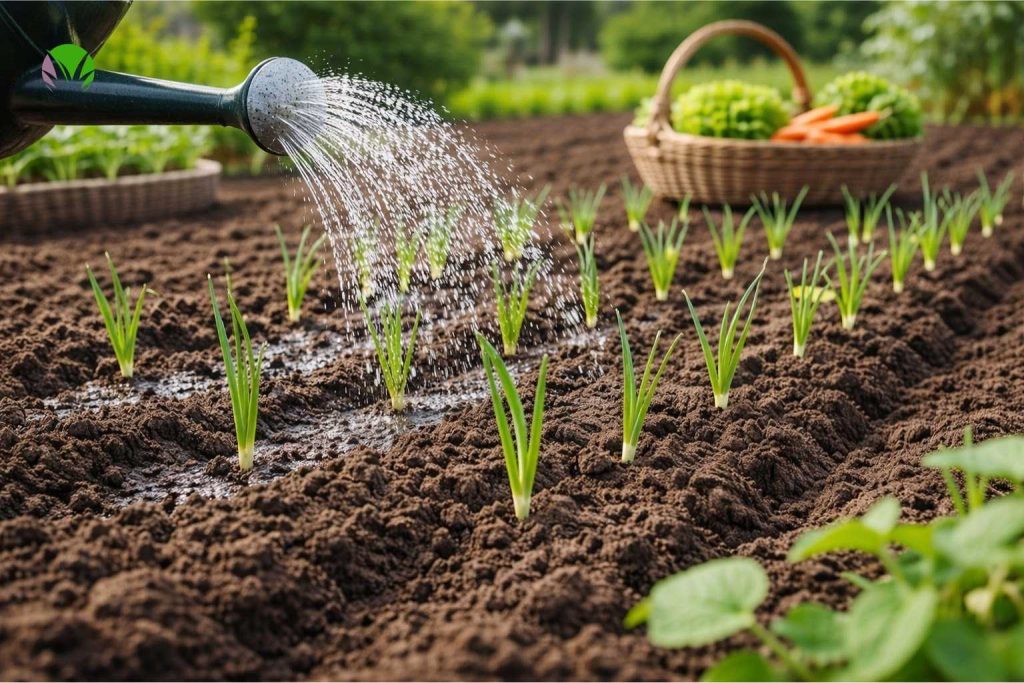
From sowing to harvest, they often take several months, which is why an early start matters. Their development is steady rather than fast.
In general:
- seeds are sown in spring
- seedlings are planted out in late spring or early summer
- harvests begin from late summer onwards
Many leeks continue improving well into autumn and can remain useful into winter depending on variety and growing conditions.
When to Harvest Leeks in the UK
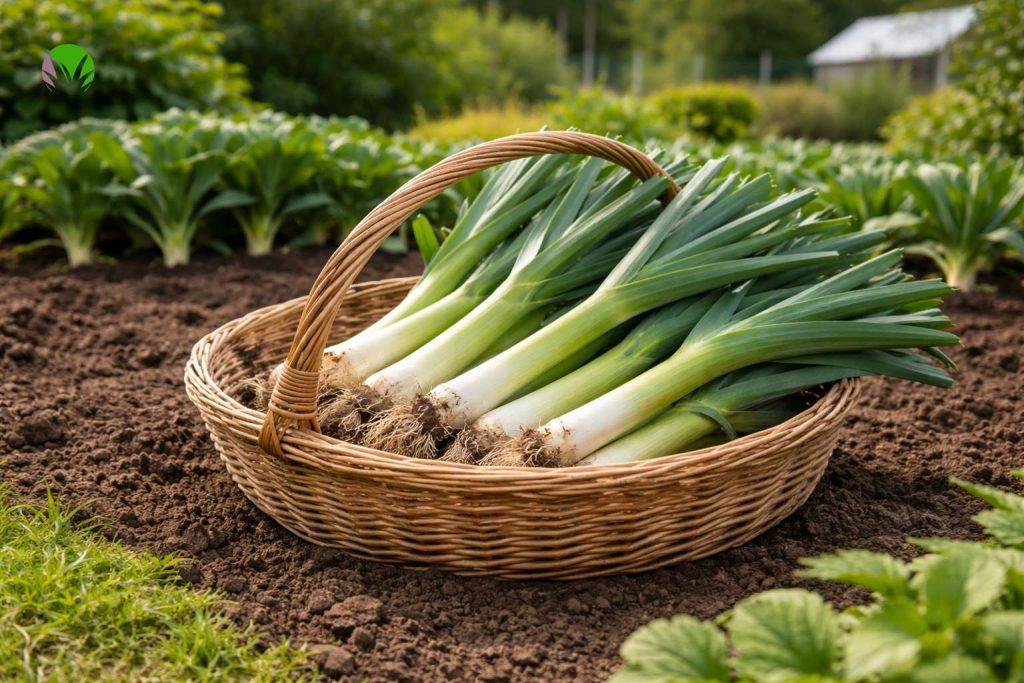
Leeks are usually harvested from late summer onwards, often continuing through autumn and into winter.
The exact timing depends on:
- sowing date
- planting-out date
- weather conditions
- how strongly the plants established
How to Tell When Leeks Are Ready
Leeks are ready to harvest when their stems have thickened to a useful size and plants look strong and established.
Unlike crops that must be harvested at a very narrow moment, leeks are often more flexible. They can usually be lifted as needed over time rather than all at once.
This is one of their main advantages in a productive UK garden.
Can Leeks Stay in the Ground Over Winter?
Yes, in many UK gardens leeks can remain in the ground well into winter.
This is part of what makes them so useful. They are often grown not because they are the quickest crop, but because they help extend the harvest season after many summer vegetables have finished.
In mild winters, leeks can often be lifted as needed over a long period, making them one of the most practical vegetables for colder months.
Are Leeks Easy to Grow for Beginners?
Leeks are reasonably beginner-friendly, but they do require patience.
They are not usually difficult because they are delicate. They are difficult because they are slow and depend on:
- good timing
- steady moisture
- well-prepared soil
- strong early establishment
Gardeners who expect fast results sometimes find them frustrating, but gardeners who understand the longer timeline often find them very reliable.
If you are already comfortable with crops like onions or beetroot, leeks are a sensible next step.
How Leeks Compare With Faster Crops
Leeks are very different from quick vegetables such as lettuce, spinach, or beetroot.
Those crops can often be sown and harvested over a much shorter period. Leeks, by contrast, need long, steady development and are better thought of as part of a season-long plan.
That difference is exactly what makes them useful. They bring balance to the garden by providing harvests when quicker crops are long gone.
How Leeks Fit Into a Year-Round Vegetable Garden
Leeks are one of the best crops for extending the usefulness of a vegetable garden beyond the main summer months.
They work particularly well in a plan that includes quicker crops for spring and summer, followed by slower, longer-season vegetables that carry the garden into autumn and winter.
Leeks fit neatly into a planting structure alongside onions, carrots, beetroot, cabbage, and other seasonal vegetables. Planning crops this way helps make your garden productive over a much longer period.
Signs You Have Planted Leeks at the Right Time
When leeks are sown and planted at the right time, you will usually see:
- steady early growth
- upright green plants
- strong establishment after transplanting
- thickening stems later in the season
Plants that begin well generally continue well, provided moisture and soil conditions remain reasonably stable.
Signs Timing or Conditions Were Wrong
Problems often show up as:
- thin stems
- patchy growth
- small plants that never bulk up
- weak recovery after transplanting
These problems are often blamed on feeding, but in many cases they begin much earlier with sowing time, soil condition, or poor establishment.
If vegetables in your garden often seem to stall generally, it may help to read why vegetable plants grow slowly in UK gardens.
FAQs
When should I sow leeks in the UK?
Leeks are usually sown in the UK from March to April, either indoors, in a greenhouse, or in a sheltered seed bed once conditions improve.
When should leeks be planted out in the UK?
Leek seedlings are usually planted out from May to June, once they are strong enough and outdoor conditions are suitable.
Is June too late to plant leeks in the UK?
June is usually the latest sensible time to plant out leeks for a reliable main crop. Starting them later often leads to thinner stems and weaker plants.
Can leeks stay in the ground over winter?
Yes, leeks can often stay in the ground over winter in many UK gardens, allowing you to harvest them as needed during the colder months.
Do leeks need full sun?
Leeks grow best in full sun, where they can develop steadily over their long growing season.
A Sensible Place to Start
If you want reliable results, a sensible place to start is by sowing leeks from March to April, then planting them out from May to June once seedlings are sturdy and conditions are right.
Choose a sunny position, prepare the soil well, keep moisture reasonably steady, and give the crop time. Leeks are not a fast vegetable, but they are one of the most useful for extending the season and filling the gap between summer and winter harvests.
They reward patience, good preparation, and consistency more than speed. Get those basics right, and leeks become one of the most dependable vegetables in a UK garden.