

Leggy tomato seedlings are one of the most common problems UK gardeners run into in spring.
You sow seeds with good intentions, the seedlings come up quickly, and at first everything looks promising. Then the stems begin stretching, the plants lean towards the light, and instead of strong compact growth you end up with thin, weak-looking seedlings that seem far too delicate for their size.
This is frustrating, but it is also very common.
In most cases, leggy tomato seedlings are not caused by bad seed or a lack of feed. They are usually caused by one thing: the plants are trying to find better growing conditions. Most often that means they do not have enough light, but warmth, timing, crowding, and indoor growing conditions also play a part.
This matters especially in the UK because many people start tomatoes indoors while the weather outside is still too cold. That is sensible, but it also creates the exact conditions that make legginess more likely. Seedlings may be warm enough to grow, but not bright enough to stay short and sturdy.
The good news is that leggy seedlings are often fixable.
Tomatoes are more forgiving than many crops, and even quite stretched seedlings can usually be rescued if you act early enough. The key is to understand why it happened, correct the problem, and stop the plants from becoming weaker as they grow on.
In this guide, we will look at why tomato seedlings go leggy in the UK, how to fix them, and how to stop it happening again.
If you want the full growing guide as well, read How to Grow Tomatoes in the UK.
Quick Answers
Why are my tomato seedlings tall and thin?
Tomato seedlings usually become tall and thin because they do not have enough light. Too much warmth, sowing too early, and crowding can make the problem worse.
Can leggy tomato seedlings be saved?
Yes. Tomato seedlings can often be saved by moving them into brighter light, potting them on properly, and planting them deeper to support stronger rooting.
Should I throw leggy tomato seedlings away?
Not usually. Tomatoes are one of the easiest seedlings to recover because the stems can form roots when buried deeper.
Does feeding fix leggy tomato seedlings?
No. Feeding does not solve legginess. The main problem is usually light and growing conditions, not lack of nutrients.
Why does this happen so often in the UK?
Because tomatoes are often started indoors while outdoor conditions are still too cold. Seedlings may be warm enough to grow quickly, but the light levels indoors are often not strong enough to keep them compact.
What Leggy Tomato Seedlings Actually Look Like
Not every fast-growing seedling is leggy.
Tomato seedlings naturally grow quite quickly once they germinate, so a bit of upward growth is normal. The problem starts when the stem becomes too long, too thin, and too weak for the size of the plant.
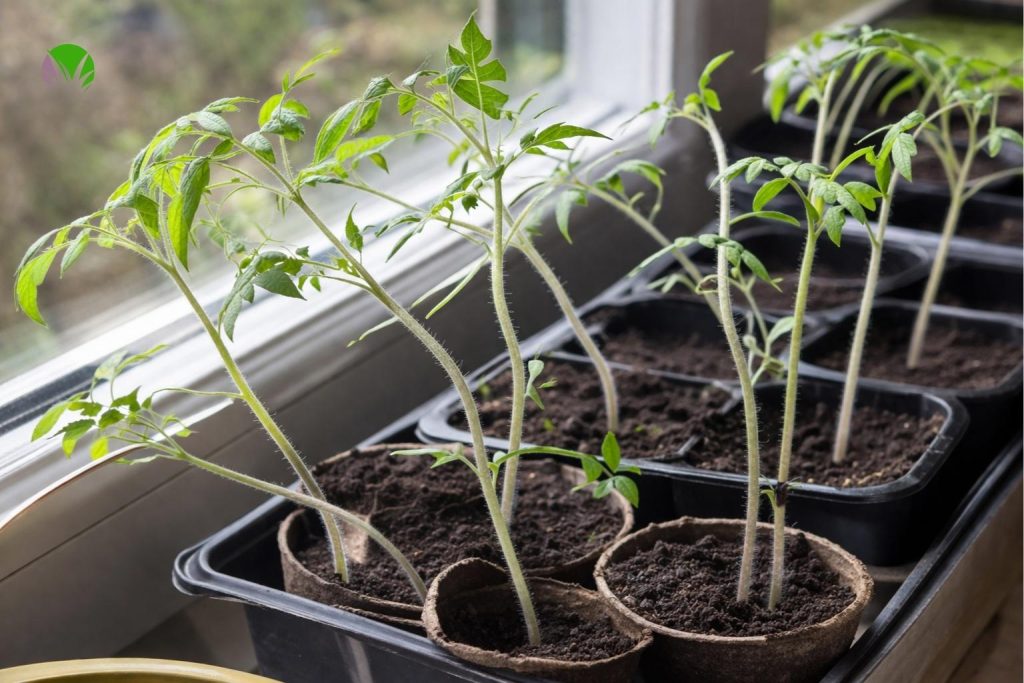
Leggy seedlings often look like this:
long thin stems,
wide gaps between leaves,
plants leaning towards the window,
pale or weak-looking growth,
and seedlings that seem unstable in their pots or modules.
Sometimes they also fall over more easily or look as though they could snap if handled too roughly.
This matters because legginess is not just about appearance. A stretched seedling is usually less sturdy, less balanced, and more vulnerable to checks later on. If the problem continues, the plant can become harder to manage and slower to recover after potting on or planting out.
The earlier you spot it, the easier it is to correct.
The Main Reason Tomato Seedlings Go Leggy
The main cause of legginess is not enough light.
When tomato seedlings do not receive strong enough light, they stretch upwards trying to find more of it. That is simply how they respond. Instead of building short, stocky growth, they put their energy into length.
This is why a warm windowsill often gives mixed results.
It may feel like a good place to start tomatoes because it is sheltered and warmer than outside, but if the light is not strong enough for most of the day, seedlings quickly begin to stretch. They may look healthy at first because they germinate well, but once they start growing on, the weakness becomes obvious.
The problem is often worse when seedlings are started too early.
That is because they spend longer indoors at a time of year when natural light is still limited. Even if the days seem to be getting longer, indoor light can still be much weaker than people expect.
Other Reasons Tomato Seedlings Become Weak and Stretched
Low light is usually the main cause, but it is not always the only cause.
Too much warmth can make the problem worse because warmth encourages fast growth. If the seedlings are warm but not bright enough, they grow too quickly for the conditions and stretch more than they should.
Crowding can also contribute.
If seedlings are sown too thickly or left too long in a crowded tray, they compete with each other for light and space. That often leads to more upright stretching and weaker individual plants.
Sowing too early is another common issue.
Many gardeners are eager to get tomatoes started as soon as possible, but if they are sown long before conditions are ready for steady onward growth, they can spend too much time indoors becoming overlong and awkward. A slightly later sowing often produces better plants than an early sowing that struggles.
This is one reason timing matters so much in UK gardening. If you want the wider seasonal picture, it helps to read When to Plant Vegetables in the UK.
Why This Happens So Often in UK Homes
UK gardeners often start tomatoes indoors because they have to.
Tomatoes are not a crop you sow straight outside into cold spring ground and hope for the best. They need warmth early on, so windowsills, conservatories, spare rooms, and greenhouses become the starting point. The problem is that those spaces are not always as bright as the seedlings need.
A room can feel bright to you and still be too dim for strong seedling growth.
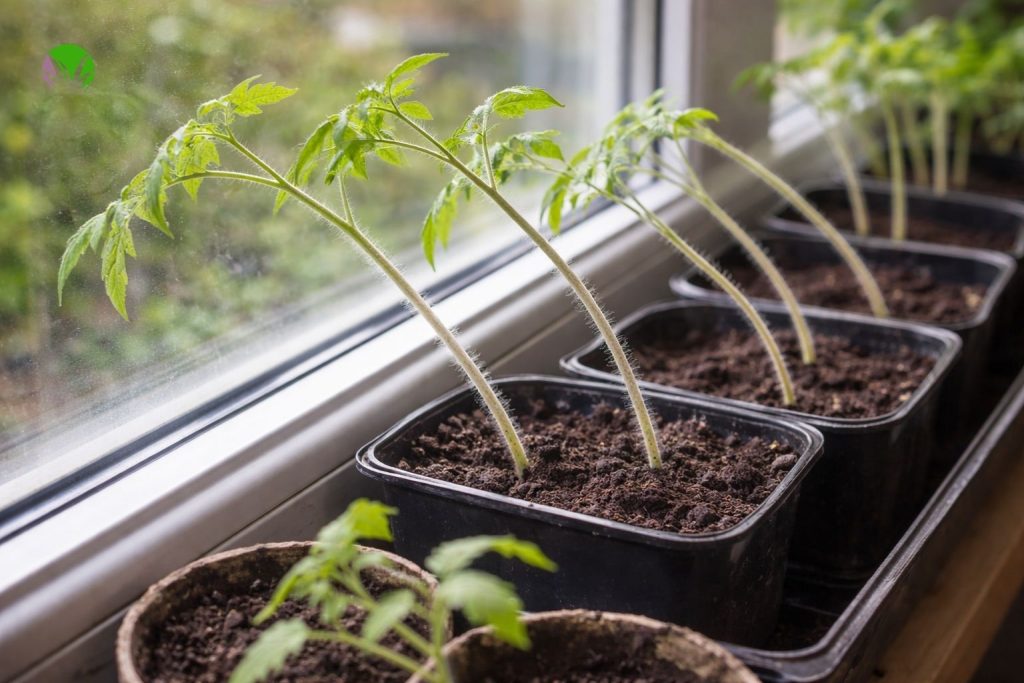
That is where the confusion comes from. The seedlings germinate, so you assume the setup is working. But germination and strong growth are not the same thing. A seedling can emerge perfectly well and then become leggy because the light level after germination is not good enough.
This is especially common during dull spells, on north-facing windowsills, or when trays are placed slightly back from the glass rather than right in the brightest position.
Once you understand that, the problem makes much more sense.
Can Leggy Tomato Seedlings Be Saved?
Yes, very often they can.
This is one of the reasons tomatoes are such a forgiving crop for beginners. Unlike some seedlings, tomatoes can usually recover well if you correct the problem in time. Even stretched seedlings can often be potted on more deeply so the buried stem develops extra roots.
That does not mean every seedling should be kept no matter how weak it is.
If a seedling is extremely thin, pale, damaged, or collapsing, it may not be worth saving. But many leggy tomato seedlings look worse than they really are. If the leaves are still healthy and the stem is not rotting or snapped, there is usually a good chance of recovery.
The next part covers exactly how to fix leggy tomato seedlings, how deep to plant them, and how to stop the problem getting worse.
How to Fix Leggy Tomato Seedlings
The first step is to improve the growing conditions straight away.
If the seedlings stay in the same weak light and overly warm conditions, they will keep stretching. So before you think about feed, bigger pots, or anything else, move them into the brightest position you can give them.
This usually means a very bright windowsill, a greenhouse with good light, or another space where they are not shaded for much of the day.
Turn trays or pots regularly if the seedlings are leaning towards one side. That will not solve the main problem on its own, but it can stop the plants becoming even more lopsided while you improve the light.
The next step is potting on properly if the seedlings are ready.
If they are still in small modules or a crowded tray, pot them into individual pots so they have more room. With tomatoes, this is where you can fix a lot of the legginess. Plant them deeper in the new compost so part of the long stem is buried.
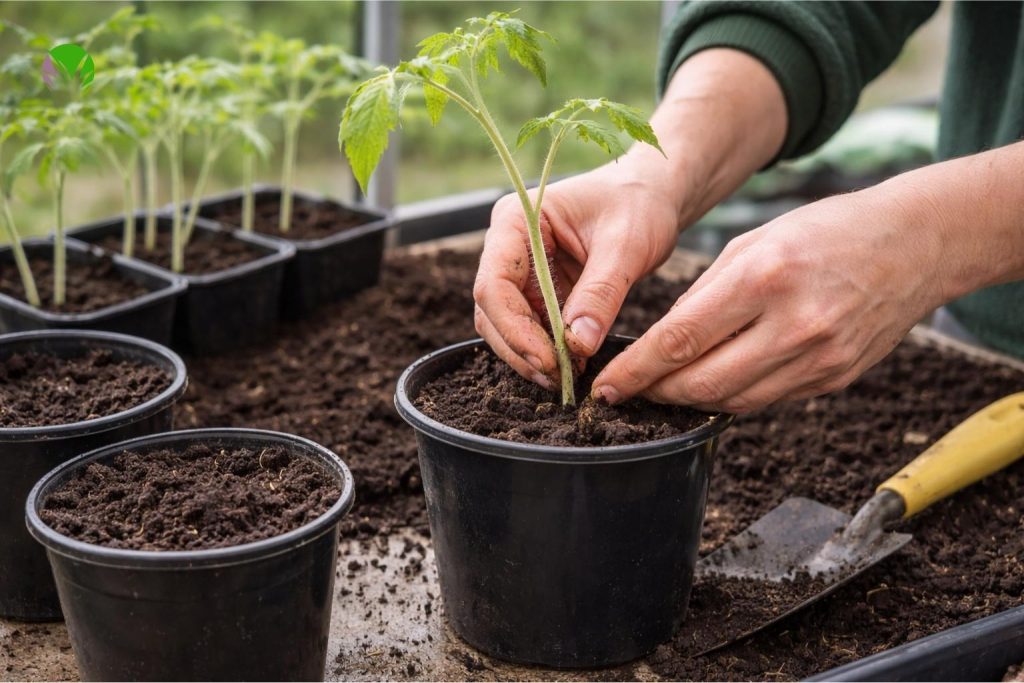
This works because tomato stems can produce roots when covered.
Instead of leaving the whole stretched stem exposed, you turn part of it into extra rooting space. That gives the seedling more support and often results in a much sturdier plant later on.
Be gentle, but do not be afraid to pot deeply.
If the seedling has enough healthy stem below the first leaves, that buried section can often help rather than harm the plant. This is one of the easiest ways to rescue a batch of tomatoes that looked awkward a few days earlier.
Should You Feed Leggy Tomato Seedlings?
Usually not straight away.
Legginess is mainly a light and growing-condition problem, not a feeding problem. If you rush to add fertiliser, you often just encourage more soft top growth without fixing the reason the plant stretched in the first place.
That is why improving light and potting on are usually far more helpful than feeding.
If seedlings are potted into fresh compost, they generally have enough available nutrition for that early stage. The focus should be on getting them sturdy, not pushing them along too quickly.
This is the same wider principle covered in Feeding the Soil vs Feeding the Plant. Feed only helps when the plant is in a good position to use it properly.
Should You Pinch Out or Cut Back Leggy Seedlings?
No, not at this stage.
It can be tempting to cut back weak-looking tomato seedlings because they seem too long and untidy, but that usually creates more stress than benefit. Young seedlings need their leaves to recover and keep growing strongly.
The better fix is to improve the conditions and replant them deeper if needed.
Once tomatoes are growing strongly later in the season, pruning and pinching can become part of normal care depending on the variety. But leggy seedlings are not improved by random cutting when they are still trying to establish themselves.
What if Tomato Seedlings Are Leaning?
Leaning is very common when seedlings are reaching towards light.
If the lean is mild, better light and turning the pots regularly often helps. If the seedlings are being potted on, deeper planting usually solves much of the problem because the stem is supported more firmly.
You can also give temporary support if a plant is especially floppy, but support should not be the main solution.
If you rely only on a stick without improving the conditions, the plant may stay weak and continue stretching. The aim is to build a sturdier seedling, not just hold up a poor one.
How to Stop Tomato Seedlings Going Leggy Again
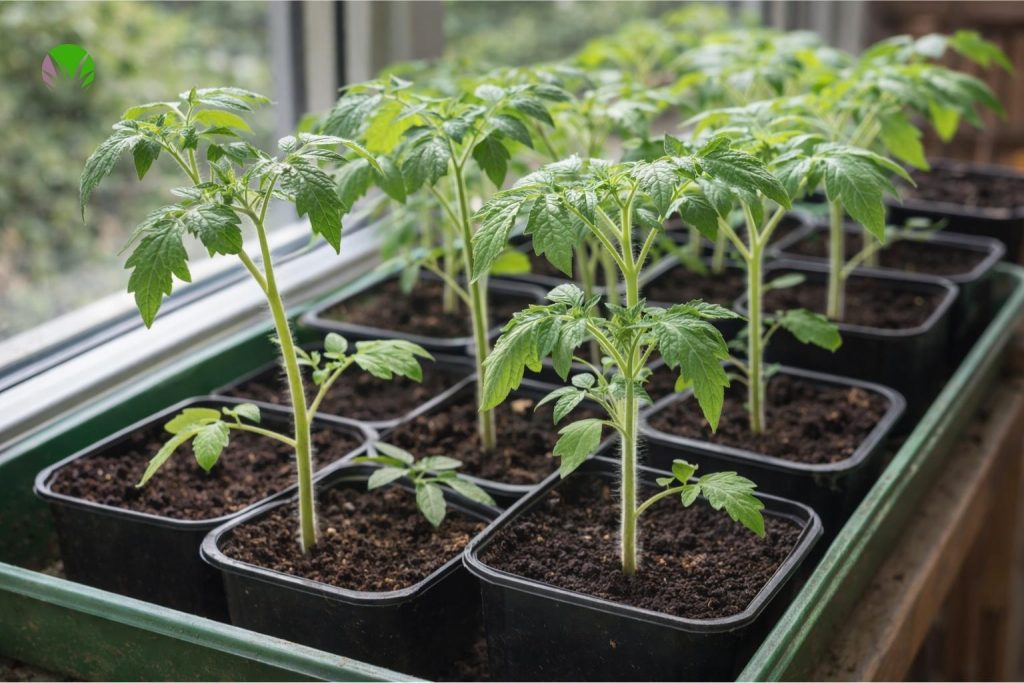
The best cure is prevention.
Once you have seen legginess happen once, it becomes much easier to stop it next time. The biggest improvements usually come from better timing and better light.
Try not to sow tomatoes too early just because you are keen to begin.
It is often better to sow a little later into improving spring light than to sow very early and spend weeks trying to stop seedlings becoming stretched indoors. A later, stronger batch usually overtakes an early weak batch surprisingly quickly.
Give seedlings the brightest conditions you can from the moment they emerge.
Do not assume that because they germinated well, the setup is good enough for growing on. This is where many people get caught out. Germination is only the beginning. The real test is whether the seedlings stay compact and sturdy afterwards.
Avoid overcrowding too.
If several seedlings are left pressed together, they compete for light and quickly become thinner and more upright. Potting on at the right time makes a big difference.
Warmth also needs balance.
You want enough warmth for healthy growth, but not so much that the seedlings race upwards in poor light. Strong light with moderate, steady warmth usually produces much better young plants than high warmth in a dimmer room.
Do Leggy Seedlings Still Produce Good Tomato Plants?
Often, yes.
If they are rescued early and grown on properly, leggy tomato seedlings can still become productive plants. Tomatoes are much more forgiving than many people realise. A stretched seedling at one stage of spring does not automatically mean a failed crop later on.
What matters is whether the underlying problem is corrected.
If the seedling keeps stretching, stays weak, and never develops a stronger root system, then performance later may suffer. But if it is potted on properly, given better light, and allowed to grow steadily, it can recover very well.
This is why panic is rarely helpful.
Legginess looks alarming because the plants seem fragile, but in many cases the answer is quite simple: give them more light, more balance, and a deeper potting-on.
Are Some Tomato Varieties More Prone to Legginess?
The main issue is usually the growing conditions, not the variety.
That said, some tomatoes naturally grow more quickly or more vigorously than others, so they can appear to stretch faster if conditions are not right. But the basic cause is still the same. Weak light and poor balance between warmth and light are what drive legginess most of the time.
It is better to fix the environment than blame the seed packet.
When to Start Again Instead of Saving Them
Sometimes restarting is the better option.
If the seedlings are extremely thin, pale, damaged, or have been left so long that they are becoming difficult to rescue, a fresh sowing may be the simplest answer. This is especially true if it is still early enough in the season for a new batch to catch up.
In many UK gardens, a slightly later sowing can still perform very well.
That is another reason not to panic. If your first batch has gone badly wrong, you have not ruined the whole tomato season. Tomatoes are fast enough to recover lost time better than many beginners expect.
If you are unsure whether the problem is just legginess or part of a wider growth issue, it also helps to read Why Vegetable Plants Grow Slowly in UK Gardens.
Frequently Asked Questions
Why are my tomato seedlings tall and thin?
Tomato seedlings usually become tall and thin because they do not have enough light. Too much warmth, sowing too early, and crowding can make the problem worse.
Can leggy tomato seedlings be saved?
Yes, in many cases they can. Tomatoes are one of the easiest seedlings to rescue because the stems can form roots when buried deeper during potting on.
Should I throw leggy tomato seedlings away?
Not usually. If the seedlings still have healthy leaves and the stems are not damaged or rotting, they are often worth saving.
Does feeding fix leggy tomato seedlings?
No. Feeding does not solve legginess. The problem is usually caused by poor light or unbalanced growing conditions rather than lack of nutrients.
Why does this happen so often in the UK?
Because tomatoes are often started indoors while outdoor conditions are still too cold. The seedlings may be warm enough to grow quickly, but the light indoors is often not strong enough to keep them compact.
Can I plant leggy tomato seedlings deeper?
Yes. This is one of the best ways to rescue them. Tomato stems can produce roots when buried, which helps create a sturdier and better-rooted plant.
Should I cut back leggy tomato seedlings?
No, not at the seedling stage. The better approach is to improve the light, pot them on properly, and bury part of the stretched stem.
What is the main cause of leggy tomato seedlings?
The main cause is insufficient light after germination. Seedlings stretch upwards because they are trying to find better conditions.
Do tomato seedlings become leggy if sown too early?
Yes, very often. Sowing too early can leave seedlings indoors for too long at a time of year when light is still weak, which makes legginess more likely.
Will leggy tomato seedlings still produce fruit later?
Yes, they often still can if the problem is corrected early enough. Once they are potted on properly and given better conditions, many recover well and grow into productive plants.
Why are my tomato seedlings leaning towards the window?
They are leaning because they are reaching for the light. This is a strong sign that the light level is not good enough or is coming mainly from one direction.
When should I start again instead of trying to save them?
If seedlings are extremely weak, pale, damaged, or collapsing, starting again may be easier. A slightly later sowing often catches up quickly in better spring light.
A Sensible Place to Start
If your tomato seedlings have gone leggy, the most useful thing you can do is fix the conditions rather than blame yourself.
Move them into the brightest position you can, pot them on if needed, bury part of the stretched stem, and avoid pushing them on with unnecessary feed. In many cases, that is enough to turn a weak-looking batch into healthy productive plants.
Tomatoes are forgiving, which is why this problem is usually recoverable.
The bigger lesson is to match sowing time, light, and warmth more carefully next time. Once you understand that balance, leggy seedlings become much easier to avoid.
If you want to build from here, the most useful next reads are:
How to Grow Tomatoes in the UK
When to Plant Vegetables in the UK
Why Vegetable Plants Grow Slowly in UK Gardens
Feeding the Soil vs Feeding the Plant