
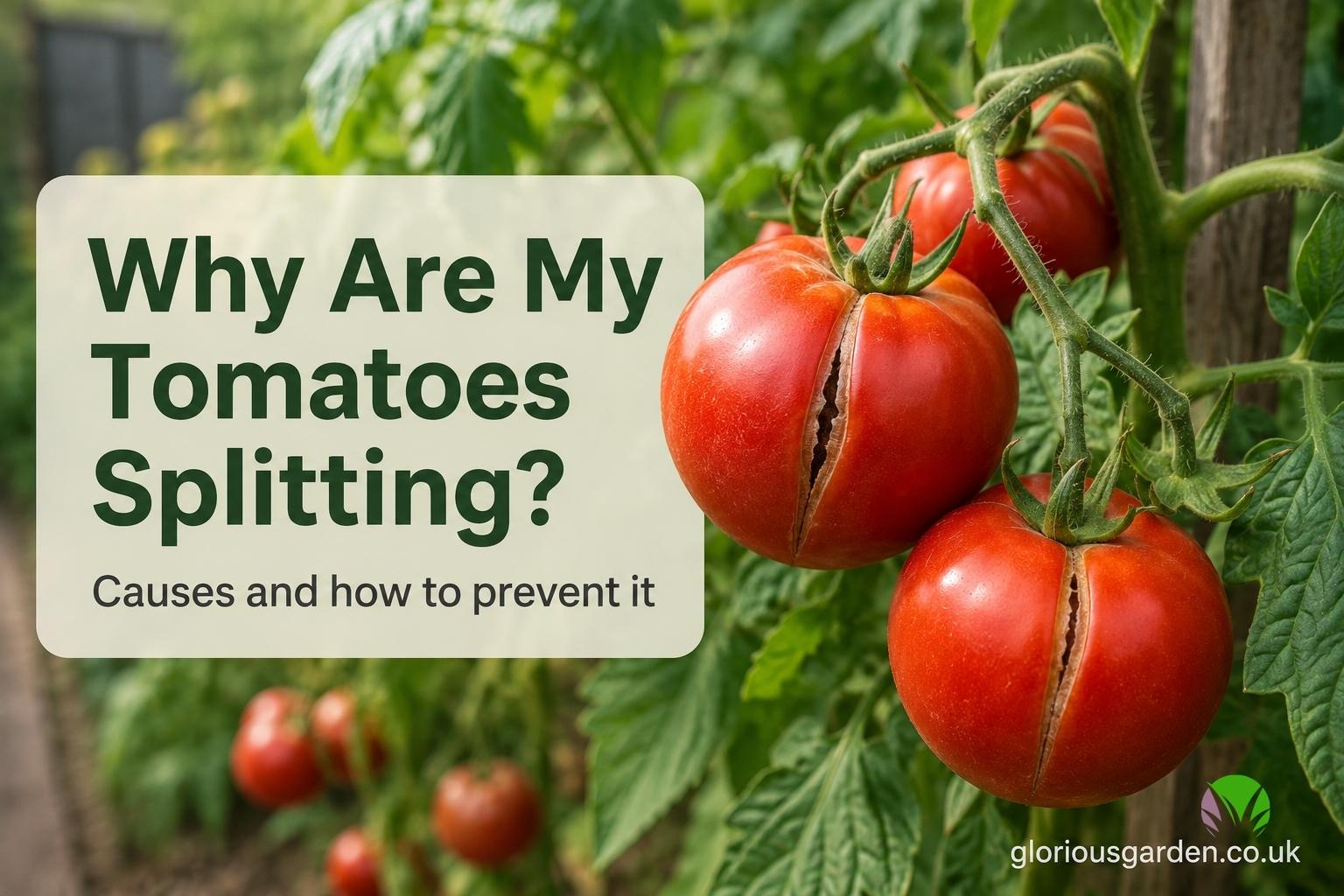
Why are my tomatoes splitting? Tomatoes split when they take up water faster than their skins can stretch, and in UK gardens the usual trigger is a spell of dry weather followed by heavy rain or a big watering. The fruit swells suddenly on the inside, the skin cannot keep up, and it cracks. It looks alarming, but split tomatoes are not diseased, not dangerous, and almost always caused by inconsistent watering rather than anything wrong with the plant. You can still eat them, and once you understand what causes the splitting you can largely prevent it. The fix, as with so many tomato problems, comes down to steady, even watering rather than the feast-and-famine that our weather so often delivers.
I have grown tomatoes for over twenty years on my Oxfordshire clay, in the greenhouse and outdoors, and splitting used to frustrate me every summer, especially after a dry fortnight broke into a downpour and half my ripening fruit cracked overnight. Once I understood it was a watering and weather problem rather than a disease, I stopped worrying and started managing it, and it became far less of an issue. Let me explain exactly why tomatoes split, the two different kinds of splitting you will see, and how to stop it happening.
Why Tomatoes Split
The cause is beautifully simple once you picture it. A tomato has a skin that can only stretch so fast. When the plant suddenly takes up a lot of water, after rain or a heavy watering following a dry spell, the flesh inside swells quickly, the skin cannot expand to match, and it splits. It is purely a matter of the inside growing faster than the outside can accommodate. That is why splitting so often appears the morning after rain breaks a dry period, and why it clusters on the fruit closest to ripening, whose skins are least elastic.
So splitting is not an infection, a pest, or a nutrient problem. It is a physical response to a sudden change in water uptake, which means the answer lies entirely in how evenly the plant is watered and how sheltered it is from sudden downpours. This puts it in the same family as blossom end rot, another watering-related disorder, and it is worth reading the two together since the prevention overlaps so much.
The Two Types of Splitting
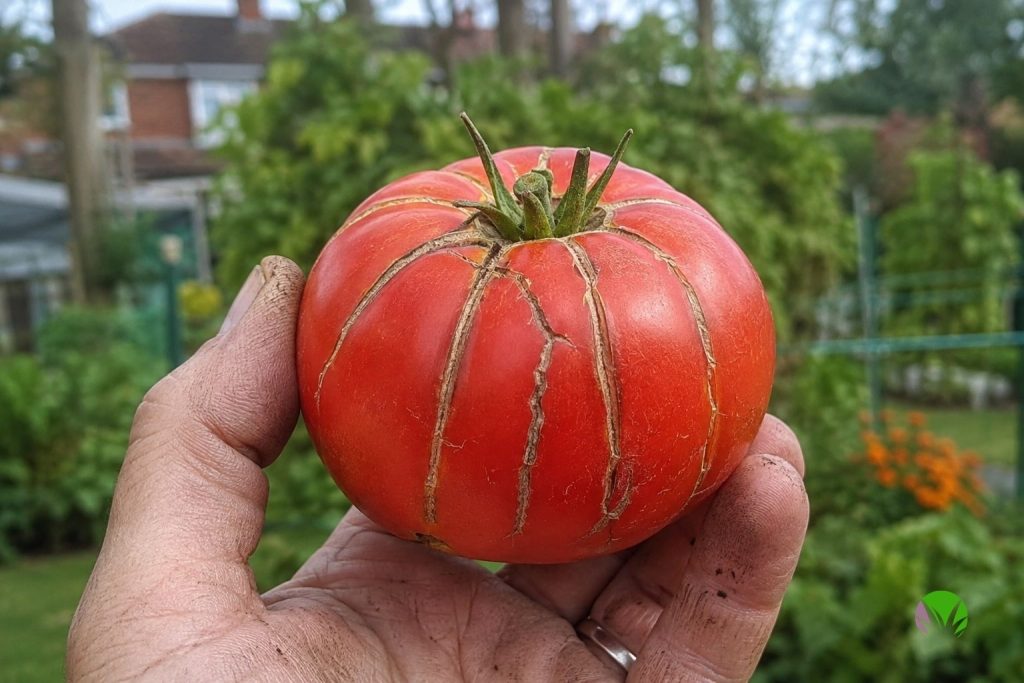
There are two patterns of splitting, and it helps to know which you are seeing, though the cause and cure are much the same. The first is radial splitting, where the cracks run down the sides of the fruit from the stalk towards the base, like the segments of an orange. This is the more common type and usually follows a sharp change in watering. The second is concentric splitting, where the cracks form rings around the shoulders of the tomato near the stalk, often finer and more circular.
Radial cracks tend to result from a sudden big drink after drought, while concentric ring-cracks are more often linked to fluctuating conditions over a longer period, and some varieties are simply more prone to them. Either way, both come back to uneven water and, sometimes, big temperature swings. Knowing the type is mostly reassurance that you are looking at splitting and not a disease, which is covered in tomato diseases and the wider common tomato problems guide.
It Is Not a Disease
This is worth stating plainly, because a cracked tomato can look unpleasant and set off worries about blight or rot. Splitting itself is not a disease. It is a physical crack caused by water, and the fruit underneath is perfectly sound at the moment it splits. There is no fungus or bacteria involved in the splitting, and it does not spread from fruit to fruit or plant to plant the way an actual disease would. The RHS advice on tomato splitting confirms it is a physiological disorder, so sprays are no help.
The one caveat is what happens next. An open split is a wound, and if you leave a cracked tomato on the plant in damp weather, that broken skin can let in moulds and rots or attract fruit flies. So the split is not the disease, but it can become a doorway for one if ignored. That is why the practical advice is to pick split fruit promptly, which I come to below. For genuine disease worries, tomato blight is the one to rule out.
How to Stop Tomatoes Splitting
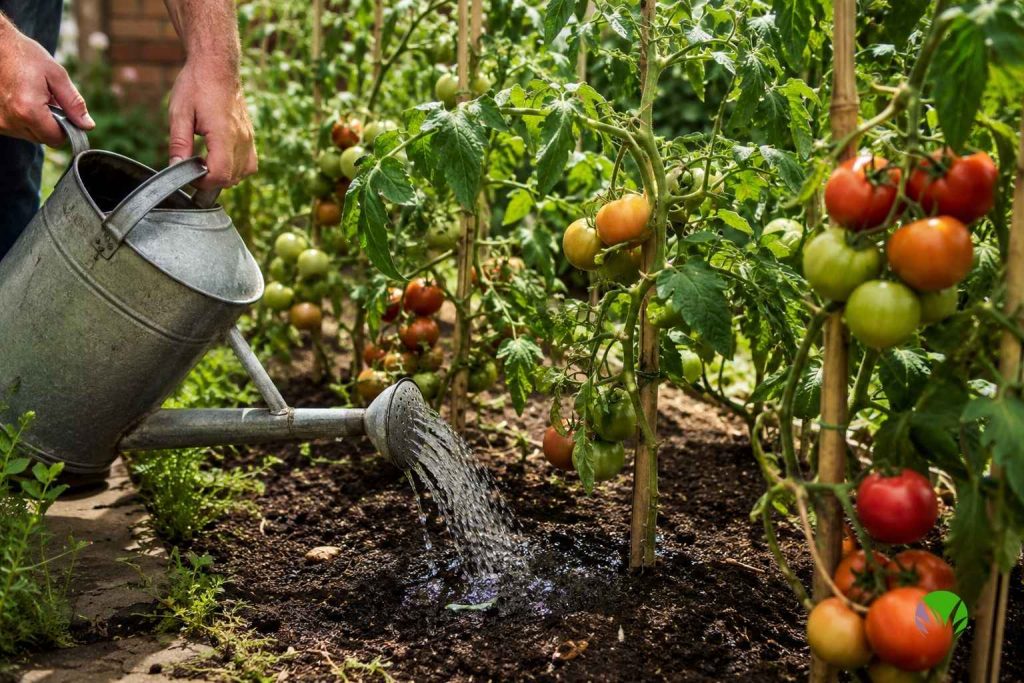
Prevention is almost entirely about consistent watering, so this is where to focus. Water regularly and evenly so the plant never dries out and then gets flooded, which for containers in warm weather usually means a good drink every day, sometimes twice in a heatwave. The aim is to keep the soil steadily moist rather than letting it swing between bone dry and soaking, because it is the swing, not the amount, that splits the fruit. Getting into a daily rhythm rather than watering only when you remember makes the single biggest difference.
Mulching around the base of your plants helps enormously, because it holds moisture in the soil and evens out the ups and downs. Improving the soil so it retains water more steadily helps too, which is another reason to keep improving your garden soil and to think about how often to water. For outdoor tomatoes, a bit of shelter from heavy rain, growing against a wall or under a lean-to, reduces the sudden soakings that cause the worst splitting.
Why Greenhouse Tomatoes Split Too
You might expect a greenhouse to prevent splitting, since it keeps the rain off, and it does help with the downpour problem. But greenhouse tomatoes split for a different reason: heat. On a hot day a greenhouse can soar, the plants transpire hard and dry out fast, and then when you water in the evening they take up a big drink all at once, which splits the fruit just as rain would outdoors. The enclosed heat actually makes consistent watering more important, not less.
So under glass the answers are good ventilation to stop the extreme heat, shading in the hottest spells, and steady watering rather than one big evening soak after a dry, baking day. Damping down the greenhouse floor helps keep the air and roots more even too. It is all part of the same care routine covered in caring for tomato plants and growing tomatoes generally.
Can You Eat Split Tomatoes?
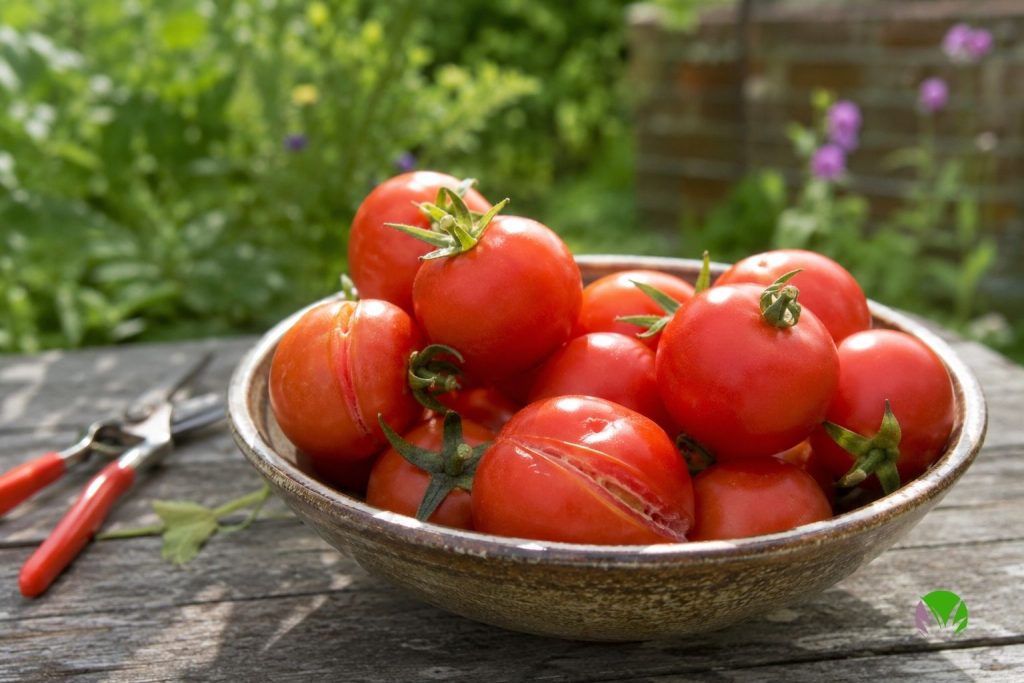
Yes, and this is the reassuring part. A tomato that has just split is perfectly good to eat, since the crack is only skin-deep and the flesh is sound. The sensible approach is to pick split fruit as soon as you spot it, before the open wound has a chance to attract mould or fruit flies, and use it promptly. A freshly split tomato is exactly as good in the kitchen as a whole one, so there is no waste involved in catching them early.
The only ones to discard are those you missed, where the split has been sitting open in damp weather and has started to rot or grow mould. Those go on the compost heap. But caught promptly, split tomatoes are a minor cosmetic problem rather than a loss, and if a glut of them splits after rain, they are ideal for cooking down into sauces and soups. If some are still green when they split, you can also ripen them indoors.
Some Varieties Split More Than Others
It is worth knowing that variety plays a real part. Thin-skinned varieties and many cherry tomatoes are more prone to splitting than thicker-skinned types, simply because their skins are less able to stretch. Some heritage and beefsteak varieties also crack readily. If you grow a variety that splits badly every year despite your best watering, the variety itself may be part of the problem, and it is not necessarily anything you are doing wrong.
If splitting is a perennial frustration, it is worth trying a variety described as crack-resistant next season, alongside your usual steady watering. Many modern varieties are bred to resist splitting well. Choosing the right variety from the start, as touched on in how to grow tomatoes, saves a lot of bother, though good watering still matters whatever you grow.
Splitting, Blossom End Rot, and Watering
If you take a step back, you will notice that the big three tomato fruit problems all trace to the same root. Splitting, blossom end rot, and poor fruit set are all, at heart, watering and consistency problems. Get the watering steady and even, and you prevent all three at once, which is why consistent watering is the most valuable single habit you can build as a tomato grower. It is genuinely the master key to healthy fruit.
That is oddly encouraging, because it means you are not fighting three separate battles but one. Steady watering, good soil that holds moisture, mulch, and shelter from extremes solve the lot. It ties into the broader picture of common growing problems and why vegetables fail, nearly all of which come back to conditions rather than bad luck.
Why Tomatoes Are Worth the Trouble
Splitting, like most tomato troubles, is really the plant asking for more consistent care, and once you provide it the problem fades. Tomatoes are more demanding than the easy beginner crops, but they teach you to water well and read your plants, and those skills pay off across everything else you grow. A split tomato is simply feedback: the watering has been uneven, steady it up, and the next flush comes through clean.
So do not be disheartened if a batch cracks after summer rain, because it happens to every tomato grower, myself included, most years. Pick them, use them, adjust the watering, and carry on. If you want the fuller picture of growing strong, healthy plants from the start, when to plant tomatoes and feeding them properly both help you get ahead of problems like this before they begin.
Why Are My Tomatoes Splitting: Frequently Asked Questions
Why are my tomatoes splitting?
They take up water faster than their skins can stretch, usually after a dry spell breaks into rain or a heavy watering. The flesh swells quickly, the skin cannot keep up, and it cracks. It is caused by inconsistent watering, not a disease.
Can you eat tomatoes that have split?
Yes. A freshly split tomato is perfectly good to eat, since the crack is only skin-deep. Pick split fruit promptly before the open wound attracts mould or fruit flies, and use it soon. Only discard fruit where the split has started to rot.
How do I stop my tomatoes from splitting?
Water regularly and evenly so the soil never swings between dry and soaked, which for pots often means daily watering. Mulch to hold moisture, improve the soil so it retains water steadily, and shelter outdoor plants from heavy rain.
Why do my tomatoes split when they turn red?
Ripening fruit splits most because its skin is least elastic at that stage. As a tomato ripens the skin becomes more fragile, so a sudden drink of water after dry weather cracks the near-ripe fruit first. Steady watering as fruit ripens helps most.
Is tomato splitting a disease?
No. Splitting is a physiological disorder caused by uneven water uptake, not a fungus, bacteria or pest. It does not spread between fruit or plants. However, an open split can let in mould if left, so pick cracked fruit promptly.
Why are my greenhouse tomatoes splitting?
Heat. A hot greenhouse dries plants out fast, then an evening watering delivers a sudden big drink that splits the fruit, just as rain would outdoors. Ventilate well, provide shade in heatwaves, and water steadily rather than one big soak.
Do some tomato varieties split more than others?
Yes. Thin-skinned varieties and many cherry tomatoes split more readily because their skins stretch less. If a variety cracks badly every year despite good watering, try one described as crack-resistant next season.
A Sensible Place to Start
If your tomatoes are splitting, the fix is almost always the same: steady the watering. Water regularly and evenly so the soil stays consistently moist rather than swinging between bone dry and soaked, which for pots and grow bags usually means watering daily, or twice a day in hot weather. Mulch around the base to hold moisture, and shelter outdoor plants from sudden heavy rain where you can.
Meanwhile, pick any split fruit promptly and use it, since it is perfectly good caught early. Get the watering steady and most of the splitting stops, and you will have solved blossom end rot and poor fruit set into the bargain, since all three come back to the same thing. Consistent watering really is the master key to healthy tomatoes.